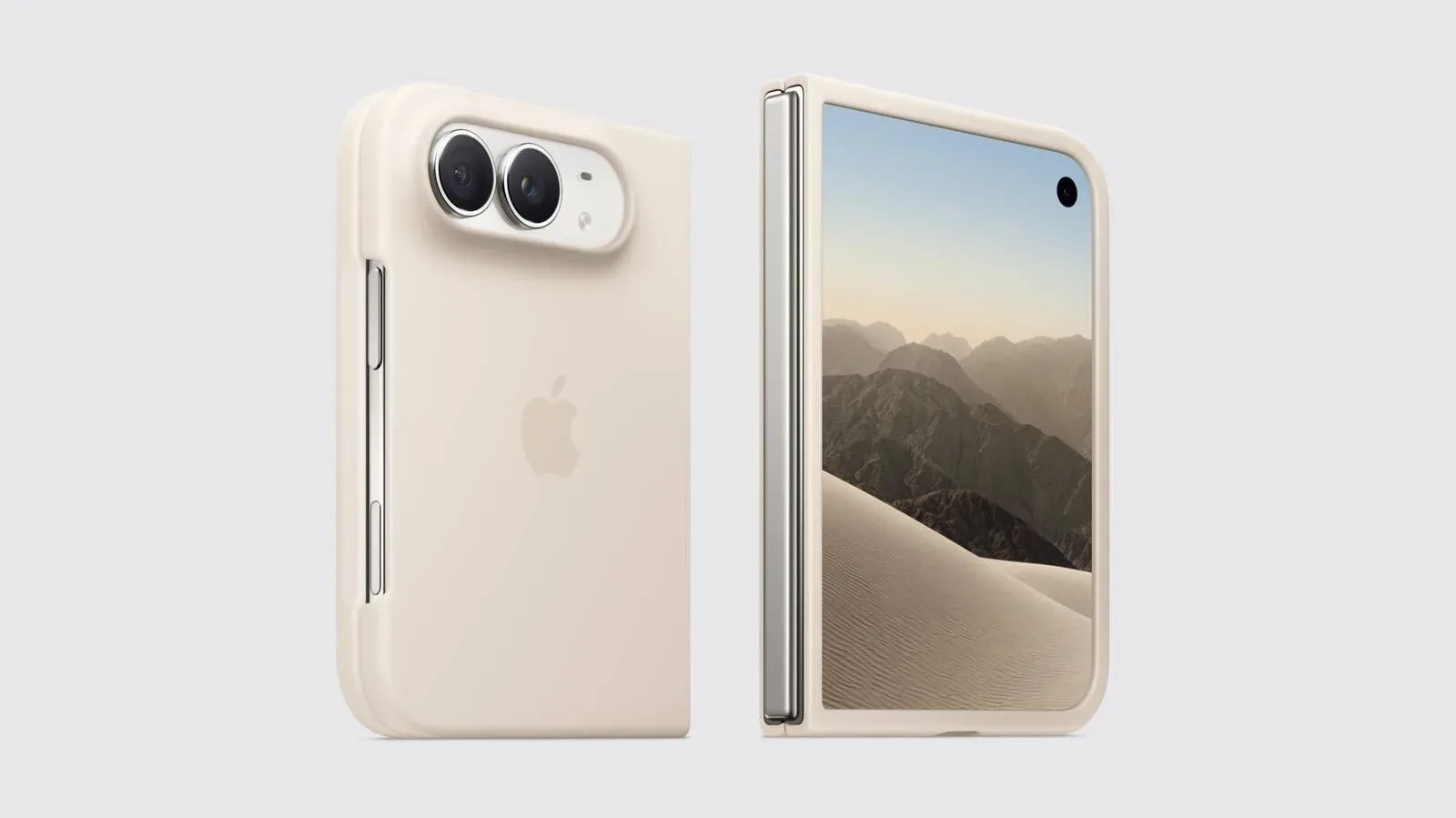
The iPhone Duo has not yet reached its October 23 official launch date, but attention is already drifting toward what a later version could fix—or, more accurately, what it might be able to fit. One prominent expectation is that Apple’s third-generation iPhone Duo could add two conspicuous omissions: Face ID and a telephoto camera.
That remains a prediction rather than a confirmed product plan. Still, it points to the central challenge facing the Duo concept. The current model arrives with Touch ID and two rear cameras, a setup that appears tied to the physical limits of its design. Devices that pursue a particularly compact, unconventional, or space-conscious form have to make hard decisions about what hardware earns a place inside. A depth-sensing system for facial authentication and the optics needed for telephoto photography both demand room, and room is often the one component engineers cannot manufacture after the enclosure has been finalized.
The proposed route to a third-generation upgrade is a familiar one in consumer technology: shrink the parts, improve the software, then make the resulting package behave more like a larger and more elaborate assembly. In this case, component miniaturization and advances in AI could potentially allow Apple to use smaller, less sophisticated depth-sensing and camera hardware while computational processing helps bridge part of the gap.
Why Face ID and a telephoto lens matter
Face ID is more than a different way to unlock a phone. It is an authentication system that can affect the daily rhythm of using an iPhone: opening the device, confirming purchases, accessing protected apps, and approving password-related actions. Touch ID remains a practical and established alternative, especially where a physical sensor is convenient, but Face ID’s absence will stand out to people accustomed to it on other modern iPhone designs.
A telephoto lens has a similarly straightforward appeal. Dual rear cameras can cover a lot of ordinary photography, but a dedicated telephoto option is meant to give users a more capable way to frame distant subjects without relying solely on digital cropping. For travel shots, events, pets that refuse to stand still at a reasonable distance, or the timeless human urge to photograph something across a room without walking several steps, optical reach is a meaningful hardware feature.
Neither upgrade is guaranteed for the iPhone Duo’s third generation. The important distinction is between an expectation about a possible product direction and a specification Apple has announced. At present, the concrete details are limited: the first iPhone Duo uses Touch ID and dual rear cameras, and its official launch is scheduled for October 23. Everything beyond that current baseline belongs in the carefully labeled drawer marked possible future hardware.
The compact-device engineering puzzle
It is easy to look at a feature list and treat every omission as a simple cost-cutting decision. Hardware design is usually more complicated. Cameras are not just circles on the back of a phone; their sensors, lenses, stabilization arrangements, supporting electronics, and positioning requirements all have to coexist with the battery, display, wireless hardware, cooling considerations, and structural elements. Authentication hardware has its own packaging demands.
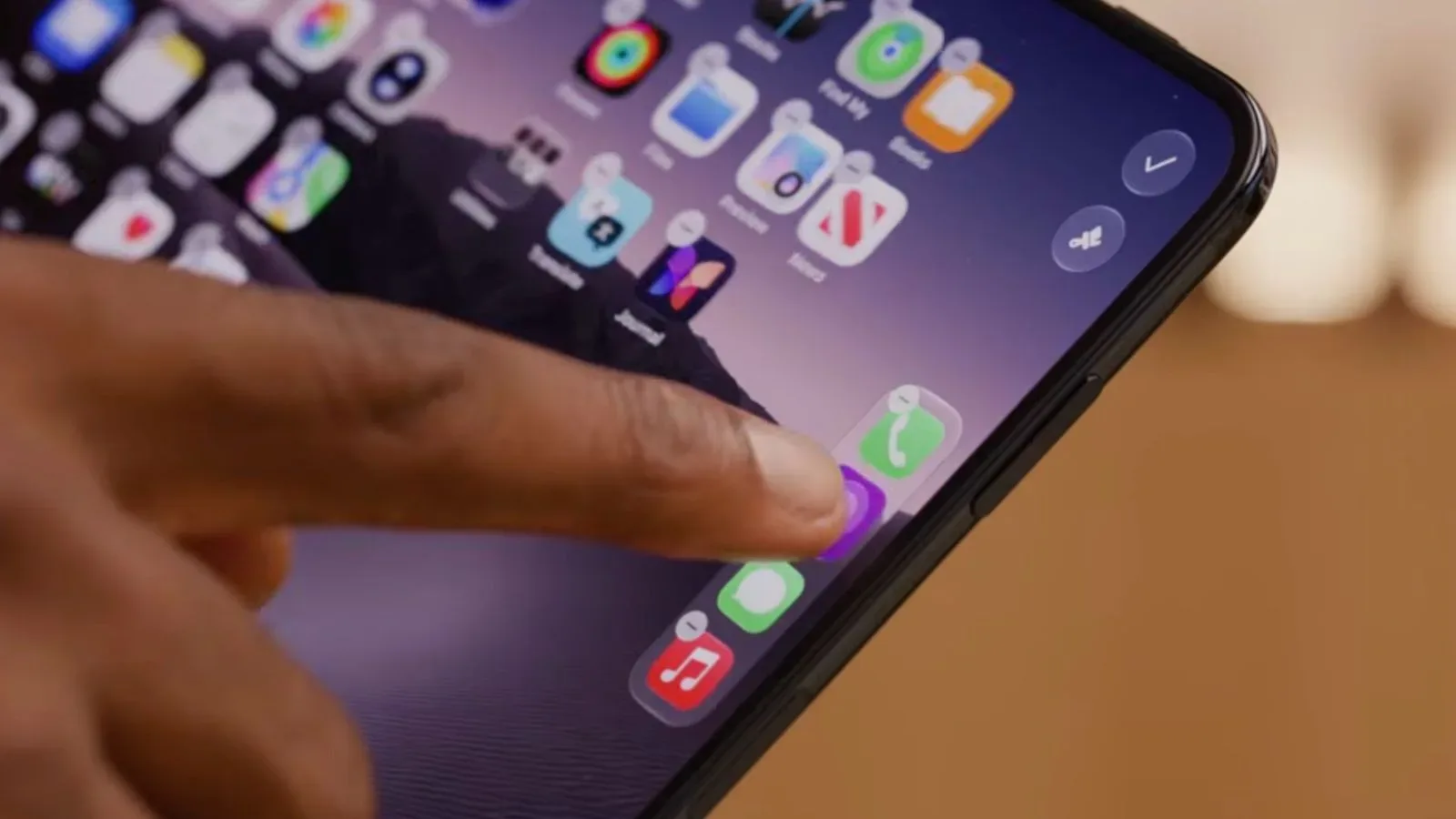
When a device’s form factor changes, those internal trade-offs become more visible. A company may be able to deliver a thin or novel design only by choosing a different biometric system, limiting camera hardware, or reorganizing how software presents apps and controls. The reported four-app vertical dock on the iPhone Duo is another example of how a distinct device layout can lead to design decisions that feel unusual beside a conventional phone.
That does not automatically make such decisions bad. It means buyers may be choosing a particular form factor and its priorities rather than receiving every feature available in a more spacious design. The success of that compromise depends on which features an individual considers essential. For some, Touch ID is entirely acceptable and two rear cameras cover the basics. For others, Face ID and telephoto photography are precisely the kinds of features that separate an interesting new category from a fully equipped everyday phone.
AI is not a magic shrink ray
The suggestion that AI could help make smaller hardware viable deserves some careful parsing. Computational techniques can improve what comes out of a camera system and can assist with interpreting sensor information. Software can combine data, reduce noise, refine images, recognize patterns, and make the most of constrained inputs. Those capabilities can be especially valuable when hardware has to be reduced in size or complexity.
But computation does not erase the role of physical components. A smaller or less sophisticated sensor system still starts with the data it can capture, while a telephoto camera still depends on optics that have to exist somewhere inside the product. The likely opportunity is not that software makes hardware irrelevant. It is that hardware and software can be balanced differently: compact components provide the inputs, and more advanced processing tries to preserve a satisfying result.
That balance is one of the most interesting aspects of the third-generation prediction. If Apple can reduce the space requirements of depth sensing and long-range camera hardware enough, software may help lessen the compromises involved. If not, the Duo may continue to emphasize a different selection of strengths. Either outcome would reveal something about the practical limits of its design rather than simply the ambition of its feature checklist.
Third generation is a meaningful qualifier
The timeline matters. The expectation is not framed around the initial iPhone Duo or an immediately following revision; it points to a third-generation model. That leaves room for the kind of incremental engineering work that often changes what is practical in a consumer device. Miniaturization is rarely a single dramatic leap visible from the outside. It can be a series of refinements to components, manufacturing, thermal behavior, power use, software, and internal arrangement.
It also means prospective buyers should separate the launch product from the aspirational version in their heads. The iPhone Duo that officially launches October 23 is the device with Touch ID and dual rear cameras. A later Duo with Face ID and a telephoto lens is not a reason to rewrite the first model’s known specifications, nor is it something shoppers can count on today.
For technology enthusiasts, that uncertainty is part of the story rather than a footnote. First-generation devices often show the initial argument for a product category. Later generations test whether that argument can accommodate the features users expect without losing the qualities that made the concept distinct. The Duo’s potential evolution could therefore be less about chasing a specification sheet and more about proving that its design can mature without becoming a different device entirely.
What to watch after October 23
Once the iPhone Duo launches, the meaningful questions will center on the current hardware rather than the hypothetical third generation. How naturally Touch ID fits the design, how the two-camera system serves everyday use, and whether the device’s layout makes its trade-offs feel purposeful will all matter more than an unconfirmed future roadmap.
Meanwhile, the Face ID and telephoto discussion offers a useful lens for interpreting the product’s trajectory. It suggests that these capabilities are not necessarily ruled out by the Duo idea itself; they may instead be features waiting on smaller components and better computational support. That is a notably different prospect from a design that could never accommodate them at all.
For now, the responsible position is simple: the iPhone Duo officially launches on October 23 with Touch ID and dual rear cameras. A third-generation model adding Face ID and a telephoto lens is an informed expectation, not a promise. The distance between those two statements is where the future engineering work—and plenty of gadget speculation—will live.