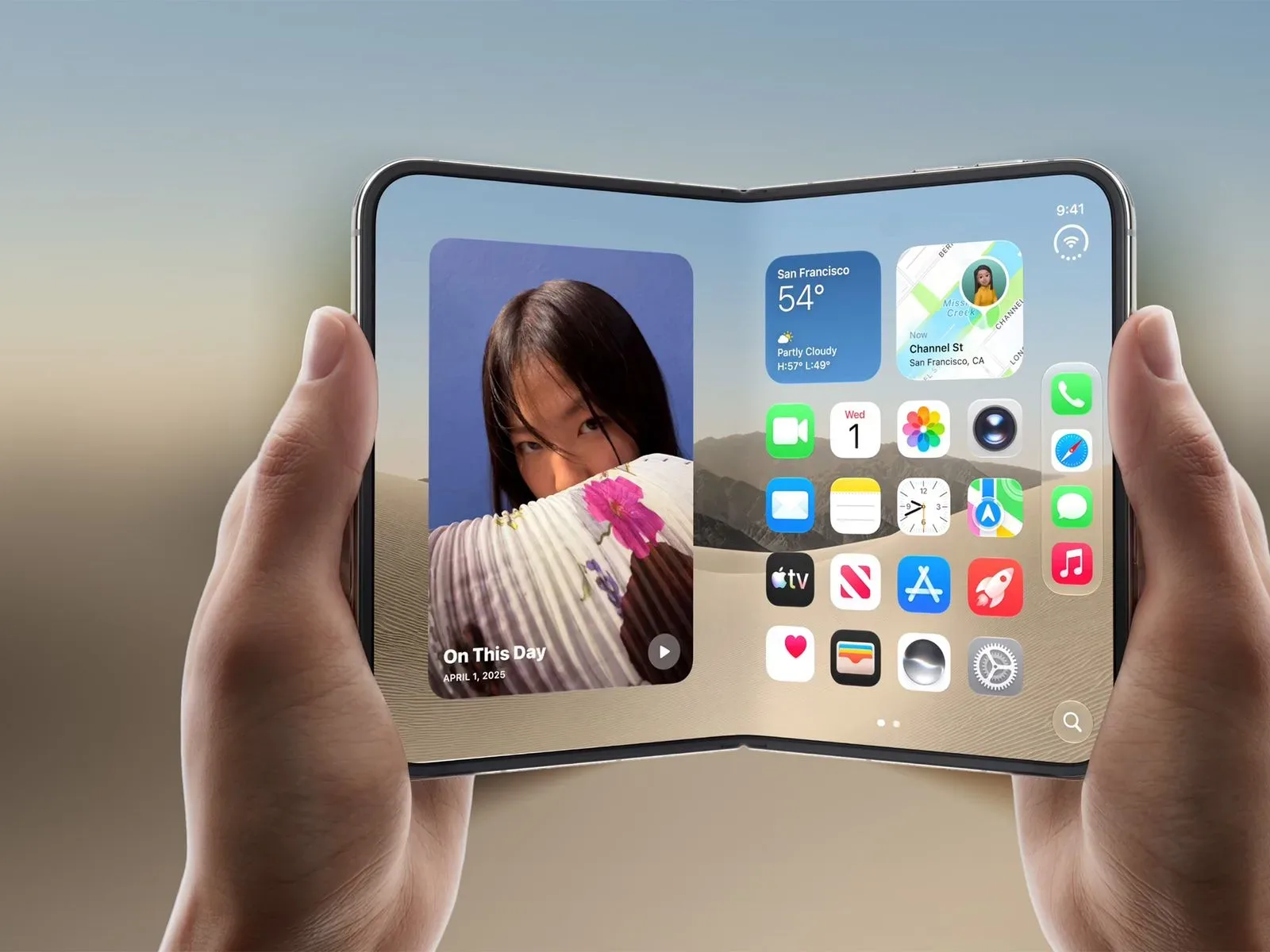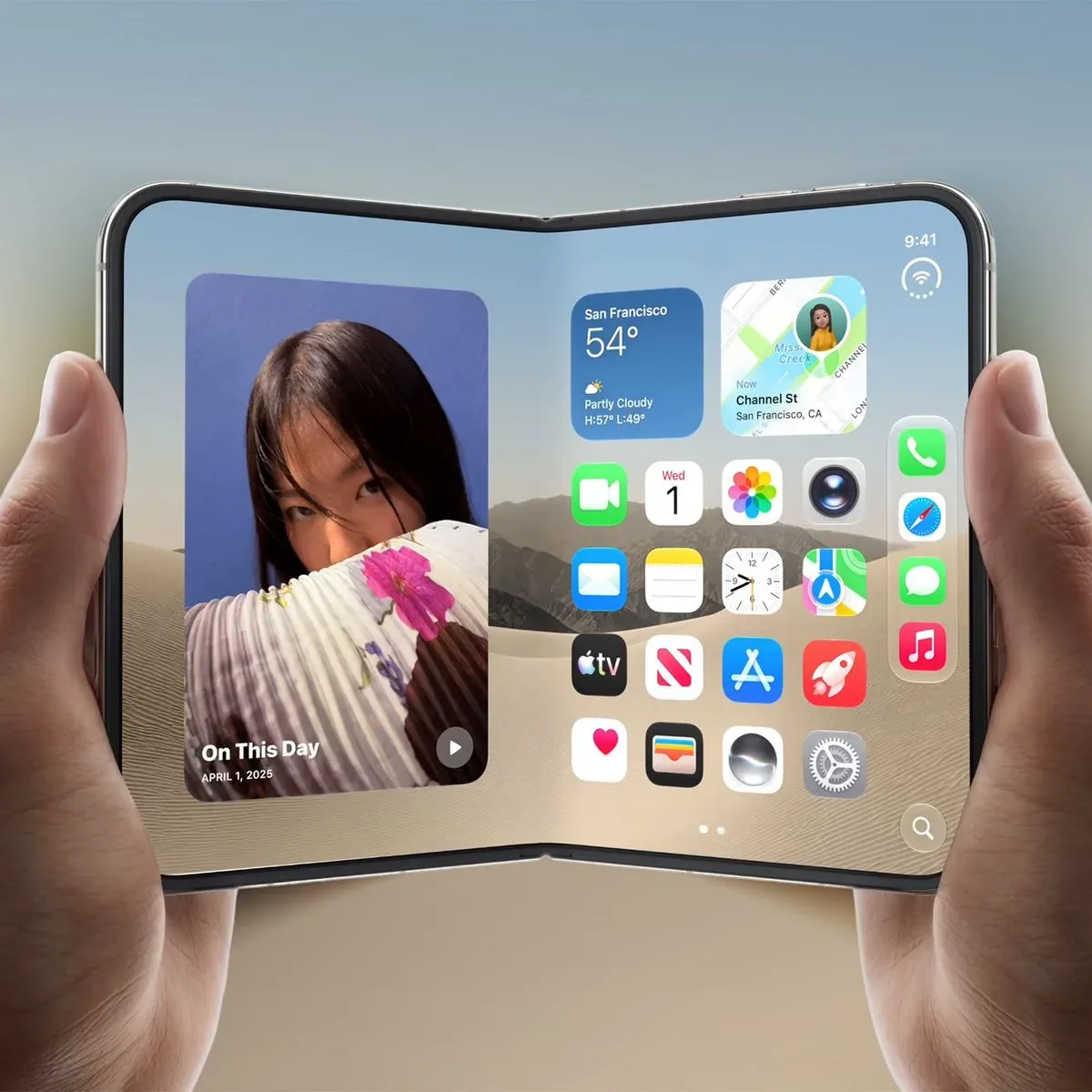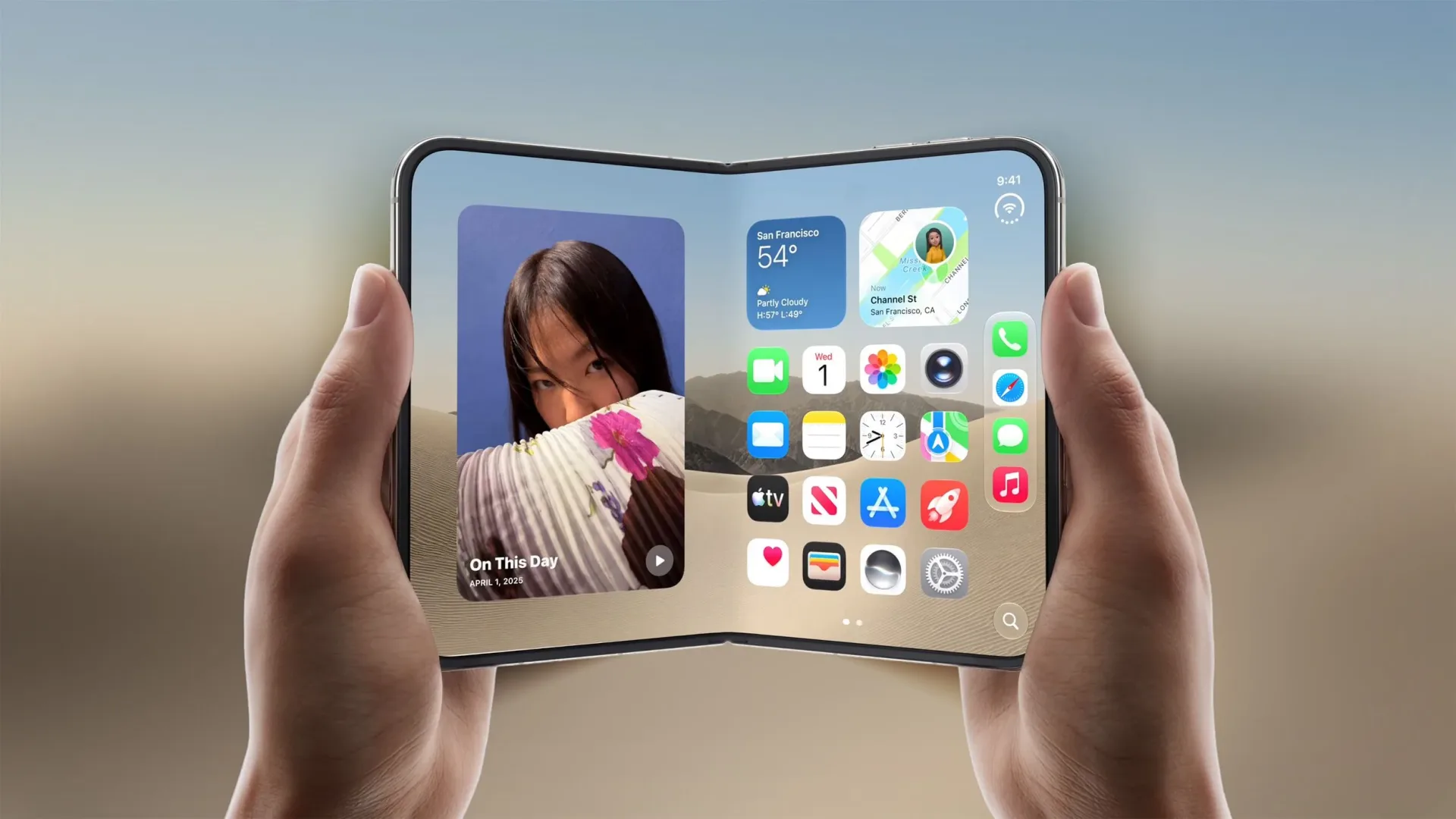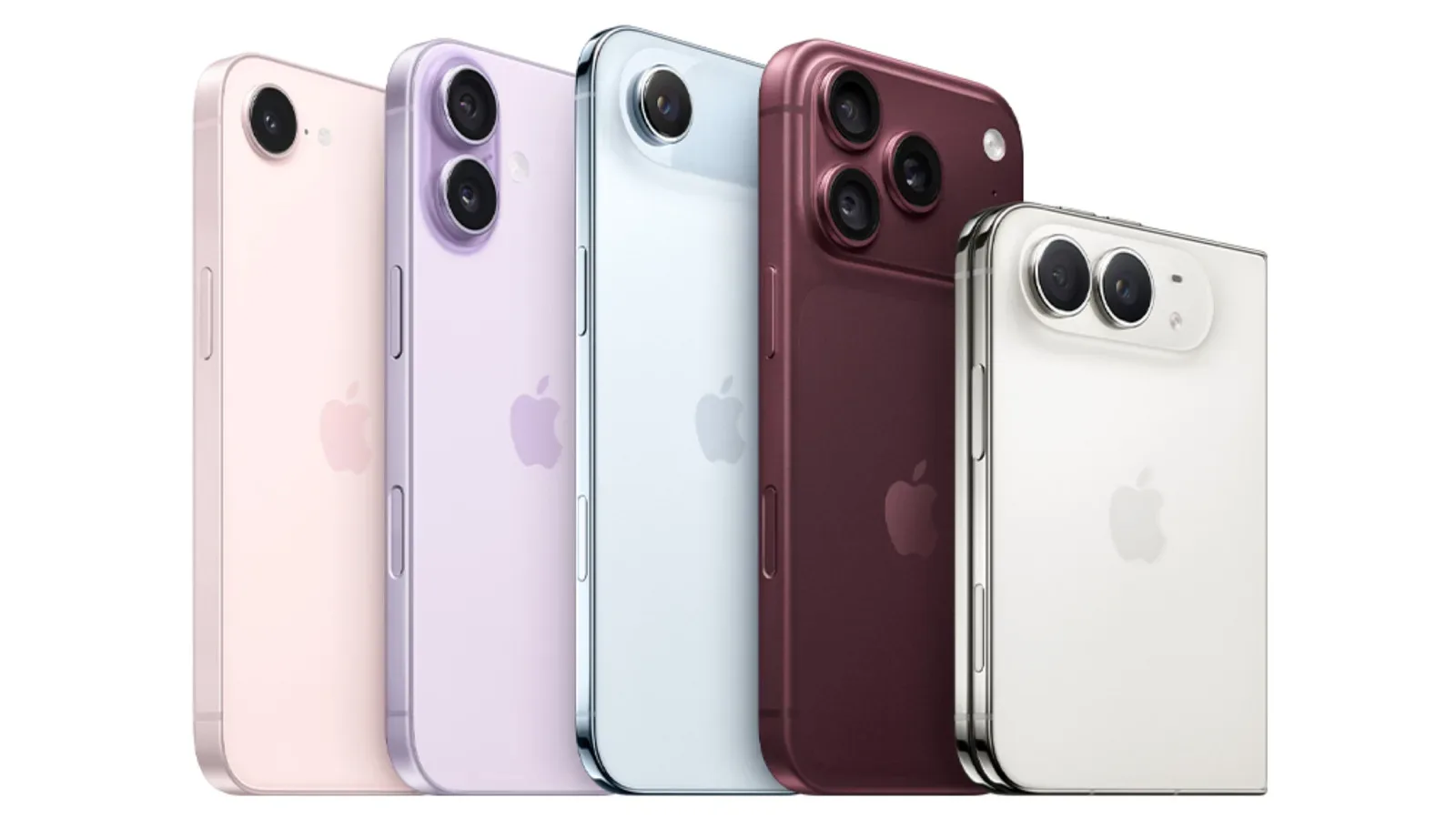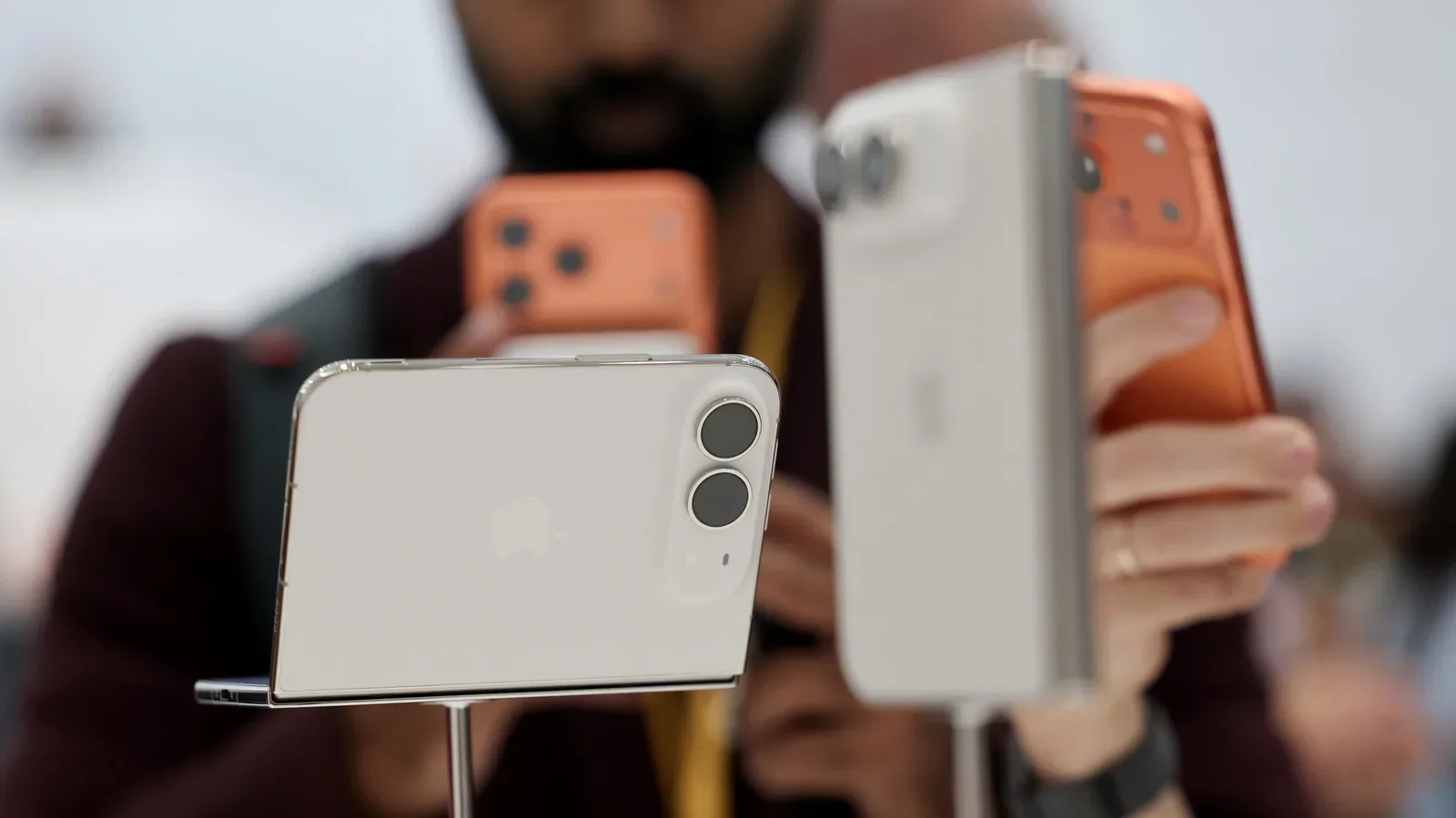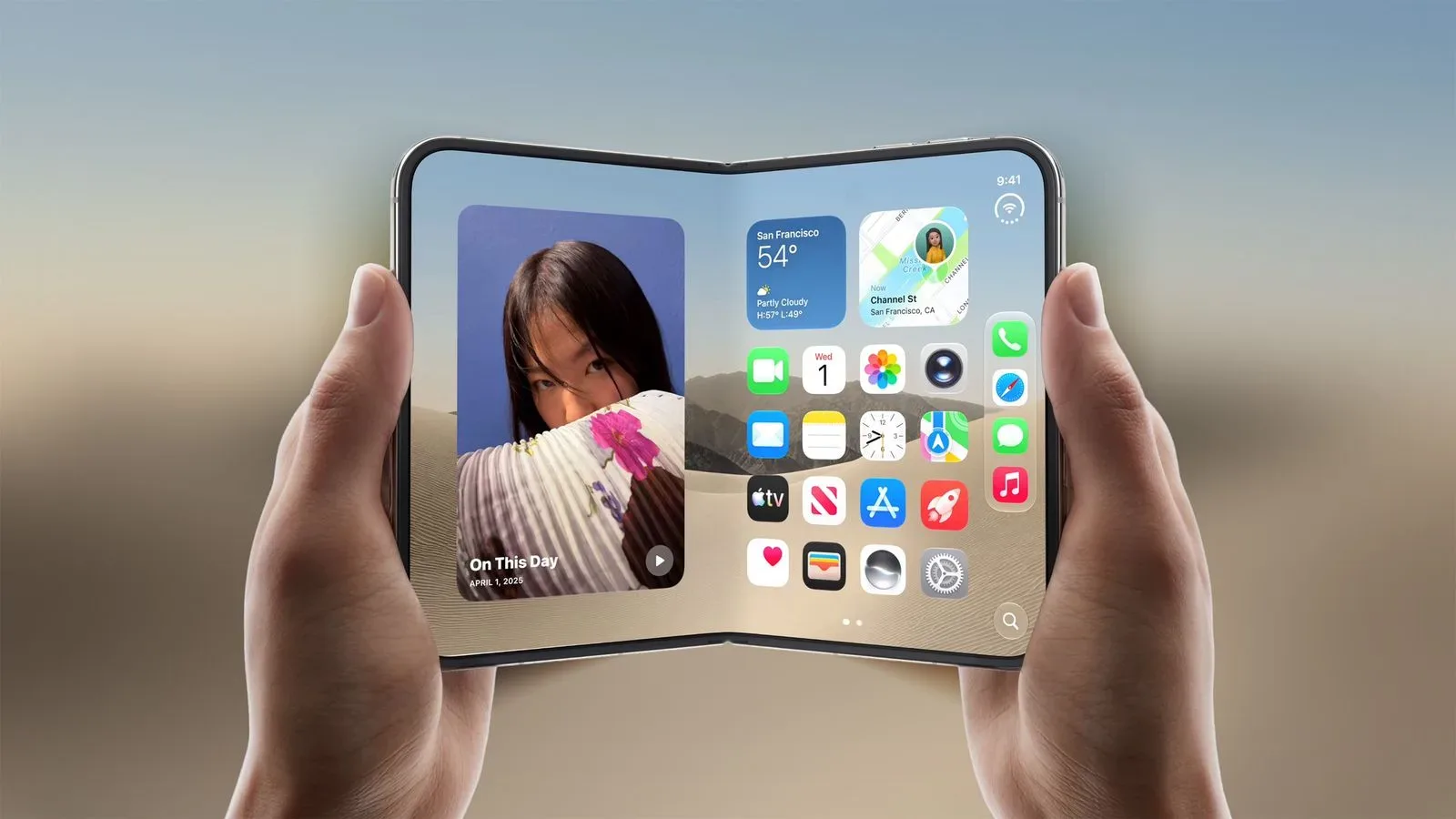
Apple is reportedly exploring a major authentication change for a future iPhone Duo: Face ID hardware placed beneath the foldable phone’s outer display. Prototypes for a second-generation model are said to include the technology, although testing hardware is not the same thing as a locked-in product feature.
That distinction matters. The first-generation iPhone Duo is due to launch tomorrow at a starting price of $1,999, and it uses a fingerprint reader built into its side button rather than Apple’s facial-recognition system. The reported work suggests Apple is trying to close that gap in a successor expected next fall, but there is no confirmation that the second-generation device will ultimately ship with Face ID.
For potential buyers, this is best read as a look at Apple’s direction rather than a reason to count on a feature. Prototype decisions can change when a component affects a device’s thickness, reliability, display design, production complexity, or power needs. In a thin foldable, those trade-offs are likely especially acute.
What is reportedly being tested
The key claim is not simply that Apple wants Face ID on a foldable. It is that the company is testing facial-authentication components under the outer display of an iPhone Duo successor.
Face ID is Apple’s facial authentication approach. The supplied reporting describes it as relying on depth-sensing components, meaning it requires hardware beyond a conventional front-facing camera. Those parts need physical room inside the chassis and a workable path through or around the display. On a conventional phone, accommodating them is already a visible industrial-design consideration. On a foldable handset designed to stay thin, the packaging problem becomes more difficult.
Putting components beneath a display would potentially preserve more uninterrupted screen space on the outside of the device. It could also avoid forcing the facial-authentication hardware into a separate visible cutout or other obvious design element. But the report does not establish how Apple’s implementation looks, how it performs, whether it works in every use position, or whether it has reached a final stage of development.
The most important word is therefore prototypes. Prototype units are useful evidence that engineers are investigating an option. They do not establish that the feature has passed every design and manufacturing hurdle, and they do not constitute an announcement of the next iPhone Duo’s specifications.
Why the current Duo uses a side fingerprint sensor
The first-generation iPhone Duo uses a fingerprint sensor integrated into its side button, in a setup compared with the iPad. The stated reason is straightforward: the current device’s thin design leaves limited interior space for the depth-sensing hardware needed by Face ID.
A side-mounted fingerprint sensor is a pragmatic answer to that constraint. Instead of devoting internal volume and display-area accommodation to facial scanning hardware, the device can authenticate when a user touches the power button. That is familiar behavior for many tablet users and can make particular sense for a device that may be handled folded or unfolded.
Still, Face ID and fingerprint authentication create different user expectations. Facial authentication can be convenient when the device is already facing its owner; a side-button sensor asks for a deliberate press or touch. Neither approach is inherently presented here as superior. The practical point is that a transition to Face ID would represent a meaningful hardware-design change, not merely a software update or menu option.
It could also affect how the outer screen feels in everyday use. The outer display is the screen available while the phone is closed. If under-display Face ID works as intended, it may allow Apple to offer facial authentication on that surface without adding another apparent interruption to the display. Whether that is worth the engineering effort depends on quality and consistency, details that remain unknown.
Thin foldables make every component decision consequential
Foldable phones ask engineers to fit the usual phone hardware around an additional set of physical requirements. A handset needs displays, cameras, battery capacity, antennas, logic boards, thermal management, and authentication components. A foldable also needs a folding mechanism and must maintain a slim profile in the process. The reporting specifically identifies limited space as the obstacle for Face ID in the current iPhone Duo.
That context explains why the reported development should not be treated as inevitable. Apple may be evaluating whether smaller components can fit without compromises it is unwilling to make elsewhere. It may also be determining whether software improvements can help the system meet its requirements in a smaller package.
Earlier reporting had pointed to smaller parts and advances in artificial intelligence as factors that could enable Face ID in a later iPhone Duo generation. In this context, artificial intelligence should not be read as a vague promise that software eliminates hardware. The facial system still needs the relevant sensors. Rather, the implication is that improved processing may help a smaller or differently arranged set of components deliver acceptable results.
There is no detail yet on the components being used in the prototypes, the role of artificial intelligence in the reported testing, or any performance comparison with existing Face ID implementations. Those omissions are significant. Until Apple itself provides specifications, claims about speed, security, appearance, and real-world behavior would be speculation.
A more concrete sign than an earlier long-range prediction
The new report is notable because it moves beyond a general expectation that Face ID might arrive in a later iPhone Duo. In September, the same reporting stream suggested that a third-generation model could gain Face ID and a dedicated telephoto camera, assisted by component miniaturization and advances in artificial intelligence.
Testing under-display Face ID in second-generation prototypes is more specific than a broad forecast about eventual upgrades. Even so, the timing remains uncertain. The report says Apple has not made a final decision on including the feature in the successor expected next fall. It is entirely possible for a company to trial a technology in one cycle and hold it for a later device.
The dedicated telephoto camera mentioned in the earlier prediction is separate from the latest prototype claim. There is no basis here to say that the second-generation iPhone Duo will get that camera, that it is being tested alongside Face ID, or that it has moved forward on the same timetable. It remains an earlier possibility associated with a prospective third-generation device.
For readers keeping tabs on the broader intersection of hardware and interactive entertainment, device rumors should be kept separate from actual gaming-platform news, such as this report on Pantaloon’s Playbill subscription space for indie games. The iPhone Duo information concerns phone authentication and physical controls, not a new gaming service, game feature, or performance claim.
The Action button is also under consideration
Face ID is not the only possible change being discussed for a future iPhone Duo. Apple is reportedly considering an Action button for a later model. The current device notably does not have one.
An Action button is a physical control intended to give users a dedicated shortcut. The supplied information does not say which actions it would support on an iPhone Duo, whether its function could be customized, or whether the button is being tested specifically for the second generation. As with Face ID, its status is under consideration rather than confirmed.
The detail does, however, point to an interesting theme in the reported work: Apple may be reassessing how people interact with a foldable iPhone at the hardware level. The fingerprint sensor, the potential facial-authentication system, and a prospective extra button all concern direct access to the device rather than an internal specification that users never touch.
What prospective buyers should take from this now
Anyone weighing the first iPhone Duo should evaluate the announced product on its own terms: it launches tomorrow, begins at $1,999, and uses a side-button fingerprint sensor. A successor with under-display Face ID has not been confirmed, even though prototypes reportedly include it.
People who strongly prefer facial authentication may reasonably see this as a development worth monitoring. But it would be premature to assume that waiting guarantees a Face ID-equipped second-generation model next fall. The company is still testing the hardware and has reportedly not finalized its shipping plans.
Conversely, the current model’s fingerprint approach is not presented as a temporary malfunction or a missing software switch. It follows from a physical limitation in the thin foldable design. That makes the first-generation Duo’s authentication choice a core design decision, while the prototype points to Apple’s attempt to expand its options as the hardware evolves.
For now, the reliable facts are limited but meaningful: the inaugural iPhone Duo arrives tomorrow for $1,999 and uses a side-mounted fingerprint sensor; Apple is reportedly testing under-display Face ID in second-generation prototypes; and neither Face ID nor an Action button has been confirmed for the next device. Everything beyond that—including the exact model that receives the upgrades and the user experience they may enable—remains unsettled.