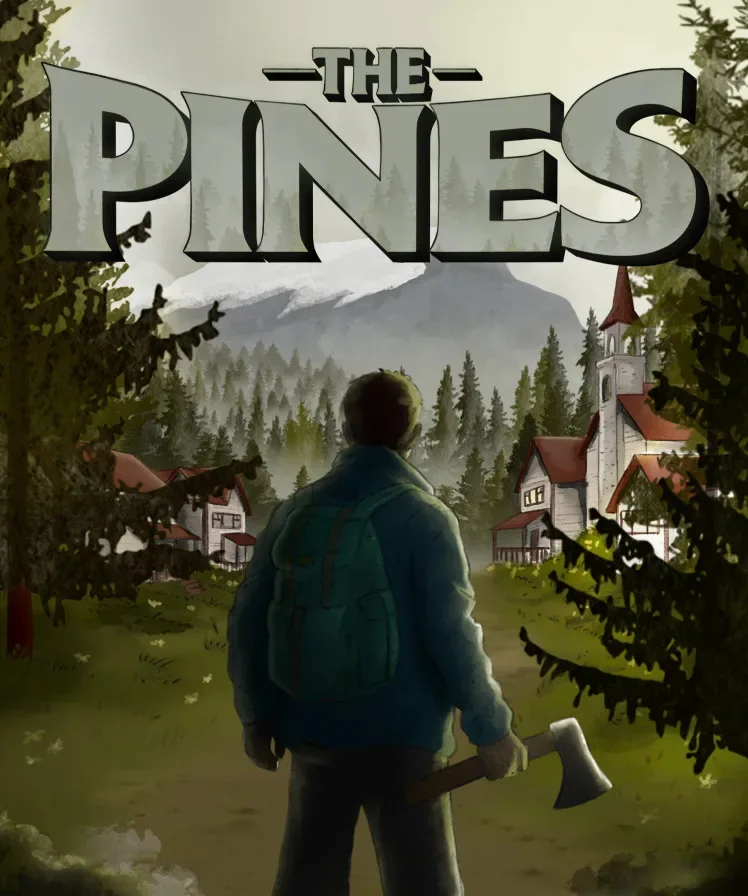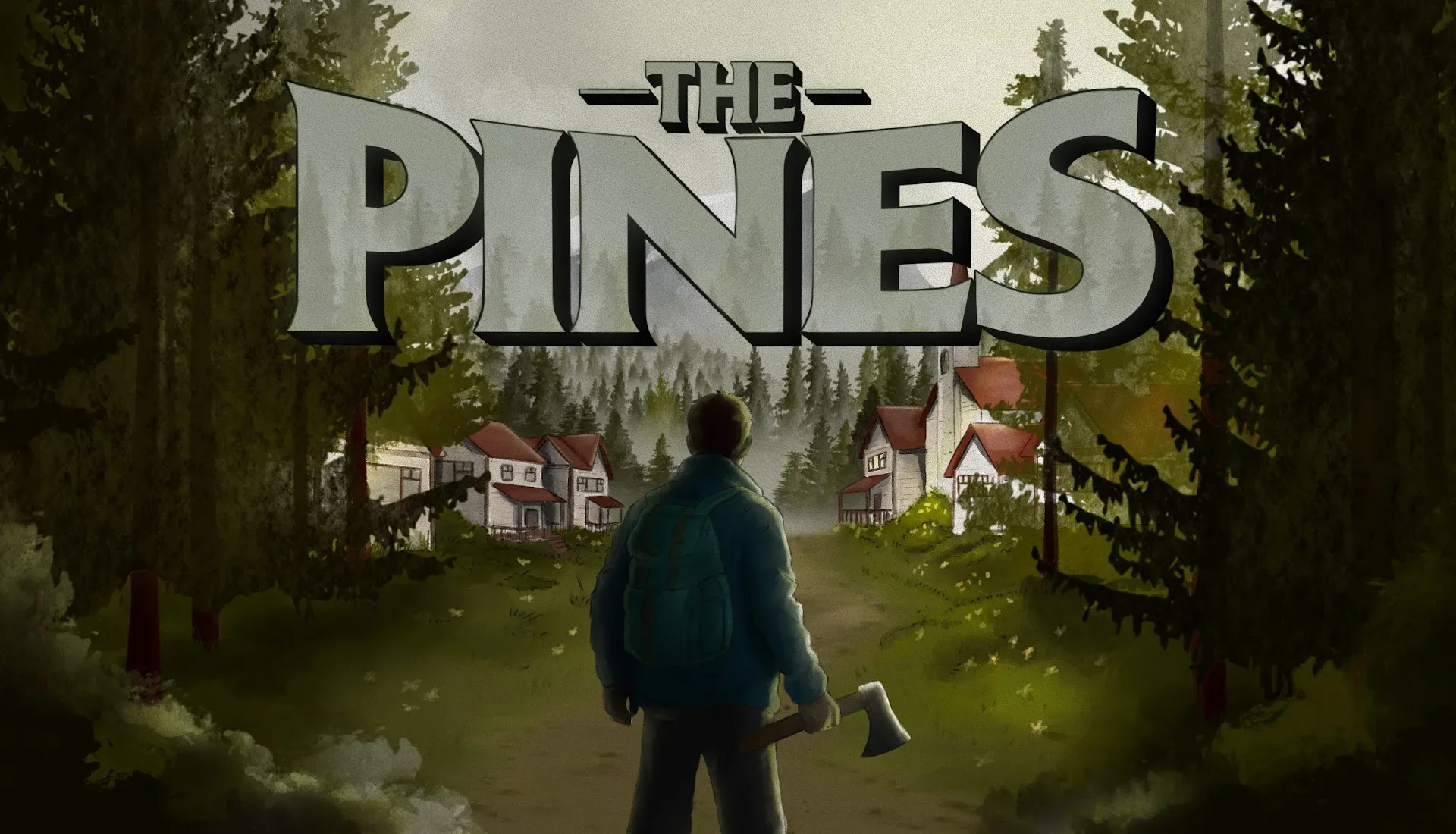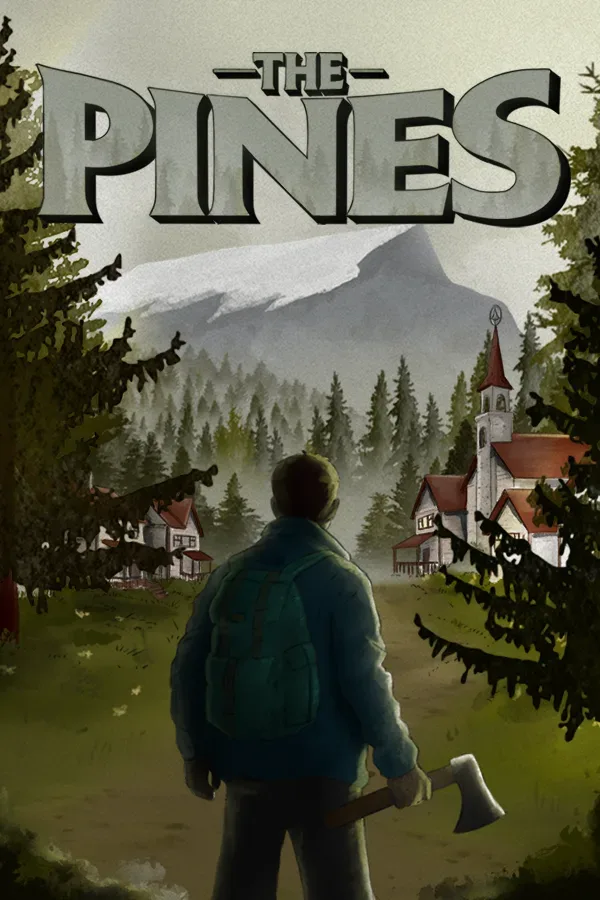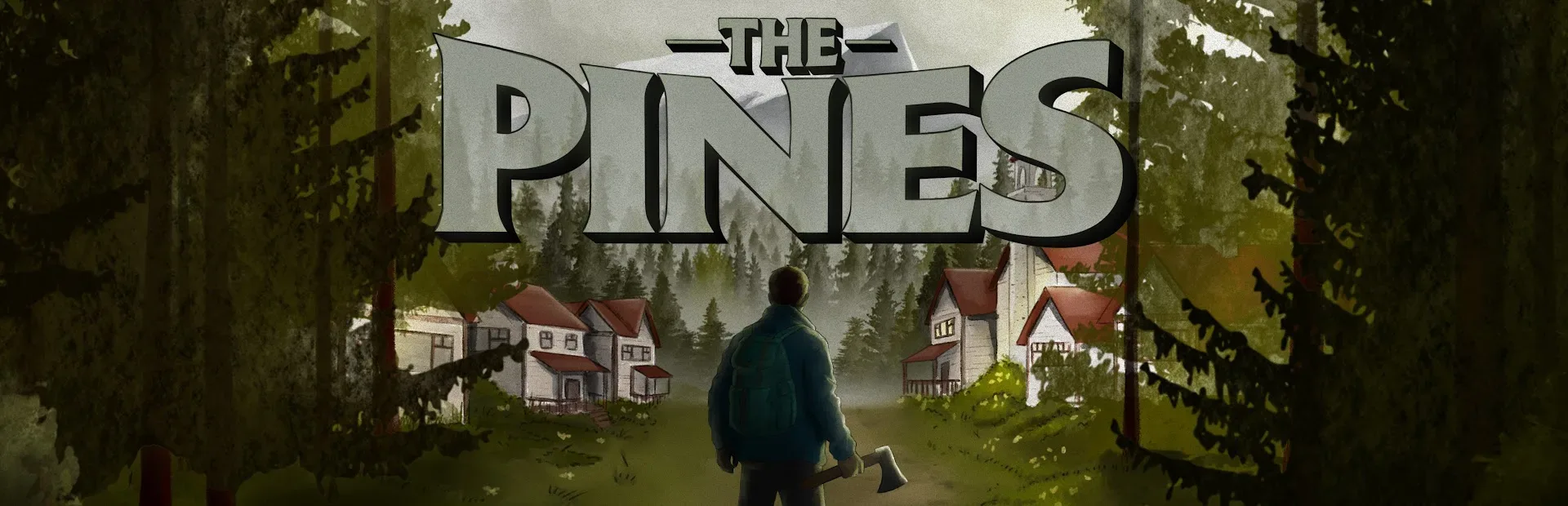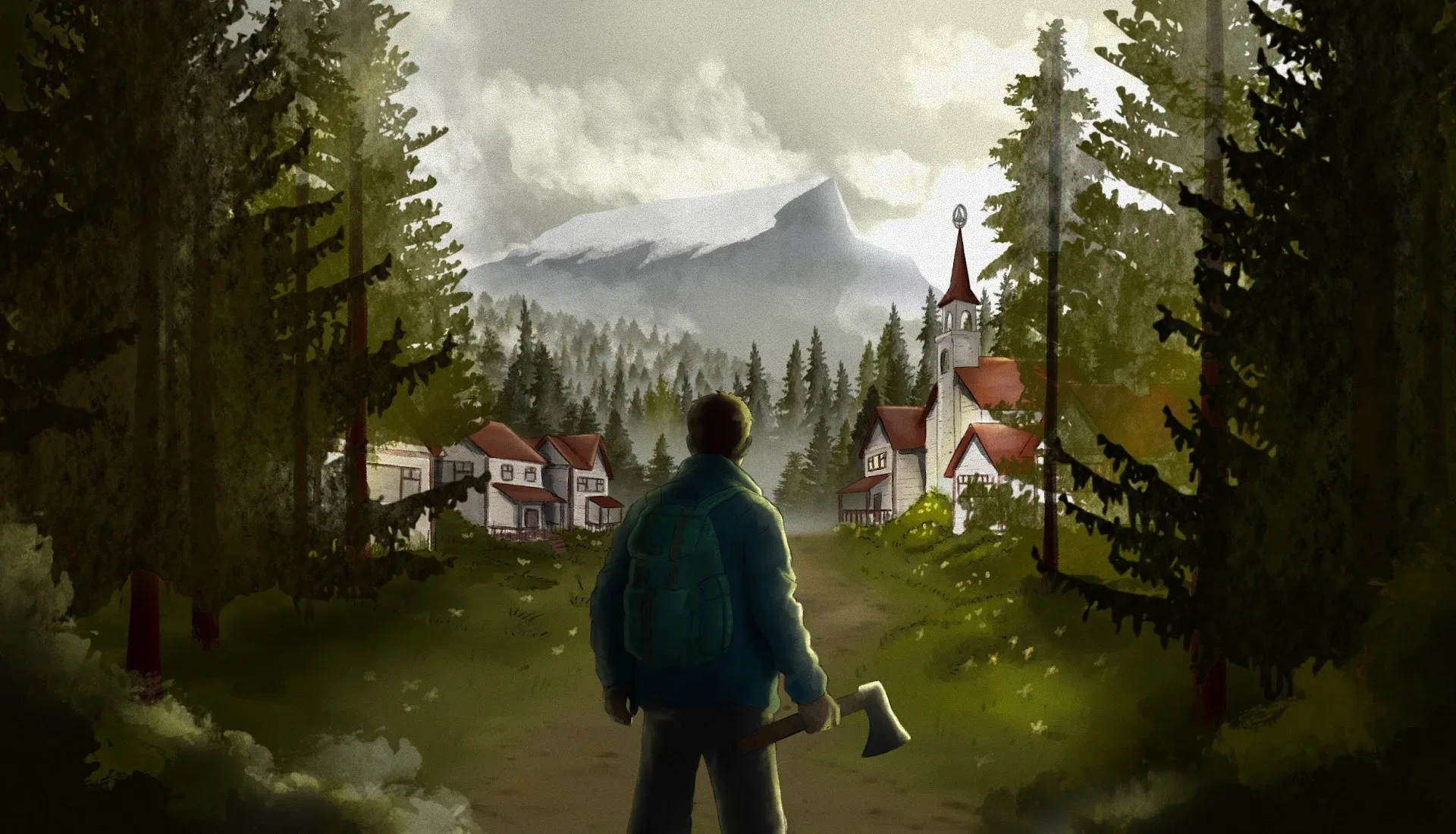
Studio Abattoir’s psychological horror RPG The Pines has found a global publishing partner in Silver Lining Interactive. Announced on October 7, 2026, the agreement puts the publisher behind a game built around an especially rotten version of self-improvement: a secluded therapy retreat, a former detective pursuing the shadow of a cold case, and a setting where investigating the wrong person may turn them into a recurring nightmare.
The game casts players as Edward Walker, a burnt-out former detective who heads to the retreat after a cold case. That ostensibly tranquil destination conceals a conspiracy, and the player’s task is to investigate its woods, uncover what is happening around the residents, and survive when the retreat becomes lethal.
That broad setup carries familiar horror ingredients—an isolated location, buried secrets, a protagonist with emotional baggage—but The Pines is framing its tension around systems that could make each playthrough’s social landscape less stable. Its open-world investigation, branching decisions, scarce ammunition and named Stalker System are the core details currently attached to the project. No release date or platform list has been provided.
A horror RPG where curiosity can make the woods worse
The most distinctive announced feature is the Stalker System. Certain residents can become persistent threats if Edward provokes them or digs too deeply into their affairs. Rather than simply functioning as isolated encounters, these characters may pursue him through the forest. The stated design also leaves room for confrontation once the player has become strong enough.
“Persistent threat” is the important phrase here. In conventional combat design, an enemy is often a problem contained to a room, a mission, or a scripted sequence. A stalker is a problem that follows the player beyond the moment that created it. That changes the value of ordinary actions: exploring a route, gathering information, or deciding whether to interfere in a resident’s life can carry a longer tail than simply obtaining a clue or winning a fight.
It also gives the investigation premise a sharp mechanical edge. Edward is not just collecting answers in a neutral detective loop. Based on the details revealed so far, inquiry itself can increase danger. Players may therefore need to weigh the benefit of learning more against the possibility that a person they investigate becomes a repeated hazard. Whether the final game makes those consequences clearly legible or deliberately ambiguous remains unknown, but the premise is built to make suspicion feel active rather than atmospheric.
Silver Lining Interactive’s Ross Griffith described the intended emotional progression as immediate immersion followed by panic, paranoia, horror and harsh consequences. That is a pitch, not proof of how the finished game will feel, but it aligns closely with the revealed systems. A forest is more unnerving when a previous decision may have put someone in it looking for you.
Choice-driven consequences extend beyond a dialogue tree
The Pines combines its investigation structure with choice-driven systems. Decisions are said to shape Edward’s story and affect the lives and fates of the other retreat residents. Those choices can produce allies, enemies, and lasting consequences.
In role-playing game terms, a choice-driven system means player decisions affect later narrative or systemic states rather than merely changing a line of dialogue. The announced examples in The Pines suggest choices may change both relationships and the hazards Edward faces. An ally could plausibly alter the social texture of the retreat; an enemy may be more than a one-scene disagreement if that character is eligible to become a stalker. The exact relationship rules, branching structure, and number of possible outcomes have not been disclosed.
That uncertainty matters. “Choices matter” can describe anything from a handful of ending variations to a deeply interwoven network of character outcomes. For now, the concrete takeaway is narrower and more useful: the game explicitly connects decisions to residents’ fates, Edward’s personal story, and the possibility of making enemies. Players expecting a fixed sequence of horror set pieces should instead watch for a game that wants social decisions to have survival implications.
Studio Abattoir founder Kevin Jochems characterized the concept as a self-help book brought to life in a horrifying form, with decisions that can create unforeseen results. It is a suitably sour foundation for a game set in a wellness retreat. A place that promises healing and guidance becomes the setting for manipulation, conspiracy and violence; the language of personal growth is turned into a source of threat.
Survival is meant to rely on timing, not an overflowing arsenal
The combat setup reinforces the game’s survival-horror direction. Firearms and ammunition are scarce, while melee implements including bats and axes are more common. Edward can dodge, parry and strike, and the game places an emphasis on awareness and timing.
Resource scarcity is a foundational survival-horror tool: limited ammunition makes each firearm shot a decision instead of a default response. It can encourage players to avoid fights, preserve supplies for a worse situation, or use close-range weapons when taking that risk is preferable to losing bullets. The announced details do not specify inventory limits, crafting, weapon durability, healing, enemy behavior, or whether ammunition can be replenished, so those parts of the survival loop remain unconfirmed.
The confirmed dodge-and-parry options are notable because they suggest melee encounters will not be solely about absorbing damage while swinging an improvised weapon. A dodge is an evasive move used to avoid an incoming attack; a parry generally refers to a precisely timed defensive action that stops or deflects it. In a game where firearms are limited, these mechanics could be vital tools for preserving health and ammunition. They may also make facing a stalker a more viable option later, in line with the promise that persistent pursuers can eventually be confronted if Edward grows stronger.
Still, players should avoid assuming that “stronger” necessarily means conventional numerical leveling. The announcement does not explain whether growth comes through skills, equipment, story progression, resources, or another system. What is confirmed is the intended arc: some threats can begin as something to fear in the woods and later become something Edward may choose to face.
Open-world investigation needs tension with direction
The game is also described as an open-world investigation. Here, “open world” establishes that the player will investigate beyond a tightly linear path; it does not yet establish the size of the setting, how areas unlock, whether the map changes over time, or how freely objectives can be approached. The known locations are the retreat and its surrounding woods.
For a horror investigation, that format can support two competing sensations. Freedom allows players to pursue leads and explore at their own pace. But it can also make uncertainty heavier: a player may choose a route without knowing whether it holds a clue, a resource, a resident in danger, or the person they have made into an enemy. The Stalker System appears designed to exploit that second possibility by making travel through the forest potentially personal.
The publisher’s involvement is practical news for a project led primarily by one developer. Jochems is developing The Pines primarily, with key artwork from Daphne Betten and motion-capture and voice contributions from Yaron Mesika. The newly announced partnership gives the game global publishing support while preserving the small credited creative group at the center of its development.
It is another reminder that publishing announcements matter differently from release announcements. This news confirms the business relationship and introduces the game’s central concept and feature set, but it does not confirm when players can buy it, where they can play it, or what its final scope will be. For a separate look at the pressures and changes surrounding game production teams, see our report on developers returning to Bit Reactor’s Star Wars Zero Company team.
What is confirmed—and what is still waiting in the trees
- Confirmed: Silver Lining Interactive will publish The Pines globally.
- Confirmed: Edward Walker is a former detective who visits a secluded therapy retreat in connection with a cold case.
- Confirmed: The game includes open-world investigation, player choices affecting residents and story outcomes, and combat centered on scarce guns, melee weapons, dodging and parrying.
- Confirmed: Some residents can become recurring stalkers after provocation or extensive investigation, and can eventually be confronted.
- Not yet detailed: Release timing, platforms, price, the exact form of character progression, and the full structure of the game’s branching consequences.
That leaves plenty unanswered, but the available outline is unusually coherent. The Pines is not presenting investigation, choices, combat and pursuit as separate feature bullets. Each is positioned to feed the others: investigations can create resentments, resentments can create stalkers, stalkers make exploration more dangerous, and scarce ammunition makes every decision about confrontation matter. For a horror RPG about a retreat where therapeutic calm masks something malignant, that feedback loop is a promisingly unhealthy one.