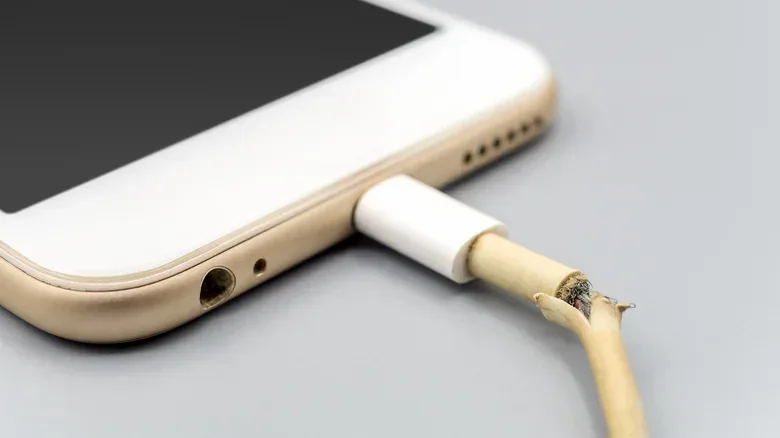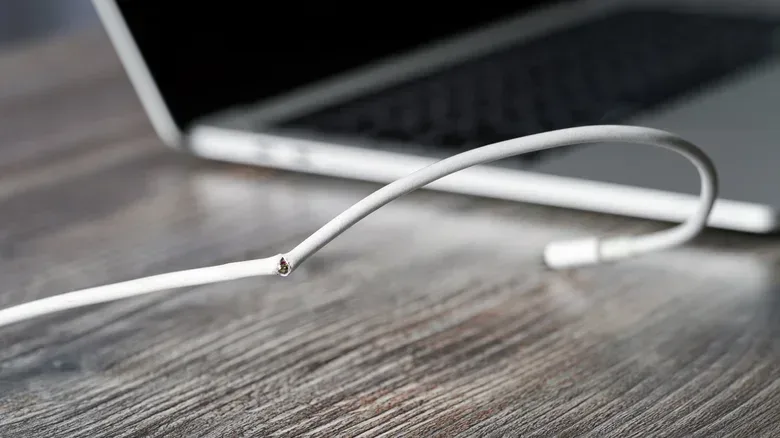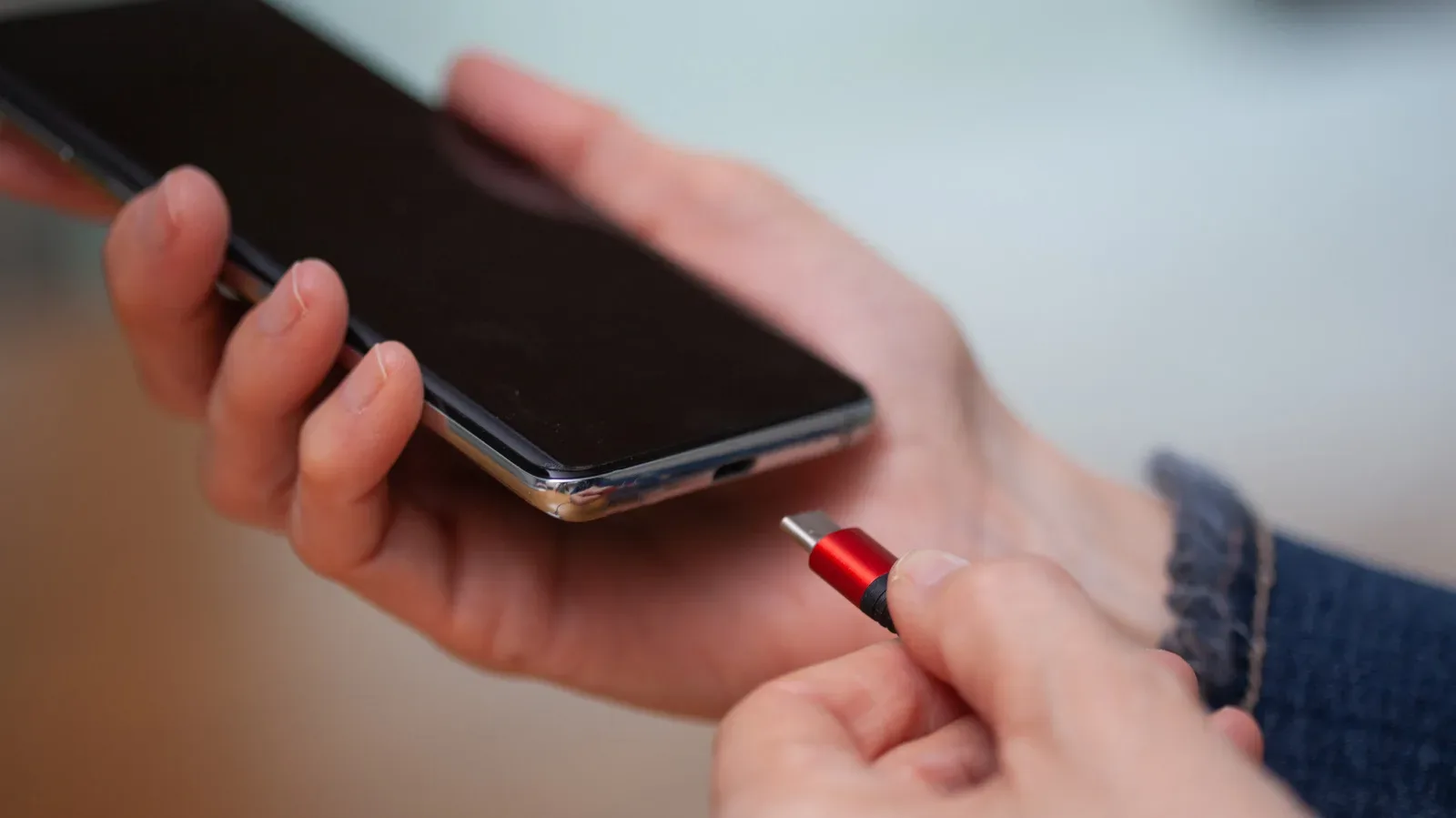
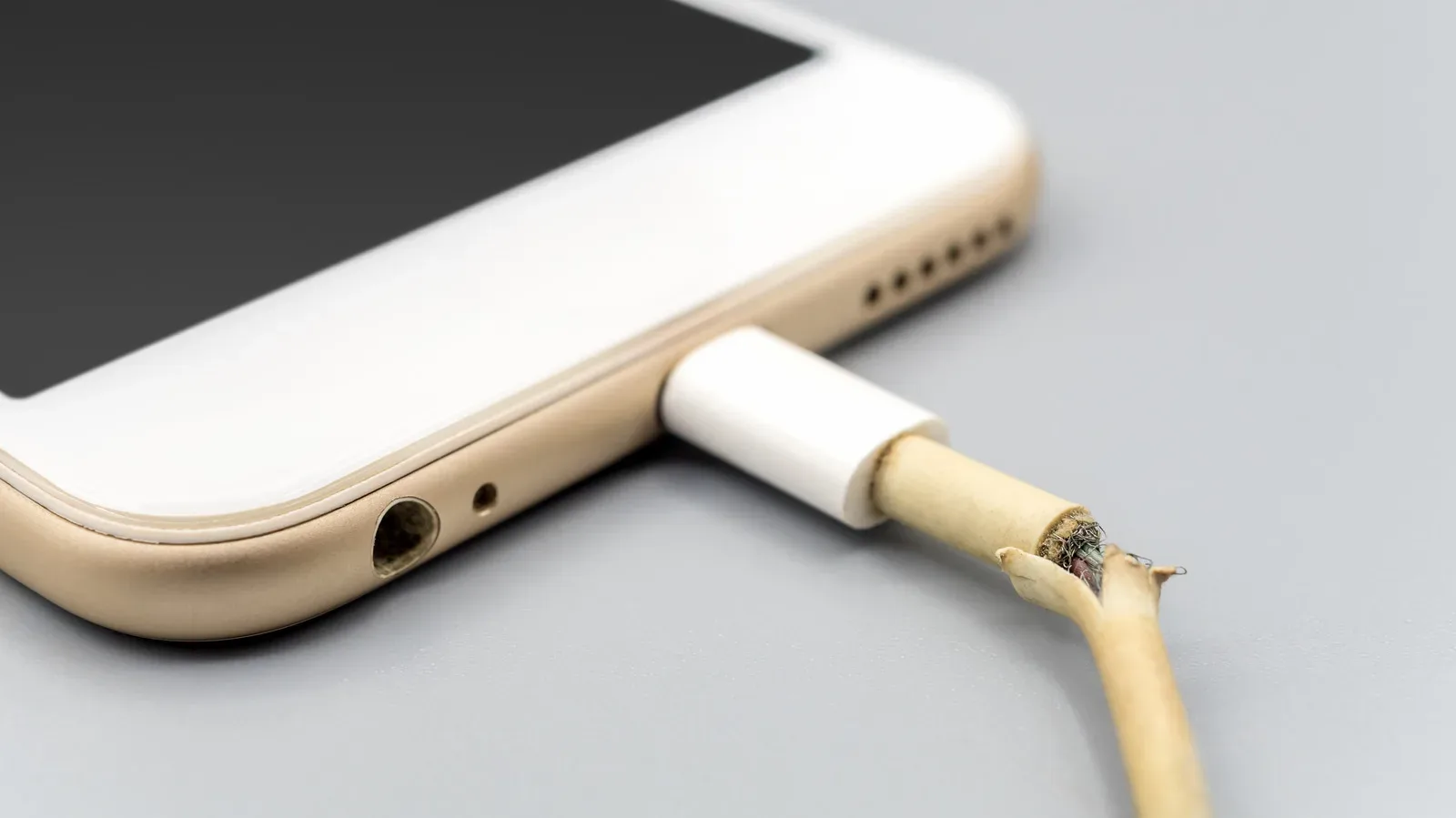
Every desk, backpack and console corner seems to have one: the charging cable with a split sheath, a connector that only works at a suspicious angle, or a plug that has to be positioned with the precision of a speedrun glitch. It may still charge a phone, controller or handheld, which makes it tempting to keep around. But “still works” is not the same thing as “still safe.”
A charging lead has a deliberately unglamorous but important task: move power from the charger to a device without overheating, failing intermittently or exposing anyone to an electrical hazard. Repeated plugging, unplugging, twisting and yanking by the cable rather than the plug all put stress on it, particularly where the wire meets either connector. Eventually, the outer material can split and the fine conductive strands inside can wear down—even before the outside looks obviously battered.
The practical call is usually simple. If a cable is frayed, visibly split, hot in use, unreliable, or needs to be bent or held in place to work, stop treating it like an eccentric but lovable piece of kit. Replace it. A low-cost cable is not worth risking a device’s port, its battery health, a burn or, in the worst case, a fire.
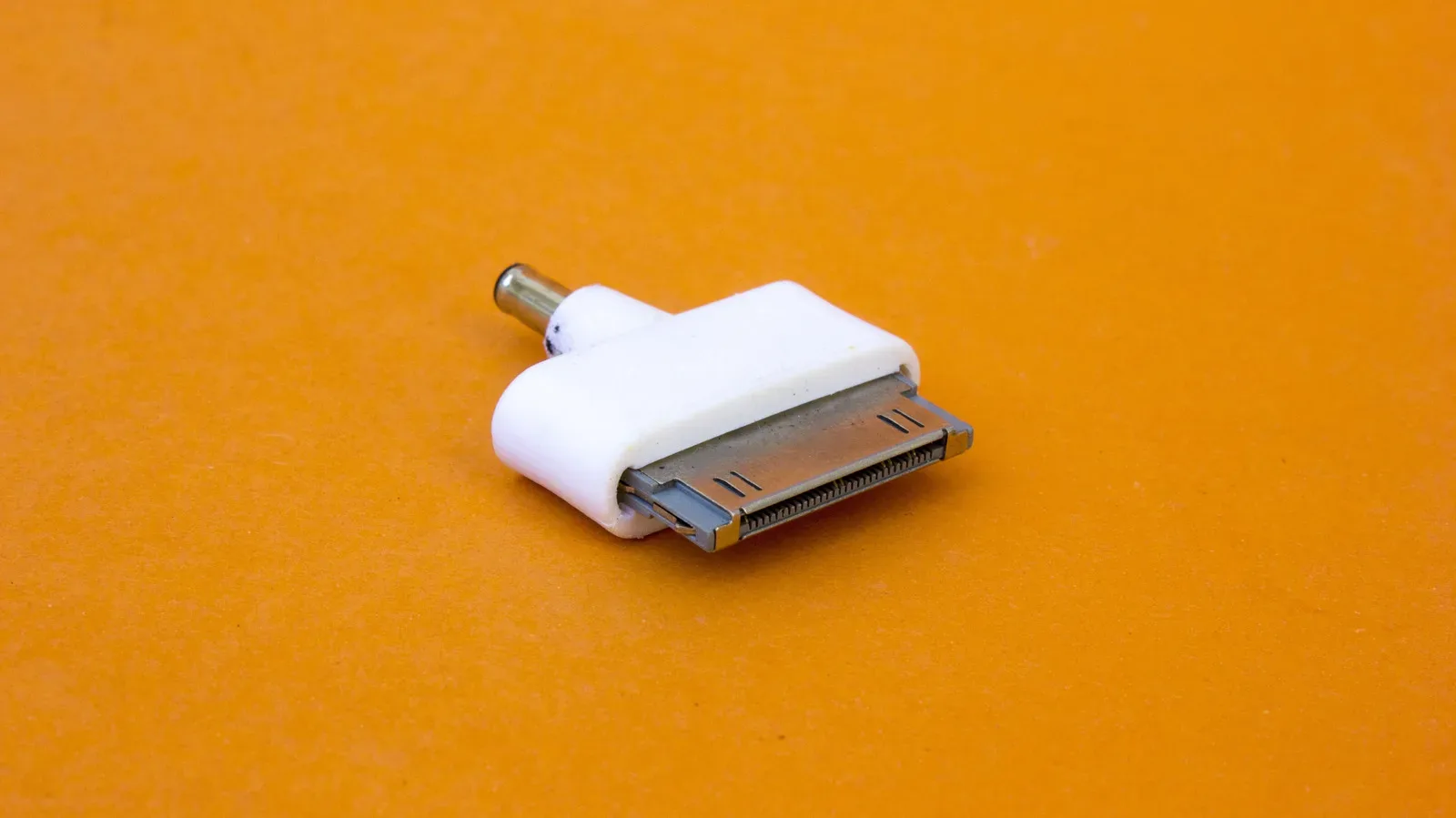
For a little historical context on why charging hardware can feel like a drawer full of archaeological artifacts, see our look at the connector battle before USB-C. Whatever connector a cable uses, however, physical damage deserves the same caution.
Why a damaged cable can get hot even when it still charges
The key term here is electrical resistance. In plain language, resistance is how much a material opposes the movement of electric current. A healthy cable contains multiple fine metal strands that share the job of carrying that current. When repeated flexing or pulling breaks some of those strands, the remaining strands have to carry more of the load.
That reduced pathway increases resistance. As current moves through the damaged section, more energy is converted into heat, concentrated in a small area. The issue can become more pronounced during fast charging, which uses higher current than slower charging arrangements. A lead can therefore remain functional enough to deliver power while becoming a much worse route for delivering it safely.
That is why a charging connection that cuts in and out should not be dismissed merely as annoying. It may be an early warning that the cable’s internal connection is compromised. Likewise, a warm or hot connector is not a performance quirk to solve by turning the plug around, wedging it under a book, or finding the one angle at which it behaves.
Some charging equipment has protective measures aimed at conditions such as overheating, excessive current or short circuits. Those protections are useful, but they are not permission to keep using damaged gear. A connection can still heat up despite current remaining within the system’s expected limits. A phone may display a temperature-related warning if it supports that feature, but waiting for a warning turns a basic inspection problem into a gamble.
The warning signs that mean a cable should leave active duty
A cable does not need to be dramatically shredded to be a poor candidate for continued use. Internal damage can precede an obvious tear. Still, a visible check is worthwhile whenever a lead starts misbehaving.
- Charging repeatedly starts and stops. A shaky connection may be inside the cable, at the plug, or in the device port.
- The cable works only when held, bent or propped at a particular angle. This is a temporary workaround, not a repair.
- The outer sheath is cracked, split or frayed. Tape can cover a split but cannot restore broken strands within the wire.
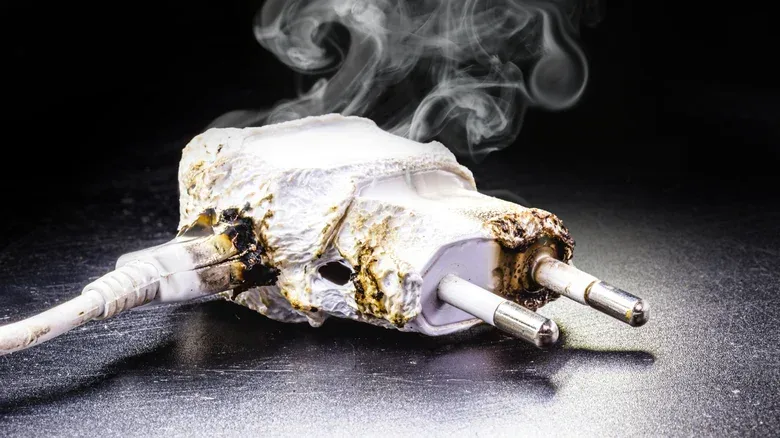
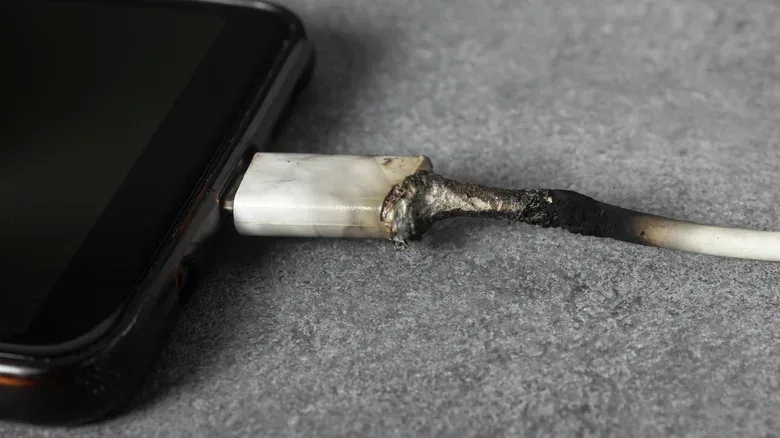
- A connector becomes unusually hot. Heat around the plug can cause burns and may soften or melt surrounding plastic.
- Metal or internal material is exposed. Stop using the cable rather than handling it as a normal accessory.
These signs are especially relevant around the strain-relief sections—the flexible sleeves near either end of a cable—because those are the points that repeatedly bend. Pulling a plug out by its wire instead of gripping the connector adds stress exactly where a cable is most vulnerable. It is an easy habit to overlook because the damage can build gradually.
What is actually at risk?
The obvious immediate risk is heat. A damaged connector can become hot enough to burn fingers or melt the plastic around it. A frayed cable also raises the chance of shock. USB leads operate at low voltage, but that does not make exposed or damaged equipment something to chance, especially where an adapter is involved or moisture is present.
There are device risks too. Inconsistent power can potentially harm a battery or reduce its long-term health. A compromised electrical connection may also damage a USB port. Those outcomes turn a cheap cable into an expensive problem, particularly for devices whose ports are not straightforward to repair.
Fire is the severe, less likely outcome—not the inevitable fate of every battered lead. Properly functioning charging equipment is intended to have safeguards against faults such as short circuits and excessive current. But damaged equipment, and especially poorly made equipment, reduces the confidence anyone should place in those safeguards. The consequences of a fire are plainly far beyond the loss of a cable.
Nor should a household circuit breaker be treated as a personal cable inspector. A breaker is designed to respond to faults in the home circuit. Depending on the amount of current involved, a damaged cable can become dangerously hot without drawing enough power to trip the breaker and shut everything down. The absence of a blackout is not evidence that a charging setup is healthy.
Do not trap the heat
Even a cable and charger that appear undamaged should not be used in a way that traps heat. Charging a device beneath a pillow or blanket is a poor setup because those materials hold heat around the device and its connections. A worn cable makes that arrangement worse, but the rule applies regardless of a cable’s condition.
This is a useful distinction: cable condition and charging environment are separate safety questions. Replacing a frayed lead is sensible, but it does not make charging under bedding sensible. Conversely, using a clear, ventilated surface does not make a damaged lead fit for use. The safest approach handles both factors at once.
Tape is a cover, not a repair
Electrical tape is often deployed as if it were legendary loot: a tiny item expected to solve a much larger problem. It can cover a damaged area, but it does not reconnect the broken fine strands inside a cable or restore the original design and protection. Any tape can make a split look less alarming while leaving the electrical problem untouched.
At most, wrapping a damaged spot should be viewed as a very short stopgap while awaiting a replacement, not as a permanent return to service. It is not a substitute for a properly repaired and tested cable, and most people do not have the specialist skills or equipment needed to strip, repair and test one safely. The sensible destination for a cable that has reached this condition is recycling or non-charging reuse, not an indefinite shift on bedside duty.
How to tell whether the cable or port is the problem
Intermittent charging does not automatically prove that the cable is at fault. A device port can also collect debris or develop a problem. Fortunately, diagnosis can begin with a low-drama swap rather than aggressive cleaning or cable acrobatics.
- Try a known-good spare cable. If the replacement works normally with the same charger and device, the original cable is the likely problem.
- Try another charger as a cross-check. This helps separate a cable issue from a charger or adapter issue.
- Inspect the port with a light. Look rather than poke. Debris may be visible, but putting objects into a phone port risks causing damage.
- If debris appears present, keep the approach gentle. With the port facing down, lightly tap the phone against your hand to help loosen buildup rather than inserting tools into the port.
If a known-good cable also fails, the port becomes the stronger suspect. That does not mean a visibly damaged old cable gets a pass; it should still be removed from use. It simply means the device may need attention too.
A small replacement is the practical win
There is a reason worn cables linger: inconvenience. The lead is nearby, it sometimes works, and replacing it can feel like a task for later. But the cost-benefit calculation is unusually clear. Continuing to use a compromised cable risks a much larger bill through damage to a device, an injury, or fire damage. Replacing it removes an unreliable component from the charging chain immediately.
When disconnecting the new cable, grip the plug rather than tugging the wire. Avoid hard bends at either end, and do not use furniture, books or desk edges to pin a cable into a sharp angle. Those small habits will not make a cable immortal, but they address the kinds of repeated strain that wear down its internal strands.
The humble charging lead may never be the star of a gaming or tech setup. That is fine. Its ideal performance is boring: stable charging, no strange heat, no flickering connection and no improvised pose required. When it stops delivering that boring reliability, retirement is the better play.