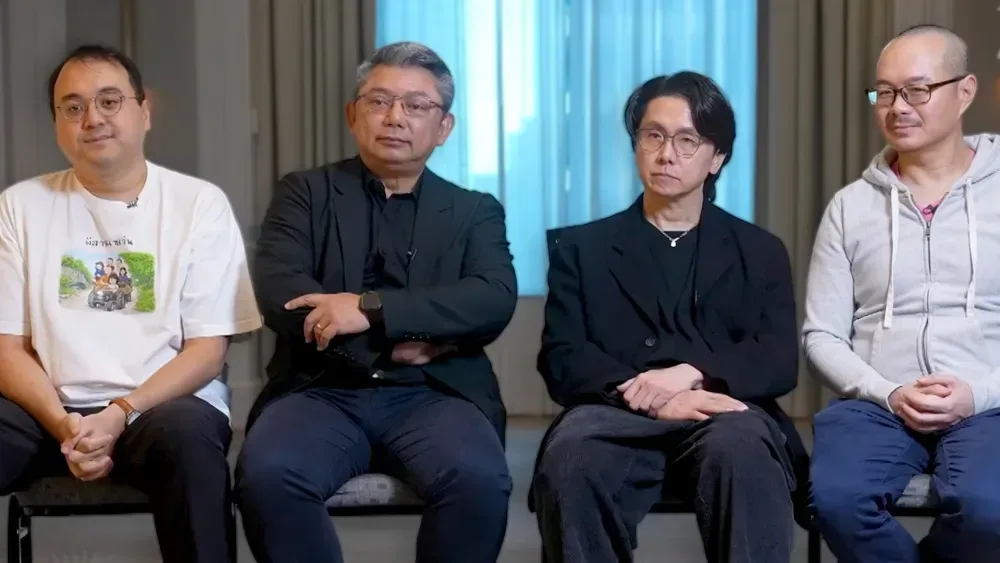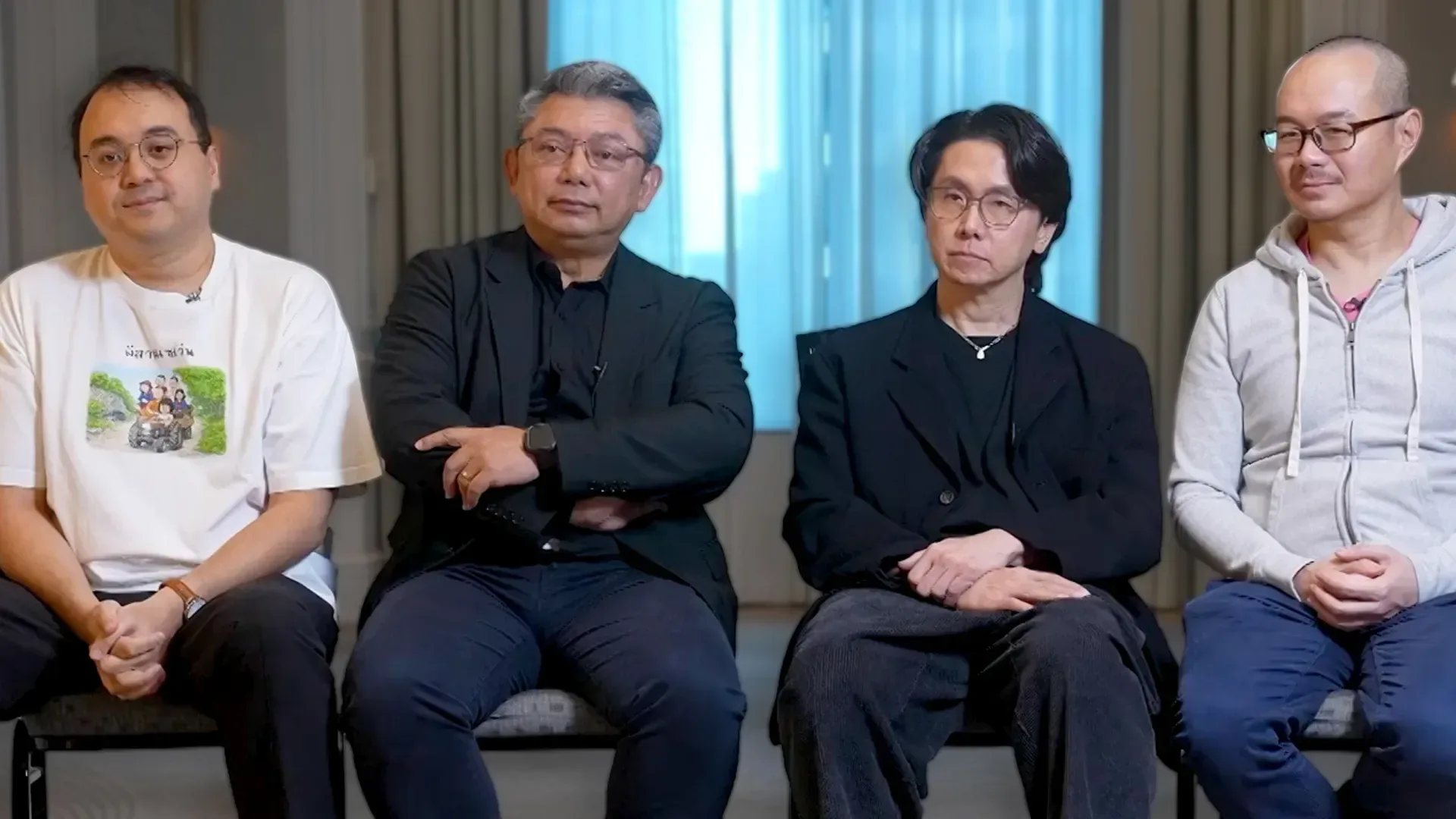
Thailand’s expanding profile on screens around the world is producing a useful double effect: international productions are bringing projects and crew work into the country, while Thai filmmakers are finding more opportunities to put Thai stories in front of global audiences. At a Toronto festival discussion, filmmakers, production figures and tourism officials all returned to the same bigger question: how can that attention become durable rather than temporary?
The evidence of momentum comes from several directions. Banjong Pisanthanakun’s Inherit debuted at the festival, giving Thai horror a major international showcase. Thailand has also hosted high-profile productions including The Creator, Jurassic World: Rebirth, and projects in the Star Wars orbit. Meanwhile, the third season of The White Lotus placed Thai performers, food, dance and locations in front of a huge television audience.
Yet the people working across this landscape are not describing international production alone as the end goal. Their emphasis is on continuity: a regular flow of Thai-made work, wider genre range, pathways for newer creators and a screen identity in which Thailand is valued not merely as a flexible substitute for elsewhere in Asia.
Two connected engines: visiting productions and Thai-made stories
Raymond Phathanavirangoon, producer and founder of the SEAFIC Script Lab, framed domestic filmmaking and incoming productions as mutually reinforcing. International shoots display Thailand’s locations and production capabilities; local films demonstrate what Thai artists can make with those resources and their own cultural perspective.
That distinction matters. A country can be an excellent filming destination without its own directors, writers and producers necessarily receiving sustained international attention. Productions may use landscapes, services and crew expertise while setting their stories somewhere else. Thailand has frequently been used to depict places elsewhere in Asia, a practice that can bring work and technical experience but does not automatically make Thailand itself more legible to audiences.
The stated ambition from the Thai side is broader: keep welcoming global projects, while ensuring more viewers encounter films and series rooted in Thai perspectives. Cod Satrusayang, head of studio at TSixtySix, described that as the next phase of growth—making Thai culture and Thai content appealing to audiences beyond the country so the current momentum does not stall.
In practical terms, that calls for an ecosystem rather than one breakout hit. A visiting production can create jobs for crews and vendors. A local-language project can build creative ownership, help new talent gain credits and give Thai actors and filmmakers work that represents the country directly. The two activities can overlap, but they deliver different forms of value.
Thai cinema already has notable proof points
Pisanthanakun is among the country’s most prominent contemporary filmmakers. His Pee Mak remains Thailand’s highest-grossing film of all time, while his newest work, Inherit, received its festival debut in Toronto. He characterized that premiere as a significant opening for Thai horror, a genre with the potential to cross borders.
Genre travelability is an important concept here. It does not mean a film must erase local character to reach international viewers. Rather, it refers to a work’s ability to find an audience across languages and territories. Horror can be especially useful in that respect because suspense, fear and visual storytelling can connect even where cultural references are unfamiliar. But Pisanthanakun’s argument was not that one genre will carry an entire national cinema. He wants more films, and more kinds of films, to make that journey in a given year.
How to Make Millions Before Grandma Dies is another meaningful marker. It became the first Thai film shortlisted for the Academy Award for Best International Feature Film. A shortlist is not a nomination or a win, but it is a visible stage in the awards process and a sign that a Thai title reached a particularly competitive international conversation.
These examples help explain why “continuity” is more than a slogan. Individual successes can attract attention, but a reliable flow of films across genres gives audiences, distributors and festival programmers more chances to engage with a country’s cinema. It also reduces the burden on any single title to represent every possible Thai story.
The White Lotus and the mechanics of set-jetting
The impact of television can be felt beyond the film business. The third season of The White Lotus filmed in Thailand, and Satrusayang, who worked on the series, said creator Mike White immersed himself in Thai culture with the aim of making the season a love letter to the country. Thai actors, traditional dances, food and locations were among the elements presented onscreen.
Koh Samui illustrates the tourism stakes. After appearing in the show, online interest in the island increased by 88%, while hotel reservations rose by 44%. Those figures give a concrete example of set-jetting: travel motivated by locations viewers have encountered in films or television. It is a straightforward feedback loop. An identifiable place appears in a popular production; viewers seek information about it; some go on to plan trips and make bookings.
The Tourism Authority of Thailand has responded with “Amazing Locations: From Scene to Scenic,” a campaign meant to connect screen exposure to tourism and encourage more productions to shoot in the country. The name reflects a dual strategy. “Scene” points to the production sector, from locations to crews. “Scenic” addresses the audience members who may wish to visit after watching.
For travelers, screen tourism can create a more immediate association with a place than a conventional advertisement. For a production destination, it offers an additional reason to promote the work made there. The challenge, as implied by the broader discussion, is to use that attention without letting famous locations become the only story. A durable screen culture needs room for its people, artists and locally generated narratives as well.
Production volume creates opportunity, but not automatically permanence
Nithee Seeprae, deputy governor of the Tourism Authority of Thailand, said that more than 383 international productions had come to Thailand in the year discussed. He also cited a 5% to 10% rise in production activity over the past year, with revenue increasing by roughly 5% to 10% and nearing about 6 million baht in the prior year.
The precise revenue figure should be read with care because the information presented offers no further breakdown of what is counted or how the measure is calculated. The larger point is clearer: officials see both project volume and revenue rising, and link the influx to additional employment opportunities for Thai crews.
That crew base is central to the country’s appeal. Phathanavirangoon stressed that productions at different budget levels can find support in Thailand. In industry terms, a production service operation is the local infrastructure that helps an outside project work in a country: crews, logistics, locations and on-the-ground coordination. A production service company may be essential to a shoot without owning the finished film or series.
That is why the present expansion has both short- and long-term dimensions. Each project can create immediate jobs. Repeated work can strengthen professional networks and production experience. But long-term creative development requires a parallel commitment to writers, directors and producers who are originating stories, especially emerging filmmakers who need routes into local-language work.
Satrusayang has taken a step in that direction by launching a separate company focused on local-language content and supporting young Thai filmmakers, alongside TSixtySix’s international production work. The split recognizes that servicing visiting productions and developing homegrown projects may demand different business priorities, even when they draw on related skills.
The opportunity is representation, not just backdrop value
Thailand’s current screen moment is compelling because it blends cultural visibility, tourism and industrial capacity. But those strengths do not have to mean the same thing. A series can send viewers toward Koh Samui. A major overseas shoot can employ Thai professionals. A Thai horror film can reach a prominent festival. An awards shortlist can introduce a family drama to viewers who might otherwise never see it.
Together, those developments create a platform. The real measure of its staying power will be whether Thai creators can use it to make an increasing number of films and series that travel internationally without surrendering their specificity. That is the difference between a country that is simply seen on screen and one whose artists are consistently heard through it.
For more on how cinema remains intertwined with release strategy and related media, see our coverage of the planned Cliff Booth novel’s placement between IMAX and Netflix releases.