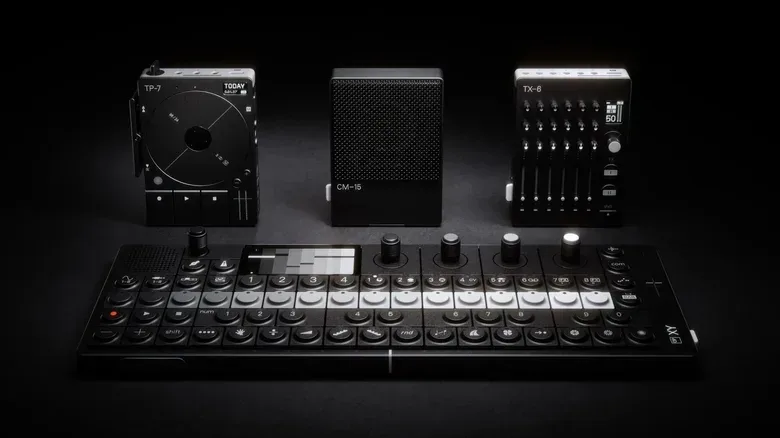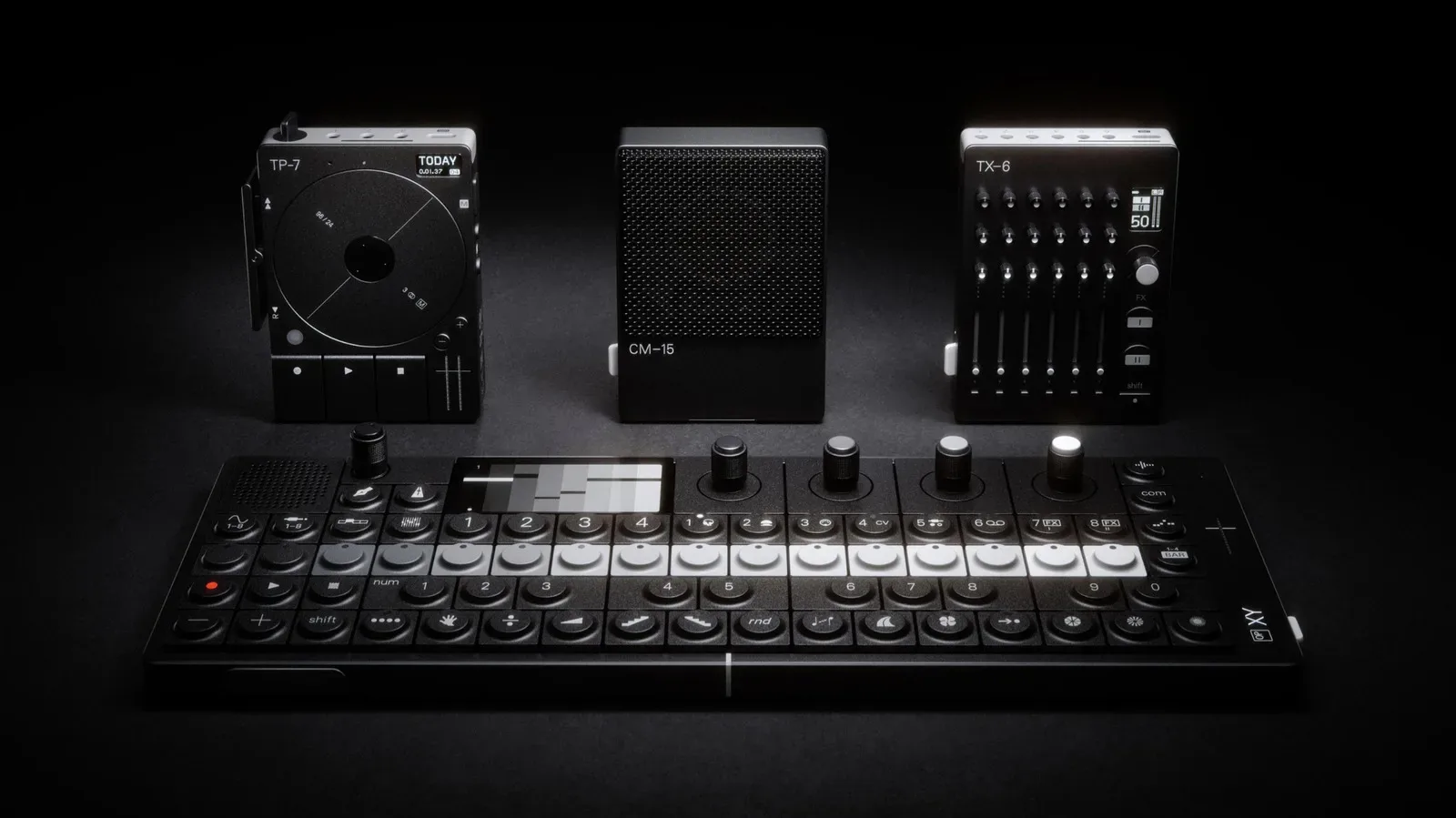
Teenage Engineering, a design company closely associated with distinctive music hardware, is planning to stop making synthesizers altogether. The stated plan includes the OP-1, the 2011 instrument that helped establish the company’s reputation and remains central to how many people identify the brand.
CEO Jesper Kouthoofd described the direction as part of a reorganization undertaken last fall. His rationale was blunt: “the products aren’t the business.” That is a major statement from a company whose public identity has been built around tangible, highly designed objects—from audio gear to unusual collaborations and projects for other companies.
Exactly when manufacturing may end, which current products would be affected first, and what support existing users can expect have not been specified. Kouthoofd also did not lay out a precise successor business. The broad implication is a shift away from Teenage Engineering operating principally as a synthesizer maker, perhaps toward design work and longer-term projects. But that remains interpretation rather than a confirmed roadmap.
The OP-1 is not being carved out
The most consequential detail is that the OP-1 is not described as an exception. Launched in 2011, the compact synthesizer put Teenage Engineering on the map and has been a defining part of its success. A plan to exit synth production without retaining the OP-1 would therefore be more than a trim of a product range; it would be a deliberate move away from the company’s best-known category.
A synthesizer is an electronic instrument that creates and shapes sound. In practical terms, synth hardware is both a musical tool and a long-term ecosystem: owners may rely on documentation, repairs, updates, accessories, and a manufacturer continuing to understand its own designs. The report does not say whether Teenage Engineering will stop any of those services, so owners should not assume that an intention to stop making new synths automatically means immediate changes to products already in use.
Still, uncertainty is understandably unsettling for people who use the company’s instruments regularly. The timeline is vague, and there is no detailed public breakdown of what “stop making synthesizers” means for production runs, software maintenance, replacement parts, retail availability, or other audio products.
More than a hardware label
Teenage Engineering’s work already extends beyond gear sold under its own name. It was behind the Playdate handheld console and the Rabbit R1, has worked with smartphone and audio company Nothing, and has created projects including the Mayku Multiplier pressure former and Impossible Camera. It has also collaborated with IKEA.
That history makes a design-centered future plausible, but it should not be mistaken for confirmation of a specific new business model. Design work can mean industrial design, interface design, product development, brand collaboration, or involvement in projects whose final form is not obvious from the outside. Kouthoofd’s comments establish an ambition to be “much more” than a product business; they do not identify the company’s next flagship offering.
For game players, the Playdate connection is the most concrete reminder that Teenage Engineering’s design reach has not been confined to music technology. Playdate is a game console, so the company’s previous work has touched the games space through hardware design. That does not mean a new gaming device is planned. It only means the company has demonstrated an ability to contribute to projects outside its familiar synth identity.
Design expertise can be particularly visible in compact devices, where controls, materials, menus, audio, and physical form all have to work together. That is one reason Teenage Engineering’s involvement in varied projects matters here: the reported strategic change is not necessarily a retreat from creative technology, but it is a potentially dramatic retreat from manufacturing synthesizers.
Long timelines make the announcement hard to read
One unnamed major project was characterized as something that could change online life, but Kouthoofd indicated that some upcoming projects may not arrive for five to 10 years. That is a remarkably long horizon compared with the immediate questions raised by a possible end to synth production.
It also means there may be a substantial gap between the company’s established output and whatever comes next. A long incubation period can reflect ambition, but it leaves customers and fans with little concrete information for now. There are no confirmed product names, release windows, platforms, or features attached to the future-facing remarks.
The practical reading is therefore cautious: Teenage Engineering has signaled an intended change in direction, not announced a fully formed replacement for its current business. Its past work gives the company a broad design portfolio, while its comments keep the destination deliberately open-ended.
What current owners and prospective buyers can reasonably take from this
There is no need to treat the statement as confirmation that existing Teenage Engineering products have suddenly become unusable or unsupported. The available information does not establish that. Nor does it provide grounds to assume that every music or audio device will disappear at once.
What it does establish is that the company’s chief executive has told staff of a plan to stop producing synthesizers, with no exemption stated for the OP-1. Anyone considering a purchase, or relying on a device for a particular workflow, should distinguish between the confirmed statement and the unanswered questions. The confirmed part is the intent to leave synthesizers behind. The unanswered part is how—and when—that intent will affect specific products and customers.
- Confirmed: Teenage Engineering is planning to stop making synthesizers, and the OP-1 is included in that direction.
- Confirmed: The idea emerged in connection with a reorganization last fall.
- Confirmed: The company has prior design work spanning Playdate, Rabbit R1, Nothing, IKEA collaborations, and one-off projects.
- Unclear: The timetable for ending synth production.
- Unclear: The effect on availability, repairs, updates, accessories, or support for existing hardware.
- Unclear: Whether the next phase will primarily be design services, new products, or something else entirely.
A company known for objects is questioning the object business
The interesting tension in Kouthoofd’s remarks is that Teenage Engineering has become recognizable through physical products, yet its CEO is explicitly arguing that products are not the core business. That does not erase the value of the company’s existing work. Instead, it suggests the company sees its central asset as a capability—designing unusual technology and experiences—rather than a permanent commitment to any single hardware category.
Whether that proves convincing will depend on details that have not been shared. For the moment, the announcement is most notable for its scale: a company famous for synthesizers says it intends to stop making the very instruments that made its name. The OP-1’s inclusion underlines that this is not a minor portfolio adjustment.
For an industry where audiences often attach closely to beloved devices, the distinction between a brand’s past products and its future identity can be difficult to accept. Teenage Engineering appears ready to test that distinction. Its next move may take years to become visible, but the message for now is unmistakable: its synthesizer era is planned to end, even if the shape of what follows remains unresolved.
As game technology and creative tools increasingly overlap in portable, design-led devices, the company’s Playdate history is worth keeping in view. For a related look at the changing tools around game creation, see this examination of Unity Spark and AI-assisted game prototyping.