Starship 40 made the high-speed portion of its journey look easy. The SpaceX vehicle departed Starbase in South Texas on July 24, crossed thousands of miles, and reached the Indian Ocean in roughly 65 minutes. The return leg is shaping up to be a completely different genre of mission: a giant, slow-moving maritime recovery operation expected to take several months.
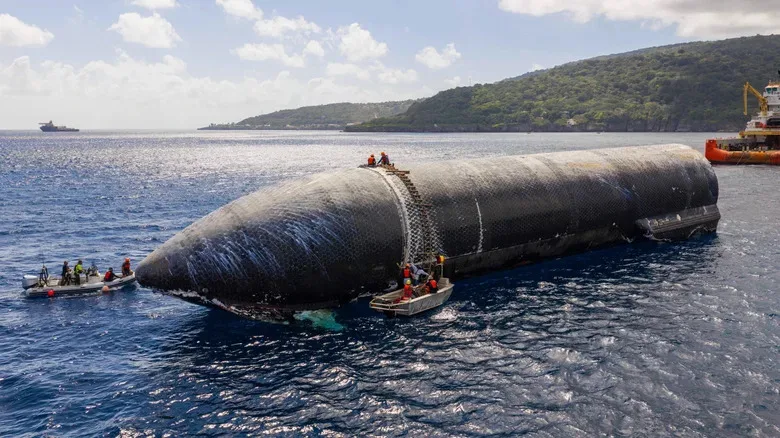
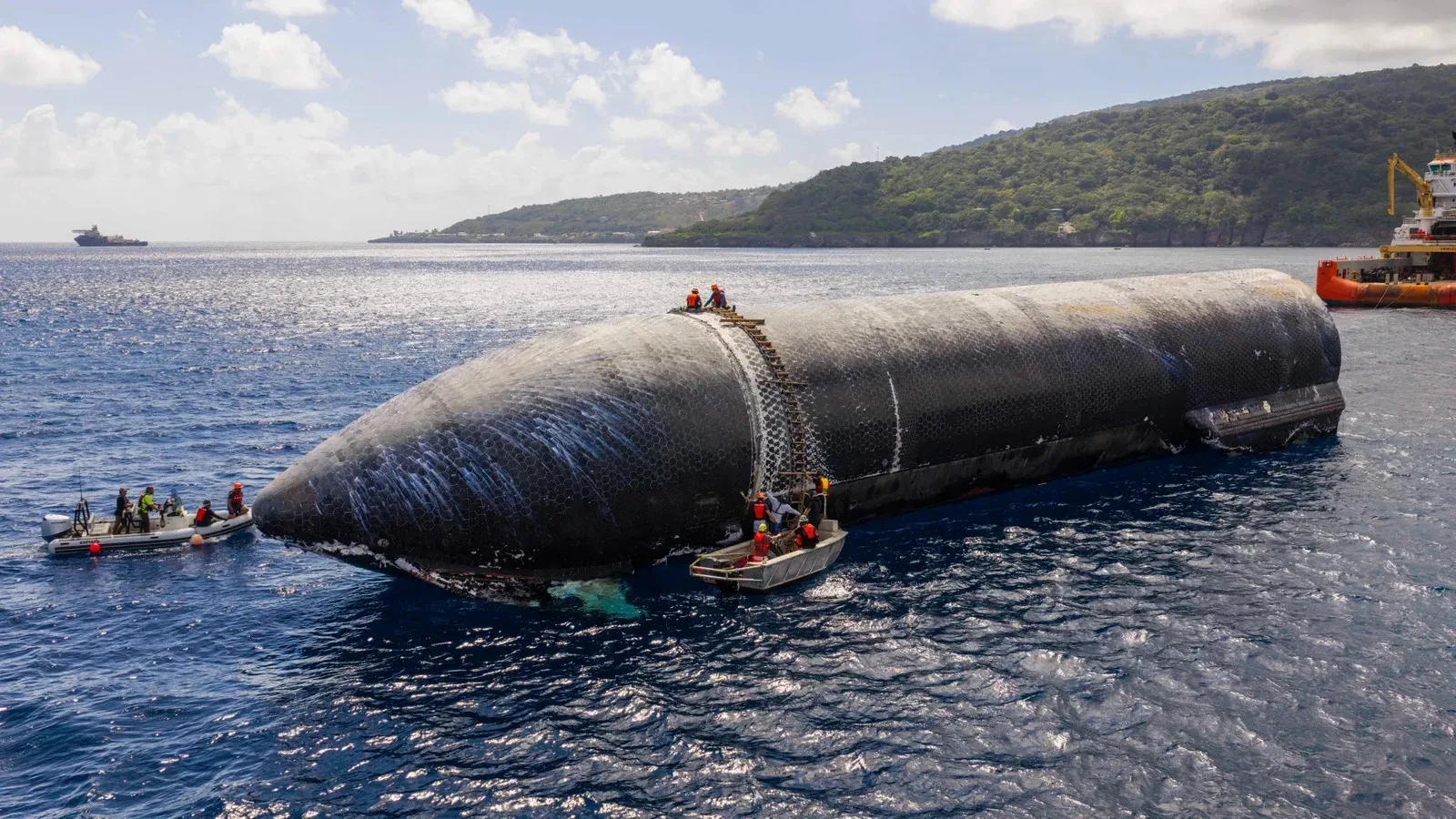
The unusual part is not simply that Starship 40 splashed down. It is that the 171-foot upper stage remained intact enough to be recovered. Previous upper stages did not leave engineers with a comparably complete object to inspect after returning through the atmosphere and meeting the ocean. Starship 40 is not thought likely to fly again, but it can still be tremendously valuable as physical evidence of what happened during reentry.
For a program pursuing a fully reusable launch system, that is a meaningful prize. Digital telemetry can reveal enormous amounts about temperatures, loads, systems performance, and vehicle behavior. Fragments can reveal something too. But a recovered upper stage potentially gives teams a far more direct look at the condition of structures, thermal-protection hardware, and other components after the stresses of flight. It is the difference between examining a replay and having a battered but tangible level map on the table.
A test flight built around deployment, not an operational satellite mission
Starship 40’s July mission was suborbital. During the approximately 65-minute flight, it deployed 20 Starlink V3 satellites. Those satellites briefly connected with SpaceX’s network, then reentered and burned up around 20 minutes after deployment. That outcome was intentional.
This was not an ordinary operational Starlink launch intended to place satellites into a lasting working orbit. The test was designed to evaluate Starship’s payload-deployment system, among other objectives, as the company works toward greater reusability. The temporary satellite deployment made the mission a practical systems test rather than a commercial constellation expansion.
That distinction matters when looking at Starship 40’s recovery. The vehicle’s unexpected survival has created an added research opportunity beyond the planned flight goals. An upper stage that endures a splashdown intact, even if badly affected by its trip through the atmosphere and extended time at sea, can offer evidence that no planned disposal sequence can provide.
Engineers have already gathered heat-shield samples. SpaceX has said the material provides vital insight into how the upper stage handled reentry. The broader hope is clear: lessons from Starship 40 could inform later vehicle designs and mission profiles, particularly as the company seeks a system in which spacecraft return more directly to Starbase for tower catches instead of taking a spectacular but inconvenient detour to the Indian Ocean.
Twenty-four days in the ocean before recovery moved ahead
Getting a spacecraft out of the sea is never a simple pickup objective, and Starship 40 is exceptionally large cargo. The upper stage spent about 24 days at sea before recovery efforts began in earnest. The first major task was getting it toward calmer conditions near Christmas Island, an Australian territory south of Indonesia.
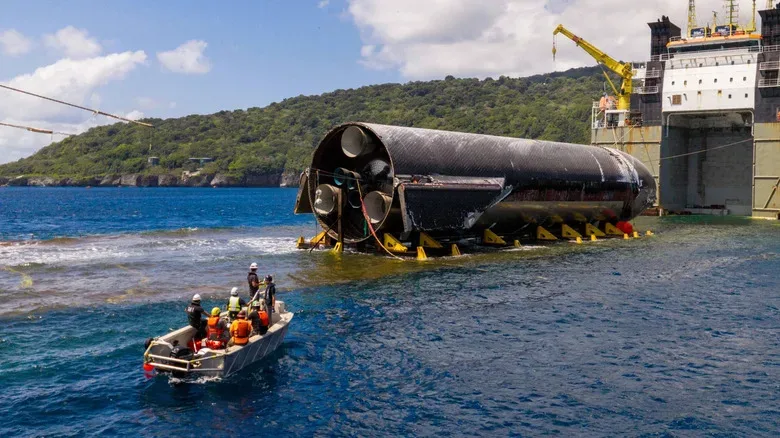
The nearly 300-foot Normand Ranger tug moved Starship 40 from the splashdown area and held it near the island. That was a staging step, not the final extraction. The next arrival was Forte, a 710-foot transport ship equipped for the type of heavy cargo handling that makes normal docks and cranes look charmingly inadequate.
Forte’s role is a useful reminder that the recovery may be unusual for a rocket program, but the core marine technique is not some improvised sci-fi maneuver. Heavy-lift transport vessels regularly move oversized equipment and structures, including barges, cranes, and ships. The special challenge here is adapting proven maritime capability to a huge spacecraft that has traveled through reentry, floated for weeks, and needs to be carried safely halfway around the world.
How Forte loaded the upper stage
The loading sequence used Forte’s ballast system. Crews secured Starship 40 alongside the transport vessel, then Forte took on ballast water and lowered its cargo deck below the surface. With the deck submerged, the upper stage could be aligned with a custom cradle designed to support it.
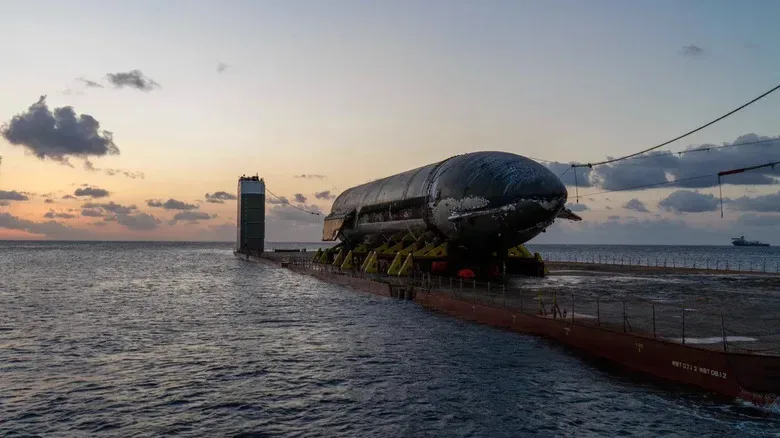
Forte then pumped ballast water back out. As the ship rose, it lifted Starship 40 into position on that cradle. In broad terms, the vessel turned the ocean itself into the loading dock: sink the deck, position the cargo, and raise the ship beneath it.
- Stage one: Move Starship 40 from the open-ocean splashdown area toward waters near Christmas Island.
- Stage two: Hold the vehicle with Normand Ranger until the larger transport vessel is available.
- Stage three: Submerge Forte’s cargo deck through ballasting.
- Stage four: Align the upper stage with its dedicated cradle.
- Stage five: Deballast the ship so the deck rises and carries the rocket securely.
It is a remarkable image because rockets are usually associated with launch towers, flame trenches, and countdown clocks. Yet the recovery of Starship 40 depends just as much on ballast tanks, towing, cradles, weather windows, and the patient logistics of commercial shipping.
The long route to Brownsville remains uncertain
The spacecraft’s arrival on Forte does not mean it is close to Texas. SpaceX has not publicly detailed the transport ship’s exact route back to the United States, only characterizing the passage as a several-month voyage. Ship-tracking information has reportedly shown an October 8 arrival target at the Port of Brownsville, Texas, though that timing may be optimistic rather than definitive.
One plausible westbound route would take Forte around the Cape of Good Hope, at the southern end of Africa. That has been suggested based on the ship’s observed direction, but it remains an informed possibility rather than a confirmed itinerary. Route selection for a load of this scale can depend on sea conditions, scheduling, port logistics, vessel requirements, and the practical demands of keeping an unusual cargo secure for a lengthy passage.
Either way, the contrast is almost comically extreme. Starship 40 traveled from Texas to the Indian Ocean in just over an hour. Its homecoming is measured in seasons of a calendar rather than launch-clock minutes. The rocket sprinted; the shipping operation is playing a very deliberate escort mission.
There is also an important distinction between recovering the vehicle and declaring it reusable. The available information points toward investigation rather than refurbishment for another launch. Saltwater exposure alone is an unforgiving complication, quite apart from reentry heating and splashdown forces. But a non-flyable spacecraft can still teach designers what held up, what did not, and where the gap lies between a vehicle surviving the trip and a vehicle returning in condition for rapid reuse.
Why this matters for Starship’s long-term design
SpaceX’s stated objective is more ambitious than collecting upper stages from distant oceans. It wants Starship missions eventually to return to Starbase in Texas for a tower catch. That would be a fundamentally different operational model: instead of a months-long sea voyage after a splashdown, the vehicle would return to the launch site and be captured for inspection, turnaround, or further processing.
Starship 40’s recovery does not mean that end state has arrived. In fact, the elaborate towing and transport effort underlines how far a splashdown recovery sits from routine, local reusability. Still, a recovered vehicle can help close that gap. Physical heat-shield samples and the condition of surviving hardware can ground future design decisions in evidence gathered after a real flight.
That preservation value has a useful parallel in other technology history. Whether it is a spacecraft, an aging console, or the packaging surrounding a classic computer game, retaining the actual artifact can reveal details that records alone miss. The same instinct drives efforts such as 3D preservation of classic PC game boxes: documentation is powerful, but direct examination carries its own kind of knowledge.
For now, Starship 40 is a very large research artifact aboard a very large ship. Its first mission covered vast distance at rocket speed, deployed 20 test satellites, and ended with an unexpectedly intact upper stage. The next chapter is slower, saltier, and dominated by marine engineering. Once the vehicle reaches Texas, the closer inspection can begin—and that may be the part of the mission with the longest-lasting impact on what future Starships look like.