SpaceX and Tesla are exploring whether to combine in a possible merger, but the idea remains at the discussion stage rather than a completed deal. Special committees made up of independent directors at both companies have been formed to consider the proposal, following a shareholder request.
Elon Musk, the chief executive of both companies, disclosed the committees during SpaceX’s third-quarter 2026 earnings call. He and his brother, Kimbal Musk, are excluded from the committees’ discussions because they are considered conflicted parties. That distinction matters: the proposed transaction would involve two companies led by the same person, creating an obvious need for a process that can assess the terms separately from Musk’s personal interests.
No agreement has been reached, and Musk cautioned that a merger is not certain. The committees’ existence is therefore an early but significant governance step, not confirmation that SpaceX and Tesla will become one business.
What the committees are meant to do
A special committee is a group of board members designated to examine a transaction where ordinary board oversight could be complicated by conflicts of interest. In this case, both companies share a CEO, and Musk holds substantial influence over SpaceX. Independent directors are intended to evaluate whether a potential combination is appropriate and, if it is, whether its terms are fair to the company and its shareholders.
Independence is central to the premise. Tesla lists seven independent directors, while SpaceX lists six. There is also a point of overlap: Ira Ehrenpreis, chair of Tesla’s Compensation and Nominating and Governance committees, joined SpaceX’s board in February. Both companies continue to list him as an independent director. The committees will need to navigate that shared-board connection while considering a deal designed to bring the companies even closer together.
The stated arrangement excludes both Elon and Kimbal Musk from the negotiations. That does not mean Musk ceases to matter to the outcome. It means the formal discussion and assessment are being placed with directors who are not supposed to be negotiating on behalf of the common chief executive.
Why “conflicted party” is important here
A conflict of interest arises when a decision-maker’s personal interests, roles, or relationships could make it difficult to act solely for one party. Musk is CEO of SpaceX and Tesla. A merger could alter his control, the structure of his businesses, and the way capital, technology, and strategy are managed across them. Those overlapping interests make it inappropriate for him to sit on committees charged with deciding whether each company should accept a deal.
For Tesla shareholders in particular, the key question is not simply whether SpaceX and Tesla could cooperate effectively. It is whether a merger would serve Tesla and its shareholders on terms they can accept. Independent review is intended to keep that question distinct from Musk’s view that combining the firms has merit.
A complicated ownership and voting picture
The route to approval is very different at each company. Musk controls roughly 82 percent of SpaceX voting power, meaning his vote would be decisive for the space company. Tesla presents a more demanding hurdle: the merger would require approval from 50 percent of all Tesla shareholders, rather than 50 percent of the shares that happen to vote.
That is a consequential difference. A conventional vote can be affected heavily by turnout; shareholders who do not cast a ballot are often absent from the calculation. Here, the threshold described for Tesla counts the entire shareholder base. In practical terms, a deal would need broad affirmative support, not merely a majority among participating voters. Musk’s influence at SpaceX therefore does not translate into an easy path at Tesla.
This voting structure explains why the project cannot be treated as inevitable. Even if the committees identify strategic advantages and negotiate mutually acceptable terms, Tesla’s required shareholder support remains a separate test. The company’s investors would have to decide whether the benefits of combining with SpaceX outweigh the risks and trade-offs.
The companies already have a financial connection. Tesla became a SpaceX shareholder after its $2 billion investment in xAI turned into SpaceX stock when SpaceX acquired the AI company. That connection does not resolve the merger question, but it shows that the corporate relationships surrounding Musk’s businesses have already become more intertwined.
The strategic case Musk is making
Musk said there is “a lot of merit” in a combination, pointing to opportunities to cooperate on superintelligence software, chip design, robotics, and other areas. The argument is not framed around a single product or a specific launch plan. Instead, it is an argument for bringing multiple technology efforts under one corporate roof.
Superintelligence software, in this context, refers to advanced artificial-intelligence work that Musk sees as strategically important. Chip design concerns the specialized processors and related hardware that can support AI and computing workloads. Robotics points to machine systems whose development may draw on software, hardware, manufacturing, and AI expertise. Those are broad fields, and the available information does not spell out which teams, products, budgets, or intellectual property would be combined.
That missing detail is important. “Cooperation” can mean many things: sharing research priorities, aligning hardware development, coordinating investment, or putting operations into one legal entity. A completed merger would be the most far-reaching option because it would change ownership and governance, not simply create a partnership agreement.
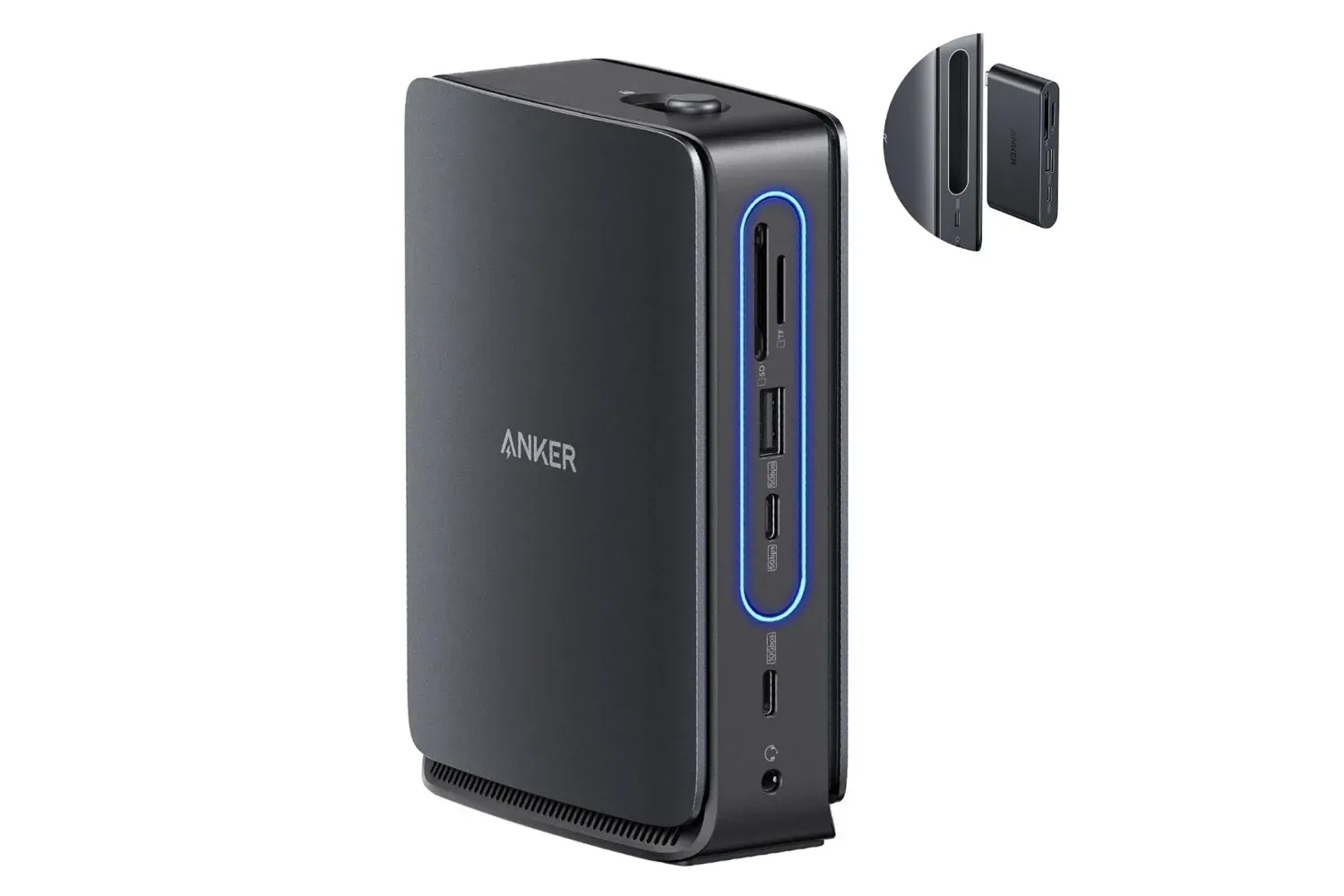
For readers following technology hardware, the distinction is useful. Companies can collaborate on components or software without becoming one company; a merger instead places assets, obligations, decision-making structures, and shareholder interests into a single organization. It would go far beyond the kind of consumer-device ecosystem seen in products such as a multi-device PC dock, where products merely connect across existing platforms. Here, the proposal concerns corporate control itself.
What a combined company could mean
Musk said a combined SpaceX-Tesla company could be worth trillions of dollars. Such a result is prospective, not established: no transaction terms, valuation, timetable, or final committee recommendation have been disclosed. Still, the scale of the idea helps explain why its governance mechanics are attracting attention.
A combined entity would place Musk at the head of a single organization spanning Tesla’s business and SpaceX’s operations. It could also give him greater operational control than he currently has at Tesla. Musk has sought more control at the automaker in connection with its direction in AI and robotics, and the merger discussion is closely tied to that broader ambition.
There is a tension at the heart of the proposal. Supporters could see one company as a way to align major investments in AI, chips, and robotics. Skeptics may focus on concentration of power, the challenge of evaluating unlike businesses in a single transaction, and whether Tesla shareholders receive sufficient value. The special-committee process and the strict Tesla vote requirement are mechanisms meant to confront those questions rather than bypass them.
What has not been decided
Several essential elements remain unknown. The committees have not reached an agreement. There is no disclosed exchange ratio, valuation framework, transaction structure, target completion date, or stated recommendation to shareholders. It is also not clear how far the talks have progressed beyond the formation of the committees.
As a result, it would be premature to treat claims about a future combined company as a forecast of an approved transaction. The present fact pattern is narrower: independent directors are examining a possible merger; Musk and Kimbal Musk are not participating in those committee deliberations; and Tesla faces a high shareholder-approval bar.
The next meaningful developments would be evidence that the committees have reached terms, further explanation of the strategic and financial rationale, and a clearer indication of how Tesla’s shareholder vote would be pursued. Until then, the proposed merger is best understood as a high-stakes corporate exploration—one with potentially enormous implications for Musk’s companies, but with no guaranteed finish line.