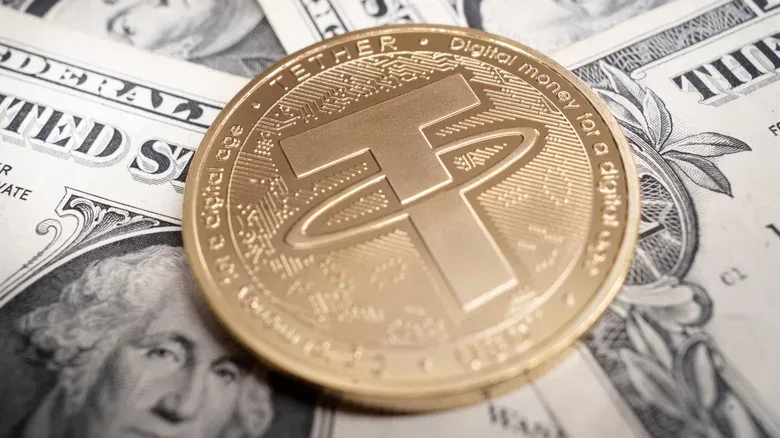
A report led by Sen. Richard Blumenthal, the ranking member of the Senate Permanent Subcommittee on Investigations, alleges that Tether’s USDT stablecoin has become a major component of Iran’s “shadow banking network.” The report argues that the token has functioned as an international payment mechanism for evading sanctions imposed on Iranian banks, while also being used in financial activity connected to regional proxy groups.
The core finding is substantial: investigators reviewed 846 sanctioned cryptocurrency wallets associated with Iran and regional proxies, and determined that 84 percent used USDT exclusively or nearly exclusively. The report says those wallets used the stablecoin to move value and help support Iran’s currency.
Tether rejects the idea that USDT is a safe harbor for sanctioned actors. The company says it is committed to combating illicit finance and reports that it has helped freeze almost $550 million in USDT linked to Iran so far this year. CEO Paolo Ardoino also emphasized a central point in the broader crypto-enforcement debate: transactions on public blockchains can be visible to authorities, unlike movements of physical cash, and token issuers can take action when law enforcement provides credible information.
What the report is alleging
The Senate investigation is not merely saying that a small number of prohibited users happened to hold crypto. Its allegation is structural: that USDT became important enough within a wider sanctions-evasion system to serve as a significant financial lifeline.
For more context, explore Cheap Multi-Room Speakers Can Fill Your Home With Music, Not Just the Sound of Your Wallet Weeping.
“Shadow banking” is a broad term for financial activity that operates outside conventional, regulated banking channels. In this context, it refers to a network allegedly used to move money internationally despite restrictions on Iran’s banking system. The report says that network is used to facilitate support for terrorist groups and may also be involved in buying and selling drones and other military equipment.
USDT is a stablecoin, meaning a cryptocurrency designed to maintain a consistent price rather than move wildly like many speculative tokens. USDT is pegged to the US dollar, so one token is intended to track one dollar. That stability can make the token more practical as a transfer and payment instrument: a sender and recipient can move a dollar-denominated asset without first accepting the volatility associated with many other cryptocurrencies.
That does not make a stablecoin inherently illicit. It does, however, explain why investigators focused on it. A token intended to hold a steady value can be useful for ordinary legitimate transfers, trading and settlement, but the same qualities can also make it attractive to people trying to move value through channels outside sanctioned banks.
The number that matters: 84 percent of 846 wallets
The report’s most concrete metric concerns the 846 sanctioned wallets examined by the subcommittee. It found that 84 percent used USDT either exclusively or almost exclusively. That does not establish that every USDT transaction is problematic, nor does it mean every holder is connected to sanctions evasion. It instead describes a particular population: wallets already sanctioned and linked to Iran and regional proxies.
That distinction matters. Blockchain addresses are not the same thing as every user of a token, and a review of sanctioned wallets should not be treated as a description of the entire USDT ecosystem. Yet, within the set the investigation reviewed, the reported concentration is the basis for the committee’s contention that USDT has become central to the alleged network.
For policymakers, that creates a difficult enforcement question. If a prohibited actor uses a token issued by a private company on public blockchain infrastructure, responsibility may be spread among multiple parties. Authorities can identify activity, exchanges may have compliance duties, and an issuer may be able to freeze assets it controls. But detection, legal designation, evidence-sharing and actual intervention do not necessarily occur at the same time.
Why the ability to freeze tokens is central
Tether says it helped freeze nearly $550 million in Iran-linked USDT this year. That figure is important because it underscores that USDT is not comparable to a physical bearer instrument that cannot be stopped after it has changed hands. Tether can freeze certain token holdings, preventing them from being moved.
In practical terms, a freeze is a compliance mechanism. It can block the ability to transfer specified USDT held at particular blockchain addresses. It is not the same as automatically recovering every asset or identifying every person behind a wallet. Nor does the supplied information establish how quickly flagged addresses were acted upon, how the Iran-linked total was calculated, or how many addresses were involved. But it does show that the issuer has an intervention tool and says it used it.
The report challenges whether that tool was deployed comprehensively enough. It alleges that, before 2024, Tether did not consistently freeze wallets flagged by counter-terrorism agencies. It further alleges the company continues to fall short of proactively blocking wallets that are clearly illicit.
Those are allegations in a congressional report, not a final court determination. Still, they outline the policy disagreement clearly. Tether’s position is that transparent blockchains give authorities exceptional visibility and that the company can respond to credible law-enforcement information. The investigation’s criticism is that waiting for information or designations may be insufficient when illicit activity is apparent or when counter-terrorism agencies have already flagged wallets.
Transparency is not the same thing as prevention
Ardoino’s statement points to a genuine technical feature of public blockchains: transactions can be recorded on a ledger visible to outside observers. Analysts can follow transfers among addresses and identify patterns that may be useful for investigations. This differs sharply from physical cash, where funds can pass from person to person without a public transaction trail.
But public visibility does not automatically reveal real-world identity. A blockchain record generally shows addresses, transaction amounts and movement of tokens. Connecting an address to an individual, organization or government requires further evidence and analysis. Public records can help investigators trace flows, but they do not on their own stop transfers or settle questions of intent, ownership and legal responsibility.
That is the tension at the heart of the Senate report. Blockchain transparency may make illicit transfers more traceable than cash in some situations. Yet, if the people behind a wallet remain unidentified or if restrictions are imposed after funds have moved, transparency alone does not prevent use of the system.
Pressure could extend beyond one company
Blumenthal called on the Justice Department and Treasury Department to investigate Tether and hold it accountable for potential sanctions violations. The report’s focus is Tether and USDT, but its implications extend to the broader infrastructure around digital-asset transactions.
Earlier this month, the Justice Department reportedly began investigating whether Binance violated Iran-related sanctions by failing to prevent certain crypto trades. The department has accused several companies of using the platform to channel $1.5 billion to Iran in return for black-market oil.
Together, the two matters illustrate that sanctions enforcement in crypto does not rest solely on a token issuer. Exchanges, wallet services, issuers, analytics providers and law-enforcement agencies can each have different visibility and different points of control. A platform may be responsible for screening customers or stopping trades; an issuer may be able to freeze a token at specific addresses; investigators may trace funds and build cases. The boundaries between those roles are likely to be a central issue in any future regulatory or legal action.
What this means for the stablecoin debate
The report adds weight to an ongoing argument over whether stablecoins should be treated primarily as innovative payment tools, as financial products needing bank-like compliance controls, or as both. USDT’s dollar peg is one reason it can be useful in legitimate markets. It is also why the Senate investigation alleges it has utility in a sanctions-evasion network: it provides a digital asset meant to preserve dollar value while moving outside traditional banking rails.
None of that means stablecoin use is synonymous with wrongdoing. The report instead raises a narrower, serious question: whether the controls surrounding a widely used dollar-pegged token are sufficient when sanctioned actors adopt it at scale.
For people following technology and digital payments, the practical takeaway is that the debate is no longer only about price stability, reserves or trading. It is also about enforcement capacity. Who has the ability to halt a transfer? What threshold triggers a freeze? How quickly can authorities connect an address to a sanctioned entity? And what obligations should a private issuer have when its product becomes a preferred instrument in an alleged illicit financial network?
The Senate report answers those questions from an investigative and critical perspective, arguing that Tether’s actions have not gone far enough. Tether answers from a compliance-and-traceability perspective, pointing to public blockchain records and the Iran-linked USDT it says it has already helped freeze. The gap between those positions is likely to define the next stage of scrutiny.