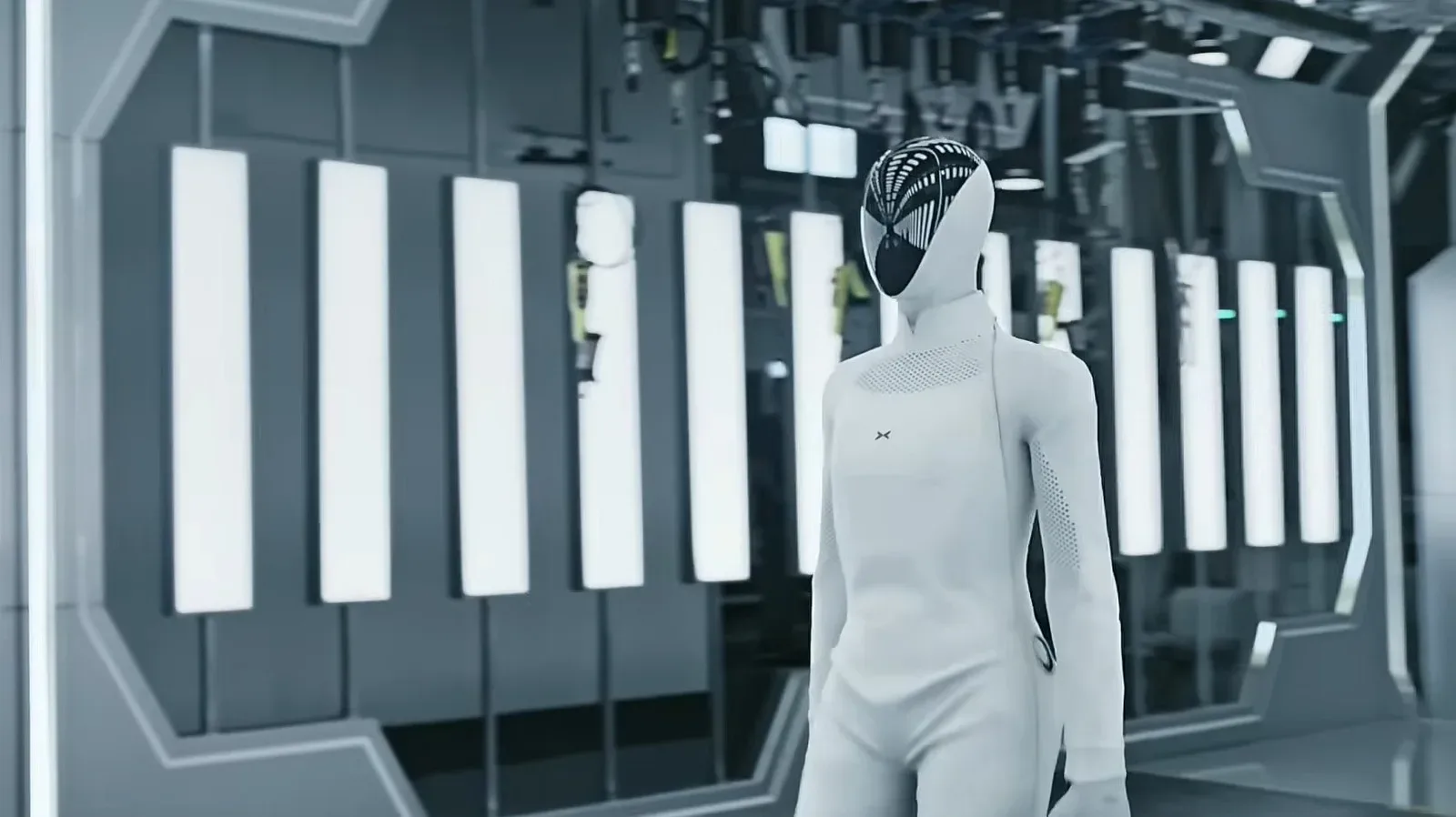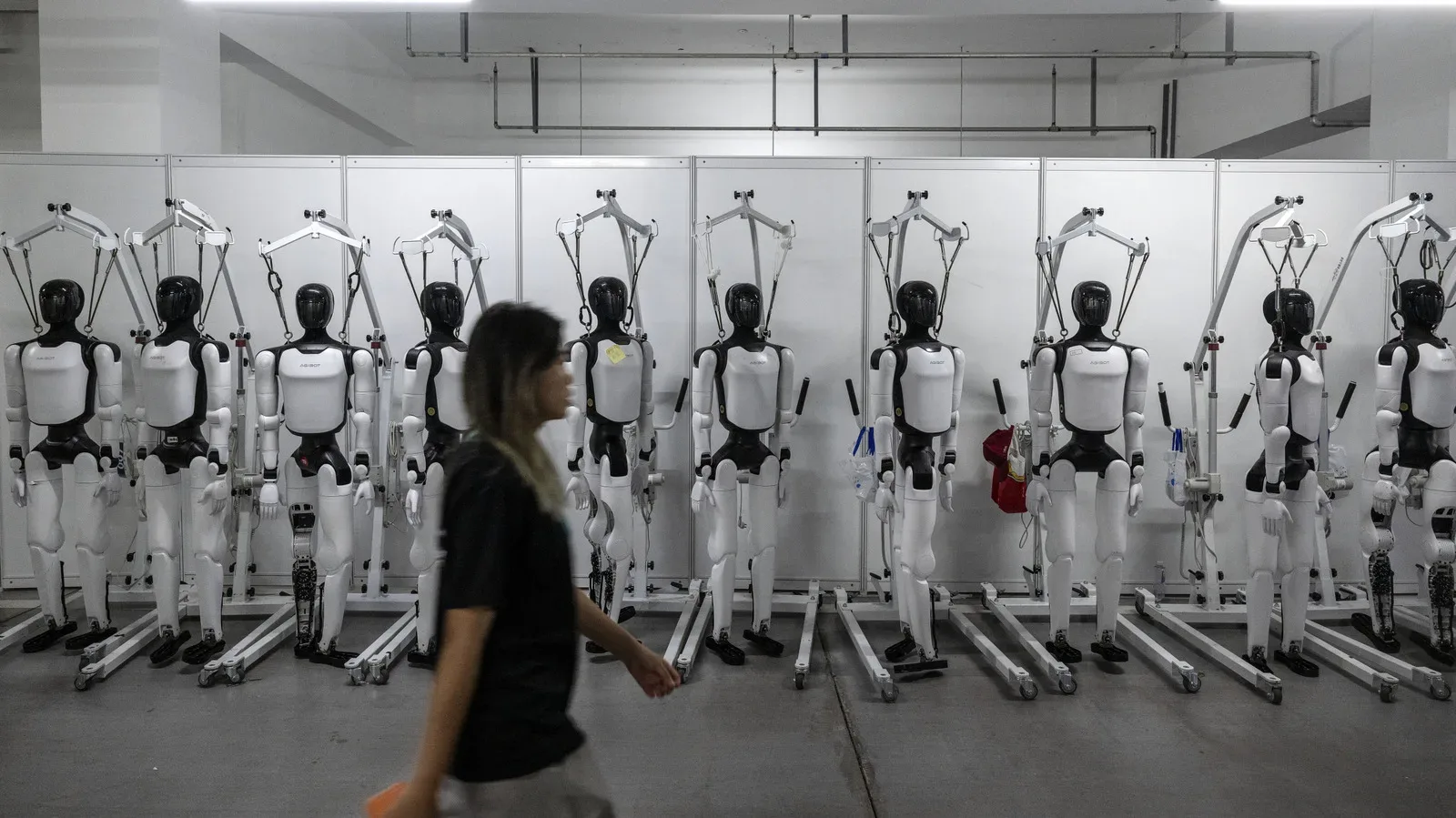
Samsung is reportedly preparing to show its first humanoid robot publicly at CES 2027, with the company’s early pitch centered on a difficult but consequential robotics problem: getting robot hands to handle real objects reliably.
A prototype has reportedly already been presented to Samsung’s board. The planned CES appearance remains a reported intention rather than a confirmed product launch, and there are still major unanswered questions about the robot’s name, specifications, operating capabilities, price, production plans and eventual customer availability. But the direction described so far is unusually specific. Samsung is said to be prioritizing object interaction, particularly for factory and manufacturing environments, rather than positioning the machine primarily as an all-purpose domestic helper.
That distinction matters. A humanoid robot can look impressive while walking, gesturing or responding to a spoken prompt, but industrial usefulness often comes down to whether it can pick up, orient, place and assemble varied items without dropping them, damaging them or needing constant human intervention. Samsung’s reported emphasis on “hand manipulation” therefore points toward dexterity as the company’s proposed differentiator.
A new robotics unit sets the organizational backdrop
Earlier in 2026, Samsung created a division called Robotics eXperience, or RX, intended to bring its robotics efforts under one umbrella. The planned humanoid would follow that reorganization. Previous reporting had also indicated that the company intended to begin manufacturing humanoid robots in 2026, although the present information does not establish whether manufacturing has begun, at what scale it may happen, or whether a CES 2027 reveal would represent a production-ready model.
RX is more than a branding footnote because humanoid robotics is not one single problem. It combines mechanical design, sensors, motion control, power systems, software, safety and the ability to operate consistently around people and equipment. A dedicated division can theoretically coordinate those disciplines around a shared product goal. Whether it does so successfully will become clearer only when Samsung provides its own details and a public demonstration.
Why the hands may be the real story
Manipulation is the technical term for a robot physically interacting with objects. In practical terms, it includes gripping a part, adjusting its position, using a tool, transferring an item between locations and releasing it in the correct orientation. For a person, these motions can feel routine. For a machine, they require a combination of precise mechanics, sensing and control.
A robot needs to recognize where an object is, determine how it is positioned, choose where and how firmly to grasp it, move without collision, and notice if the item slips or behaves unexpectedly. The challenge rises sharply when objects differ in shape, texture, weight or fragility. Factories are an especially demanding setting because repetition alone is not enough: the operation has to be accurate, safe and dependable over time.
Samsung is reportedly applying precision machining and assembly techniques associated with its Galaxy foldable smartphones to its robot hands, with the goal of human-like dexterity. That phrase should be read cautiously. It describes an ambition, not a verified measure showing that a robot hand matches human ability across tasks. Still, the connection suggests Samsung believes experience making tightly engineered consumer hardware may transfer to the tiny components and tolerances required for sophisticated robotic hands.
Related coverage includes Samsung reportedly plans to debut its first humanoid robot at CES 2027.
The most meaningful evidence, if Samsung reveals the machine, would not simply be a hand that resembles a human hand. It would be a clear demonstration of repeatable work: handling objects of different sizes, recovering from small errors, placing items accurately and completing the same task consistently. Those are the kinds of details that separate an attractive prototype from a tool that could fit into manufacturing workflows.
Humanoid form is only part of the equation
Humanoid robots are built around a broadly human-shaped body: typically a head, torso, two arms and two legs. The basic appeal is straightforward. Human workplaces, tools and facilities were designed for people, so a human-like form could eventually let a robot work in spaces without a complete rebuild of the surrounding environment.
But a humanoid outline does not automatically solve an industrial problem. The relevant question is whether the machine can safely perform a defined task better, more flexibly or more economically than a specialized machine or a human-operated process. Samsung’s reported focus on factories makes that question central. The company will need to show not only movement, but useful object handling within real operating constraints.
That is why the hand focus is notable. Legs and a human-like silhouette are visually compelling, while hands are where many practical tasks become difficult. A well-designed hand must balance fine movement with sufficient strength, and it must operate in coordination with the arm, body and visual systems. In manufacturing, speed by itself is not the goal; an incorrect grip, a misplaced component or a damaged part can undermine the value of the entire operation.
Samsung enters a busy humanoid field
Samsung would be joining an increasingly crowded group of companies pursuing humanoid machines. The current field includes Tesla’s Optimus, Unitree and Boston Dynamics, while Meta and OpenAI have been identified as companies with upcoming alternatives. The competitors differ in their public positioning and development paths, but the shared result is a faster-moving race to make humanoid robots useful beyond demonstrations.
For Samsung, arriving after other prominent entrants may offer one advantage: it can choose a narrower point of differentiation instead of trying to promise every possible robot capability at once. The reported bet is that dependable manipulation can provide that focus. It is also an appropriately demanding target, because factories and manufacturing operations have a clear need for accurate physical work.
There is no basis yet to say that Samsung’s approach will outperform rivals. No public side-by-side results, task benchmarks or production data have been outlined. The useful takeaway for now is more limited: Samsung appears to be aiming its first humanoid at a concrete capability—interaction with physical objects—rather than relying solely on the novelty of a humanoid body.
This is not Ballie’s return
Samsung’s reported humanoid effort should not be confused with Ballie, the small home-assistant robot introduced at CES 2024. Ballie had a much more whimsical consumer-facing identity and was designed around the idea of assistance in the home. It was later indefinitely shelved.
The apparent change in direction is significant. A home robot has to navigate unpredictable domestic environments and establish a clear reason for ordinary households to own one. A factory-oriented humanoid, by contrast, can be evaluated against specific work tasks. That does not make the industrial route easy, but it gives Samsung a more defined problem to address: can its robot manipulate objects dependably enough to be useful in a manufacturing setting?
For readers following technology’s crossover with games and broader entertainment hardware, the larger lesson is that impressive interfaces and motion alone rarely determine whether a new machine succeeds. The same skepticism is useful when assessing ambitious tech claims elsewhere, including the industry shifts surrounding large-scale game projects whose development paths can change dramatically. A compelling concept still has to survive the practical details.
What to watch for at a potential CES reveal
If Samsung does present the robot at CES 2027, the most revealing information will likely be concrete rather than theatrical. Observers should look for demonstrations that explain what objects are being handled, how much variation the system can tolerate, whether the robot repeats a task reliably, and whether the demonstration is framed as research, a pilot or a product intended for deployment.
- Task clarity: Is Samsung showing a defined manufacturing operation, or only general movement and gestures?
- Object variety: Can the robot handle more than one carefully selected item?
- Reliability: Does it demonstrate repeatable grasping and placement rather than a one-off success?
- Safety and control: Are there details on how it works near people, tools and other equipment?
- Commercial timeline: Does Samsung identify testing partners, production goals or an intended route to real deployment?
At this stage, the headline is not that Samsung has proven a humanoid robot for factories. It has not publicly done so based on the information available. The news is that Samsung reportedly intends to enter the humanoid field with a prototype aimed at CES 2027, backed by its newly created RX division and a stated interest in hand dexterity. The eventual value of that plan will depend on whether those hands can turn an ambitious concept into dependable physical work.