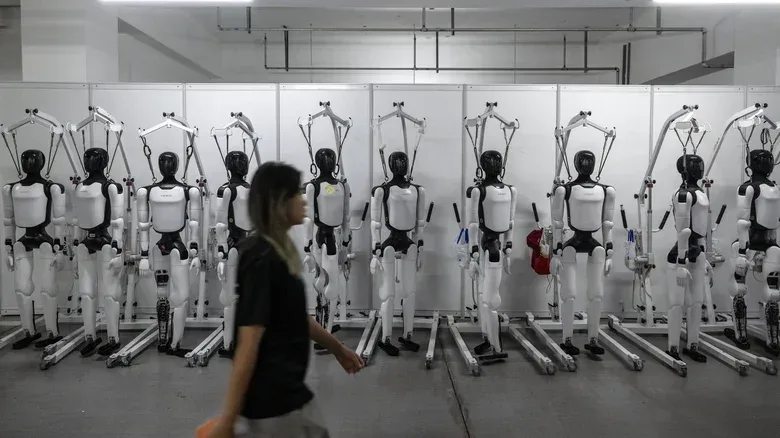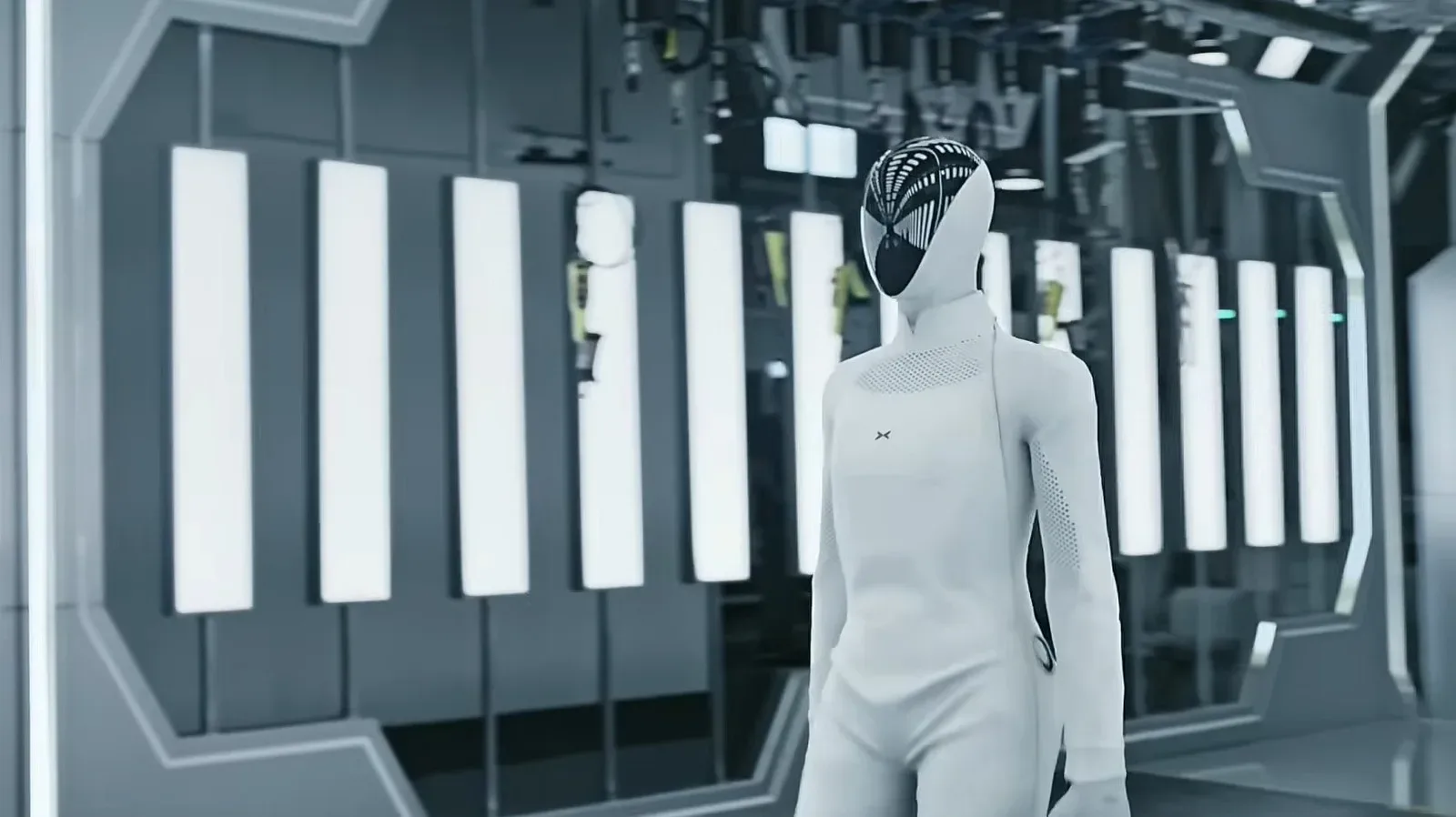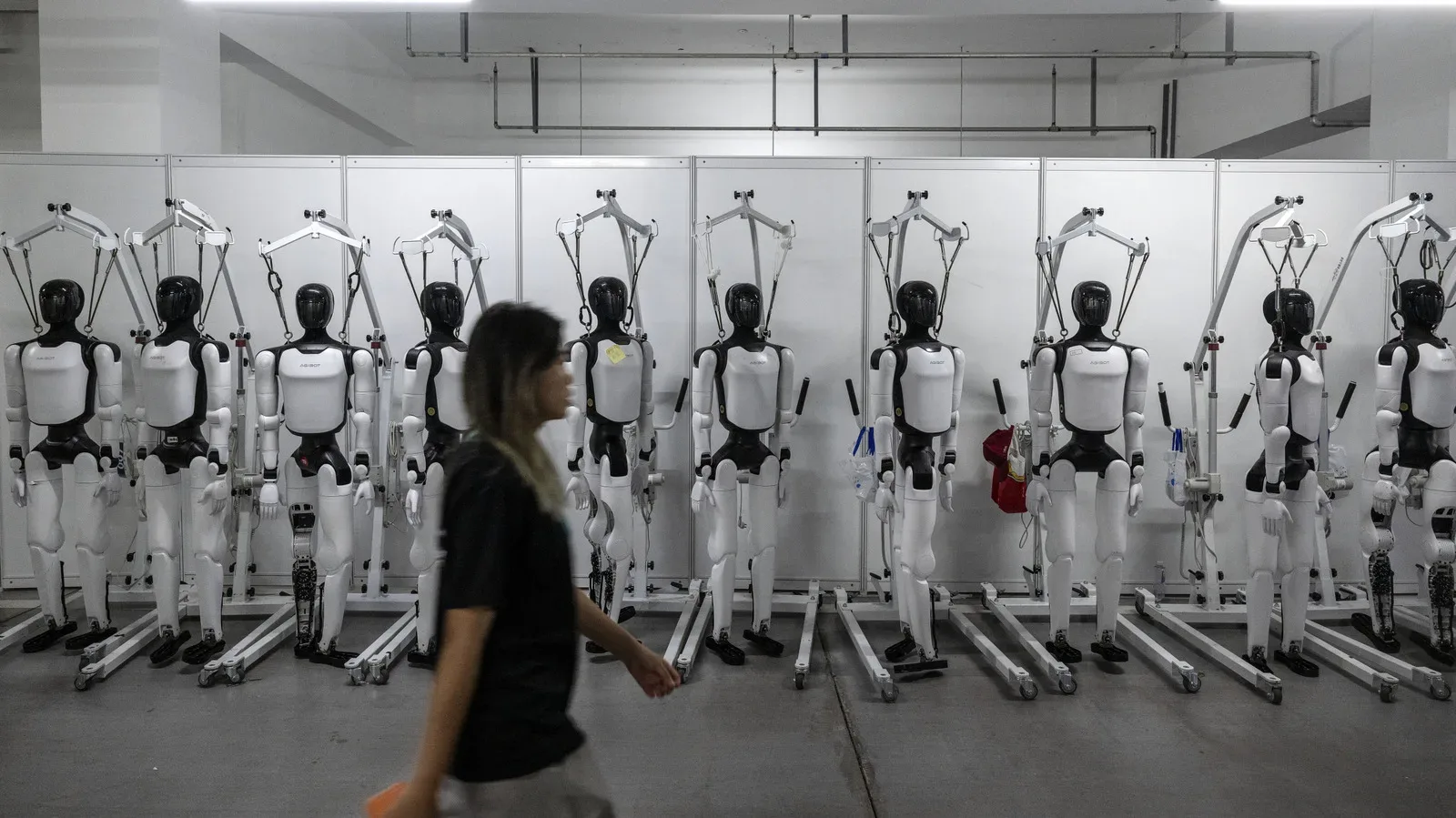
Meta has reportedly built a humanoid robot prototype intended to help with chores around the home. Internally called Max, the machine is said to be the company’s early attempt at a practical household robot rather than a finished consumer device.
The report describes Max as roughly 1.5 metres tall—about five feet—and around 106 pounds. It reportedly has a screen capable of displaying facial expressions, an onboard speaker, and hands designed to pick up small objects. The stated compute platform is NVIDIA’s Jetson Thor, while Chinese robotics company Fourier reportedly helped Meta build the prototype in approximately three months.
Those details make Max an interesting development, but they do not amount to a product announcement. There is reportedly no mass-market launch date, no confirmed list of chores it can perform, no pricing, and no evidence that it is ready for unsupervised use in ordinary homes. The distinction matters. A prototype can show that a design direction is technically possible; it does not establish that the system is reliable, safe, affordable, or prepared for the countless awkward situations found in a real kitchen, hallway, bedroom, or staircase.
What Max is reportedly designed to be
“Humanoid robot” refers to a machine built around a human-like body plan, generally including an upright torso, two arms, hands, and legs. That form is appealing for home work because homes are already organised around people: counters sit at human height, doors use handles, cupboards have shelves, and many useful items are sized to be held by human hands.
Max’s reported dimensions suggest a machine designed to operate in those familiar spaces without being as tall as a typical adult. Its hands are especially important. Moving through a room is one robotics challenge; manipulating small, varied objects is another. A home robot would need to deal with objects that differ enormously in size, texture, weight, balance, and fragility. The reported emphasis on hands built for small objects indicates that Meta’s concept is not solely about walking and display-friendly facial expressions.
Still, “designed to pick up small objects” should not be read as a claim that Max can complete broad domestic work. Household chores involve long chains of decisions. Clearing a table, for example, requires recognising what belongs where, safely grasping items, avoiding spills, navigating around people and pets, and deciding when an uncertain object needs human input. The available information supports the existence of a prototype and its reported hardware characteristics, not a demonstrated catalogue of capable tasks.
Why the reported Max 2 changes the story
The clearest sign that the work is ongoing is the reported second prototype: Max 2. Meta is said to have been working on it since September, with changes planned for the torso and hands. It is also reportedly adding a projector and more sensors to improve how the robot handles stairs.
That focus tells us something useful about the remaining design problems. A torso is not merely a place to mount a head and arms. In a humanoid platform, torso design affects balance, reach, the ability to bend or turn, and how the arms can work around the body. Changes to the hands point to the difficulty of physical interaction: a better hand design could potentially improve grip options, reach, dexterity, or the handling of different everyday items. Exactly what Meta is changing has not been detailed, so any more specific interpretation would be speculation.
Related coverage includes Meta Reportedly Has a Humanoid Home Robot Prototype Called Max.
Stairs are an especially revealing target. Homes are rarely clean, perfectly mapped environments. Even where steps are present, their dimensions, lighting, surfaces, and clutter can vary. Extra sensors may help a robot perceive stair edges and judge its movement more effectively, but sensing is only part of the challenge. The robot also has to turn that information into stable physical action while managing its own weight and balance.
The reported projector is similarly notable but undefined. A projector could potentially communicate information or add a visual interface to the robot’s surroundings, but no intended use has been provided. It would be premature to assume it is for navigation, entertainment, instructions, or any other particular feature. At this stage, it is best understood as a reported component of an evolving prototype rather than a confirmed user-facing capability.
Technical terms: what the hardware details mean
Jetson Thor
The report says Max uses NVIDIA Jetson Thor chips. In plain terms, that means the robot is reportedly using specialised computing hardware intended for demanding artificial-intelligence and robotics workloads. A humanoid robot has to process inputs from its cameras and sensors, determine what it is seeing, plan movement, and coordinate its body. That is a much more demanding task than simply running a voice assistant or displaying an animation.
Using a dedicated robotics compute platform does not tell us the exact software capabilities of Max. It does, however, fit the requirements of a machine that must make rapid sense of its surroundings and control physical components. The chip is one part of the system; it does not, by itself, solve safe movement, object handling, household understanding, or dependable task completion.
Sensors
Sensors are the robot’s means of gathering information about the environment and its own body. The report does not identify the specific new sensors planned for Max 2, only that they are intended to help with stairs. That limitation is important: there is no basis here to claim particular camera types, depth sensors, touch sensors, or other hardware.
More generally, sensors are crucial because household robotics cannot rely on a single fixed arrangement. A robot needs enough environmental awareness to notice obstacles and enough feedback to understand where its body is while moving. For a stair-climbing machine, the ability to perceive the next step and monitor balance is not a luxury feature; it is central to operating safely.
Prototype versus product
A prototype is an experimental model used to explore a concept, test components, or inform the next revision. It may be built quickly, modified heavily, or never released. A consumer product must address a much broader set of issues, including reliability, safety, manufacturing, support, usability, and cost. Max reportedly took around three months to build with Fourier’s assistance, which is notable speed for an early model, but it should not be mistaken for a timetable to retail availability.
That reality is particularly relevant when a robot weighs about 106 pounds. The practical stakes of a mobile household machine increase with physical mass and mobility. The available reporting does not describe safety systems, operating limits, battery arrangements, charging behaviour, testing procedures, or how closely a user would need to supervise it. Those are not minor omissions; they are core questions for any eventual home robot.
Meta’s broader robotics push
Meta’s reported work on Max did not emerge in isolation. The company’s humanoid-robot efforts reportedly began as early as last year, when it created a team focused on robot hardware with the eventual aim of household chores. It also acquired a startup earlier this year that is known for making artificial intelligence for robots.
Together, those reported steps indicate an effort that spans both physical hardware and robot-focused AI. That combination is logical. A capable home robot requires more than a body and motors, and more than software that can identify objects. It requires the two sides to work together: the machine must perceive a situation, decide how to act, execute a movement, and respond when the situation does not unfold as expected.
Meta’s reported collaboration with Fourier adds another dimension. Building humanoid hardware entails a wide range of difficult mechanical and integration work, so partnering on a prototype may be a way to move more quickly than developing every component alone. The report does not outline the partnership’s scope, identify which parts were supplied or designed by each company, or say whether such collaboration would extend beyond Max.
What has and has not been established
The reported facts are compelling: a Meta prototype called Max; a body measuring about five feet and weighing approximately 106 pounds; an expressive display, speaker, small-object hands, and Jetson Thor processing; and a follow-up prototype that may revise the torso and hands while adding a projector and sensors for stairs.
Just as important is what remains unconfirmed or unannounced. There is no release window for a mass-market model. There are no published performance results. There is no confirmed task list, consumer price, battery information, or explanation of how Max would operate around residents, visitors, pets, clutter, or uneven home layouts.
For now, Max is best viewed as a reported signal of intent: Meta appears to be investigating whether it can turn robotics hardware and AI into a machine suited to domestic spaces. The development of Max 2 suggests the first design is already feeding into another iteration, especially in areas where a humanoid robot’s physical design matters most. But the distance between a compelling prototype and a dependable household helper remains substantial—and the available details do not claim otherwise.
As this space develops, the most valuable updates will be the concrete ones: clearly demonstrated chores, explicit safety boundaries, details on supervision requirements, and whether the project moves from internal prototypes toward a defined consumer product. Until then, Max is a robotic concept with intriguing reported specifications, not a home appliance people can plan to buy.
For a different look at how consumers can make practical use of existing tech before replacing it, see five smart second lives for an old laptop.