OpenAI plans to build a humanoid robot. CEO Sam Altman gave the unusually direct answer—“We will”—when asked whether the company would actually make one. But the more revealing part of his comments is where OpenAI appears to see the truly difficult work: not in making a machine with arms and legs, but in giving it the intelligence to use them reliably.
That distinction matters. A humanoid frame makes immediate practical sense in a world laid out for human bodies. Doors, keyboards, tools and work areas were built around the reach, grip and movement of people. A robot with a broadly similar body could, in theory, operate in those same environments without requiring every building and object to be redesigned first.
Yet a convincing silhouette is not the same as useful autonomy. A two-legged robot that can stand in a room is one engineering achievement. A robot that can understand a request, recognize the relevant object, decide on a safe sequence of actions, move its joints precisely, and recover when the object slips or the environment changes is another entirely. In videogame terms, the body is the character model. The hard part is making sure its AI does not repeatedly walk into a chair, misread the objective marker, or treat a coffee mug like an indestructible physics prop.
A demo may arrive in 2027, but a product is not announced
Altman has suggested OpenAI could show a “cool demo” in 2027. He also indicated that robots walking the streets remain several years farther away. Those statements establish a broad direction, not a product timetable.
There is no disclosed design, no stated release date, no consumer price, no subscription plan and no explanation of what a first demonstration will include. OpenAI has also not announced a robot-specific privacy framework. That absence is important because a general-purpose machine expected to work around people would likely depend on cameras, microphones or other sensors to understand its surroundings. The practical rules around what such a device captures, where information is processed and who can access it would be central questions—not optional settings buried three menus deep.
For now, the public picture is of a company building toward robotics rather than selling a finished robot. That fits with OpenAI’s wider interest in AI models and consumer hardware, an area where the broader industry is already wrestling with launch supply and retail realities, as seen in recent reporting on constrained Apple Store launch stock. Physical products add manufacturing, logistics and support problems that software alone does not solve.
Why the “brain” is the difficult part
Calling the control system a robot’s “brain” is useful shorthand, but it covers a large collection of technical problems. A helpful humanoid needs more than a chat interface connected to a body. It must join language, vision, sensing, planning and movement in real time, while dealing with the fact that real rooms are messier than a carefully staged demonstration.
Perception: turning sensor data into an understanding of a room
Perception is the process of interpreting data from cameras and other sensors. For a person, identifying a mug on a table is usually effortless. For a robot, that task can involve separating the mug from the table and background, estimating where it is in three-dimensional space, recognizing whether it is upright, locating its handle and accounting for whether a hand or another object blocks part of the view.
Related coverage includes OpenAI Targets Humanoid Robots, With Intelligence as the Hard Part.
Perception also has to remain dependable when lighting changes, objects are moved, surfaces reflect light, or an item appears in a shape or color the system has not encountered often. A robot that has merely seen many mug images still needs to understand the particular mug in front of it well enough to act on it.
Planning: translating a request into physical steps
Planning is the bridge between an instruction and an action sequence. If someone asks a humanoid to pick up a mug, the robot must determine what to do first and what constraints matter. It may need to move closer, choose an approach that avoids other objects, orient its hand toward the handle and decide whether a grasp looks stable before lifting.
That is different from generating an answer in text. Language models can interpret and produce language, but a physical robot must connect an instruction to a changing environment and to a body with limits. It cannot simply state that the mug has been collected; it needs to collect the mug without knocking it over.
Control: making motors behave with precision
Motion control concerns how a robot makes its joints and limbs execute a desired movement. Actuator control goes deeper into the components that create that movement. An actuator is the hardware that converts control commands into physical motion; OpenAI’s hiring indicates work on custom electromechanical actuators combining motors, transmissions, sensing and thermal systems.
The precision requirement is easy to underestimate. A grip that is too weak can drop a mug. A grip that is too strong can damage it. A robot also has to coordinate its arm, hand, torso and balance as a connected system rather than treating each motor as a separate toy. Physical work is full of feedback loops: sense the object, move, detect resistance or slippage, adjust, and continue.
State estimation, another area reflected in OpenAI’s robotics roles, is part of that loop. In plain language, it is the robot’s best ongoing estimate of where its body is, how it is moving and what condition it is in. Sensors are imperfect and the physical world does not always behave exactly as predicted, so the machine needs a continually updated sense of its own position and motion.
Simulation helps, but physics gets the final turn
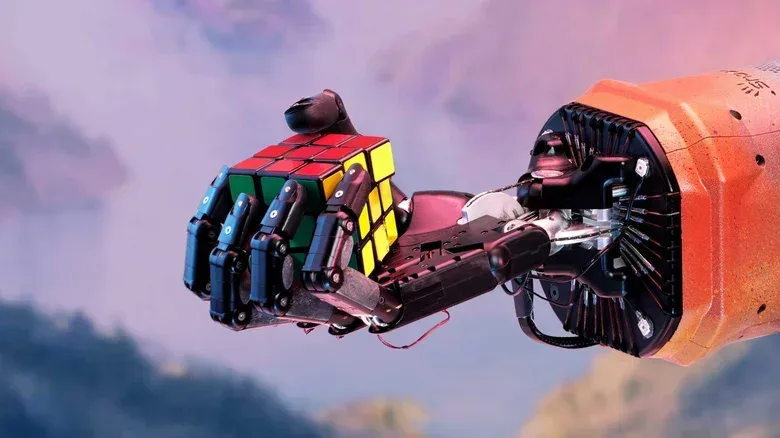
OpenAI has prior robotics research experience through Dactyl, which trained a robotic hand to manipulate real objects using training carried out entirely in simulation. The work was later applied to handling a Rubik’s Cube. That history is relevant because it illustrates a lasting robotics challenge: lessons learned in software must survive contact with a physical object.
Simulation can provide large amounts of training without requiring a robot to repeat every attempt in a real environment. But a simulation is still an approximation. Real objects can vary in weight, friction, shape and position. Sensors can be noisy. A movement that looks correct in a virtual setting can produce an unexpected result when a motor, joint, surface or object behaves differently in the real world.
This is often described as the gap between simulation and reality. It is not a minor polish issue. It goes straight to whether a machine can perform a task safely and repeatedly outside a controlled setup. The Rubik’s Cube example is a compact version of the larger problem: the system has to keep track of an object, manipulate it with dexterity and adjust to physical outcomes rather than assuming the world will follow a perfect model.
OpenAI is hiring across software and hardware
The company’s recruiting activity suggests that it is treating robotics as a full-stack undertaking. Its roles include motion control, state estimation, actuator control, overall robot behavior, and machine-learning infrastructure for training physical AI systems. At the time described, OpenAI’s careers page listed 27 robotics openings.
There are also positions related to manufacturing and supply-chain work. This is a necessary reminder that even if software is the strategic centerpiece, a robotic body is not a disposable accessory. Motors need to be manufactured, transmissions need to hold up, sensors need to work consistently, thermal systems need to manage heat, and the complete machine needs to be buildable at more than prototype scale if it is ever meant to leave the lab.
Altman’s emphasis on intelligence should therefore be read as a statement about the hardest differentiator, not an argument that hardware is easy. A human-compatible body is useful because the environment is built for people. Creating one that is strong, balanced, durable, controllable and manufacturable remains an enormous job in its own right.
The first use case is not necessarily a robot roommate
OpenAI’s stated nearer-term objective is to create general-purpose robots that can help skilled workers build infrastructure. Its longer-term aim is a personal robot capable of assisting with a much wider variety of tasks.
That ordering is significant. Infrastructure work may still be demanding, but it frames the robot as a tool intended to assist skilled people rather than an immediate all-purpose household servant. A personal robot would face a wider range of environments, objects and expectations. Homes are especially variable: they contain clutter, stairs, pets, delicate belongings, unpredictable layouts and people who do not pause to provide a carefully labeled training scene.
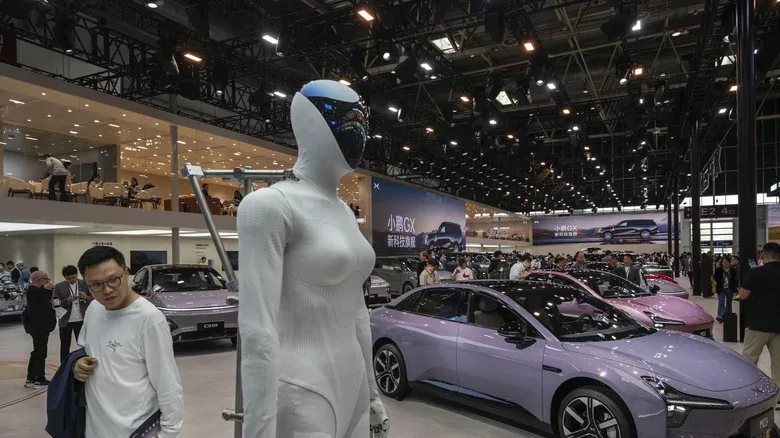
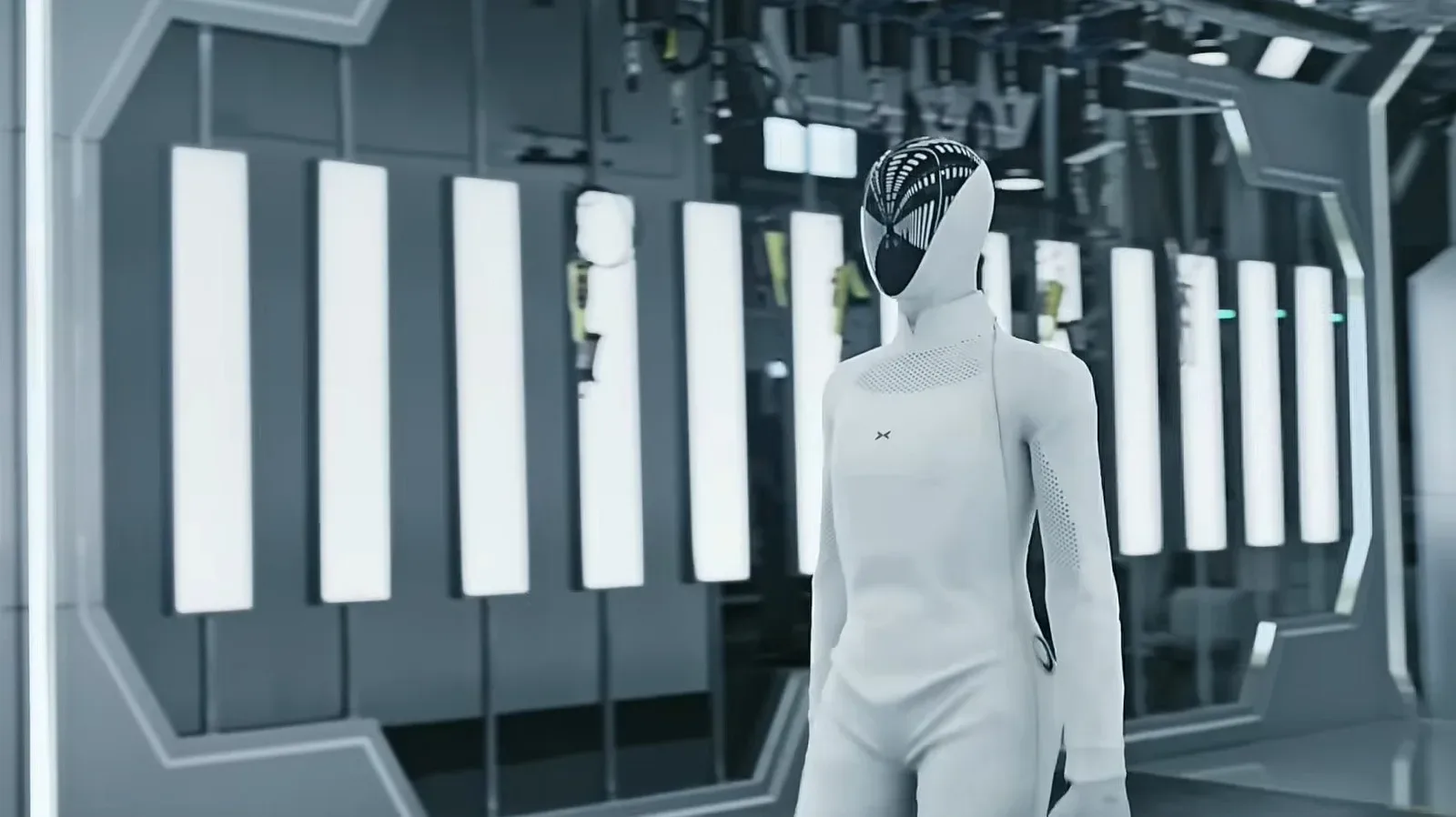
OpenAI is entering a field where other companies are already pursuing humanoid machines. Tesla has worked on Optimus for years, while XPENG recently showed its IRON humanoid autonomously walking off a production line after assembly. Those examples underline the same basic point: getting a complex set of joints and motors to move autonomously is a substantial challenge even before a robot is asked to understand broad natural-language instructions and carry out diverse useful tasks.
What to watch next
The 2027 demo target offers a useful checkpoint, but it should not be mistaken for a promise of a near-term consumer launch. The most meaningful details will be the ones that establish what the machine can do, under what conditions, and how much human setup or supervision is involved.
- Task range: Is the robot performing one tightly defined routine, or can it adapt across several tasks?
- Autonomy: Does it act from high-level instructions, or does it rely on extensive staging and operator support?
- Reliability: Can it repeat a task when lighting, placement and objects vary?
- Safety: How does it detect people, obstacles, fragile objects and mistakes in progress?
- Privacy: What data does it collect in workspaces or homes, and what controls would owners have?
- Scale: Is there a credible path from a demo unit to production hardware?
OpenAI has supplied a clear ambition and a broad timetable for a demonstration. It has not yet supplied the robot itself, nor the answers that would determine whether a humanoid becomes a practical helper instead of an impressive stage appearance. The human form may be a logical fit for a human-designed world. Teaching a machine to operate sensibly within that world is the much longer quest.