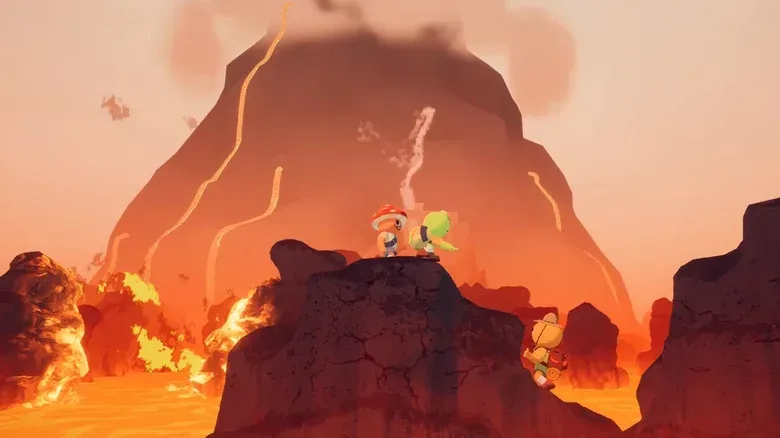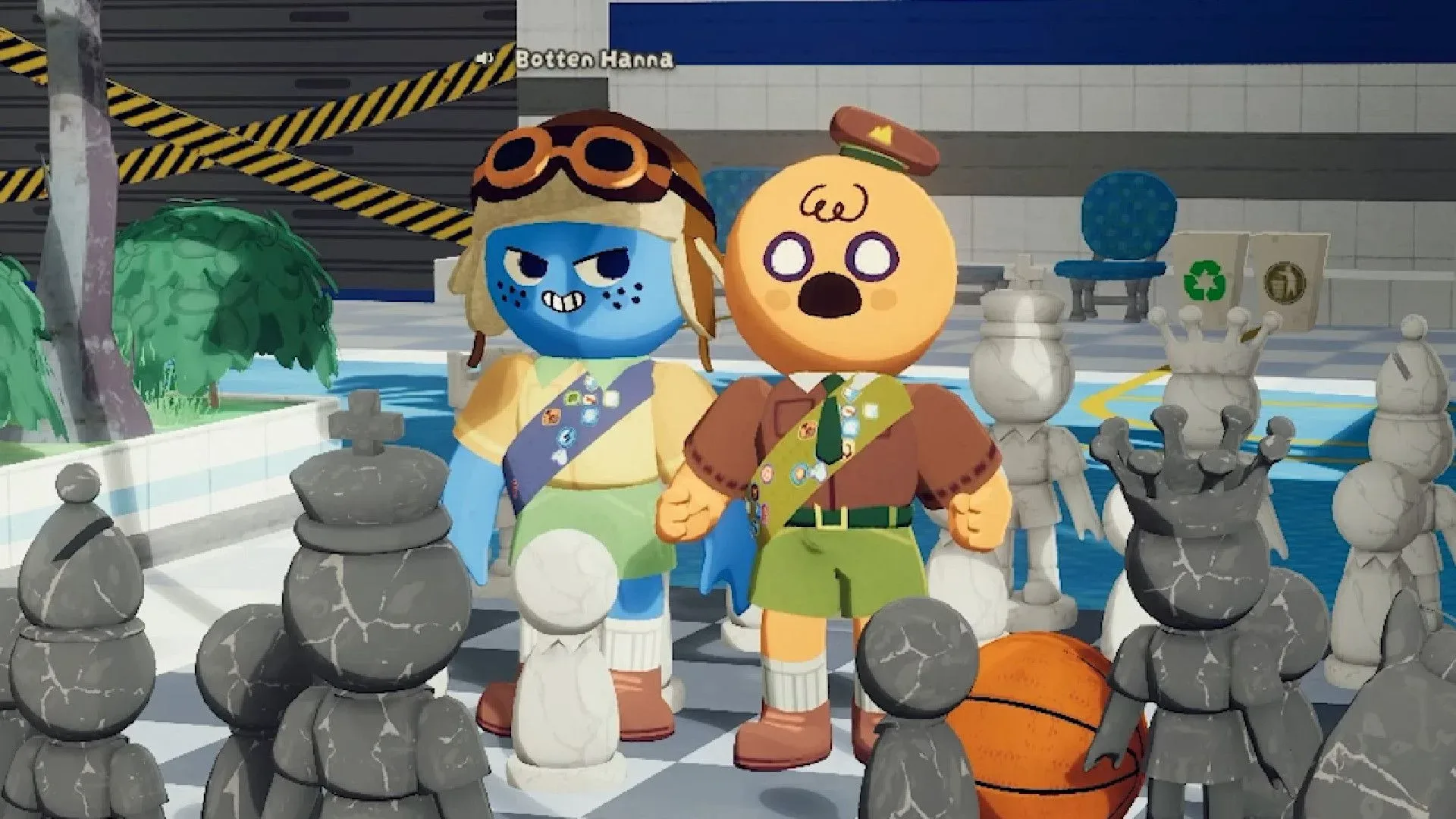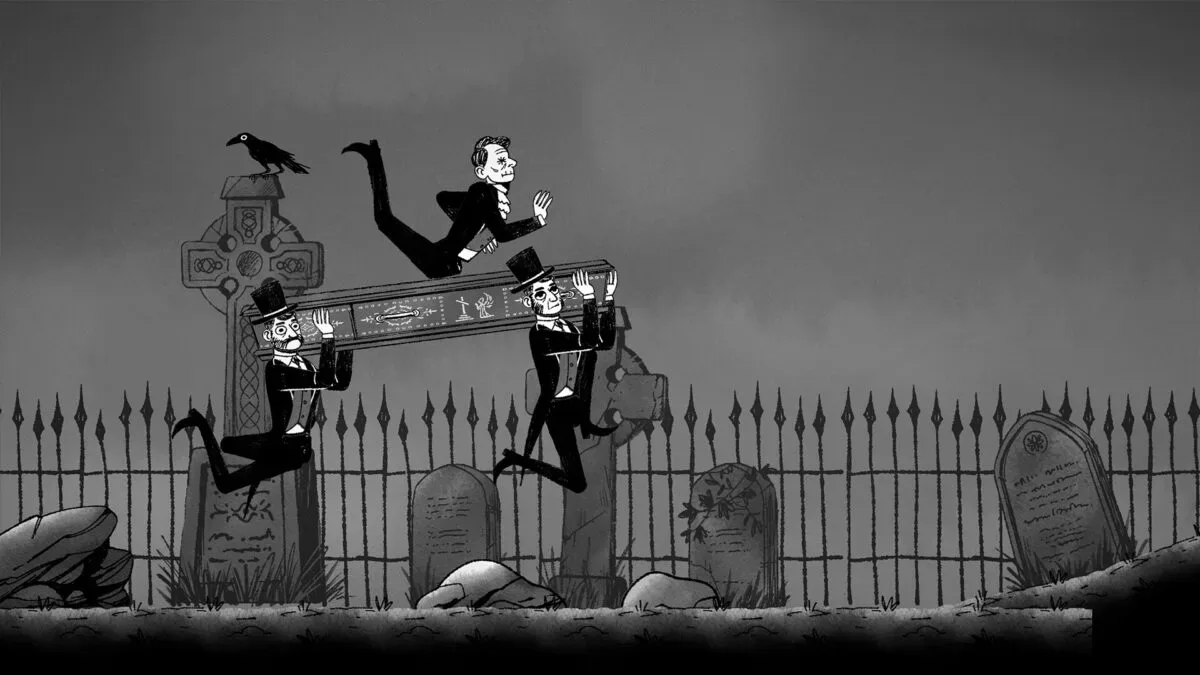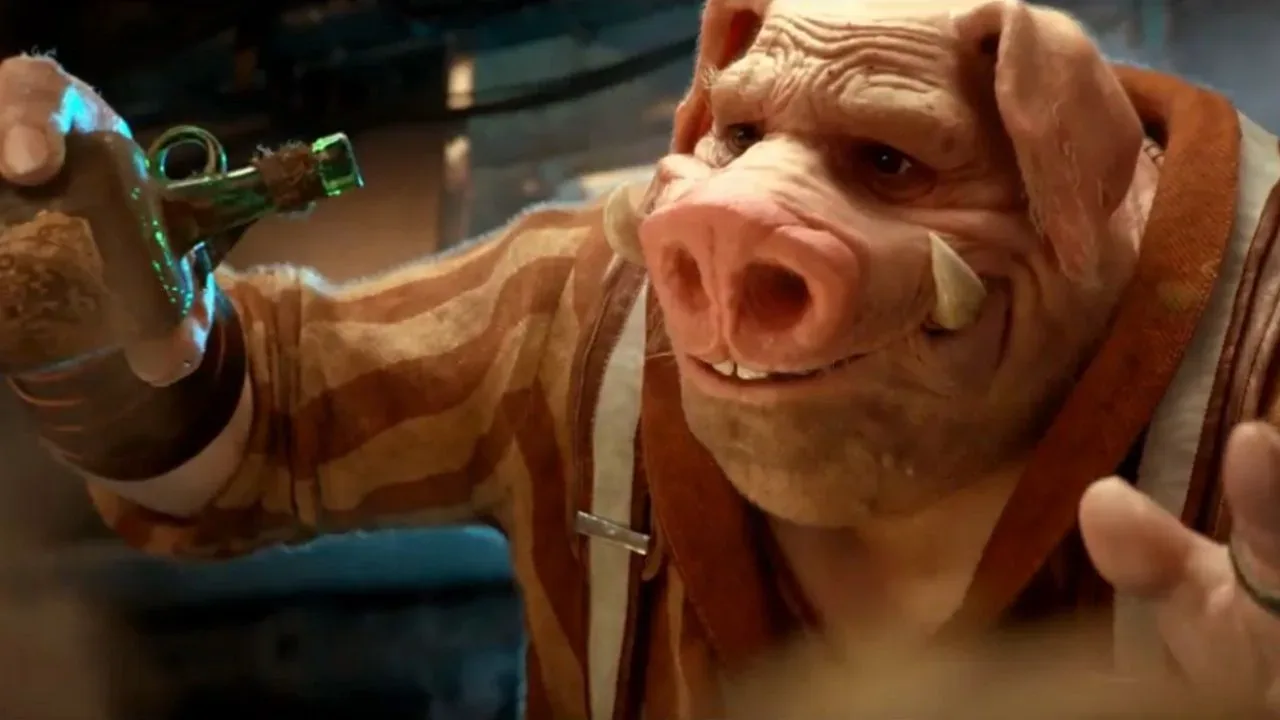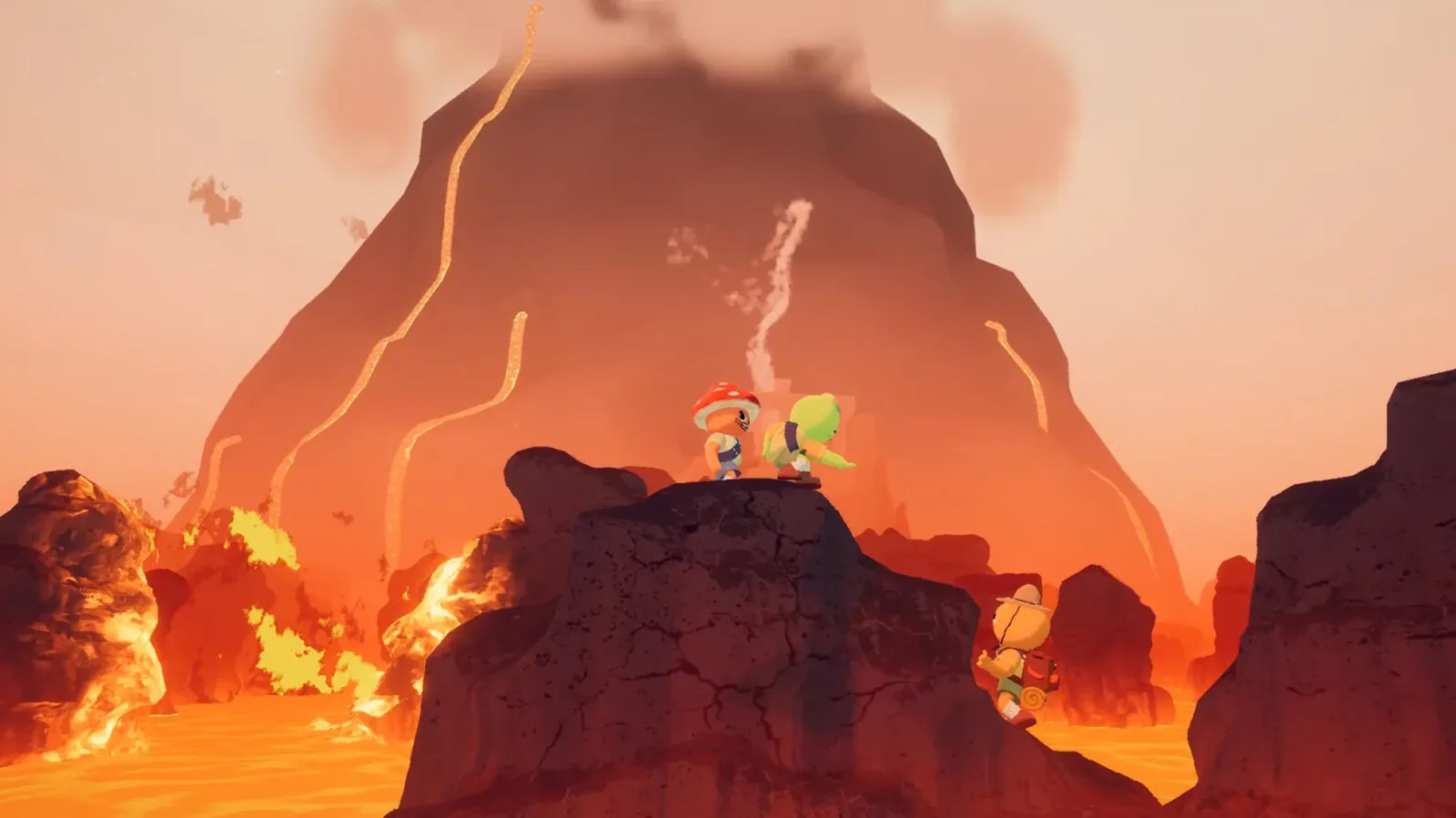
Peak, the cooperative climbing game built around teamwork, survival pressure and inevitable slapstick disaster, has reached PlayStation 5, Xbox Series X/S and Nintendo Switch 2. The console launch gives one of 2025’s major indie successes a much wider set of places to fall off a mountain with friends—and, crucially, includes cross-play.
That detail matters more than it may initially sound. Peak’s premise is a social one: players cooperate to climb mountains whose layouts change daily, managing the hazards of the ascent while helping each other forward. Cross-play expands the pool of possible climbing partners beyond a single platform’s player base. For a game where a friend can be a life-saving rope holder one second and an accidental agent of gravity the next, keeping groups together is a practical part of the experience rather than a box for the feature list.
The console versions cost $10. Peak first launched on Steam at $8, with an initial $5 discount, and has since sold more than 23 million copies. Its developers have said the amount of content has doubled since release. For a closer look at how that expansion affects the game’s footprint and map pool, see Peak’s console update and its 208-map rotation.
Why Peak’s platform move is significant
Peak was made through a collaboration involving developers from Aggro Crab, known for Another Crab’s Treasure, and Landfall, the team associated with Content Warning. The game’s broad appeal is easier to understand when broken down into its main ingredients: a simple collective objective, changing mountain layouts, survival mechanics, and the kind of unpredictable physical comedy that can make a narrow rescue attempt turn into a group expedition to the afterlife.
Cross-play means players using different compatible platforms can join the same multiplayer session. In a co-op game, that can remove a familiar logistical hurdle: the person organizing the group does not need to discover that half the party owns the game on one system and half owns it somewhere else. It does not guarantee a successful ascent, of course. It merely ensures that everyone can witness the failure in real time.
Daily-changing mountain layouts also give Peak a repeatable communal rhythm. Rather than treating one solved route as a permanent answer, players have reason to return and compare how their group handles a new arrangement. That is different from a conventional scripted campaign, where the same level solution can eventually become routine. The mountain remains the boss; it simply receives a new office layout every day.
Tape to Tape leaves early access with arcade hockey chaos
Excellent Rectangle’s Tape to Tape is also moving into its full release after being in early access since 2023. It is available on Steam for Windows, PlayStation 5, Xbox Series X/S and Switch, and is Steam Deck Verified. The usual price is $20, with a 10 percent Steam discount running through October 30.
This is not a straight simulation of hockey. Tape to Tape is an arcade hockey roguelite, a description that needs both halves to understand why the game can contain opposing soccer teams, farting princesses, fights and a mission to stop evil golfers from ruining a national sport.
Related coverage includes Peak Reaches Consoles as Indie Games Bring Hockey, Horror and Heists.
An arcade sports game generally prioritizes immediately expressive action, exaggerated mechanics and spectacle over a strict recreation of the real sport. A roguelite uses repeatable runs or campaigns in which players earn unlocks or upgrades that carry some form of progress forward. In Tape to Tape, players select a squad with its own rules and style, then unlock abilities, players and other enhancements while looking for synergies between them.
Synergy is the important strategic word here. It means two or more abilities or upgrades combine in a way that is more useful than each would be separately. In practice, the appeal is not just winning a single game of hockey; it is building a team setup that changes what the next match feels like. That structure is well suited to arcade sports because it gives the game a longer progression loop without requiring it to become a season-management simulator in a tie and cardigan.
Tape to Tape also supports up to 10 local players in co-op. Local co-op means people play together in the same physical location rather than connecting over the internet. A 10-person hockey session is a wonderful invitation to communal mayhem, but prospective players should also consider the obvious real-world requirement: enough controllers, display visibility and tolerance for competitive shouting.
The full-release update is said to include improved audio and visuals, a revised campaign, and gameplay-mechanics improvements. Those are broad changes, but the campaign overhaul stands out for a roguelite: the campaign framework is the engine that gives each upgrade decision and squad choice a reason to matter across repeated attempts.
Mycopunk brings modular enemies to co-op shooting
Mycopunk, from Pigeons at Play and Devolver Digital, is leaving early access on Steam for Windows and coming to PS5. It normally costs $15 and has a 50 percent Steam discount until November 3. It is also included with PlayStation Plus Extra and Premium.
The game is a co-op looter shooter set on a planet overtaken by fungus. A looter shooter is an action game where combat and collecting or improving equipment operate together: players shoot enemies, acquire gear or resources, and use those rewards to refine their build. Mycopunk’s particular wrinkle is that infected enemies are modular. Players can focus attacks on specific parts to disable threats selectively, while remaining alert because other enemies can grab and use dropped weapons.
That is a meaningful distinction from simply pouring damage into the nearest target. Modular foes create prioritization decisions: which component is most dangerous, which enemy must be stopped first, and whether a weapon on the ground is about to become somebody else’s problem. The game also has a weapon-upgrade grid designed for experimental builds, plus an explorable hub space. Its visual direction has been described as grungy and inspired by Moebius, matching a premise where the workplace is a contaminated planet and the job security is presumably fungal.
As with most co-op-focused shooters, prospective players should separate two questions: whether the combat systems sound appealing on paper and whether they have a regular group to play with. Mycopunk supports cooperative play by design, and the value of its loadout experimentation may be most visible when several players can coordinate roles and reactions.
Horror takes a culinary route
Two newly available games turn food settings into locations for dread rather than comfort food. Cucina Stellata from Filthy Eden and Critical Reflex is free on Steam for Windows and Steam Deck Verified. It is a short psychological-horror game set in 19th-century rural Italy, with cooking as part of its setup. A $5 supporter-pack DLC adds illustrations and recipes that can be made outside the game.
Psychological horror typically leans on unease, implication and a character’s perception rather than solely on direct combat or visible monsters. Here, the available details are deliberately limited, aside from unsettling sound design and the cooking element. That restraint makes it sensible to view Cucina Stellata as a short, free curiosity for players seeking Halloween-season atmosphere, rather than assume it is a sprawling cooking simulation with a haunted pantry subscription tier.
Grease Trap ’99, by James Muirhead, takes place in a fish-and-chip shop in the Scottish Highlands. It is a horror mystery with comic touches, rendered in retro low-poly visuals, where something is growing underneath the floor. The Steam game for Windows normally costs $5 and has a 10 percent discount through November 4. It is fully voiced in Gaelic with English subtitles and is expected to take less than an hour to complete.
Low-poly refers to a visual style built with comparatively simple 3D geometry. In horror, that reduced detail can make familiar places feel oddly artificial or incomplete, allowing suggestion to do work that high-detail realism might otherwise do explicitly. Combined with a modest running time and mystery structure, Grease Trap ’99 looks positioned as a compact atmospheric detour rather than a giant open-world chip-shop management epic. A missed opportunity for spreadsheets, perhaps, but sensible for everyone involved.
Dispatch expands while Faraway and Payday: Aces High approach
AdHoc Studio’s superhero workplace comedy Dispatch is scheduled for iOS and Android on December 9. It is already available on Steam, Switch, Switch 2, PS5, Xbox Series X/S, Xbox on PC and Luna. The game costs $20, although the first four mobile episodes will be free.
The game has also added two deluxe-edition modes: commentary containing 16 hours of cast and crew material, and an option to play the entire game with storyboard animatics. An animatic is a rough, timed visual version of scenes, commonly made from storyboard art to map out pacing and staging before final animation. Offering animatics can be particularly interesting for a narrative game because it exposes an alternate layer of the production process. Players who own the standard edition can upgrade for $11. A one-off Los Angeles concert of the game’s music is planned for December 3, and a hardcover art book is in development.
Faraway arrives November 5 for $10 on Steam, Epic Games Store, PS5, Xbox Series X/S and Switch. Developed by Steph Thirion and published by Annapurna Interactive, it is a procedurally generated arcade game about guiding a shooting star from star to star, forming constellations and drawing energy to continue.
Procedural generation means a game uses systems or rules to create content rather than relying entirely on a fixed, hand-built sequence. In Faraway’s case, that should make the star-to-star route a changing challenge. The stated goal is an easy-to-learn but hard-to-master rhythm of swinging through space, a useful fit for an arcade design: the basic action can remain approachable while precision, momentum and route selection provide the deeper skill ceiling.
Also due November 5 is Payday: Aces High, a virtual-reality Payday spinoff from Fast Travel Games. It will cost $25 on SteamVR and Meta Quest. Up to four players can assemble a crew, plan a job, choose equipment and pursue either stealth or direct force. The game includes four selectable characters, each named after an ace and specialized in areas such as mission planning or gadgets. Cash can be spent on inventory expansion and skills. A final playtest is live on Steam and Quest until October 26.
VR changes the practical appeal of a co-op heist game: compatible hardware and space considerations are part of the purchase decision, alongside the usual question of finding a group. But the core heist split is familiar and clear—careful infiltration or loud improvisation after the plan encounters its traditional first enemy: reality.
Demos and a giant-beast adventure remain on the radar
Steam Next Fest is running until Monday with thousands of demos. Among the highlighted playable prospects are the prologue for Emberville, whose progress carries into the full game launching October 27; Golden Retriever Simple Life, an FMV life sim about caring for a golden retriever named Pichu; and the cyberpunk shopkeeping simulation Probably Stolen.
Other demos include Backrooms-style puzzle game Geodyssey, propeller-plane shoot ’em up Iron Skies, jump-button-free 2D Metroidvania Moonbrella, and comedy heist game My Arms Are Longer Now. New announcements also include surreal RPG amFM, where players travel across dimensions and create machines for combat, and Keykruncher, where survival requires eating keyboards. The indie scene remains firmly committed to the scientific principle that every noun is one pitch deck away from becoming a game mechanic.
Finally, Nyra and the Garden of Moros is an open-world action adventure in development for Steam by solo creator Joe Winter. Nyra must confront a dozen giant creatures known as Keepers to seal away a god of doom and cure a spreading curse. Players can destroy the Keepers or take the more difficult route of cleansing and saving them. Nyra travels with Rama, a wolf companion inspired by Winter’s late husky; the project also draws inspiration from the developer’s wife’s strength and compassion.
That choice between defeating and cleansing the Keepers is the key point to watch. It suggests that the giant-creature encounters may not be framed as a single mandatory answer. Until more details are available, it is best treated as a promising design direction rather than a confirmed breakdown of how every encounter will work. Still, a game about climbing immense beasts that leaves room for mercy has an immediate identity—and far more emotional ambition than merely asking which enormous creature looks most like it could ruin a weekend.