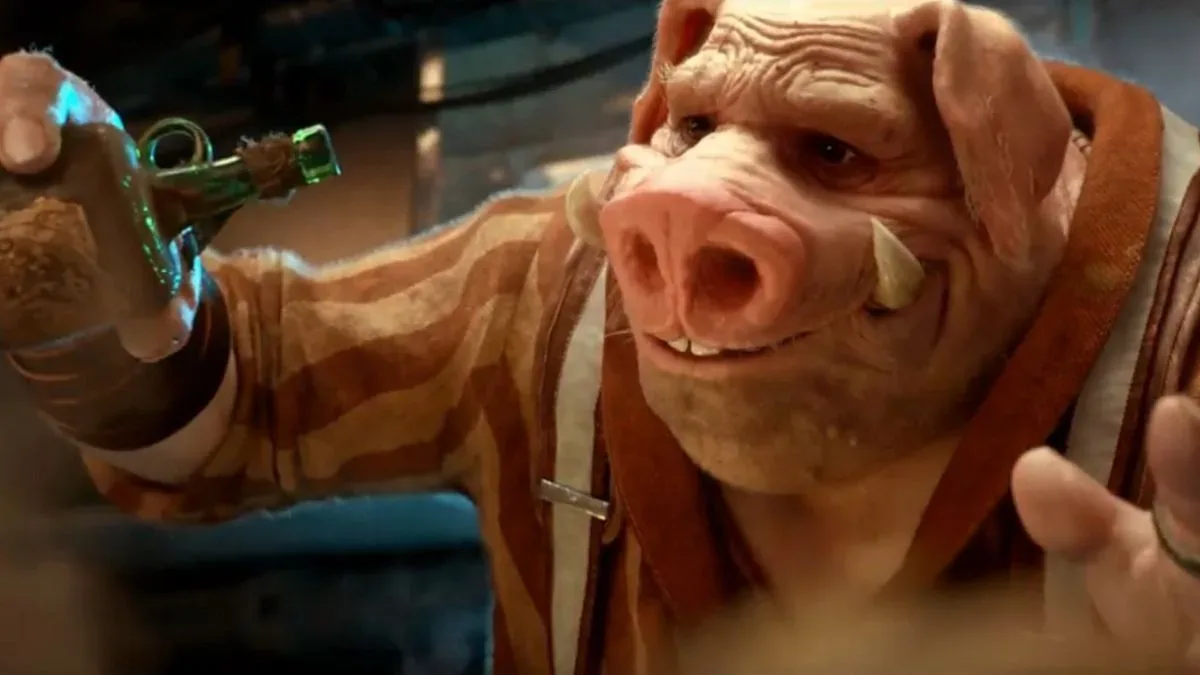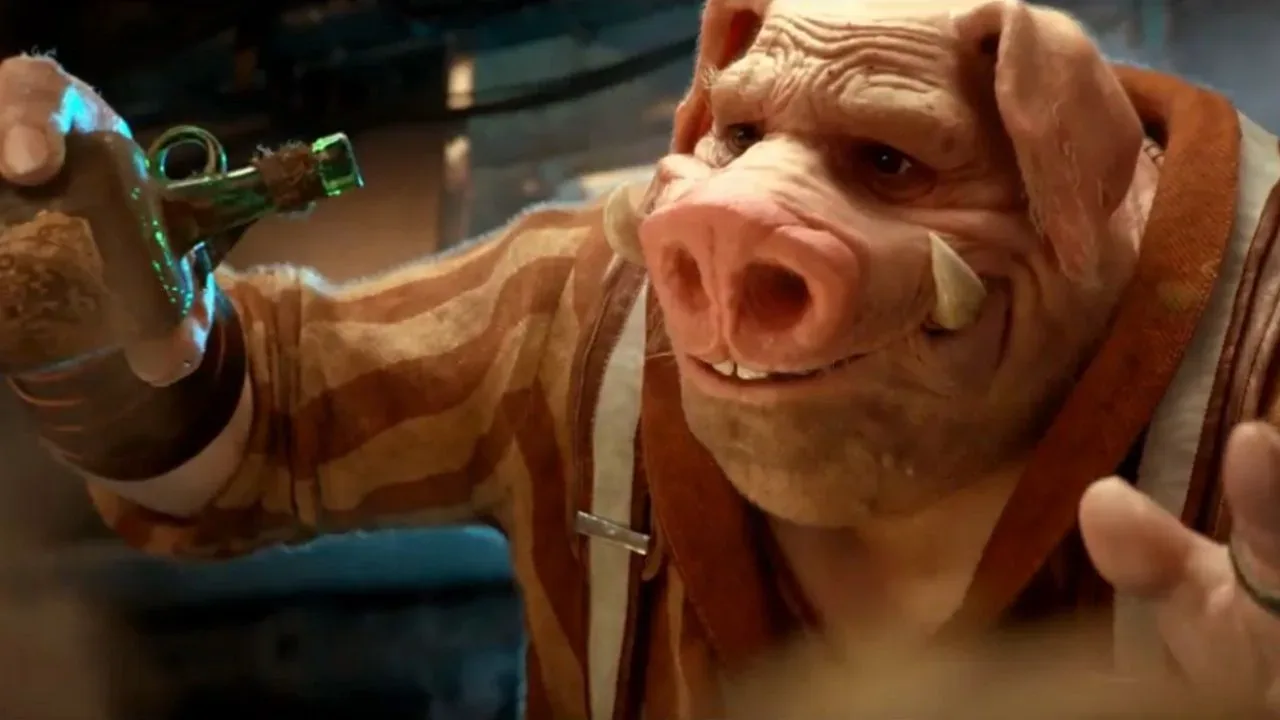
Beyond Good & Evil 2 may have made another major turn in its unusually long development story. A new report claims Ubisoft spent 2019 through 2022 developing the project as a deeply connected multiplayer game influenced by the broad, persistent appeal of Fortnite and Destiny. The same report says the current version is instead designed as a solo-first experience: a single-player-focused game with optional co-op, no mandatory internet connection, and combat compared to Marvel’s Spider-Man.
The important word in all of this is “reportedly.” Ubisoft has not publicly confirmed these claimed design phases, the current feature set, a release date, or even that the project remains in pre-production. But if the account is accurate, it offers a plausible explanation for why a game announced more than 18 years ago has remained so difficult to pin down: the team may not simply have been making one enormous game for all that time. It may have been repeatedly asked to make different games.
The reported path: connected multiplayer, then shrinking co-op, then solo-first
The reported 2019–2022 concept was described as highly multiplayer and connected. Players would have created their own characters, participated in activities generated on the fly, and joined large sessions through organic matchmaking. In plain terms, that points to a game built around regularly connecting players to a shared online ecosystem rather than centering a fixed, self-contained solo campaign.
That approach reportedly did not stay fixed. The design is said to have shifted first toward a more open-ended structure, then toward four-player team action, and later to two-player co-op. The present direction is reportedly single-player first, retaining co-op as an option rather than making it the organizing principle of the entire game.
Those distinctions matter. “Optional co-op” does not merely mean that a game allows a second player to join. It generally implies the core experience must still function coherently for a person playing alone: progression, combat encounters, exploration and pacing need to work without a partner. A project conceived around large multiplayer sessions faces a different set of needs, including systems for matchmaking, repeatable activities and a more constantly connected player base.
Moving from one model to the other can therefore mean far more than turning off a server requirement. It can change the intended player character, mission structure, rewards, combat readability and the basic question of what players are meant to do from one session to the next.
Why “pre-production” is the striking part
The report’s most consequential claim is that Beyond Good & Evil 2 is still in pre-production. Pre-production is the stage in which a game’s creators work out its concept and foundations before full-scale production. Teams may establish the creative direction, identify major technical needs, test prototypes, define the game’s pillars and determine which content can realistically be built.
That does not mean no work has been done. Development is not a simple light switch that flips from “nothing” to “everything.” But it does suggest that the project’s central decisions may not be locked in tightly enough for a conventional march toward completion. The report characterizes the issue as a pattern of changing creative milestones: targets were missed not necessarily because a team failed to hit a settled goal, but because the goal itself kept being revised.
Related coverage includes Beyond Good & Evil 2 Reportedly Returns to Solo-First Design After Years of Multiplayer Shifts.
That distinction is brutal for a game in development. A milestone is useful when it measures progress toward a shared destination. If the destination changes, work that once looked like progress can become a prototype, a discarded system or an expensive lesson about what the game should not be.
A solo-first action game with optional co-op can still be ambitious, but it needs a clear creative identity. The comparison to Marvel’s Spider-Man, as reported, appears to concern the desired style of combat rather than a detailed description of systems, characters or world design. It should not be read as confirmation that Beyond Good & Evil 2 will copy that game’s mechanics or structure. No detailed gameplay breakdown has been provided here.
Live service and solo-first are not interchangeable labels
“Live service” is often used broadly, sometimes as shorthand for any game that goes online. More precisely, it describes a model intended to operate and evolve over time through ongoing connected play, updates and repeatable engagement. The reported Fortnite and Destiny inspirations are meaningful because those games are associated with persistent online communities and designs that encourage recurring participation.
A solo-first game can absolutely receive updates or include online co-op. What makes it different is the priority: the individual player’s journey is meant to remain complete without a permanently online framework or the presence of a large population of other players.
For prospective players, the reported absence of mandatory internet requirements is a particularly concrete implication. If it remains true at release, it would mean internet access is not required simply to play the core game. Optional co-op would still naturally require a connection when used, but the distinction would be welcome for people who prefer playing independently or who do not want a game’s fundamental access tied to online status.
It also avoids assuming that a shift away from a highly connected concept automatically makes a project smaller or easier. Rebuilding a game around single-player priorities can demand its own large design effort. Narrative flow, enemy behavior, difficulty, companion systems, mission objectives and progression all need to stand on their own when a teammate is not guaranteed to be present.
A familiar industry tension, but no guarantee of a clean outcome
The account arrives amid a broader industry conversation about projects that move between multiplayer ambitions and more traditional single-player designs. Dragon Age: The Veilguard has also been cited in reports as a game that changed between live-service multiplayer and single-player RPG directions during its development. That example does not establish what will happen with Beyond Good & Evil 2, but it does illustrate why changes in the underlying pitch can leave a long shadow over a project.
Ubisoft’s restructuring is presented as an effort that could bring clearer creative direction to works in development. For Beyond Good & Evil 2, clarity would be more valuable than another attention-grabbing comparison. The game does not need to be framed as a challenger to Fortnite, Destiny or Marvel’s Spider-Man to earn interest. It needs a stable answer to simpler questions: who is the player, what is the core loop, how does co-op fit, and what makes this entry feel like Beyond Good & Evil?
That kind of focus is especially important when the public has had so little recent evidence to assess. The project was announced more than 18 years ago, and it has not been seen publicly this decade. Every reported overhaul raises the risk that audiences will interpret any future reveal not as the start of a clear campaign, but as yet another provisional version.
Industry pressure can compound that problem. As explored in a recent discussion of expectations as a career risk in game development, creative work at major studios is often shaped by more than budgets alone. Expectations around scope, market trends and perceived commercial potential can make a stable creative vision hard to maintain. That is analysis rather than proof of what happened on this particular project, but the reported sequence of design pivots fits the concern.
What has and has not been established
There is still a very large gap between a reported internal direction and a finished, publicly detailed game. The report does not provide a release window, platforms, a confirmed protagonist, footage, a confirmed story premise or final co-op rules. It also does not establish that the current solo-first plan will remain unchanged.
What it does describe is a project that may finally be narrowing its priorities after years of successive reinvention. The claimed evolution from large, organically matched multiplayer sessions to optional co-op is not a minor tuning pass. It is a redefinition of the product.
For now, the most sensible reading is cautious: Beyond Good & Evil 2 is reportedly alive, reportedly still unsettled, and reportedly oriented toward a format many fans may find easier to understand. Until Ubisoft provides a substantive official update, however, “solo-first with optional co-op” should be treated as a reported snapshot of development—not a finalized promise.