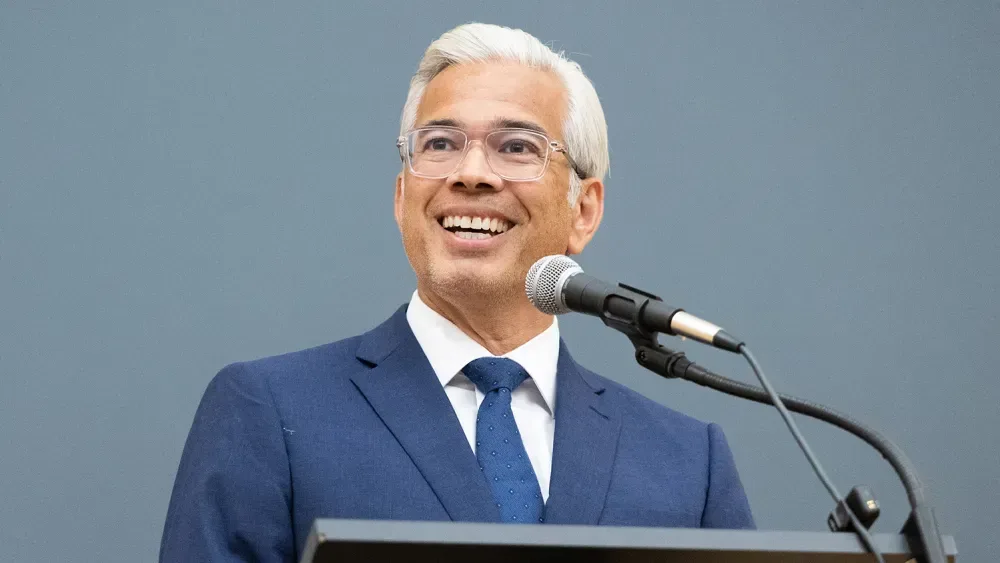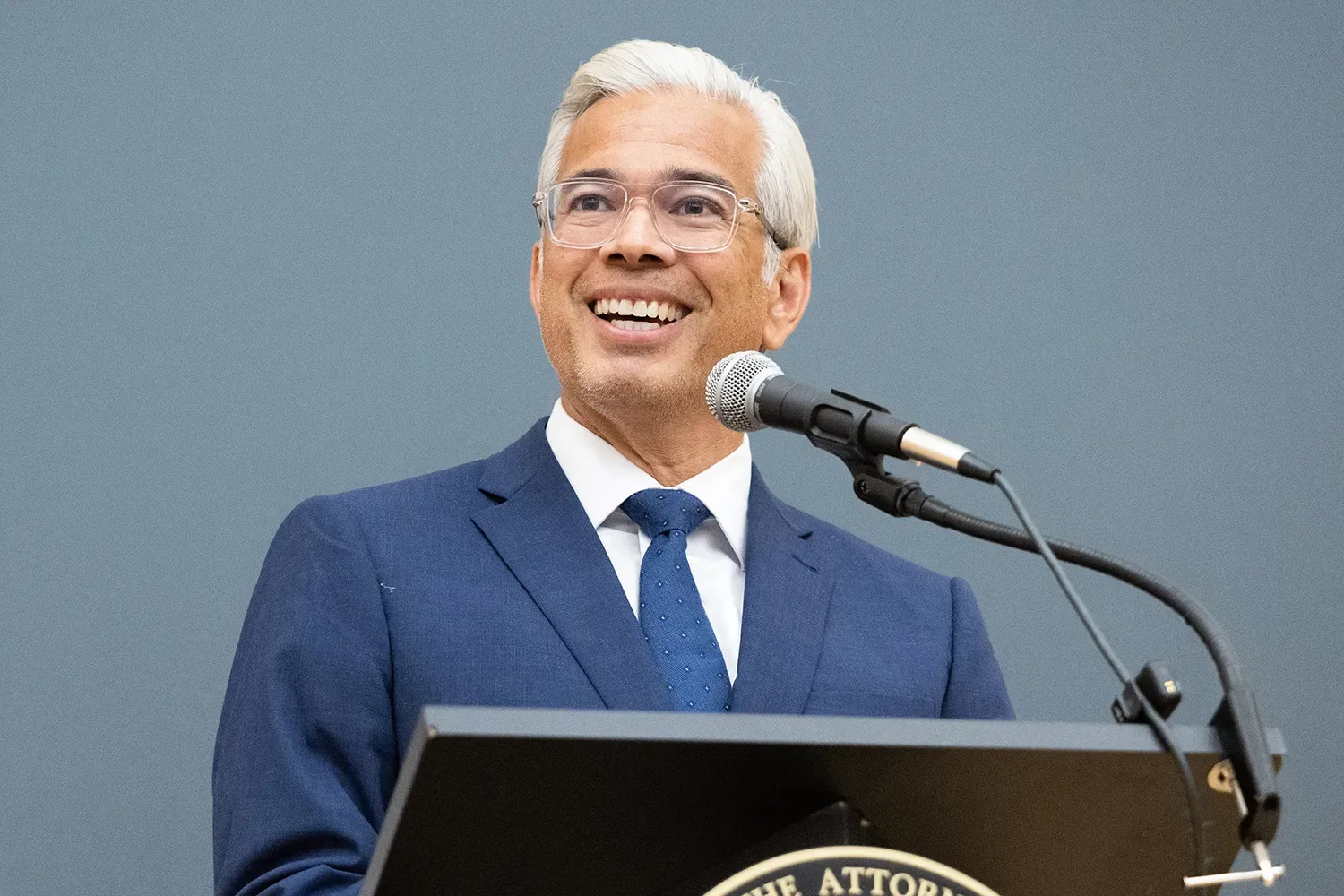
California Attorney General Rob Bonta’s attempt to block the proposed Paramount-Warner Bros. merger has ended in a settlement with what were described as modest conditions, bringing an abrupt close to a case that had become as much a test of political power as a conventional antitrust dispute.
Bonta filed the case in July while arguing that federal enforcement had failed to scrutinize major transactions adequately. Two months later, the state’s effort was withdrawn amid an unusual combination of pressures: Gov. Gavin Newsom publicly favored a settlement over a potentially lengthy court battle, Paramount gathered political and industry support, and the company raised the prospect of moving to Tennessee if an agreement was not reached by Oct. 1.
The result matters beyond one studio deal. It highlights the difficult position of state attorneys general trying to pursue competition cases when the federal government takes a less aggressive posture—and when a case’s economic consequences become a major political concern in their own state.
What happened to California’s merger challenge
Antitrust law is the body of law intended to prevent conduct or transactions that unlawfully reduce competition. In a merger case, an enforcer generally must establish that combining two companies is likely to harm competition in a legally meaningful market. The concern can include reduced choices, weaker bargaining power for workers or suppliers, or the ability to raise prices.
Bonta’s lawsuit aimed to stop the Paramount-Warner Bros. merger. He framed the state action as necessary because the Trump administration had not taken the enforcement action he believed was warranted. His public remarks cast the dispute in explicitly political terms, arguing that federal decisions were being driven by White House politics rather than the views of the Justice Department’s antitrust staff.
That framing became part of the conflict. Paramount, by contrast, characterized Bonta’s action as political, noting that he repeatedly referenced President Trump at the press conference where he announced the lawsuit while mentioning Paramount CEO David Ellison only once.
The settlement means the core challenge will not go to trial. Importantly, Paramount did not need to secure a favorable ruling from a court to prevail. The company’s ability to resolve the suit without one illustrates that lawsuits involving huge entertainment businesses can be decided in arenas beyond the courtroom: labor relationships, state economic policy, public messaging and negotiations among elected officials can all change the practical terrain.
Newsom’s concern: uncertainty during a production slump
Newsom’s involvement centered on the prospect that a trial would prolong uncertainty for the industry. That position did not necessarily answer the legal question of whether the merger violated antitrust law. Instead, it reflected a policy calculation about the risks attached to a drawn-out dispute.
Those risks carried extra political weight because the entertainment business is in a historic production slump. Paramount’s suggestion that it could leave California for Tennessee if no deal was completed by Oct. 1 sharpened the stakes. For political leaders, the possibility of a major studio departing Hollywood created an economic concern as well as a symbolic one.
Former California deputy attorney general Abiel Garcia characterized the outcome as a case where Bonta had a stronger position on the legal merits but lost ground on everything around the law. That distinction is key. A government official can possess an arguable case on the facts and legal standards while still lacking the coalition necessary to sustain a fight against a large company with substantial economic influence.
There is also a limit to what can be inferred from the settlement. The available account describes the conditions as modest, but does not specify them. It would therefore be premature to treat the agreement as proof that California won meaningful structural protections, or that Paramount conceded the merger would have been unlawful. The clearest confirmed result is that the lawsuit was abandoned rather than tested in court.
Labor and exhibition groups complicated Bonta’s position
The attorney general’s challenge also lost prospective allies among groups that might have been expected to raise concerns about consolidation. The Directors Guild of America, IATSE and Cinema United each supported a settlement.
That matters because mergers in entertainment rarely affect only the two corporate parties. Filmmakers, crews, exhibitors and other businesses may have different concerns even when they all operate around the same studio system. Some may see a combination as a danger to competition; others may prioritize stability, continued work or a quick resolution that removes uncertainty.
Those competing interests make “the industry” an imprecise shorthand. A deal can produce very different calculations for unions, theater owners, production workers and studio management. In this instance, support for settlement from the Directors Guild, IATSE and Cinema United weakened the political case for extending litigation, regardless of the arguments Bonta intended to present in court.
For audiences, these disputes can feel distant, but ownership changes influence the companies that finance, produce, distribute and market films and television. The immediate article does not establish a particular consumer outcome from this merger. Still, the fight demonstrates why ownership structure is not only a corporate issue: it can shape who has leverage across the entertainment pipeline.
A broader question about state antitrust enforcement
Bonta is part of a wider group of state attorneys general seeking to pursue antitrust enforcement where they believe the federal government has stepped back. He has joined multistate coalitions in matters involving HPE and Juniper Networks, Ticketmaster, and Nexstar and Tegna.
State enforcement can be especially consequential in national industries. A state attorney general may bring a case under state or federal competition rules, and a coalition can give states more resources and a broader geographic stake. But state officials remain elected figures operating inside political systems. Their independence in a legal sense does not eliminate the possibility that governors, employers, labor groups, voters and companies will exert political pressure around a high-profile case.
Colorado Attorney General Phil Weiser drew a pointed contrast, saying that his governor had never offered him feedback, publicly or privately, on an antitrust case. Paula Blizzard, who leads California’s antitrust section, emphasized that attorneys general are separately elected independent officials, while declining to elaborate on Newsom’s role.
The comments reveal the underlying institutional tension. An independently elected attorney general has authority to make legal judgments, but governors have their own responsibilities for economic policy and political leadership. The harder question is not whether those offices are formally separate; it is how much room an attorney general has to maintain an aggressive enforcement posture when the governor believes the litigation itself threatens the state’s economic interests.
Federal intervention added another front
The case was further complicated when the Trump-led Justice Department and two Republican state attorneys general sought to intervene while Paramount appeared to be under pressure. Their position effectively challenged whether states should be able to enforce antitrust violations at all.
That intervention pushed the dispute beyond the merits of a single media transaction. If states face efforts to restrict their ability to bring competition cases, the consequences could reach every sector in which federal enforcers choose not to act. State attorneys general may be described as a backstop in such situations, but that backstop is only meaningful if they retain both legal standing and political support.
Media and technology businesses are increasingly intertwined with these questions of market control, distribution and access. The same broad attention to how companies shape audience access can be seen in a separate discussion of a Microsoft patent exploring Xbox game access earned through ad viewing, though that is a distinct issue from the Paramount-Warner Bros. merger.
What the settlement says—and does not say
It would be too simple to call the outcome either a clean corporate victory or a definitive rejection of Bonta’s legal theory. Observers cited in the account disagreed over the underlying strength of the case, with some viewing it as marginal. No final court decision was issued, so there is no ruling that resolves the legal merits for future mergers.
What the settlement does show is the leverage a major company can build outside litigation. Paramount assembled supporters, invoked the possibility of a relocation to Tennessee, and operated in a moment when California leaders were sensitive to the state of film and television production. Those factors did not substitute for a judicial ruling, but they changed the incentives facing the state.
Bill Kovacic, a professor at George Washington University, said Bonta appeared to overestimate the political backing he would receive from Newsom and other Democratic figures. His assessment points to the central lesson of the episode: enforcement authority on paper is not the same as durable political capacity in practice.
For future state-led merger challenges, officials may have to calculate not only whether they can make a legal case, but whether they can retain support through the economic and public-relations pressure that a prolonged battle can invite. In California, the Paramount-Warner Bros. dispute ended before the court could decide the antitrust question. The larger argument—over who should police consolidation when federal enforcement is restrained—remains unresolved.