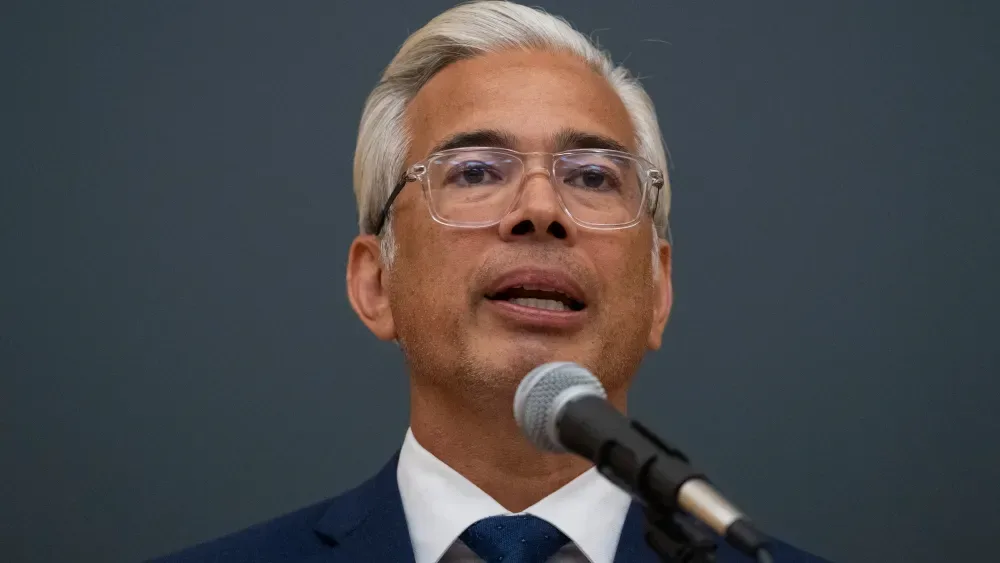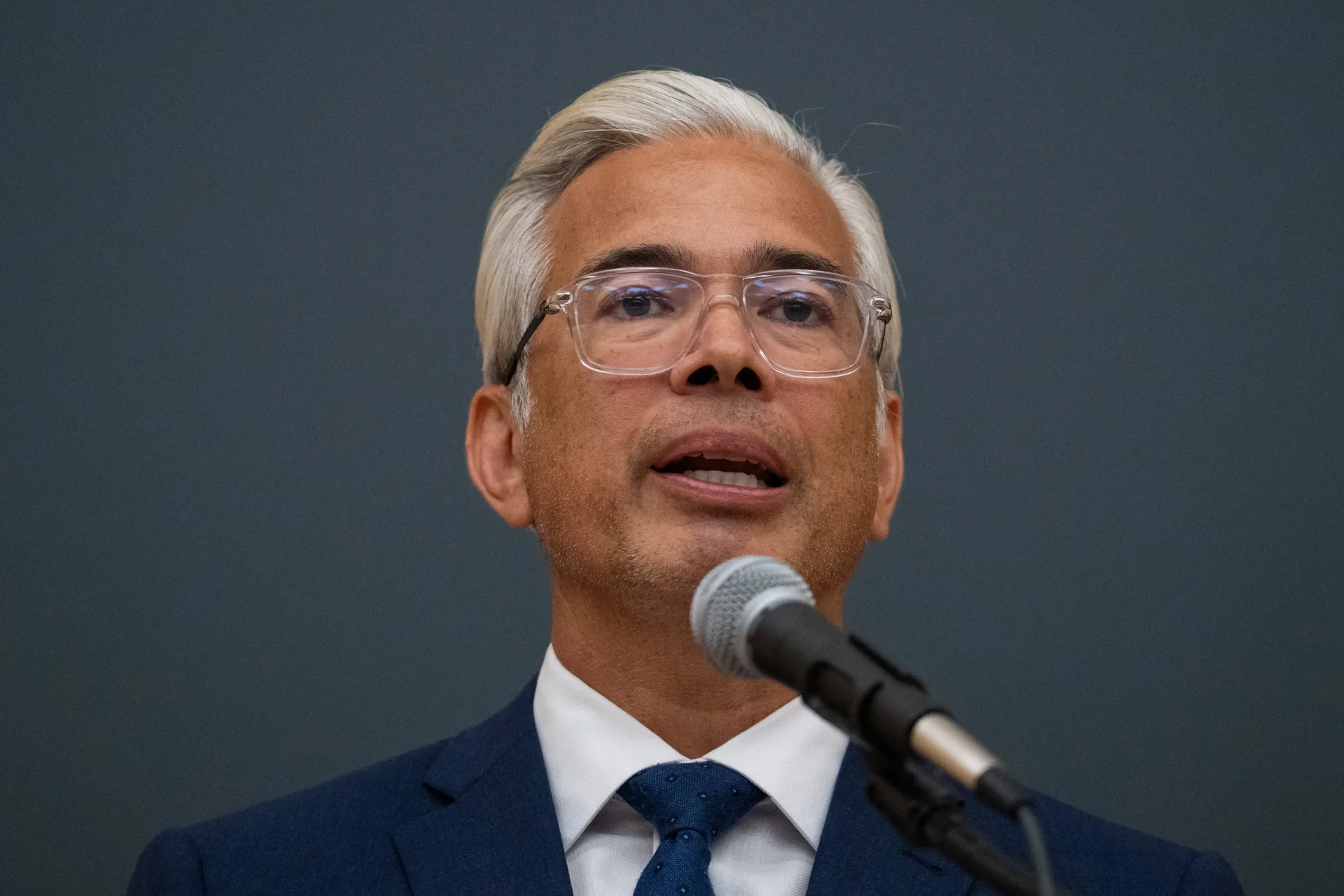
California Attorney General Rob Bonta has defended the antitrust settlement clearing the way for Paramount to merge with Warner Bros., calling the result a strong package of remedies even as he acknowledged that it was not the outcome he would have chosen in the abstract.
At a 45-minute press conference, Bonta said the arrangement brings independent monitoring and commitments intended to support Hollywood employment. He stressed pledges to increase domestic production and not sell Paramount’s Los Angeles lots for at least five years, arguing that those terms provide stability for a production community that has been dealing with uncertainty around the proposed combination.
But the defense comes with an important qualification: Bonta said plainly that he does not think the two companies should merge. The settlement resolves the states’ antitrust case; it does not mean California’s attorney general has changed his underlying view about the desirability of consolidation between the media companies.
What the settlement is designed to do
The dispute involved a coalition of 12 states. All 12 signed onto the settlement, Bonta said. Rather than pursuing a trial next spring, the states agreed to terms that allow the transaction to proceed while imposing obligations on Paramount.
The central promises publicly identified by Bonta are:
- Independent monitoring: Oversight by a party separate from the merging companies, intended to assess compliance with the settlement’s commitments.
- More domestic production: A commitment to increase production in the United States, which Bonta linked to job prospects in Hollywood.
- Protection for Los Angeles lots: Paramount has committed not to sell its L.A. studio lots for a minimum of five years.
Those are commonly described as behavioral remedies: rules governing what a company must do or must not do after a deal. They differ from structural remedies, which alter the assets or corporate structure involved in the transaction. A divestiture—selling a network, business division or other asset—is a central example of a structural remedy.
That distinction sits at the heart of the disagreement surrounding this settlement. Bonta had previously identified “robust structural remedies” as the objective after the lawsuit was filed in July. The final agreement, as described publicly, does not contain that language. Nor does it require the sale of CBS or CNN.
Bonta’s case: certainty and enforceable commitments
Bonta’s public argument is pragmatic. Antitrust litigation is uncertain, even when regulators believe the evidence supports their case. He said courtrooms “always have risk,” and also recognized that a prolonged fight would have extended the period of uncertainty confronting Hollywood.
Related coverage includes Rob Bonta Calls Paramount-Warner Bros. Settlement a Strong Antitrust Outcome.
In this framing, the question was not simply whether the merger should be blocked. It was whether the states could convert their challenge into enforceable protections that would materially address the harms they had identified. Bonta says the answer is yes, characterizing the agreement as an antitrust resolution containing “very strong remedies and commitments.”
His emphasis on Los Angeles-based production is particularly significant because the commitments concern physical production activity and studio-property continuity, rather than only abstract competition principles. A no-sale commitment for the L.A. lots is meant to remove one immediate concern: that consolidation could lead to the disposal of infrastructure tied to local screen production. The domestic-production pledge is meant to address a related concern about work.
Independent monitoring matters because a settlement is only as meaningful as its execution. Monitoring does not itself create more productions or jobs. Its role is to provide oversight of whether obligations are being met, and to make the commitments more than a public-relations promise that vanishes once a deal closes.
Paramount is reportedly hoping to close the Warner Bros. transaction in approximately two weeks, based on a staff memo from David Ellison. That timetable underscores why the settlement is being examined not merely as a litigation milestone but as a near-term blueprint for how the combined company will be expected to operate.
The critics’ objection: commitments are not divestitures
Connecticut Attorney General William Tong voiced the clearest public disappointment with what was left out. He said divestiture of CBS and CNN was necessary to preserve ethical and independent journalism, and said the states had fought aggressively for that result. His assessment after the settlement was blunt: the coalition could not do more.
The Writers Guild of America also resolved its separate antitrust case over the weekend, but its response was sharply critical. The guild said the terms fall far short of adequately protecting writers. It also said it could not afford to continue its lawsuit without support from the states.
That sequence is worth separating carefully. The WGA was not part of the states’ negotiations, as Bonta noted. Its suit and the states’ suit were distinct legal actions, even though both challenged the same broad merger. The guild’s settlement therefore should not be read as an endorsement of the states’ terms, and its criticism illustrates why the overall deal remains contentious.
Critics’ broader point is straightforward: commitments about conduct can be valuable, but they do not permanently separate assets or businesses. A divestiture changes ownership and can reduce concentration directly. Monitoring and production commitments instead rely on continuing compliance over time. The two approaches may be aimed at related problems, but they are not interchangeable.
Why Disney-Fox remains the comparison point
Bonta has contrasted the new settlement with the earlier Disney-Fox merger, which he said went unchallenged by antitrust authorities and was followed by a substantial reduction in film production. He argued that the Paramount-Warner Bros. agreement is the opposite model: not just a guardrail against downside, but a mechanism intended to lock in increased production.
The comparison explains both Bonta’s defense and the skepticism around it. In Bonta’s view, the past shows why regulators should demand commitments tied to output and employment rather than simply allow a major entertainment merger to proceed without a challenge. In the critics’ view, the same history is a warning that consolidation can reshape creative work in ways that assurances may not fully prevent.
It is also a reminder that major corporate transactions reverberate beyond a company’s immediate catalog or streaming menu. Film and television production affects writers, crews, performers, facilities and local businesses. It can also affect the volume and range of projects that reach audiences. Disney’s entertainment footprint continues to evolve, including the planned endpoint for Daredevil: Born Again on Disney+, while the Paramount-Warner Bros. settlement has put a different question in focus: what protections are needed when another enormous entertainment business is allowed to consolidate?
Pressure, leverage and the decision to settle
The settlement arrived after a period of intense pressure around the litigation. Gov. Gavin Newsom, Xavier Becerra, a cinema trade group and labor leaders had expressed hope for a resolution. Paramount, meanwhile, threatened to relocate to Tennessee and sought a court order requiring the 12-state group to pay $1.88 billion for delaying the transaction.
Bonta pushed back on the suggestion that these developments drove the decision. He said that was not his focus and instead argued that the states’ court victories placed pressure on Paramount to make substantial concessions. He did not identify a single provision or turning point that produced the agreement, describing the negotiations as a blur of deep conversations.
There is no need to accept either interpretation as exclusive. Settlement negotiations in major antitrust cases can involve legal risk, commercial deadlines, political pressure and practical concerns for workers at the same time. What is established here is that Bonta sees the deal as the product of leverage earned through litigation, while its public detractors believe the final terms did not reach far enough.
What to watch after closing
The most useful test of this settlement will be its implementation. The disclosed terms make several practical questions especially important:
- How will the independent monitoring process measure compliance with the production and property commitments?
- What does an increase in domestic production look like in practice, and how will it be documented?
- How will the five-year protection for Paramount’s Los Angeles lots be enforced?
- Will the merged company’s decisions address the concerns raised by writers and by officials seeking divestitures, even where the settlement does not mandate those steps?
Bonta’s message is that the coalition obtained the strongest realistic resolution while avoiding the uncertainty of a trial. Tong and the WGA, from different positions, have made clear that they see important protections as missing. The Paramount-Warner Bros. merger can now move ahead under the settlement, but the argument over whether behavioral commitments are enough for an entertainment deal of this scale is far from settled.