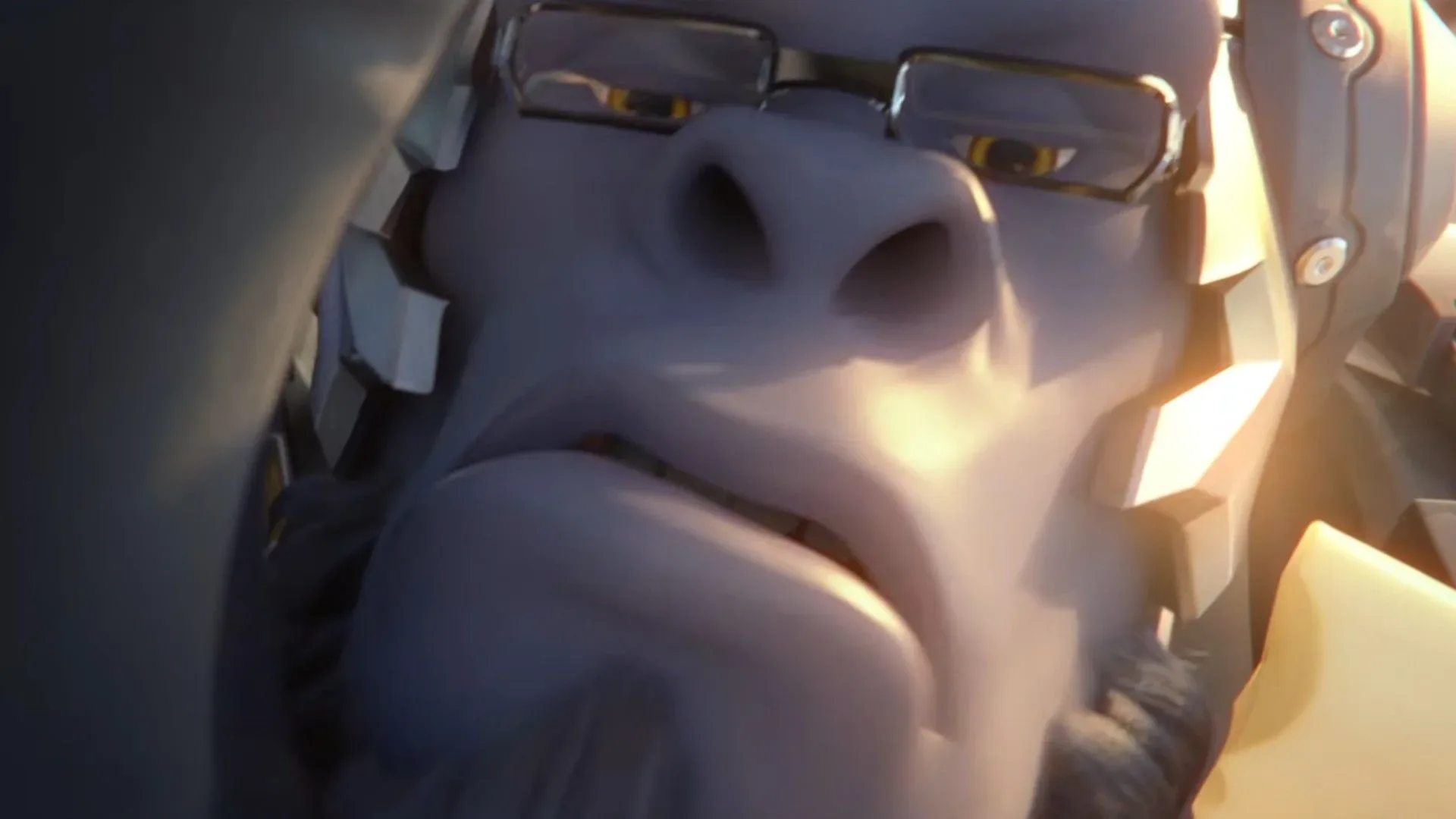
Overwatch PvE is not being declared permanently dead, but its most ambitious form is not on the table as a simple comeback. Game director Aaron Keller has left open the possibility of future playable narrative content in the Overwatch universe. At the same time, he has drawn a clear line between smaller PvE experiences and the kind of sweeping, story-led cooperative campaign once planned for Overwatch 2.
For players still hoping to see Overwatch’s story unfold through missions rather than solely through cinematics and other narrative material, that is a qualified bit of encouragement. Keller said he would “never discount” a return to PvE. But he also indicated that rebuilding the original campaign-scale proposition would be a vastly larger undertaking—one that could require a separate team making “a whole new game.”
That distinction matters. It does not signal that a replacement campaign has been announced, nor does it establish a timetable for new missions. It does, however, explain why any future PvE may look notably different from the project many players originally expected.
What Overwatch’s canceled campaign was meant to be
The original vision for Overwatch 2 included an in-depth cooperative campaign built around the game’s cast and setting. Players were expected to take their preferred heroes through story content while upgrading and modifying them over time. That model would have made PvE more than a sequence of isolated matches: hero progression and an extended campaign structure were intended to give the mode its own identity.
For more context, explore Apple Watch AssistiveTouch: How Hands-Free Gesture Control Works and When to Turn It On.
PvE, or player-versus-environment, means players cooperate against computer-controlled enemies and encounter design rather than competing only against other human players. In Overwatch’s case, that format can support scripted objectives, enemy waves, character interactions and set-piece moments that do not fit neatly inside its competitive multiplayer matches.
A campaign also offers something different from a trailer or animated short. It puts players in the action as events happen and can use missions to advance the setting over time. The trade-off is that every playable chapter needs a substantial amount of production work: mission concepts, environments, enemy behavior, objectives, balance, narrative presentation, testing and ongoing technical support. A cinematic can move the fiction forward without requiring all of those systems to be playable.
That original campaign was canceled. Shorter and simpler PvE missions followed, but those were infrequent and were subsequently discontinued. Keller’s latest comments place that history at the center of the studio’s apparent caution: the question is not simply whether the universe has enough characters or lore for PvE. It is whether a particular form of PvE can justify the effort needed to build and maintain it.
Related coverage includes Overwatch Director Leaves Door Open for PvE Return, but Full Campaign Would Need a New Game.
Interest at launch did not become lasting play
Keller described a familiar problem for limited-time or event-style modes: a strong initial burst of attention that did not hold. Speaking about the campaign activity that did run, he said there was considerable excitement and that it advanced the story, but added that it “didn’t really get played the way that we wanted it to.”
“I would never discount it.”
That phrasing is more meaningful than a simple yes-or-no answer, but it should be read carefully. Keller is not promising that PvE missions are in development. He is saying the concept remains possible. The available evidence points to the team being more receptive to smaller experiences that do not significantly disrupt work on the core competitive game than to another massive, separate campaign track.
For a live-service hero shooter, sustained engagement matters as much as initial curiosity. A mission can create excitement because it is new, because it contains story material, or because it gives familiar heroes a new kind of activity. Yet if many players return quickly to competitive modes—or do not revisit the mission once its novelty fades—the development cost becomes harder to defend.
That does not mean people who played and enjoyed the missions were wrong to value them. It means a large-scale PvE strategy needs enough continued participation to support the resources it consumes. Keller specifically pointed to the heavy development demands of such missions, suggesting those resources could instead be used on cinematics and other ways to tell stories.
Why “a whole new game” is a significant qualifier
The phrase “a whole new game” is the most important boundary in Keller’s comments. It suggests that a campaign on the intended original scale is not merely a feature waiting to be resumed. It would be a project with its own staffing needs, production plan and long-term support burden.
That makes practical sense based on the structure of the abandoned concept. A deep co-op campaign with persistent hero modifications needs systems that can accommodate progression while preserving the identity of heroes players know from competitive play. It also needs enough missions, enemy variety and narrative momentum to feel like a complete experience rather than a brief detour.
Even without assuming any particular development plan, the implications are straightforward:
- A full campaign needs scale. One or two story missions would not deliver the promise of an extensive, progression-led cooperative mode.
- Campaign work competes for development capacity. Time spent on playable missions is time that cannot automatically be spent on competitive updates, cinematics or other content.
- Separate development may be necessary. Keller’s wording indicates the campaign’s needs could exceed what the existing game’s team can absorb alongside its principal responsibilities.
- Future PvE does not have to mirror the canceled plan. Smaller narrative experiences could exist without recreating a campaign-sized product.
For fans, this helps separate two hopes that are often discussed as if they were identical. Wanting any future co-op story mission is one thing. Wanting the full original-style campaign—with broad progression, repeated chapters and a substantial standalone feel—is another. Keller has left room for the first while portraying the second as a far more consequential commitment.
Smaller missions could be the more realistic route
The strongest reading of Keller’s remarks is that Overwatch’s next playable narrative step, if it happens, would likely need to be constrained. That could mean a smaller experience designed not to affect the main competitive game too heavily. The comments do not define the format, size or release cadence of such content, so it would be premature to describe any particular mission type as planned.
Still, the logic behind the approach is easy to understand. A compact PvE experience can focus on a specific event or piece of character-driven story without carrying the expectations of an entire campaign. It can also avoid tying the game’s broader future to a mode that may demand continual expansion to remain compelling.
There is a creative opportunity in that limitation. Overwatch has a large roster and a setting built for clashes between distinctive personalities. A focused mission could potentially spotlight a smaller group, a single conflict or a notable moment in the ongoing story. In principle, that is a different proposition from building a complete co-op progression ecosystem around every hero.
The risk, from the player perspective, is that smaller missions may not satisfy those who were invested specifically in the canceled campaign’s depth and promise. A compact event is not interchangeable with a persistent story mode. The value of a modest PvE return would therefore depend on how clearly it is presented: as a self-contained narrative experience, not as an implied restoration of the larger project.
Narrative may continue outside playable missions
Keller’s comments also reinforce a broader possibility for the Overwatch universe: story can move through formats other than PvE gameplay. He identified cinematics and other narrative delivery methods as potentially better uses of substantial resources than mission development in some cases.
That approach can keep characters and major plot developments moving even when the competitive game remains the central priority. It will not replace the agency of playing through a mission, but it avoids the substantial production overhead attached to interactive content.
There is also potential beyond the game itself. Blizzard’s president has previously teased possible adaptations involving both Warcraft and Overwatch. No specific Overwatch adaptation was established in Keller’s comments, and players should not treat the possibility as confirmation of a series or another project. But the fact that adaptations have been publicly floated shows that playable campaign missions are not the only imaginable vehicle for this universe’s stories.
For now, the most accurate expectation is modest: PvE remains a possibility, not a commitment. A large replacement for the canceled campaign would demand the kind of investment associated with making a new game, while smaller story-focused experiences appear more compatible with keeping the competitive hero shooter at the center of development.
That may be disappointing news for anyone waiting for the original campaign vision to reappear intact. Yet it is also a more direct explanation of the trade-offs involved. Overwatch’s cast and setting still have room for stories; the unresolved question is what form of storytelling can earn a place alongside the game’s ongoing competitive demands.