Lara Croft became one of video games’ most recognizable characters, but two developers from the original Tomb Raider say the franchise’s early marketing took its emphasis on her appearance further than they would have liked.
Paul Douglas, a co-creator and lead programmer on the original game, and level designer Heather Stevens have described a disconnect between Core Design’s character work and the publisher-led campaigns that followed. Their comments do not deny Lara’s commercial value: both acknowledge that she was central to the series becoming a major success. Their criticism is narrower, and more revealing. They argue that promotional imagery sometimes reduced a game character with a distinctive role in an adventure game to a sexualized mascot.
A different early direction for Lara
Douglas said Lara’s earliest form was a character named Laura Cruz, described as Latina, more realistic in appearance and “almost androgynous.” Androgynous, in this context, means a design that does not strongly exaggerate traditionally feminine or masculine visual traits.
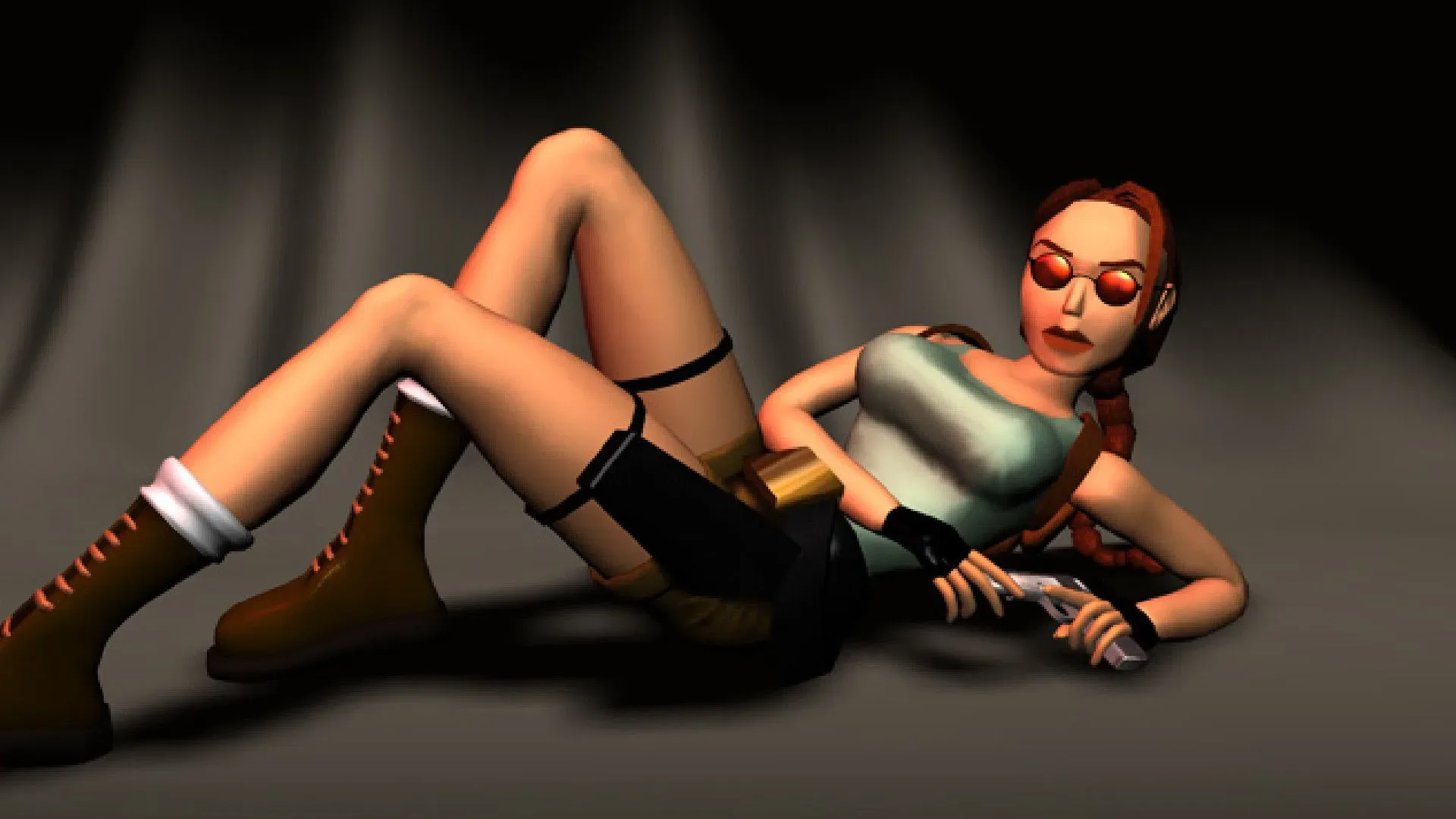
That initial idea changed as the team worked toward the version of Lara that players ultimately saw. Douglas explained that the developers felt more stylized movement would play better, and that her body shape shifted alongside that decision. The result was the sharply stylized, polygonal hourglass silhouette associated with the original game.
That distinction matters. A character model can be stylized for readability, animation, or an intentionally heightened visual identity without necessarily dictating every way the character is sold to the public. Douglas’s recollection presents the in-game design as a development choice tied to movement and style. The later criticism from him and Stevens concerns the marketing choices built around that design.
Laura Cruz’s place in Lara’s development history has been discussed for years, although surviving concept art does not offer a simple alternate universe in which every trait of the final Lara disappears. Some early art still includes pronounced hips and a bare midriff. The useful takeaway is not that the earliest proposal was wholly free of stylization; it is that the original team considered a substantially different character concept before the familiar Lara Croft identity solidified.
From perceived risk to central selling point
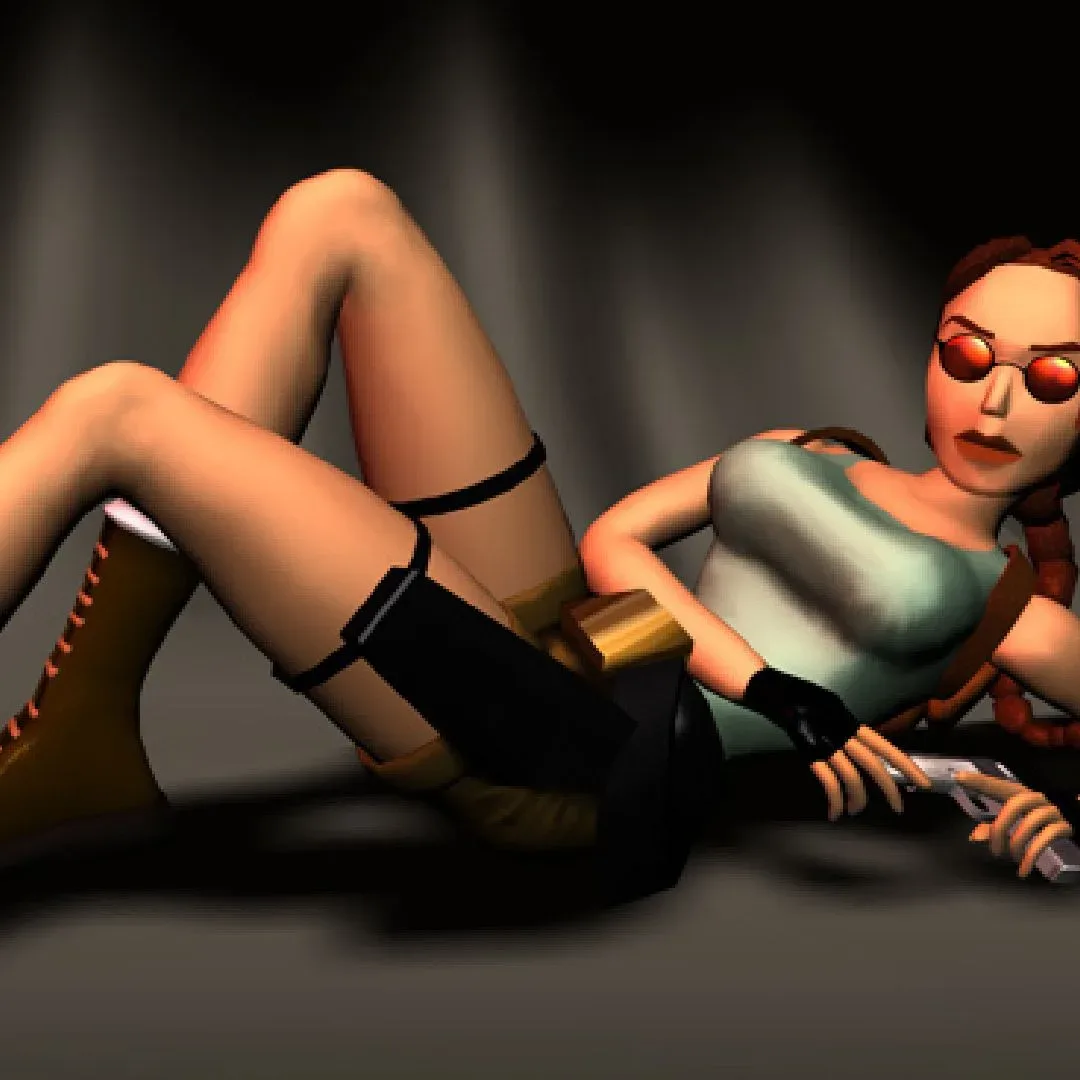
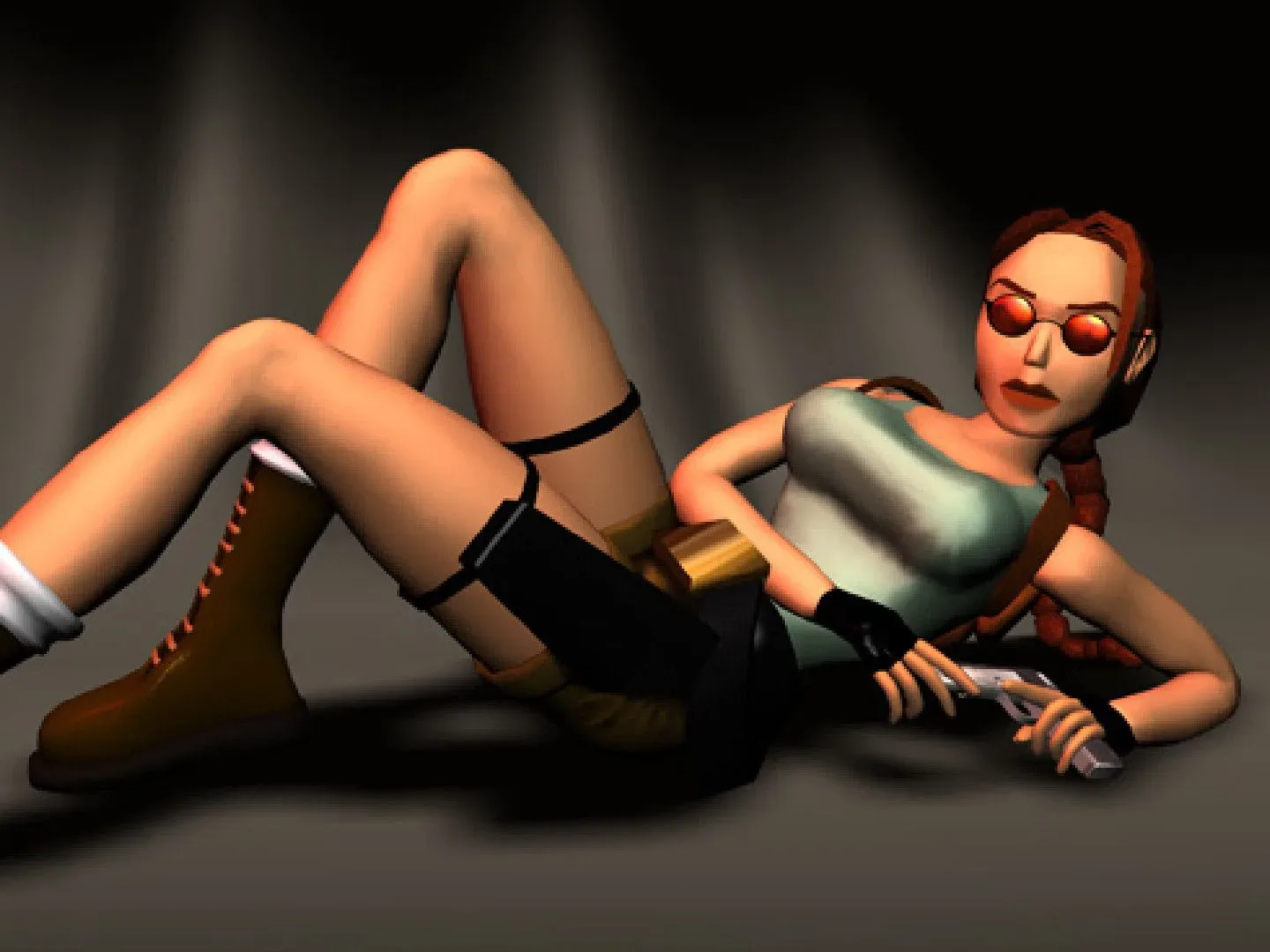
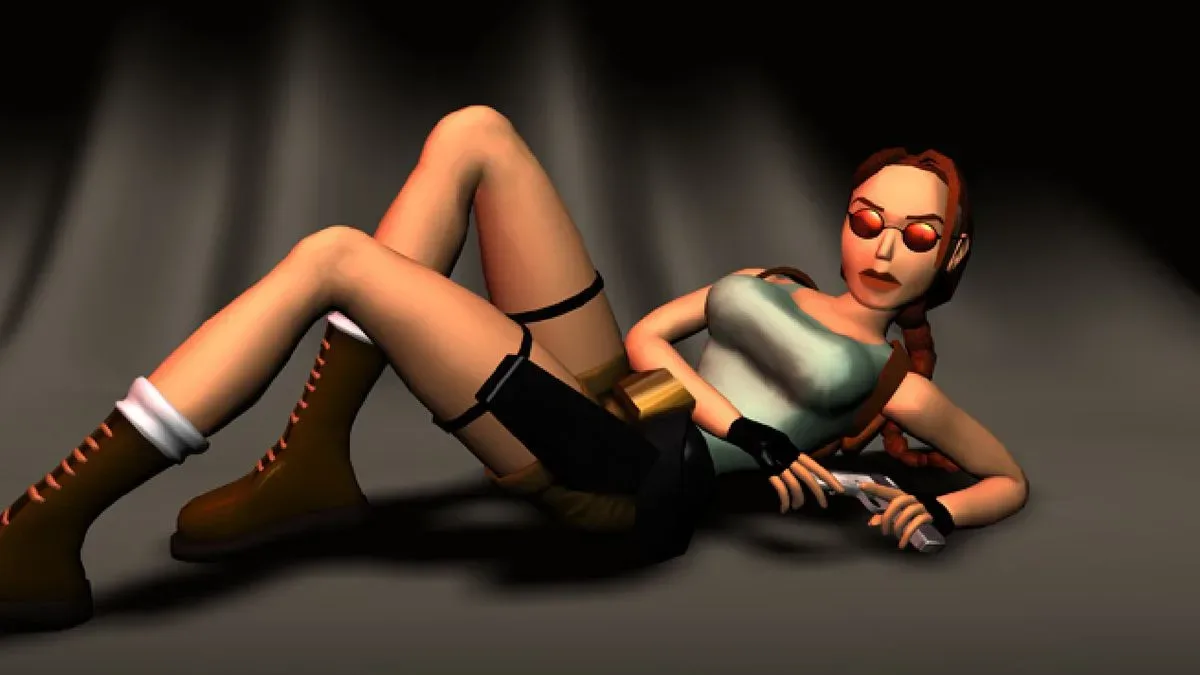
Douglas recalled a publishing belief at the time that a female character would not sell. Whether that was a universal view or not, it underscores the speed of the reversal once Tomb Raider found its audience. Lara was placed at the center of the first game’s promotion, and the series’ follow-up campaigns increasingly used pin-up-style renders and more suggestive presentation.
That evolution is the heart of the developers’ concern. Douglas said Lara’s marketability propelled Tomb Raider “into the stratosphere,” while adding that he believed the game’s quality could stand independently of the way she was sexualized. In other words, Lara was undoubtedly a powerful branding asset, but that does not settle the question of whether every marketing decision served the game, its character, or the audience well.
Related coverage includes Original Tomb Raider Developers Say Lara Croft Marketing Went Too Far.
Marketing often relies on a quick visual shorthand. For a famous character, that can mean recognizable clothing, a pose, or an easily repeated silhouette. The danger is that shorthand can become the whole message. When promotion makes the character’s body or sexual appeal the primary hook, it can crowd out the game’s actual identity: exploration, environments, level design, movement, puzzles, danger, and the player’s own role in the adventure.
Heather Stevens: focus on the character, not enough imagination
Stevens agreed that the publisher had correctly recognized Lara’s potential. But she said the attention landed on Lara rather than the game, and that particular clothing choices and poses in some campaigns went too far. Her broader criticism was that oversexualizing the character showed “a lack of imagination.”
It is an important formulation because it is not an argument that Lara should have been hidden from the advertising. A protagonist is naturally a major part of a game’s identity, and Stevens explicitly saw the value in making Lara prominent. The objection is to the limited kind of prominence chosen: promotional work that repeatedly treated sexual suggestion as the most persuasive or memorable way to communicate the franchise.
That is also a useful reminder that character marketing and sexualization are not interchangeable terms. Character marketing means using a character to help audiences recognize and understand a product. Sexualization, as discussed by Douglas and Stevens here, refers to promotion placing disproportionate emphasis on a character’s sexual appeal, revealing presentation, or suggestive posing. The former may be unavoidable for a franchise led by an iconic protagonist; the latter is a specific creative and commercial choice.
Why the comments remain significant
Lara Croft’s cultural visibility became inseparable from Tomb Raider’s success, so it would be easy to treat every part of the brand’s early image as a single, unanimous strategy. These accounts complicate that assumption. The people involved in making the original game could recognize the enormous benefits of Lara’s recognizability while still objecting to how that recognizability was used outside the game.
They also distinguish three overlapping but separate things: a character’s original concept, the final in-game model, and the promotional version of that character. Those layers influence one another, but they are not the same. A development team can revise a design for animation and readability; a publisher can then interpret that design through advertising; audiences may in turn remember the advertising as much as, or even more than, the game itself.
That division is especially relevant to legacy franchises. Public memory tends to compress years of games, posters, renders, magazine covers, and other promotional material into a single image. Douglas and Stevens are pushing back on that compression. Their comments suggest that the original creative team’s relationship with Lara’s image was more ambivalent than the brand history alone may imply.
Lara’s image continues to change
The 2013 Tomb Raider reboot from Crystal Dynamics moved Lara closer to the realistic direction Douglas associated with the earliest concept, even if the modern version would not straightforwardly fit his “androgynous” description. It represented another interpretation of the same central character rather than a return to Laura Cruz as originally envisioned.
The franchise is also set to continue with Tomb Raider: Catalyst and Legacy of Atlantis, which are described as returning to a more campy and exaggerated take on Lara. Camp generally refers to heightened, knowingly theatrical style: imagery that embraces boldness, artifice, or playful excess rather than realism. An exaggerated Lara, then, need not automatically repeat the publisher campaigns criticized by Douglas and Stevens. Style, character design, and sexualized marketing remain different decisions.
Nothing in the developers’ comments requires a rejection of Lara Croft as a larger-than-life action-adventure icon. Their point is more precise: the games had qualities worth foregrounding, and treating sexualized imagery as the default promotional language was not the only way to sell them. That observation carries weight precisely because it comes from developers who helped establish the character in the first place.
For another example of how the past can be revisited and reinterpreted within gaming culture, see our coverage of an original N64 voice being recast through blind auditions.