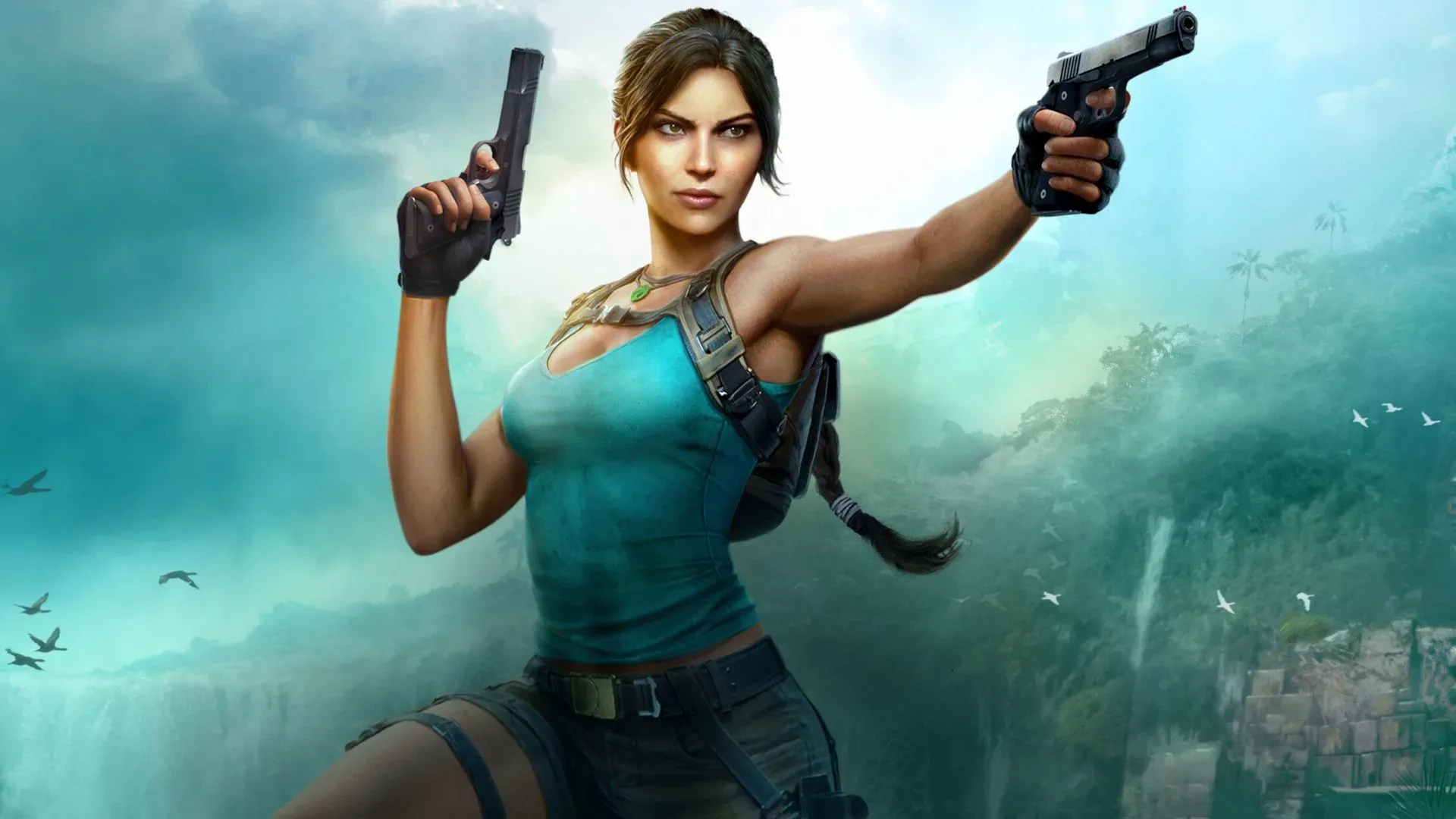
Tomb Raider: Legacy of Atlantis is being built around a deliberately tricky remake principle: change enough that the return feels meaningfully new, but leave the memories that defined the 1996 original recognizably intact.
Michał Kuk, creative director at Flying Wild Hog, and Jeff Adams, experience director at Crystal Dynamics, have described an approach that separates a player’s emotional memory of the first Tomb Raider from the mechanical and logical details that a modern production may wish to revisit. The result is not being framed as a near-identical reconstruction. Instead, Legacy of Atlantis uses the original game’s setting and story as a foundation for a new interpretation.
That distinction is central to why the project has prompted debate. A remake can mean anything from a close technical rebuild to a much broader reworking of how a classic plays, looks and moves. The team’s stated goal places Legacy of Atlantis closer to the latter category, while arguing that a remake’s identity should be measured by the scenes and sensations players remember most strongly.
Memory, rather than literal replication, is the team’s preservation test
Kuk’s test is simple in concept: imagine completing the original game, close your eyes, and replay it in your head. What remains are not necessarily the precise rules, item placements or individual jumps. They are the moments, environments, views and objects that carried the greatest emotional charge.
Those elements, Kuk said, are the material that needs to remain “almost untouched.” It is an important qualifier. “Almost” leaves room for a remake to present an old moment through contemporary technology and a different overall design, but it also establishes a boundary. The team does not appear to regard every old component as equally flexible.
In practical terms, that means preservation is not solely a question of whether a location shares a name with its predecessor, or whether a story beat occurs in roughly the same order. The stated aim is to protect the impact of a remembered encounter, vista or discovery. A remade sequence could therefore change in surface detail while still needing to deliver a recognizable emotional destination.
That is a useful way to understand the difference between fidelity and verbatim reproduction. Fidelity, in this context, means being faithful to the qualities that made the original enduring for its audience. Verbatim reproduction means retaining the old material in highly literal form, whether or not every older convention still works cleanly within the new game.
The two can overlap, but they are not the same thing. A project can replicate many details and still miss the feeling players associate with a classic. Conversely, it can substantially alter controls or structure and still preserve a scene’s purpose, tension or sense of discovery. Legacy of Atlantis is evidently pursuing that second, more subjective standard.
Related coverage includes Tomb Raider: Legacy of Atlantis Team Says the Original's Most Memorable Moments Must Remain Intact.
A remake is not automatically a one-to-one rebuild
Modern game discussion often treats the word “remake” as if it promises a single format. It does not. Some remakes emphasize close visual and mechanical reconstruction. Others retain a recognizable premise while redesigning systems, pacing and presentation at a much wider scale.
The developers position Legacy of Atlantis among the projects that use a classic work as a starting point for a new game, rather than following the near-one-to-one model associated with remakes such as Metal Gear Solid Delta or The Legend of Zelda: Link’s Awakening. That does not automatically settle whether every change will appeal to every longtime player. It does make the team’s creative contract clearer: this is intended to be an interpretation, not a museum-piece reproduction.
That approach has drawn criticism around the inclusion of modern AAA-style mechanics, including crafting and skill trees. Neither term is inherently good or bad; each changes what the player is asked to pay attention to.
- Crafting generally refers to a system in which gathered or acquired resources are turned into useful items or upgrades.
- A skill tree is a branching progression structure that lets players unlock abilities, usually by choosing among different upgrades over time.
Both systems can add planning, customization and a stronger sense of character growth. They can also shift the rhythm of a game. A player may spend more time considering materials, menus and upgrade choices rather than moving directly through spaces and set pieces. For a series whose original identity is closely tied to traversal, ancient settings and dramatic locations, that shift naturally raises questions about balance.
The developers’ comments do not provide a detailed breakdown of how either system will function in Legacy of Atlantis. What they do offer is a hierarchy of priorities. The systems may be open to modernization, while the locations, vistas and key moments that formed the original’s emotional backbone are being treated as protected territory.
Why realism creates new design problems
Adams described another pressure on the remake: raising the level of realism makes some details from the original harder to justify. His example was a med pack found inside a tomb that has remained hidden for 10,000 years.
It is a small example, but it captures a large issue. Older games often use conspicuous health pickups because they are immediately readable to the player. Their placement does not necessarily need an in-world explanation. A remade game with more realistic environments can invite a different kind of scrutiny: who put this here, why has it survived, and does it belong in this place?
This is a question of diegetic logic, meaning whether something makes sense within the fictional world and its rules. A game does not need to simulate reality perfectly to have diegetic logic. It simply needs its objects, spaces and actions to feel coherent enough for the experience it is trying to create.
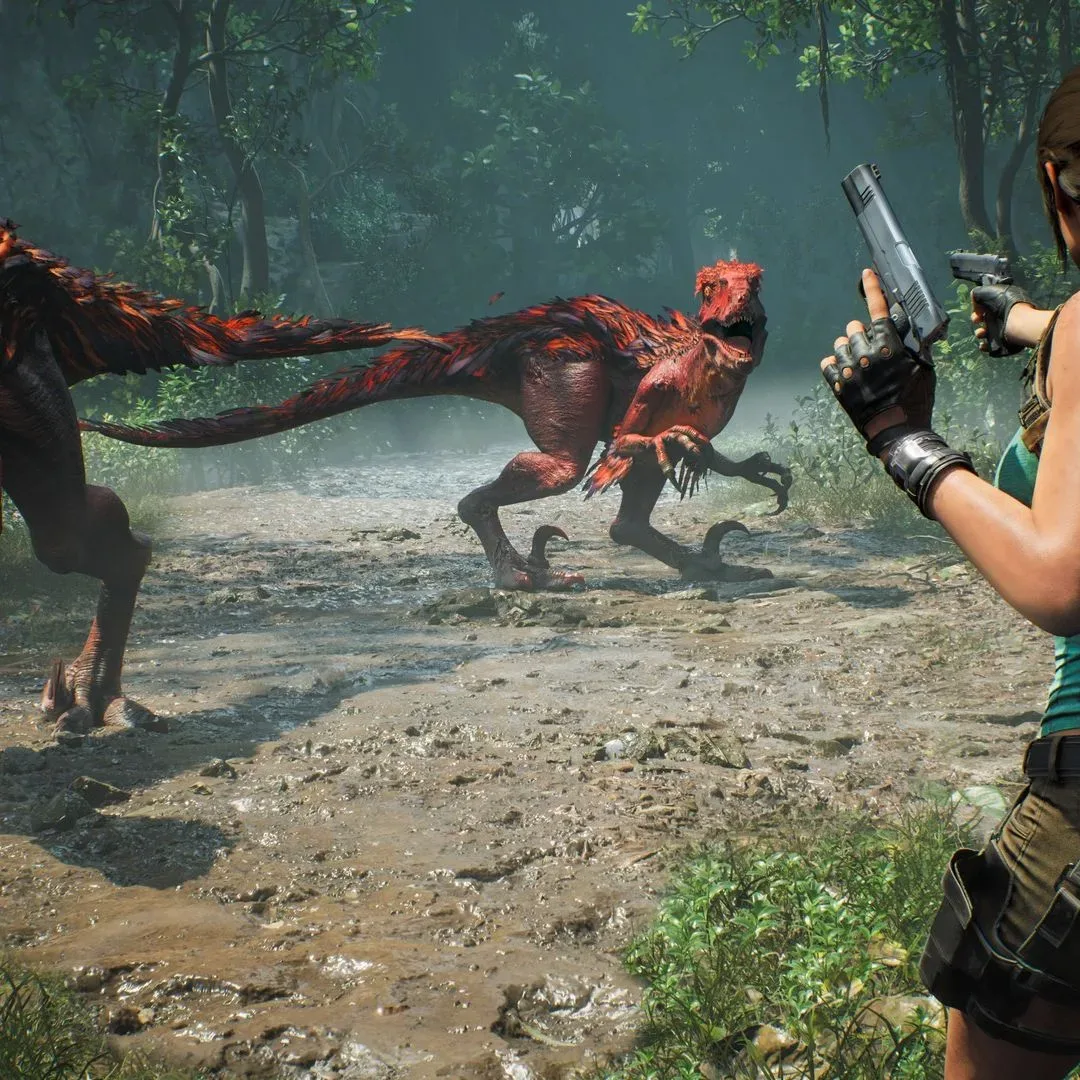
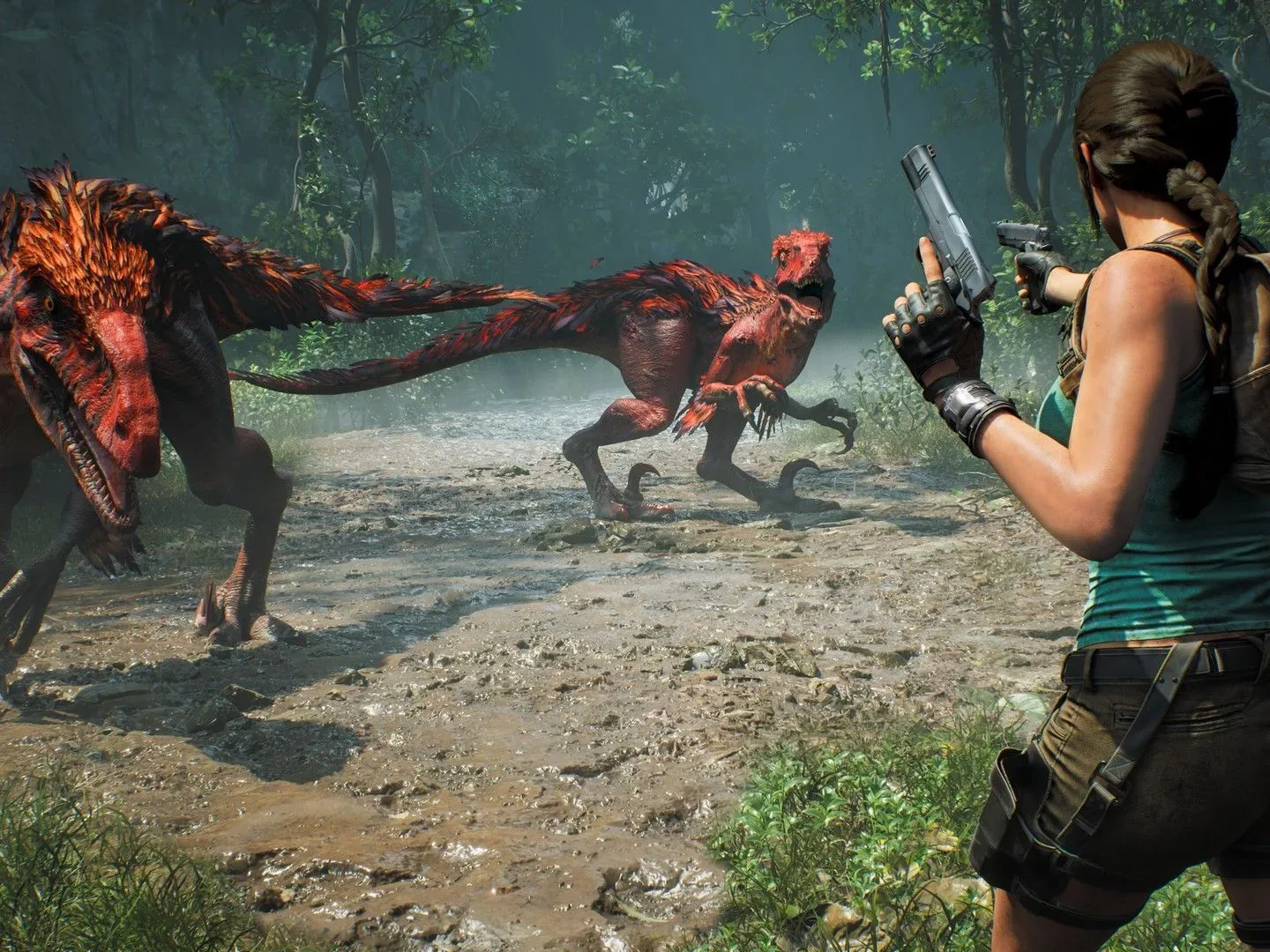
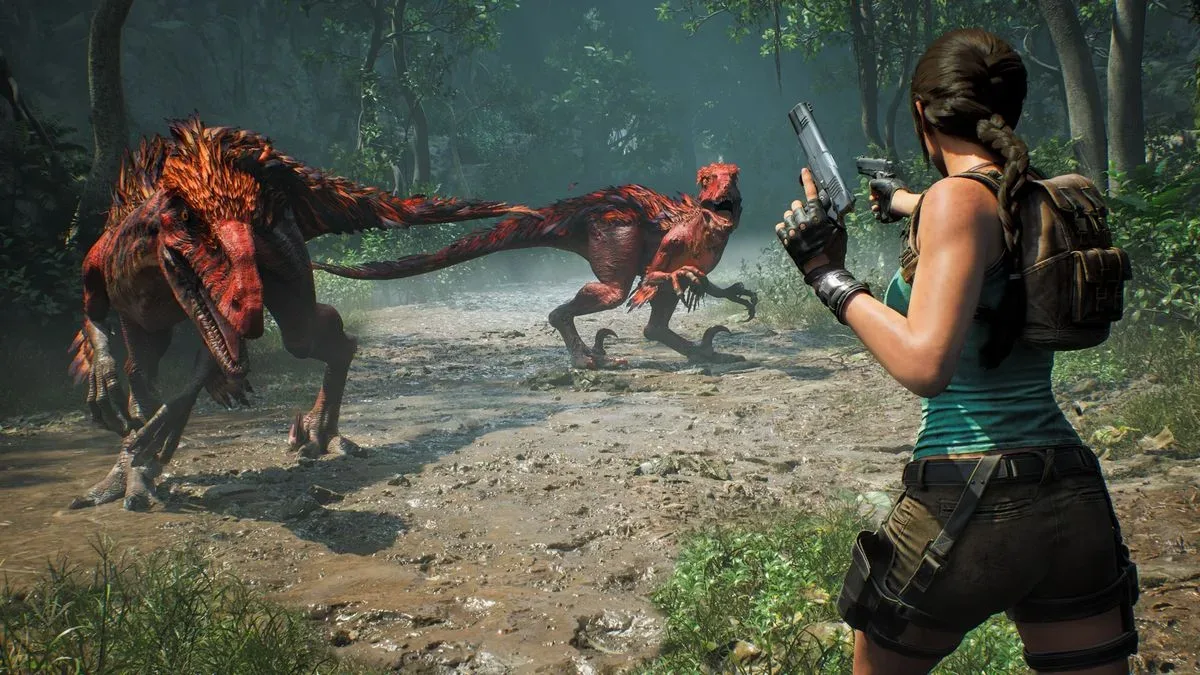
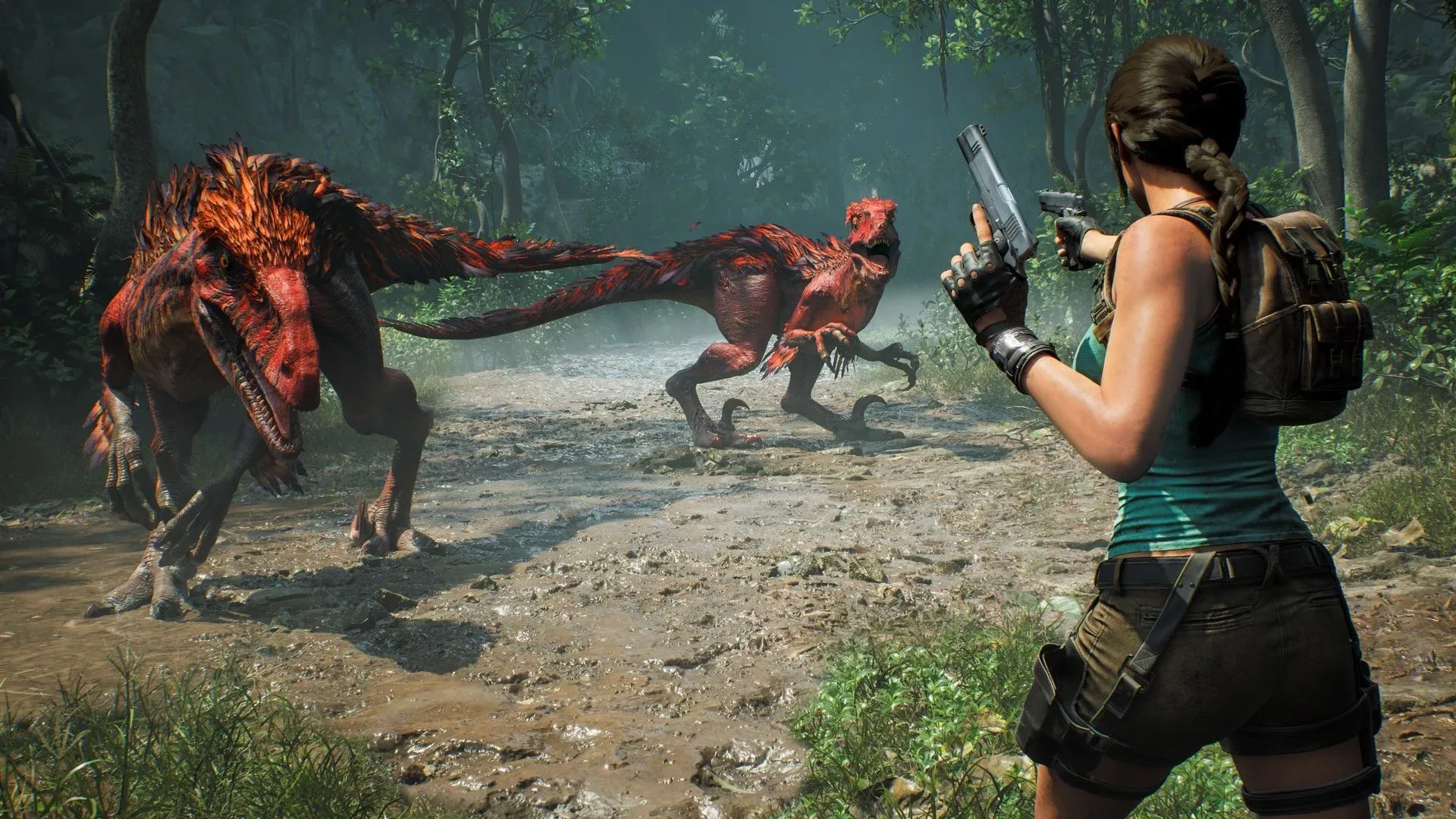
The tension is especially visible in an adventure that includes guns and dinosaurs. That premise is hardly ordinary realism, and Adams acknowledged the contrast. Yet even fantastical games choose where to ask the player for belief. A stylized pickup might be acceptable in one version of a game, while a more grounded visual presentation can make that same object appear oddly detached from the environment.
For Legacy of Atlantis, revisiting such details is not necessarily a rejection of the original. It is part of the consequence of changing the game’s presentation and design language. If the remake is aiming for a greater sense of material reality, familiar abstractions may need a new context, a new form, or a different role.
The difficult line between modernization and erosion
The team’s comments describe the core risk of any ambitious remake. Updating a game is not only about adding detail or adopting popular systems. Every alteration has the potential to change the relationship between the player and the original’s defining moments.
Analysis: the strongest version of this approach would use new mechanics to support the memorable landmarks rather than compete with them. Crafting and progression can provide texture, but they should not make a pivotal environment feel like a stop on the way to a resource checklist. Greater realism can make an ancient space more convincing, but it should not sand away the heightened drama that made the location memorable in the first place.
That is where Kuk’s emphasis on emotional recall becomes more than a slogan. It provides a decision-making filter. When a feature, object or section is reconsidered, the relevant question is not merely whether it is modern, realistic or technically impressive. It is whether the change preserves—or weakens—the thing players still picture when they remember the 1996 game.
There is no universal answer that will satisfy every audience. Some players may want the strictest possible reconstruction, including quirks that now seem implausible or dated. Others may want a remake that takes full advantage of a new generation’s tools. The developers are not promising the former. They are arguing that the latter can still honor the original if it protects the game’s emotional landmarks.
That debate extends beyond one series. As explored in an examination of why game worlds can be central to successful adaptations, recognizable spaces can carry much of a game’s identity. In a remake, a location is not merely scenery. It can be a memory trigger, a storytelling device and a test of whether new design work understands what made the old work matter.
What the comments establish—and what they do not
The available comments establish a philosophy, not a full design specification. Flying Wild Hog and Crystal Dynamics have said they intend to preserve the most emotionally resonant moments, locations, vistas and objects from the original in largely intact form. They have also acknowledged that some original details are candidates for change as the remake pursues more realism.
They do not, however, identify every sequence that meets the “almost untouched” threshold. Nor do they explain precisely how crafting, skill trees, health recovery or other revised systems will work. It would be premature to assume that every remembered scenario will be reproduced in a particular way, or that a single example about a med pack defines the treatment of all classic pickups and mechanics.
For now, the clearest takeaway is that Tomb Raider: Legacy of Atlantis is staking its case on selective preservation. The project is not asking players to judge faithfulness by counting unchanged details alone. Its developers want the remake to retain the images and feelings that remain after the original is over, even as much of the machinery around those memories is rethought.