OpenAI is putting a conspicuous new price tag on high-volume AI work: $500 per month. The new Pro 500 plan arrives with the company’s highest stated usage allowance and access to Ultrafast, a premium speed option intended for tasks where turnaround time is the point rather than a pleasant extra.
The announcement is also a meaningful change for people already paying $200 per month for Pro. Included usage in Codex and Work is set to fall from 20 times the Plus allowance to 10 times that allowance. GPT-6 Pro message caps in ChatGPT are likewise being reduced from 200 to 100 messages each week. Existing subscribers will retain their present limits temporarily, after which they are slated to receive a one-time credit as the lower allowances take effect.
That makes the new plan more than another item on a subscription menu. It creates a sharper division between an expensive professional tier and an even more expensive tier aimed at users for whom throughput, speed, and repeated use may be central to the job.
What Pro 500 adds
Pro 500 is priced at $500 monthly and includes OpenAI’s largest usage allowance. Its standout feature is Ultrafast, which the company describes as its top speed tier for workloads that need fast responses. In Codex and Work, the company says Ultrafast can generate up to 300 tokens per second.
A token is a small unit of text a model processes and produces; it is not the same thing as a word. Token rates are therefore a measure of generation throughput rather than a simple promise that every answer will arrive instantly. Still, a higher rate can matter greatly for long code outputs, successive revisions, task-heavy workflows, or situations in which someone is waiting on an AI system before continuing their own work.
OpenAI says Ultrafast is available to API users as well. An API, or application programming interface, lets software connect to and use a model programmatically rather than solely through a consumer-facing chat interface. For developers building tools around model output, a speed tier can affect how responsive their own applications feel. It does not, by itself, establish that the model is more accurate or better at reasoning; it principally concerns how quickly output is delivered.
The practical appeal is straightforward: less waiting can make a repetitive workflow feel less interrupted. The practical question is tougher: whether that advantage is worth $500 every month will depend on how consistently a person or organization reaches the plan’s high usage level and whether response time actually constrains the work.
The $200 Pro plan is losing ground
The biggest immediate implication may be for current Pro customers. In Codex and Work, the plan’s included allowance will be cut in half relative to Plus, moving from 20x to 10x. In ChatGPT, the GPT-6 Pro weekly message cap will also be cut in half, from 200 to 100.
Those are distinct limits in distinct products, so subscribers should avoid treating them as interchangeable. Codex and Work usage relates to those specific applications, while the cited ChatGPT cap concerns GPT-6 Pro messages. Someone who uses one service far more intensely than the other may feel the changes very differently.
The temporary retention of current limits and the promised one-time credit give existing subscribers some transition time. But the longer-term comparison is clear: the $200 tier is being repositioned with less included capacity, while the new $500 option becomes the place for the highest allowance and premium speed.
For users assessing their subscription, the useful questions are concrete rather than glamorous:
- Which product consumes most of their allowance: ChatGPT, Codex, or Work?
- Do they actually hit the current caps or usage limits?
- Is output speed a recurring bottleneck, or merely an occasional convenience?
- Would a reduced allowance change a real workflow, or only alter a theoretical maximum?
That framing matters because a larger number on a plan sheet is not automatically valuable. High usage allowances are most relevant to people regularly doing many long, iterative, or automated tasks. For everyone else, the price jump may be far more noticeable than the additional headroom.
Dots and the push toward personal agents
All Pro subscribers will receive one Dot, OpenAI’s name for a personal AI agent. The company also says conversations with a Dot will not count against a user’s ChatGPT usage limit.
An agent generally refers to an AI system designed to carry out multi-step work toward a goal, rather than simply answer one isolated prompt. The important distinction in this announcement is not a detailed list of Dot capabilities, which has not been provided here, but the separate accounting: Dot conversations are excluded from the ordinary ChatGPT limit.
That exclusion could make the product structure easier to understand for people who expect an agent to involve extended back-and-forth. It also separates conventional chat usage from whatever work takes place through a personal agent, an increasingly relevant distinction as AI products move from one-off answers toward sustained tasks.
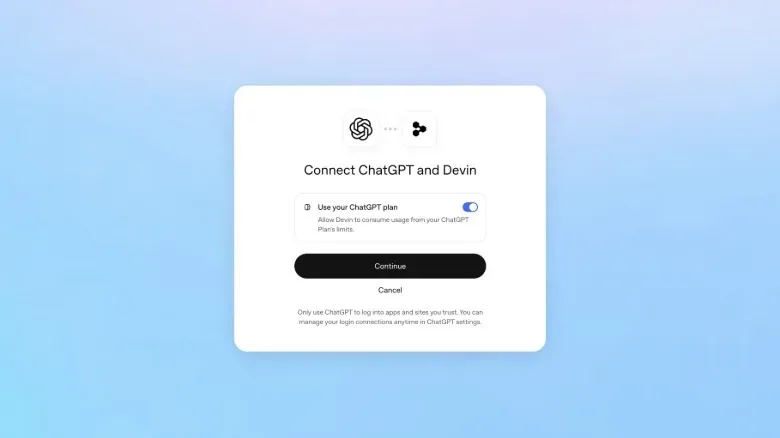
The company is also partnering with 16 companies, including Notion and Cognition, around a new Sign in with ChatGPT option. Plus and Pro customers will be able to run OpenAI models in participating services without first setting up an API key. API keys are credentials that allow software to authenticate requests to an API; removing that setup step could make model access more approachable for customers working inside supported third-party products.
For readers following how AI tools are settling into shared and organized workspaces, this builds on the same broad shift toward embedded assistants and agent-oriented work hubs explored in ChatGPT Spaces and its shared-context approach. The key limitation is that the announcement identifies the sign-in arrangement and example partners, not a full breakdown of what every partner integration can do.
GPT-6.1 Sol targets lower-cost frontier-style work
Alongside the subscription changes, OpenAI announced GPT-6.1 Sol. The company says the model delivers nearly the performance of GPT-6.0 Astra, described as its current frontier system, in coding and computer-use work while costing one fifth as much.
That is a company performance and pricing claim, not an independently established equivalence across every task. But it identifies the intended trade-off: a model positioned as close to a higher-end system in specified areas, at substantially lower cost. For teams using models repeatedly in code and computer-use workflows, the cost of each request can matter as much as the quality of a single standout response.
Computer use here refers to model work involving computer-oriented tasks. The announcement does not provide a task-by-task benchmark breakdown, so it would be premature to infer particular capabilities, operating environments, or reliability levels beyond the company’s broad description.
OpenAI also says GPT-6.1 Sol is safer to use. Its specific claims focus on greater transparency about limitations, more dependable adherence to user intent and safety constraints, and lower failure rates in challenging evaluations involving broken search tools, explicit restrictions, and unauthorized outcomes during agentic tasks.
Transparency about limitations is especially important when a system cannot complete work because a tool has failed or necessary information is unavailable. Respecting explicit restrictions matters when a user has set boundaries on what an agent should do. And avoiding unauthorized outcomes points to a core concern with agents: a system should not treat a broad goal as permission to take actions outside the limits it was given.
These are valuable aims, but the announced evaluation summary does not replace careful supervision in consequential work. A lower reported failure rate is not the same as no failure rate, and the company has not supplied enough detail here to establish how the model will perform in every real-world setting.
Who can use the new Sol model now
GPT-6.1 Sol is available immediately in Codex and Work for Plus, Pro, Business, Enterprise, and Education users. Availability in ChatGPT is planned for a later date.
That staged rollout is worth noting for anyone who sees “available now” and assumes the model has reached every OpenAI surface. At present, the stated access is tied to Codex and Work for the listed account types, while ChatGPT access remains forthcoming.
The overall announcement tells two connected stories. One is about product segmentation: a $500 tier packages the greatest stated allowance and highest-speed experience, while the $200 plan receives lower limits. The other is about efficiency: GPT-6.1 Sol is being positioned as a less expensive option that remains near a frontier model in the named areas of coding and computer use.
For users, the sensible response is less about chasing the newest tier and more about matching a plan to a genuine workload. Speed, high caps, agent conversations outside a chat allowance, and lower model costs can all be useful. Their value depends on which constraint—budget, volume, latency, setup friction, or reliability—is actually slowing the work down.