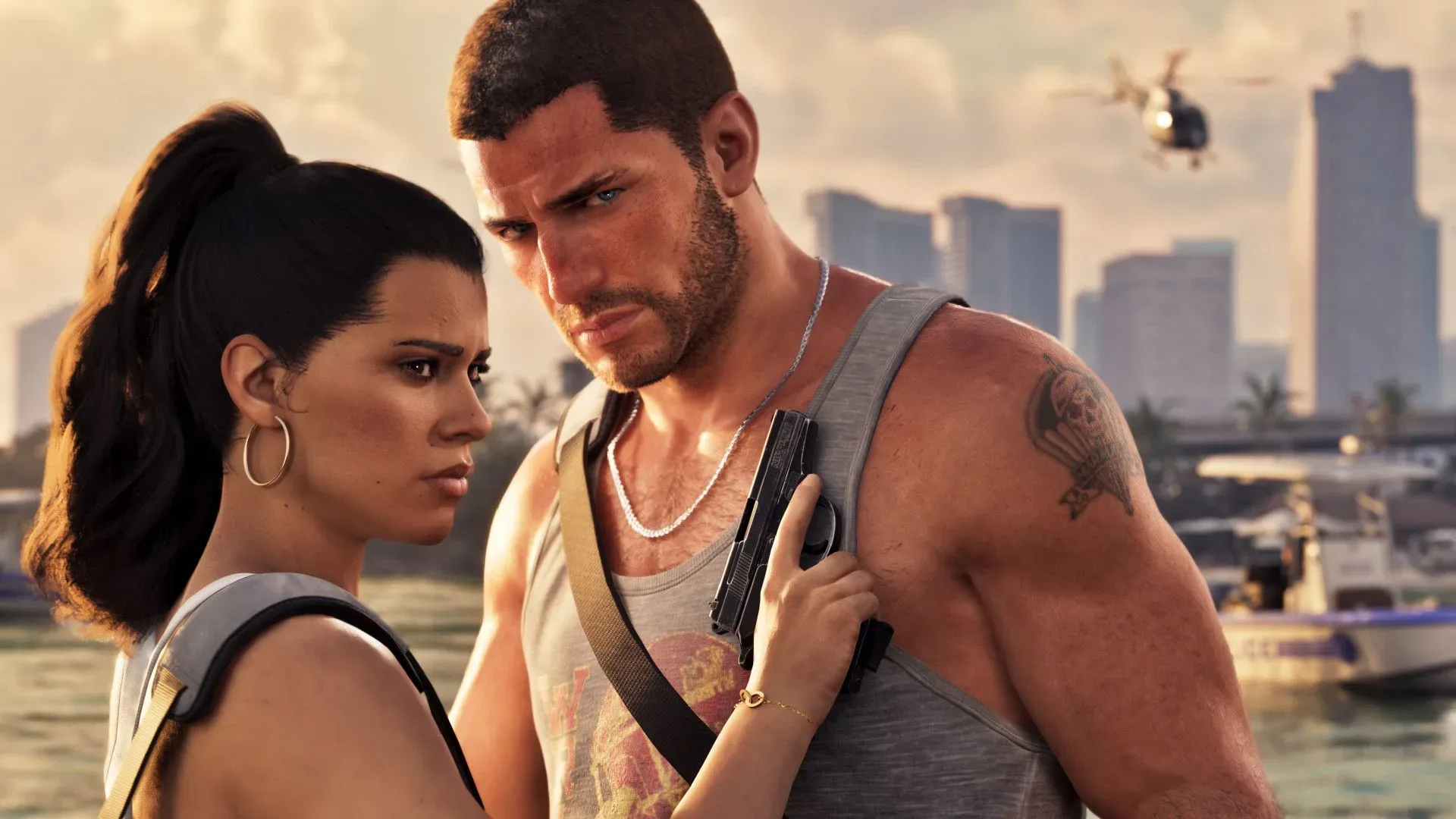

October’s video game market was notably quieter than the same month a year earlier. Consumer spending declined 14% year over year, while console spending fell 18%, based on figures from market-research firm Circana. It is tempting to reduce that result to one very large explanation: Grand Theft Auto 6 arrived in November, after months of anticipation that could plausibly have led some players to hold their money and time for Rockstar’s open-world release.
That is an important part of the picture, but it is not the only one supported by the available numbers. October’s comparison was unusually demanding, mobile spending declined sharply, and the games asked to carry this year’s release calendar did not replicate last year’s exceptional blockbuster performance. The more useful reading is not that one upcoming game single-handedly erased demand, but that a huge launch entered a market already shaped by softer spending and a tough year-over-year benchmark.
The headline number: spending was down, especially on console
Circana’s reported 14% year-over-year decline refers to consumer spending across the game market in October. Year-over-year is a comparison with the corresponding month in the prior year, rather than a comparison with September. That distinction matters: a decline does not necessarily mean that players suddenly stopped buying games in October. It means the market generated less spending than it did during an especially formidable October a year earlier.
Console spending was down 18%. The broader total was also affected by a 16% year-over-year fall in mobile spending, which was identified as the primary driver of the overall drop. Mobile is a major piece of consumer game expenditure, so a decline there can materially change the market-wide result even when attention is concentrated on premium console and PC releases.
In other words, the data does not establish a simple “players skipped all October games for GTA 6” story. It does show a market that spent less across multiple areas, with console under pressure and mobile weakening substantially. GTA 6 may have been an additional force concentrating player attention and discretionary budgets, but it sits alongside those measurable factors rather than replacing them.
A hard comparison with last October
The prior October featured Battlefield 6, described as one of the best-selling entries in its series and the year’s top-selling game. A comparison against a month powered by that kind of hit is inherently difficult. Circana’s analysis specifically connected the console-spending trend with the prior performance of Battlefield 6 and Pokémon Legends: Z-A.
This year had major releases of its own. Gears of War: E-Day launched October 1, while Call of Duty: Modern Warfare 4 followed on October 23. Their presence demonstrates that October was not empty. However, a busy calendar and a strong sales month are not the same thing. Games can earn solid critical responses, attract a lot of conversation, and still be unable to match the commercial effect of the previous year’s biggest release.
Modern Warfare 4 received a mixed review response. E-Day was praised more warmly, but estimates put its sales at about 400,000 copies across console and PC by October 30. That figure is an analyst estimate, not a definitive publisher sales disclosure, and it should be treated accordingly. Even so, it illustrates why enthusiasm around a release should not automatically be read as blockbuster-scale demand.
Related coverage includes October Game Spending Fell 14% as GTA 6 Fever Reshaped the Market.
Critical reception and market performance are different measurements
A review score or positive reception measures how critics respond to a game. Sales measure how many people buy it. Spending measures the dollars consumers devote to games and related content over a period. Those metrics can move together, but they do not have to.
A well-liked game may face a limited audience, a packed release window, or a consumer base reluctant to spend immediately. A game with mixed reviews may still sell extremely well because of its brand, marketing, established player community, or platform reach. October’s results are a reminder that industry reporting needs all three ideas kept separate: reception, unit sales, and consumer spending each answer a different question.
Why GTA 6 may have affected purchases before launch
The possibility of a pre-launch “shadow” is economically straightforward. When a major game is close, players who have finite entertainment budgets may delay other purchases. Some may intend to buy GTA 6 at launch and avoid committing to another long game in the weeks before it. Others may simply preserve their free time for a release they expect to dominate their social circles, streaming feeds, and multiplayer groups.
That does not require GTA 6 to be cheaper, better, or directly comparable to every October release. It only requires it to feel unavoidable. A player considering a new shooter, sports game, or open-world title may decide that buying later is safer than starting something immediately before a game expected to consume dozens of hours arrives.
Take-Two chief executive Strauss Zelnick indicated earlier in November that the timing of GTA 6 may have affected the initial performance of NBA 2K27 and potentially other games. He characterized the period as crowded while maintaining that the basketball title’s performance was positive. That is a measured claim, not proof of direct causation, but it fits the broader theory that an enormous release can influence consumers before they actually purchase it.
The practical implication for publishers is that release-date competition is about more than games launching on the same day. A title can shape the market weeks beforehand if consumers view it as their next major commitment. For players, the same dynamic can turn a launch calendar into a budgeting exercise: waiting is not a judgment on a game’s quality; it can be a decision to avoid buying more than there is time to play.
The cultural signals were unusually large
The available signs of anticipation around GTA 6 go beyond ordinary pre-release chatter. Analysts observed a 17% increase in time-off requests connected to its November 19 release date. Australia’s workplace regulator also drew attention online with a reminder about paid-time-off rights, while Germany was cited as having a professional-development leave program that could be used to take time away from work for the game.
A U.S. Army battalion reportedly offered a reenlistment incentive that included four days of paid leave timed to GTA 6’s arrival, with 43 soldiers taking it. Internet service providers also reported a major traffic increase from Xbox consoles as players went online. These details should not be confused with sales data, but they are meaningful indicators of attention: people were scheduling time, workplaces were responding to demand for leave, and console network traffic rose.
Attention does not automatically become October revenue. In fact, in this case it may help explain why some spending shifted out of the month. Players who expected to be occupied with GTA 6 in November had a reason to postpone purchases, particularly games built around long campaigns or sustained online progression. This is analysis rather than a proven one-to-one transaction trail, but it is consistent with the timing and with comments from Take-Two’s leadership.
What the October result does—and does not—tell us
- It does show: Overall consumer spending was 14% lower than the prior October, console spending fell 18%, and mobile spending fell 16%.
- It does show: This year’s October releases entered a market being compared with a prior month powered by an extraordinarily successful Battlefield 6.
- It suggests: GTA 6’s looming launch could have encouraged some consumers to defer purchases and free up time.
- It does not prove: That GTA 6 alone caused the entire spending decline, or that every lower-performing October game lost sales exclusively because of it.
- It does not prove: That a game’s critical reception translates directly into its unit sales or its contribution to monthly spending.
That distinction is especially useful in a release cycle where one title can become a broad cultural event. GTA 6 clearly commanded remarkable attention, but market totals are affected by comparison periods, platform mix, mobile purchases, individual game performance, and consumer timing. The 16% mobile decline alone is a major reason to avoid treating the console calendar as the full explanation.
What October most clearly reveals is a competitive-market reality: even recognizable franchises can struggle to define a month when the prior-year comparison was huge and an even bigger game is waiting just beyond the calendar. GTA 6’s release has already generated a separate set of player discussions, including questions about its systems and in-game escalation; readers looking at that side of the game can see how to reach a six-star wanted level in GTA 6.
For the business side, the next question is whether the market’s November figures show spending that was delayed rather than lost. October cannot answer that by itself. It does, however, document the unusual pressure created when a crowded slate, a softer mobile market, a historic comparison point, and one of gaming’s most anticipated launches all converge.