
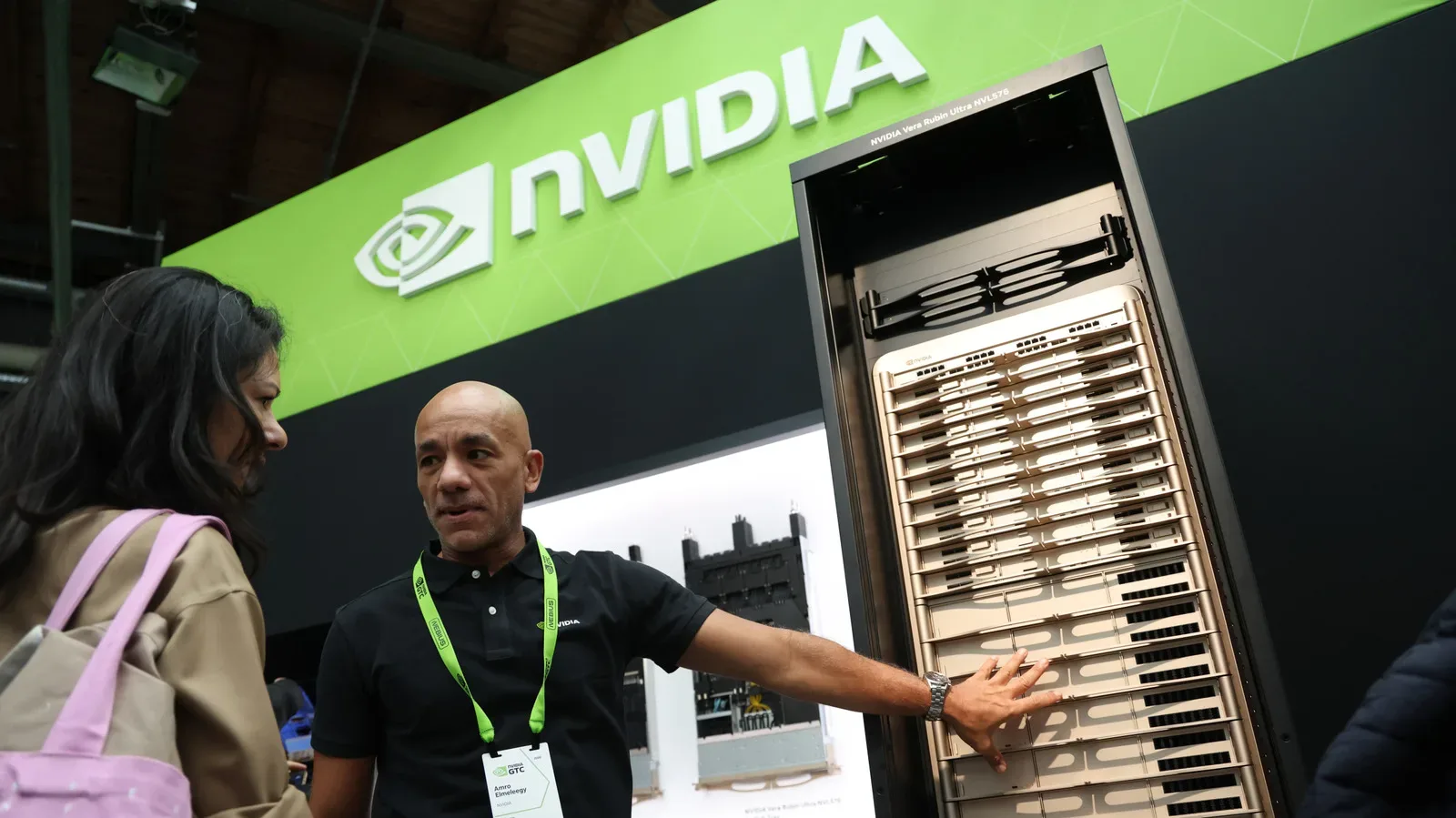
NVIDIA has reportedly paused shipments of AI server hardware headed to Malaysia, Singapore, Thailand and Indonesia, placing a sudden question mark over server deployments in a region that has become a major destination for AI data-center investment.
The reported restriction affects orders handled by manufacturing partners including Dell and Supermicro. Customers in the four countries have reportedly been told that NVIDIA is not permitting their server orders to ship. It remains unclear whether the move is temporary, how broadly it applies, or what process may allow affected orders to resume.
The development matters beyond the immediate customers waiting on racks of hardware. AI servers are built around GPUs: graphics processing units originally associated with rendering game visuals, but now widely used to perform the highly parallel calculations needed to train and run advanced AI models. When shipments of those systems stop, the effects can reach data-center construction, cloud-capacity planning and the businesses that rent computing power rather than own the machines themselves.
Why Southeast Asia is at the center of the issue
Malaysia, Singapore, Thailand and Indonesia have become important locations for cloud-computing capacity used by Chinese AI labs. The arrangement described in the reporting was not necessarily a matter of shipping chips directly to those labs. Instead, cloud providers in Southeast Asia bought servers containing NVIDIA GPUs and then rented computing access to customers.
That distinction is central to the policy issue. Cloud compute means remotely accessed processing power: a customer uses servers in a data center through a network rather than taking possession of the equipment. A company can therefore access a large pool of GPUs for model training or inference without operating the underlying hardware itself.
Inference is the stage at which a trained AI model responds to prompts or processes new data. Training is the more compute-intensive process of adjusting a model using large datasets. The supplied information does not specify whether particular affected deployments were intended primarily for training, inference, or both. Either workload, however, depends on available server capacity, and a shipment hold can delay planned expansion.
Demand from Chinese technology companies helped fuel a data-center construction boom in Southeast Asia. The scale of activity is reflected in NVIDIA’s reported 2025 revenue through its Singapore subsidiary: $104 billion, a 72 percent increase from the preceding year. Revenue recorded through a regional subsidiary should not automatically be read as a measure of hardware ultimately deployed in that country, but the figure does illustrate Singapore’s substantial role in NVIDIA’s regional business.
New rules, licenses and a 90-day deadline
The reported delivery pause follows recent U.S. Commerce Department action intended to stop the use of overseas cloud providers as a route to obtain access to powerful NVIDIA chips. The measures include a new rule directed at the practice of providing large amounts of computing power to China-based companies and other locations covered by the rule.
Related coverage includes NVIDIA reportedly halts AI server shipments to four Southeast Asian countries.
Data centers already supplying that level of capacity have 90 days from November 19 to obtain a license if they intend to continue doing so. The key complication is operational rather than theoretical: operators reportedly face uncertainty about how the licensing process will work while the compliance deadline is already running.
“There’s this new rule but no guidance on execution,” a cloud executive said. “No one knows how to apply for this license while the 90-day clock is ticking. It’s causing sheer chaos in the region.”
A license, in this context, is government authorization required before a company can carry out an export-controlled transaction or activity. Export controls are rules that limit the transfer of specified goods, technology or services to particular parties, countries or end uses. They can apply to physical shipments, but the policy concern here also extends to access to computing capabilities delivered remotely.
For operators, uncertainty has practical consequences. A data center may have commitments to customers, construction schedules, power arrangements and financing plans built around expected hardware arrival dates. A new requirement that is still difficult to operationalize can turn a logistics timetable into a compliance decision. Providers may need clarity about whether an existing customer relationship requires a license, what information a license application needs, and whether capacity can continue during the review period.
The reported server halt appears to be an especially cautious response to that uncertainty. It does not establish that every customer or every project in the four countries is prohibited. Nor does the available information say that NVIDIA has permanently withdrawn from those markets. What it does indicate is that the flow of AI infrastructure can be interrupted when suppliers and partners are unable to determine the compliance path for orders.
Megaspeed’s addition to the Entity List
Separately, the Commerce Department added Megaspeed to its Entity List on Wednesday. An Entity List designation means companies dealing in goods covered by U.S. export rules need a U.S. license to ship those goods to the named organization.
Megaspeed had leased access to NVIDIA chips to Chinese companies, and the Justice Department is investigating whether the company violated U.S. export rules. The available information describes an investigation, not a finding of wrongdoing. That distinction is important: an investigation examines whether violations occurred; it does not by itself resolve the question.
Megaspeed is also tied to the broader backdrop surrounding NVIDIA leadership. Jensen Huang resigned as chief executive on November 12 after reports involving alleged extramarital affairs, including an allegation involving Alice Huang, a former Megaspeed executive whom some U.S. officials suspect was a Chinese intelligence asset. Those allegations and suspicions should be treated as unresolved claims rather than established facts. Huang was reinstated as NVIDIA’s chief executive days before the reported Southeast Asian shipment pause.
The immediate business effect of the Entity List action is clearer than the surrounding allegations: shipments of covered goods to Megaspeed now require a U.S. license. For NVIDIA and hardware partners, that kind of restriction increases the scrutiny needed around customers, intermediaries and the eventual use of systems.
What the reported pause could mean for PC and gaming-adjacent technology
AI server hardware is not the same product category as a gaming desktop or a consumer graphics card. Still, the technologies share an important foundation: GPUs. Consumer GPU buyers should not assume from this report that retail graphics-card supply, laptop availability or game performance will change. The supplied information is specifically about AI server orders and four Southeast Asian markets, not consumer product allocations.
The story is nonetheless relevant to the wider PC hardware ecosystem because it shows how GPU supply is shaped by much more than manufacturing output. Data-center demand, trade restrictions, licensing rules, shipment routes and customer verification can all influence where high-performance computing equipment can be installed.
For organizations using cloud services, the most immediate concern is not a graphics card on a store shelf but whether planned compute capacity will arrive on schedule. A delayed server delivery can mean slower model-development schedules, postponed expansion or a need to seek capacity elsewhere. For regional cloud providers, the challenge is to balance customer commitments against rules that may require government approval before certain services can continue.
For businesses placing new orders, the useful distinction is between a paused shipment and a confirmed cancellation. The information available says orders were reportedly not being allowed to ship; it does not say that all orders have been cancelled, that every supplier has adopted identical policies, or that the pause will remain in place. Customers should therefore avoid treating the reported halt as a final answer until their vendor provides order-specific guidance.
Questions that remain unanswered
- Whether the reported halt is temporary or open-ended.
- Which specific server configurations, customers or end uses are covered.
- How the new licensing procedure will be implemented during the 90-day period.
- Whether data centers can maintain existing services while applications are evaluated.
- What steps NVIDIA and its manufacturing partners will require before affected orders can move.
Those answers will determine whether this is a brief shipment disruption or a more lasting restructuring of how AI computing capacity is provisioned in the region. The distinction matters because the region’s data-center buildout has been driven by precisely the kind of GPU-backed capacity now subject to greater scrutiny.
In a different corner of the PC market, hardware buying decisions can be far more straightforward, as with this Logitech Lift vertical mouse deal. The contrast underscores the scale of the present issue: a server shipment is not simply a purchase transaction, but part of a chain involving chipmakers, system builders, data-center operators, cloud customers and export-control compliance.
For now, the confirmed takeaway is limited but consequential: AI server orders bound for four Southeast Asian countries are reportedly being held as the industry confronts newly tightened U.S. rules and an unclear licensing process. Until there is more implementation guidance, the region’s AI infrastructure pipeline will remain exposed to regulatory as well as technical constraints.