A canceled project at New Radical Games has put a fresh cloud over hopes for The Simpsons: Hit & Run. The crucial caveat is also the one worth keeping front and center: there is no confirmation that the canceled game was a Hit & Run remake, remaster, sequel, or any Simpsons project at all.
What is confirmed is narrower, but still significant. Darren Evenson, a senior game designer at New Radical Games, said the team’s latest project had been canceled as part of a wider set of cancellations. Because the game was unannounced, its identity, stage of development, intended platforms, publisher, and connection to any licensed property remain unknown.
That lack of detail has not stopped fans from joining a few compelling—but incomplete—dots. Earlier in the year, Simpsons creator Matt Groening said at a D23 panel that the original The Simpsons: Hit & Run was “coming back in some form.” Separately, a now-removed New Radical hiring post referred to a stylized game. New Radical also includes people connected with Radical Entertainment, the studio behind the original Hit & Run. Put together, those details made a New Radical-led revival an understandable theory. They did not make it an announced project.
What happened at New Radical Games
Evenson described the canceled work as being part of “a whole gaggle of cancellations.” That establishes the important news: a project at the studio did not survive. It does not establish what intellectual property was involved.
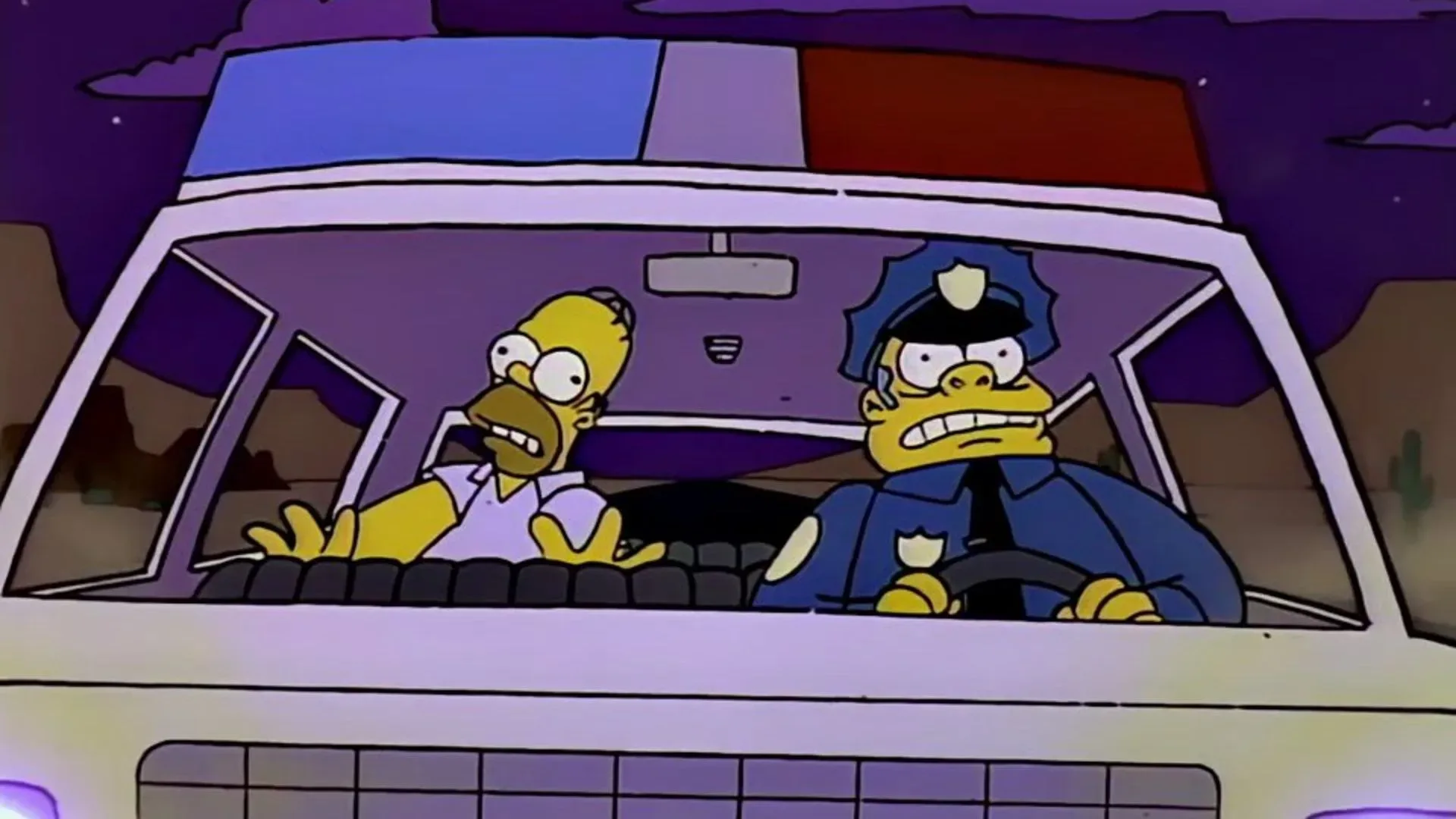
In a separate line, Evenson used a variation of the famous Scarface saying about money and power. That prompted another round of Simpsons speculation because the phrase was parodied in a Homer Simpson gag involving a backyard sugar hoard. There is a further connection in the background: Radical Entertainment also worked on a Scarface game.
But that is precisely why the reference cannot reliably identify the canceled project. It can be read as a Scarface nod, a Simpsons nod, a general pop-culture joke, or simply a rueful statement about the business realities behind project cancellations. A line with multiple plausible readings is not evidence of a particular game’s existence.
The responsible reading, then, is straightforward: New Radical had an unannounced project canceled, and fans fear it could have been related to Hit & Run because of prior circumstantial clues. Until New Radical, the rights holders, or another directly involved party identifies the project, that feared connection remains unverified.
Why the rumor landed so hard
The Simpsons: Hit & Run remains unusually prominent in discussions of games that players want to see return. Its appeal is not just nostalgia for Springfield or the show’s characters. The game is remembered as a licensed title that turned its animated setting into a playful driving-and-exploration structure, allowing its comedy and recognizable locations to work alongside missions and vehicle-based chaos.
Related coverage includes Simpsons: Hit & Run fans fear the worst after New Radical cancellation.
That combination helps explain why a vague statement that the original game was returning “in some form” immediately carried weight. Fans have spent years asking for a sequel, while reports have previously suggested that a sequel was once in development but never came to fruition. The franchise later received the unrelated console release The Simpsons Game, but not the direct continuation many players had wanted.
That long gap matters. When an older favorite has gone without a successor for decades, even limited hints become magnified. A creator’s tease, a studio’s stylized-game job listing, and personnel with a historical connection to the original can quickly look like the outline of an inevitable reveal. In reality, game development is full of projects that change direction, lose funding, shift studios, or end before they are ever publicly named.
That does not make fan disappointment unreasonable. It does mean disappointment should be aimed at a possibility rather than treated as proof that a particular remake has been lost. The difference is meaningful for expectations around both New Radical and The Simpsons: Hit & Run.
Remake, remaster, sequel: the distinction matters
Much of the discussion has used “remake,” “remaster,” and “comeback” interchangeably. They describe very different kinds of projects, and the available information does not tell us which—if any—was being considered.
- Remaster: an updated version of an existing game. The original design is generally retained while visuals, performance, controls, interface elements, or compatibility are refreshed.
- Remake: a game rebuilt more substantially, potentially with new technology, assets, systems, mission design, or structure while drawing on the original work.
- Sequel: a new game that continues or follows the earlier title rather than reproducing it.
- “Coming back in some form”: a deliberately broad phrase that could describe any of the above, or something else entirely.
For fans, those labels carry different expectations. A remaster may preserve the original more closely, while a remake can offer larger changes but also invites debate over what should remain intact. A sequel would have the most freedom, but would need to capture the tone and gameplay identity that made the original beloved. None of those paths can be assumed from the evidence currently available.
What this means for a Hit & Run revival
The cancellation does not prove that Matt Groening’s earlier tease is no longer happening. It also does not prove that it is still happening. A possible Hit & Run project could have been at New Radical, at a different developer, in a different form, or unrelated to the canceled work entirely. The public record supplied here is simply too thin to decide among those possibilities.
There is also no basis to infer a release schedule, platforms, technical approach, or a licensing arrangement. New Radical’s canceled project being unannounced means fans never had a formal title, trailer, product description, or official announcement to measure against the later news. The apparent connection has been built from timing and context rather than confirmation.
Practical takeaway: treat social-media reactions and theories as expressions of enthusiasm and concern, not project documentation. The strongest facts are the cancellation statement and Groening’s prior remark. The rest is inference. In an era when even established games can be canceled before reveal, restraint is less exciting than a rumor spiral, but it is the only way to avoid turning an unconfirmed loss into accepted history.
A reminder of how cancellations shape game news
Unannounced cancellations are especially difficult to process because they create a vacuum. Developers may have spent substantial time on a game, yet the audience may never learn what it was. Players instead encounter fragments: a job listing, a cryptic post, a coincidental reference, or a former studio connection. Those fragments can be valuable context, but they are not substitutes for an official identification.
That is also why this episode is bigger than one rumored revival. It is a reminder that a project can appear plausible without being publicly real in a verifiable sense. Licensing, studio heritage, and player demand may all point toward a game people would love to see, yet none guarantee that it was in production or that it will eventually appear.
For now, the sensible status for The Simpsons: Hit & Run is unresolved. There was a prior indication that the original would return in some form. New Radical Games has now lost an unannounced project. Fans have reasons to worry about a link between the two, especially given the studio’s Radical Entertainment ties, but no party has confirmed one.
Until that changes, the story is not that a Hit & Run remake was definitively canceled. It is that one canceled game has renewed anxiety around a long-awaited return that remains frustratingly undefined. For more on the enduring appeal of older games receiving new life, see our look at Tyrian’s return in a browser-playable form.