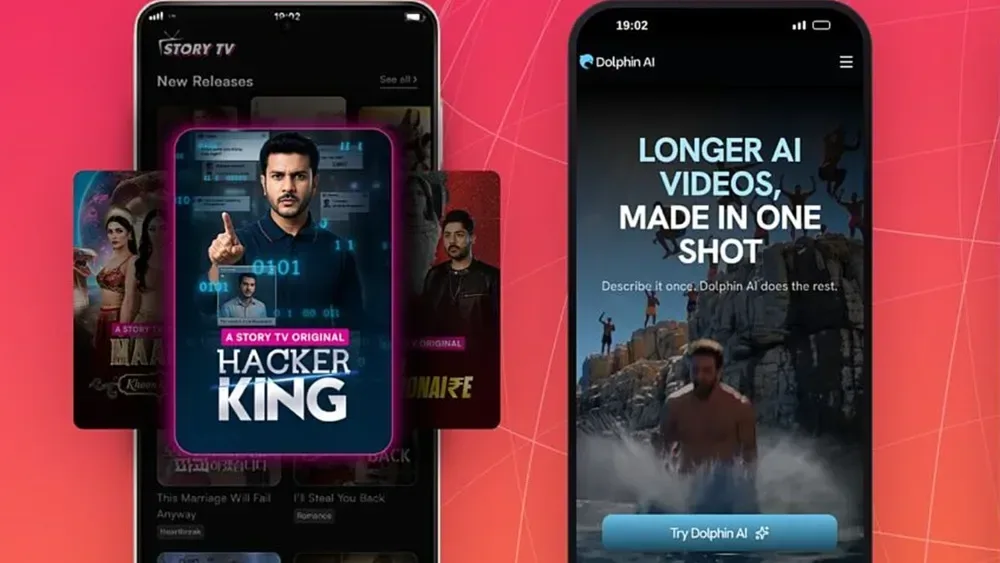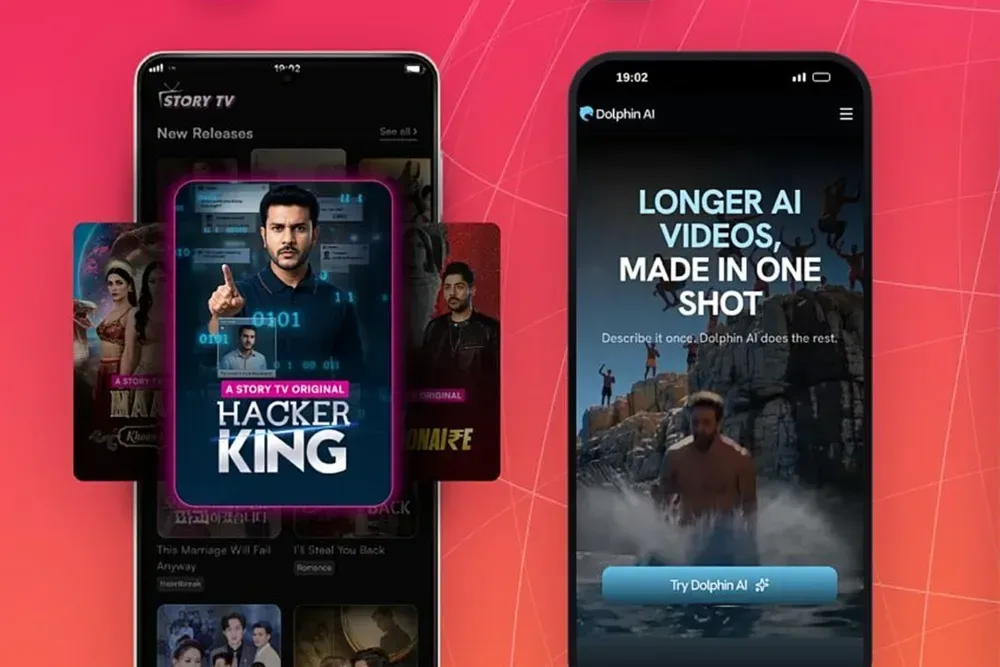
NBCUniversal and India-focused investment firm Hornbill Capital have co-led an $80 million Series C investment in EloElo Group, the Bengaluru-based company behind microdrama platform Story TV. The funding gives a substantial vote of confidence to a mobile-first entertainment model built around short episodic video, local-language programming and a high-volume release cadence.
MIT Investment Co. also participated, alongside existing backers Play Ventures, Kalaari Capital, Waterbridge Ventures and Griffin Gaming Partners, among others. The new round brings EloElo’s total funding to $130 million. Avendus Capital acted as the deal’s sole financial adviser.
For audiences accustomed to thinking of video competition in terms of theatrical films, long-form streaming series and creator clips, Story TV sits in a more specific lane: microdramas. The format is designed for phones and structured in episodes meant to fit around daily routines. EloElo’s stated strategy is not simply to put conventional television on a smaller screen, but to treat the smartphone as the primary viewing destination.
What EloElo is building around Story TV
EloElo was founded in 2020 by chief executive Saurabh Pandey, formerly an executive at Flipkart. Story TV currently offers more than 5,000 microdramas across six languages and adds a new title every three hours. The company says its average user spends 95 minutes per day on the app.
Those figures illustrate the scale of the programming challenge as much as the service’s potential. Adding a title every three hours implies a model that requires a deep and continuously replenished catalogue. That places a premium on finding stories for specific language audiences, producing them efficiently and ensuring there is enough new material to keep viewers returning.
Language is central to the pitch. Pandey described the company’s thesis as entertainment that is video-first, native to viewers’ own languages and delivered in episodes that can fit into their day. In practical terms, that means local-language originals are not a side initiative attached to an existing library; they are one of the areas the new capital is specifically intended to support.
For the broader entertainment business, this is an example of distribution and creative planning becoming increasingly intertwined. A phone-first product has different constraints and opportunities than a traditional television channel or a standard streaming catalogue. Its programming must compete not only with other scripted shows but with everything else that vies for a moment of attention on a mobile device.
Why the Series C matters
A Series C is a later-stage venture funding round. It typically signals that investors are backing a company’s effort to scale an established product, expand into new markets or build new capabilities, rather than merely proving an early idea can work. In EloElo’s case, the stated uses are original local-language programming, an overseas launch for its microdramas and continued work on its Dolphin AI product.
NBCUniversal executive vice president of corporate strategy and development Deepak Arya said the company sees an opportunity in mobile-first storytelling and microdramas as viewing habits evolve. He also pointed to EloElo’s focus on content and storytelling, while saying NBCUniversal expects to bring its global capabilities to the partnership as EloElo moves beyond India, including into the U.S.
That U.S. element is important, but it should be read precisely. The investment and planned overseas launch indicate ambition to expand; the information available does not establish a release date, a U.S. catalogue, pricing, platform details or a distribution plan. It does show that EloElo’s next phase is meant to reach past its domestic market rather than solely deepen its position within it.
Hornbill Capital founder and managing partner Manoj Thakur described EloElo’s combination of creative capability and technology-enabled scaling as central to the investment case. Hornbill was established in 2014 and has previously invested in PhysicsWallah, KreditBee, Dhan and Nazara Technologies.
The participant list also connects the round to investors with experience across technology, consumer services and games. That does not make Story TV a gaming product, but it reflects how contemporary mobile entertainment businesses are often evaluated through both content and technology lenses: audience retention, production throughput, delivery systems and the cost of acquiring and serving users all matter alongside a show’s creative appeal.
Dolphin AI and the economics behind a fast catalogue
Story TV is only one product in the EloElo Group portfolio. The group also operates micro-learning app Master, AI companion agent Voxy AI and Dolphin AI, described as an agentic AI creative suite that was introduced recently at the FICCI Frames conference. Across its apps, EloElo says it has more than 40 million monthly active users and more than 300 million installs, and that its revenue multiplied during the past year.
The term agentic AI generally refers to AI systems designed to carry out multi-step tasks toward a goal, rather than only produce a single response to a prompt. Here, the confirmed detail is that Dolphin AI is positioned as a creative suite. Specific workflows, features and the degree of human involvement have not been detailed, so it would be premature to assume exactly how it is used in writing, production or post-production.
Still, Dolphin AI is clearly a strategic part of EloElo’s plan. Pandey framed the relationship between the two products in direct economic terms: Story TV provides signals about what viewers in India want to watch, while Dolphin AI is intended to make the content economics workable. The company says that combination has helped it scale with solid unit economics.
Unit economics is a business term for the financial performance of an individual unit of activity. For a mobile entertainment company, the exact unit can vary: a subscriber, purchaser, episode, production or user acquisition cohort. EloElo has not provided underlying cost or revenue figures here, so the claim cannot be independently unpacked. The significance is that management is arguing the service’s growth is not based on audience volume alone; it is also focused on the cost structure required to keep supplying content.
That focus makes sense for microdrama. A large library and frequent title additions can create viewer choice and momentum, but they also require disciplined production operations. AI tools may be presented as a way to improve those operations, yet the material does not specify outcomes such as lower production costs, faster release schedules or changes to staffing. The clearest takeaway is narrower: EloElo plans to invest further in Dolphin AI while treating it as a core component of its content strategy.
A growing microdrama market, with important limits to the forecasts
The investment arrives amid bullish estimates for the format. Omdia projects that the global microdrama business will generate $14 billion before the end of 2026. Redseer estimates that 40 million Indians made at least one microdrama purchase during fiscal 2026. Lumikai forecasts that India’s local microdrama market could reach $4.5 billion by 2030.
These are forecasts and estimates rather than guarantees, and they measure different things: a projected global business total, the estimated count of Indian purchasers and a long-term forecast for India’s market. Taken together, they point to why investors are paying close attention to mobile episodic storytelling, particularly where local-language viewing and purchasing are involved. They do not, by themselves, predict how any one service will perform.
The distinction matters because the sector’s headline growth opportunity is broad while execution is highly specific. A platform must win attention with programming, make episodes easy to discover, create reasons to continue watching and sustain the operational machinery behind regular releases. For a company planning international expansion, it must also determine how a product and catalogue designed around local relevance travel to additional markets.
Story TV’s existing scale—more than 5,000 microdramas, six languages and a reported 95 minutes of average daily user time—gives EloElo material to build on. Its planned spending makes the next priorities clear: more original programming in local languages, an overseas microdrama rollout and Dolphin AI development. The $80 million round is therefore less a single-product bet than a bet on a connected model in which mobile viewing, content supply and creative technology reinforce each other.
What to watch next
There are several tangible questions that follow from the deal. First is how EloElo deploys new investment into original titles without diluting the local-language focus identified as a strength. Second is what form its overseas launch takes, especially as NBCUniversal has identified U.S. expansion as part of the partnership’s outlook. Third is whether Dolphin AI becomes a visible part of the company’s creative process or remains largely infrastructure supporting the catalogue behind the scenes.
For the entertainment industry, the round is another signal that the phone is being treated as its own scripted-video environment rather than merely a secondary screen for clips from television and film. The case for that approach rests on behaviour: people reach for phones constantly, and content purpose-built for those moments can be delivered in a different rhythm from long-form programming.
It is also a reminder that the market for screen entertainment is becoming more plural, not less. Long-form series, films, live video, short creator content, learning apps and microdramas can all compete for overlapping attention while serving distinct use cases. EloElo’s wager is that local-language, episodic mobile storytelling deserves an industrial-scale operation of its own. With NBCUniversal and Hornbill Capital now backing that wager, the company has a larger budget to test it across programming, technology and new territories.
That shifting relationship between platform strategy and entertainment investment is also visible elsewhere in the business, including discussions around public policy and production incentives, such as the potential implications of California’s film tax-credit decisions. EloElo’s expansion plans are different in scope and geography, but they similarly underline that where and how content gets made is closely tied to the economics behind it.