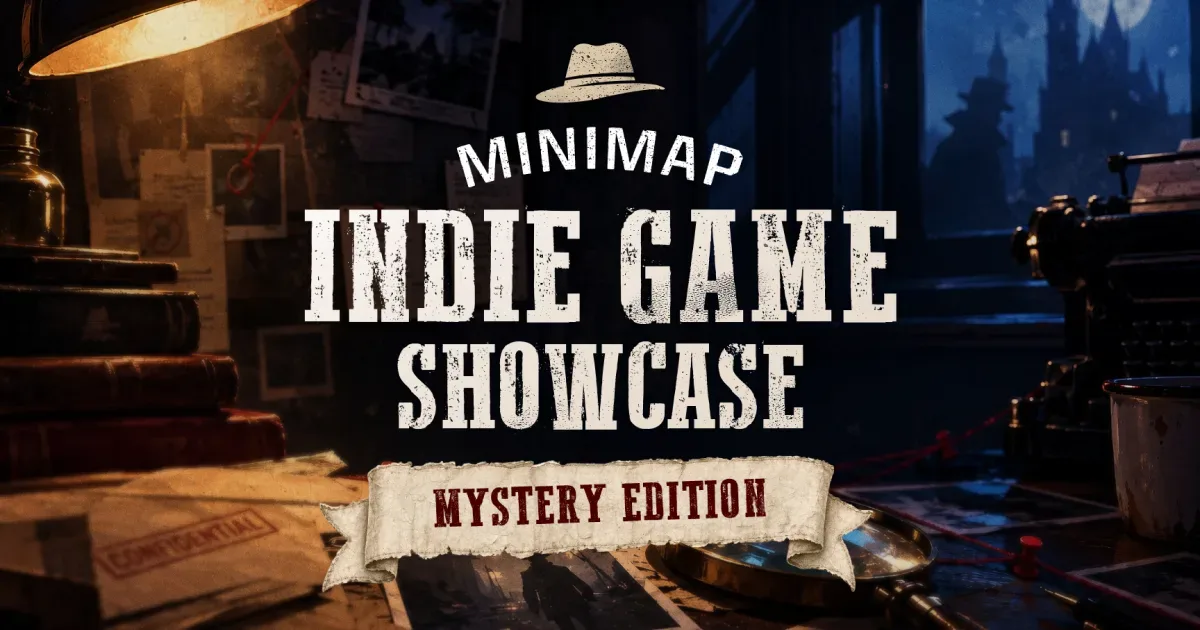
Minimap will present its Indie Game Showcase: Mystery Edition as a livestream on November 4, 2026. The broadcast is scheduled for 5:00 PM PST, 7:00 PM CST and 8:00 PM EST through Minimap’s official YouTube channel.
The event is built around mystery and investigation games from independent developers, with 24 titles set to appear. That focused remit is the key detail: rather than treating “indie” as a single genre, the presentation groups games around a common player appeal—following clues, interpreting evidence, uncovering information and, presumably, asking the sort of questions that make a suspiciously locked drawer feel personally insulting.
For viewers, the showcase also has a participation layer. Voting opens when the livestream begins on November 4 and remains available until November 18, giving the audience two weeks to select up to three of the games they are most anticipating.
When to watch the Mystery Edition
- Date: November 4, 2026
- Start time: 5:00 PM PST / 7:00 PM CST / 8:00 PM EST
- Where: Minimap’s official YouTube channel
- Games featured: 24 indie mystery and investigation titles
- Voting window: November 4 through November 18, 2026
The announced schedule makes this a livestream premiere rather than an on-demand roundup. Anyone chiefly interested in voting should note the important practical distinction: the voting period begins alongside the show, but it does not end with the initial broadcast. That leaves time to revisit the games that stood out, compare notes with friends or creators, and decide which three deserve a place on a ballot.
How the community vote works
Each participant can vote for up to three anticipated games. “Up to” matters here: viewers are not required to fill every slot. A voter who feels strongly about one project can support that one, while someone with a detective’s wall of red string connecting three favorites can use the full allotment.
Once voting closes, the three games with the most community votes will each receive a marketing support package from Minimap. The precise contents of those packages have not been detailed, so it would be premature to attach specific promotional services, spending levels or release outcomes to the reward. What is confirmed is the basic structure: audience interest will determine which three participating games receive added marketing support.
Marketing support is especially meaningful as a showcase incentive because a game being seen is not automatically the same as a game being remembered. A themed event can provide an initial introduction, while additional promotion can help a selected project maintain visibility after the stream has passed. That does not make the vote a verdict on quality, nor does it mean the remaining 21 games are out of the running with players. It is simply a community-driven mechanism for directing an extra promotional boost toward three entries.
A giveaway for voters
People who cast a vote will also be entered into a giveaway for the chance to receive a Steam key for one of the featured games when that game releases. The wording is worth reading carefully: entry is connected to participating in the vote, the prize is a chance rather than a guaranteed key, and the key is intended for a featured game upon release. No specific game, release date or winner selection details have been announced in the available event information.
Related coverage includes Minimap’s Mystery Indie Game Showcase Set for November 4.
That timing places the giveaway alongside the future launches of the games rather than positioning it as an immediate post-show prize. For viewers, the most dependable reason to watch and vote remains the showcase itself: it is an opportunity to identify projects they may want to follow after the presentation.
Why a mystery-specific showcase is useful
“Mystery” and “investigation” are broad labels, not single mechanical genres. In games, an investigation can mean piecing together narrative details, comparing accounts, locating relevant objects, observing environments or deciding what information is important. A mystery can also frame a game’s atmosphere and story even when its moment-to-moment interaction differs substantially from another title under the same umbrella.
That breadth is part of the appeal of a dedicated showcase. It gives viewers a useful starting filter without promising that all 24 games will play alike. Someone looking for a premise built around unanswered questions may discover projects they would not encounter through a platform-based presentation or a general genre montage. Conversely, the format gives developers a clearer shared context: their games are being presented to an audience already interested in investigative themes.
There is also a straightforward discovery benefit in keeping the number at 24. A multi-game broadcast always asks viewers to make quick early judgments, especially when projects may still be far from release. A defined theme helps viewers retain those first impressions: not merely “another indie game,” but a game positioned among other works about secrets, evidence and discovery. The actual games and their individual features have not yet been detailed, so the November 4 stream will be the place to assess how widely the participating titles interpret that theme.
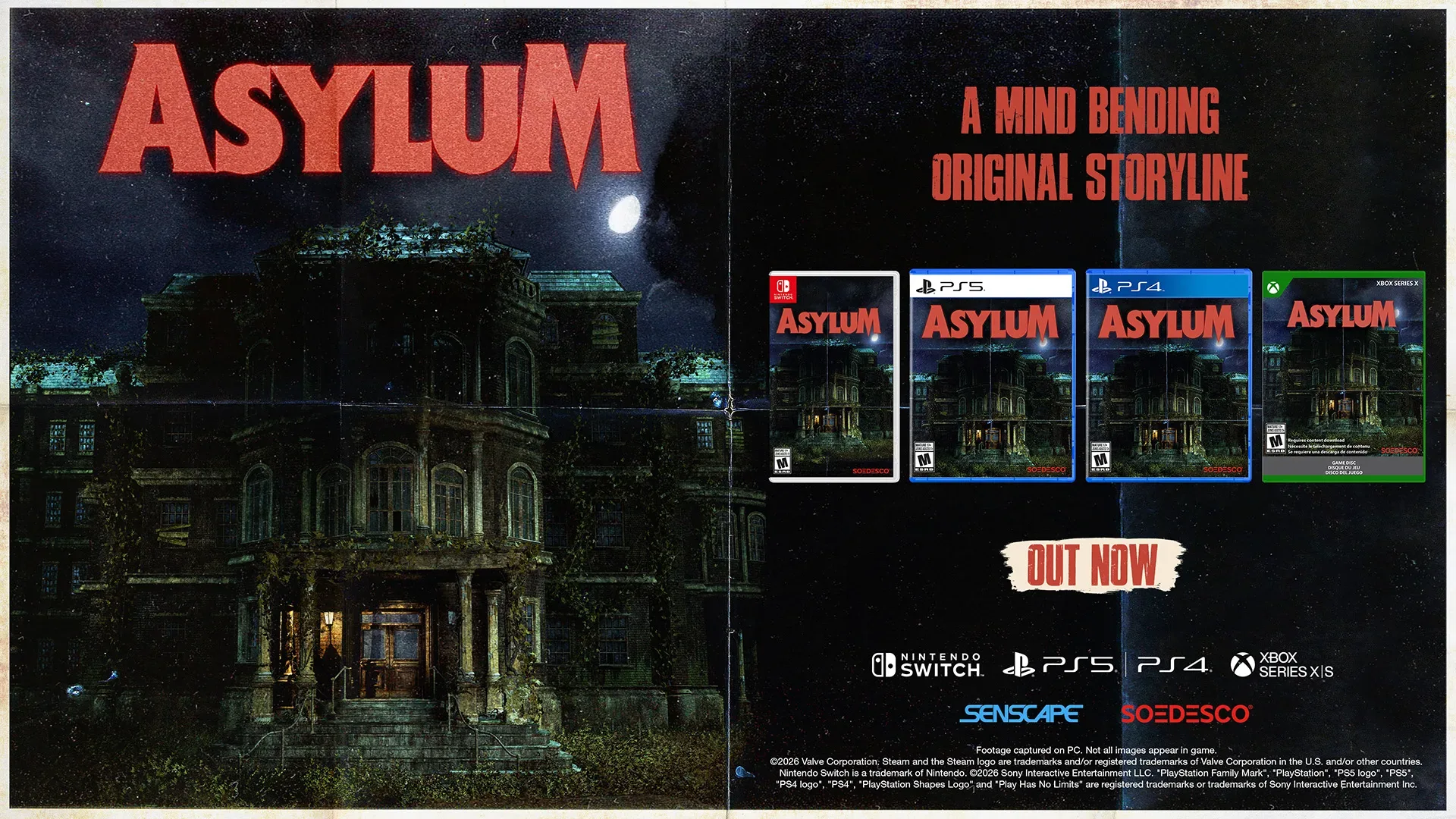
Fans currently looking for another game in an adjacent mystery space can also keep an eye on Asylum’s console release, though it is separate from the Minimap event and has not been identified as a Mystery Edition participant.
Co-streaming invitation aims to extend the showcase
Minimap is inviting streamers and content creators to co-stream the presentation. Co-streaming means a creator broadcasts the event to their own audience, generally with their own commentary, reactions or discussion around the feed. It can give a showcase reach beyond a single central channel while letting viewers experience the presentation in communities they already follow.
For a collection of independent games, that added distribution can matter. Different creators may focus their commentary on different details—story hooks, puzzle potential, visual presentation or the games they want to watch after the show. Just as importantly, co-streaming can turn a brief reveal into a conversation that continues through the voting window. The invitation is framed as a way to help participating developers reach more people, rather than as a claim that any particular creator has already committed to covering the broadcast.
Creators considering a co-stream will need to follow the event’s applicable platform and rights guidance when it is available. The announcement confirms the invitation, but does not outline technical instructions, partnership terms or a roster of participating channels.
What this follows
The Mystery Edition follows Minimap’s February 2026 Indie Game Showcase, which featured 30 indie titles. The newer event has a smaller announced game count—24 rather than 30—but is explicitly centered on mystery and investigation. Neither number alone says anything about the length of the broadcast or how much time each game will receive, because those details have not been provided.
The change in focus nonetheless gives this edition a more specific identity. For developers, a theme can place a game before viewers who are actively seeking a certain kind of premise. For audiences, it can make a packed broadcast easier to navigate: viewers know the program is intended to surface games where curiosity, deduction or discovery sits near the center of the experience.
What viewers can do now
- Set a reminder for the November 4 livestream at the announced local time.
- Watch for the 24 featured games and note the titles that fit your interests.
- Vote for as many as three anticipated games between November 4 and November 18.
- Remember that voting also enters participants for a chance to receive a Steam key for a featured game upon release.
- Follow the games that interest you after the showcase; the available information does not provide individual release dates or platform lists.
Minimap’s Mystery Edition is therefore more than a one-night sequence of trailers: it combines a themed slate of 24 indie games, a two-week community ballot and marketing support for the top three vote-getters. The answer to the showcase’s biggest mystery—exactly which games will emerge as audience favorites—will be decided after viewers have had the opportunity to examine the full lineup.