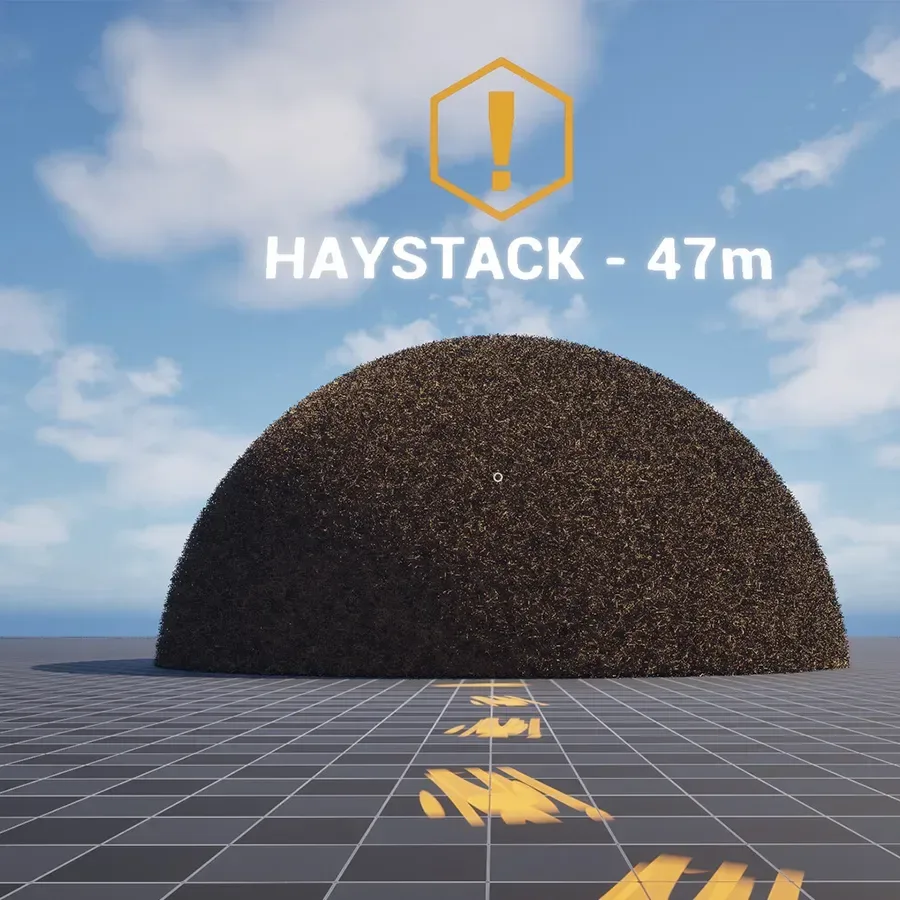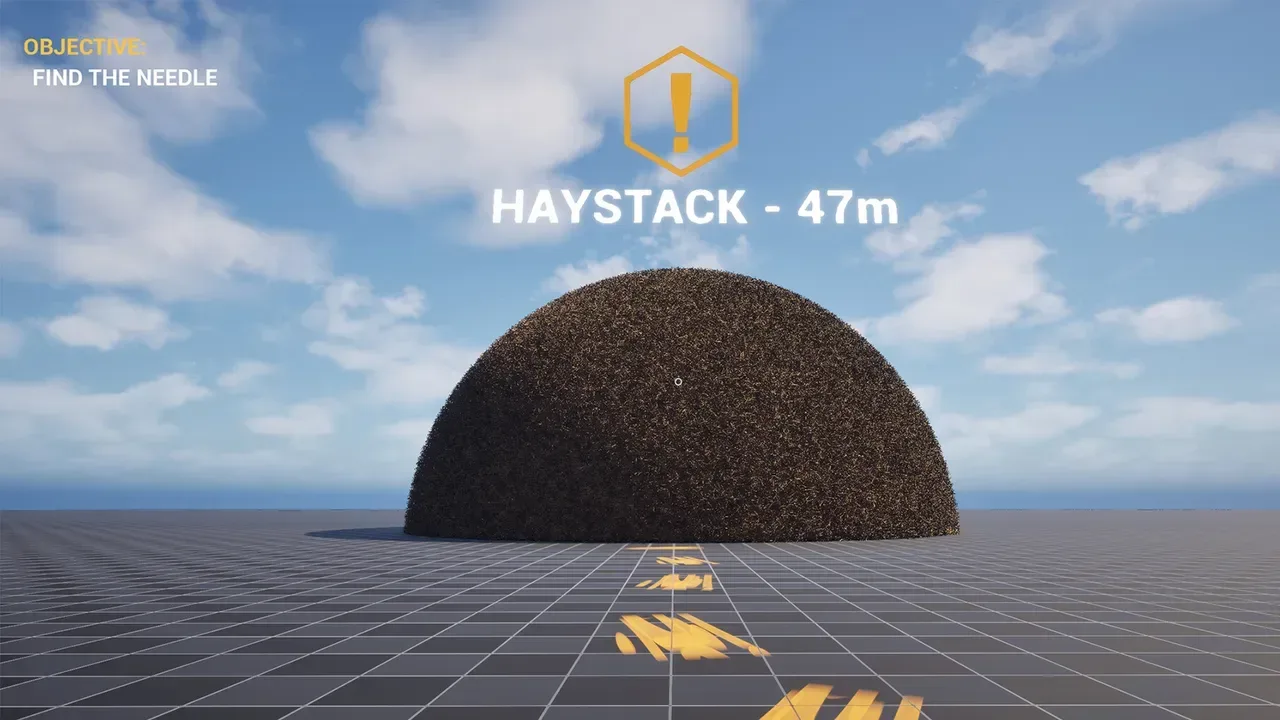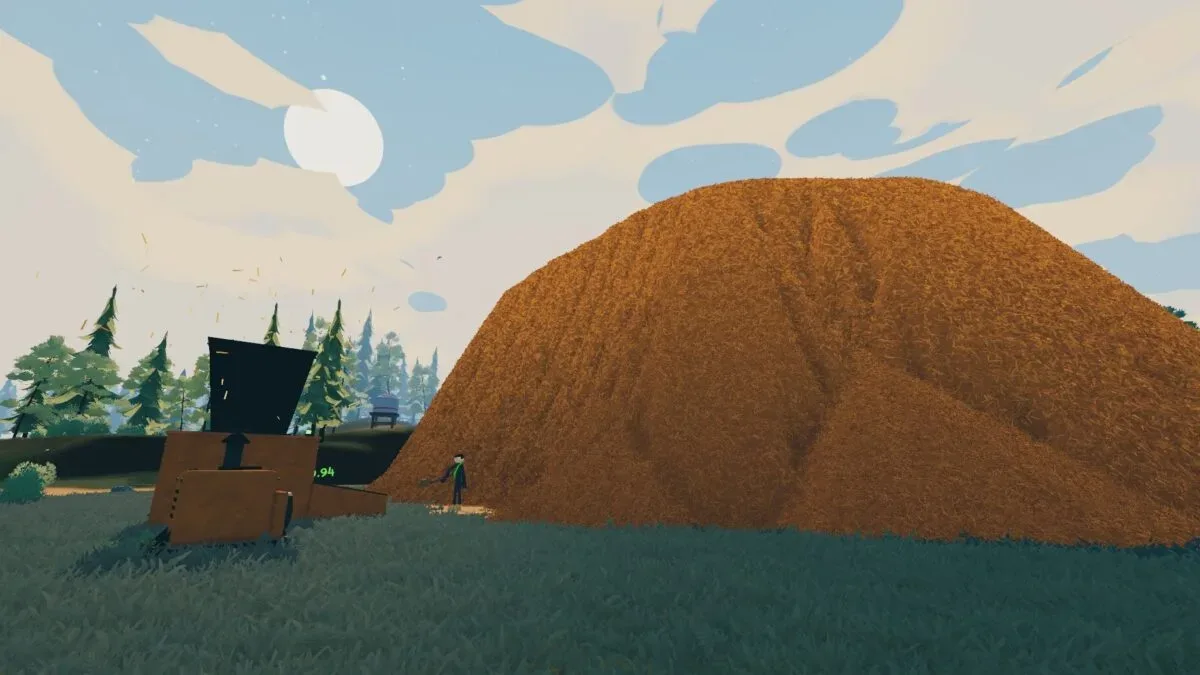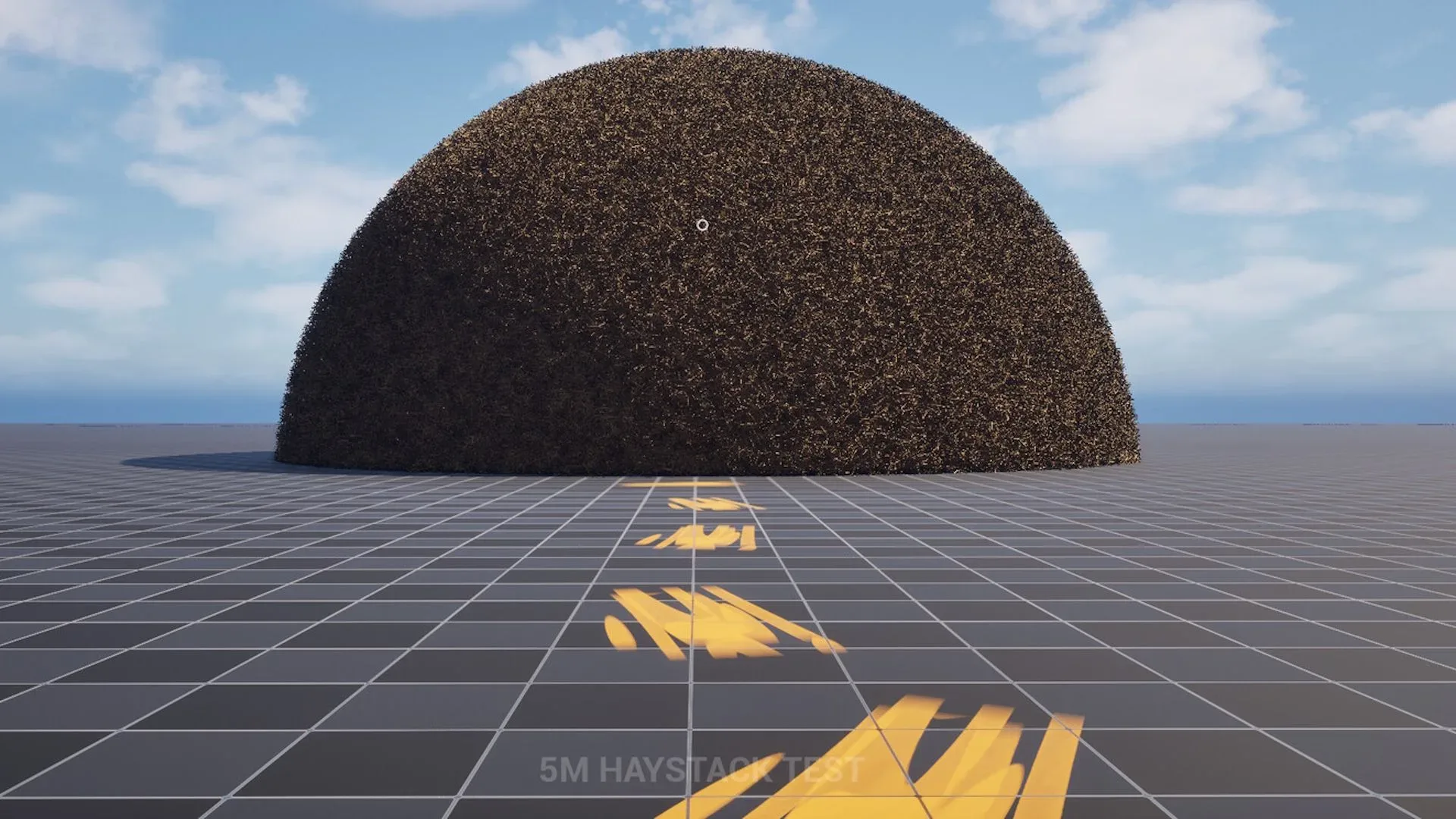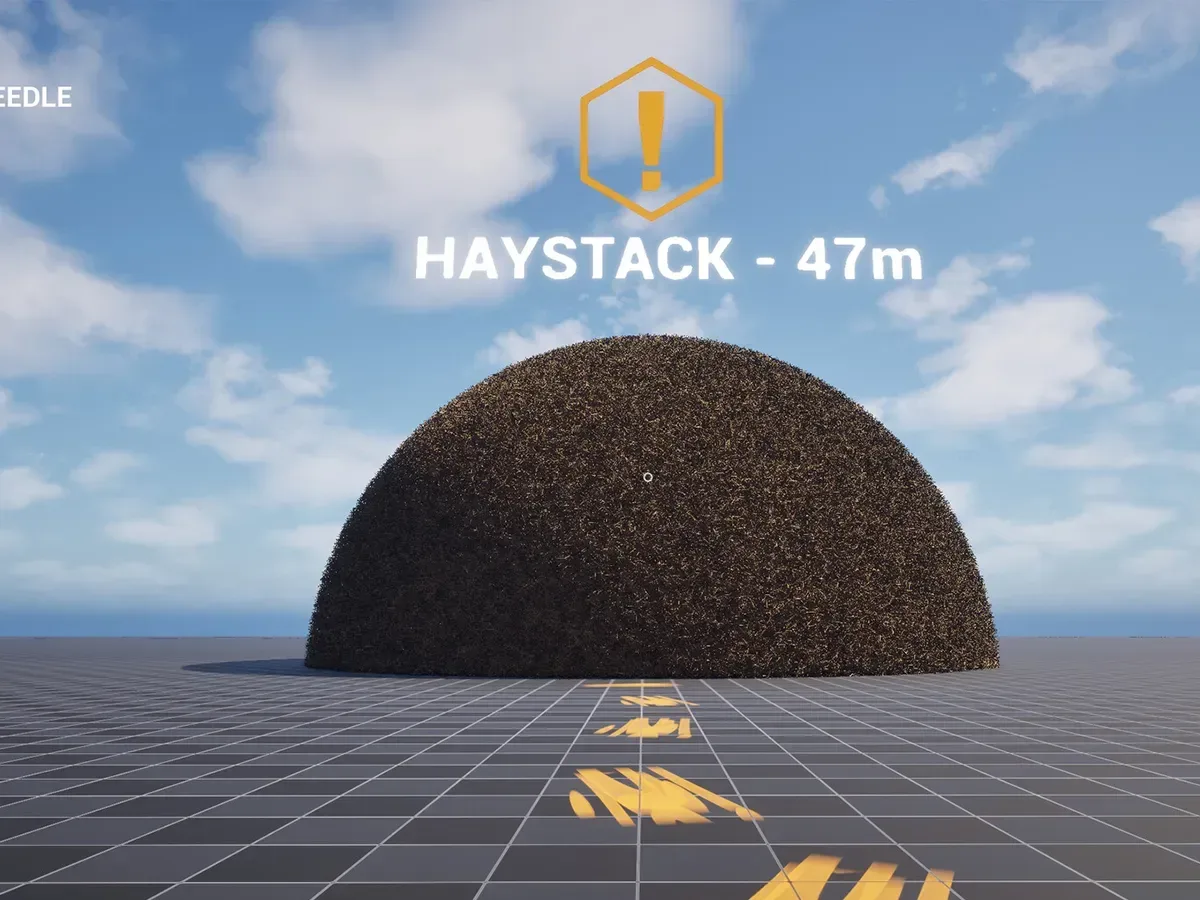
There is a special kind of irony in building a game around locating one tiny object amid visual noise, only to watch its own name and premise become difficult to spot in a crowded marketplace. That is the joke behind “Find the Original Game,” a satirical mode demonstrated by NasNakarus, the creator of the unreleased indie project Needle in a Haystack Simulator.
The base idea is deliberately direct: players search for a literal needle in a haystack. In the new gag, the haystack is replaced with a pile of game cases. Most are labelled Needle in a Haystack Clone, with the word “Clone” highlighted in a bright red box. The player’s task is to locate the original.
It is a simple visual punchline, but it speaks to a real problem for small teams and solo developers: a concept can be easy to understand, easy to imitate, and hard for players to trace back to its creator once similar listings accumulate. NasNakarus framed the bit succinctly: “Our needle in a haystack game has been cloned so many times we made a new game mode.”
The demonstration was shared on October 27. It should not be read as a confirmed product feature, however. The footage presents it as a joke mode, and it remains unclear whether it will actually be added to the game.
A joke with a very specific target
“Find the Original Game” works because it changes the object of the search without changing the game’s central metaphor. Instead of a needle concealed by straw, the original product is concealed by near-identical titles. The bright red label makes the search far easier than the supposed main game, which is precisely the point: the difficult part is not identifying the joke. It is making the situation visible.
Fans immediately recognized the bleak-comic angle. One described it as a “tragicomedy,” while another suggested an equivalent Roblox challenge in which players would seek a particular Roblox game among a larger pile. Those responses underline why the gag travels: it is about discoverability as much as it is about copying.
Discoverability is the practical term for how easily a player can encounter, recognize, and find a game through storefront search, recommendations, social posts, or word of mouth. A simple title and premise can be a strength because they communicate instantly. Yet that same clarity can become a weakness if many lookalike products use similar wording or presentation. Players who remember only “the needle-in-a-haystack game” may have difficulty distinguishing the intended release from a collection of similarly named alternatives.
That does not mean every comparable game is necessarily a direct copy. The premise itself is plainly simple, and observers have also noted that it is not a novel idea. Two projects can share an obvious concept without sharing the same assets, code, branding, or creative work. The mock mode’s language is satire, not a public accounting of how any individual title was made.
Related coverage includes Needle in a Haystack Simulator Jokes About Clones With a New Search Challenge.
The original is not out yet
That context matters. Needle in a Haystack Simulator has not launched. It is planned for release in the fourth quarter of 2026, and playtests were scheduled for the week of the October 27 post. The project is therefore trying to establish its identity before its full release, while similar titles are already appearing on online marketplaces.
For an unreleased game, a public demo can do two jobs at once. It can build anticipation by showing people the basic experience, but it can also give imitators a clear view of a highly legible concept. In this case, the creator has responded by making the concern part of the game’s public personality rather than issuing a dry complaint. The result is memorable because it uses the project’s own mechanics as commentary.
There is a practical lesson for players here as well. When a game catches attention through a clip or a joke post, it is worth checking the developer name, release status, official social account, and store-page details before assuming the first similarly titled listing is the game being discussed. In this instance, the developer is NasNakarus and the named project is Needle in a Haystack Simulator. Those are more useful identifiers than the broad concept alone.
- Check who is listed as the developer or publisher.
- Confirm whether the title is released, in testing, or merely announced.
- Compare the official name carefully with lookalike wording.
- Use the creator’s verified public posts for release information where possible.
- Be cautious about treating a familiar premise as proof that a listing is the original project.
Cloning, reverse engineering, and AI are not the same thing
The broader discussion around the post has included artificial intelligence and the growing ease of copying or reconstructing games. It is useful to separate several terms that are often collapsed into one accusation.
Cloning, in the broad conversational sense used here, means making a game that closely resembles another game’s premise, presentation, branding, or structure. It is not a precise legal conclusion. Similarity can range from a shared basic idea to something much more specific.
Reverse engineering generally means studying a finished product or its behavior to understand how it works, then using that understanding to recreate aspects of it. The term can describe many techniques and does not automatically establish that a resulting project is identical to, or unlawfully derived from, another one.
Modding is the alteration of an existing game by users or creators. The wider conversation has pointed to experiments such as moving games to browsers, combining elements from different games, or creating projects based on established intellectual property. Those examples help explain why developers are concerned about the speed with which familiar experiences can be remixed or reproduced, even though they are not evidence about any particular Needle in a Haystack Simulator lookalike.
And AI is not a catch-all explanation. The available information makes the broad claim that advances in AI are making modding and cloning easier, but it does not establish that AI was used to make any of the titles that prompted this joke. That distinction is important. A funny post about clones should not become an unsupported claim about the tools behind each competing game.
The larger anxiety is understandable nevertheless. Individual developers and small studios can have limited money, time, and legal capacity to respond when they believe their work has been copied. Even before any formal dispute, a marketplace full of similar products can force creators to spend energy explaining which version is theirs. That is a visibility problem first, and potentially a business problem after that.
Why the gag lands
There is no confirmed new release feature in the clip, no announced legal action, and no indication that the creator is turning the situation into a conventional campaign against every similarly themed game. The power of “Find the Original Game” is its economy. It takes an abstract complaint—too many copies—and translates it into a playable image that needs almost no explanation.
It also makes the player’s role uncomfortable in a productive way. In a normal needle hunt, the player searches carefully because the object is physically hidden. In this version, the “original” is hidden by repetition: similar words, similar boxes, and a marketplace-scale pile. The joke asks players to acknowledge that they are participants in the discovery system, not just spectators of a developer dispute.
That question of how gaming communities find and verify information has relevance beyond storefront listings. Platform visibility and searchability can shape what players encounter, including the way public community conversations surface online. Discord’s plans around web search visibility for some public server messages are a separate issue, but they point to the same basic reality: where information appears, and how it is indexed, affects who gets seen and understood.
For now, NasNakarus has answered a frustrating situation with the kind of response the game’s own premise invites: make people search. The difference is that this time the missing object is not a needle. It is authorship, recognition, and the ability to find the original before the haystack gets any bigger.