The haystack-game boom on Steam has reached its most appropriately absurd stage: a developer behind one clone is alleging that another clone copied its code.
NoGlyph, the team behind Needle In A Haystack, says Little Field Studios’ A Game About Needle In A Haystack includes portions of NoGlyph’s code. The accusation matters because it is not solely about two games sharing an obvious premise. NoGlyph points to allegedly identical internal material: named classes, methods and error messages, including an error that refers to a shader said not to exist in the accused game.
That is a much more specific claim than “this game looks like ours.” It also puts a sharp, messy spotlight on the difference between copying a concept and copying the technical work used to implement it.
How the haystack pile formed
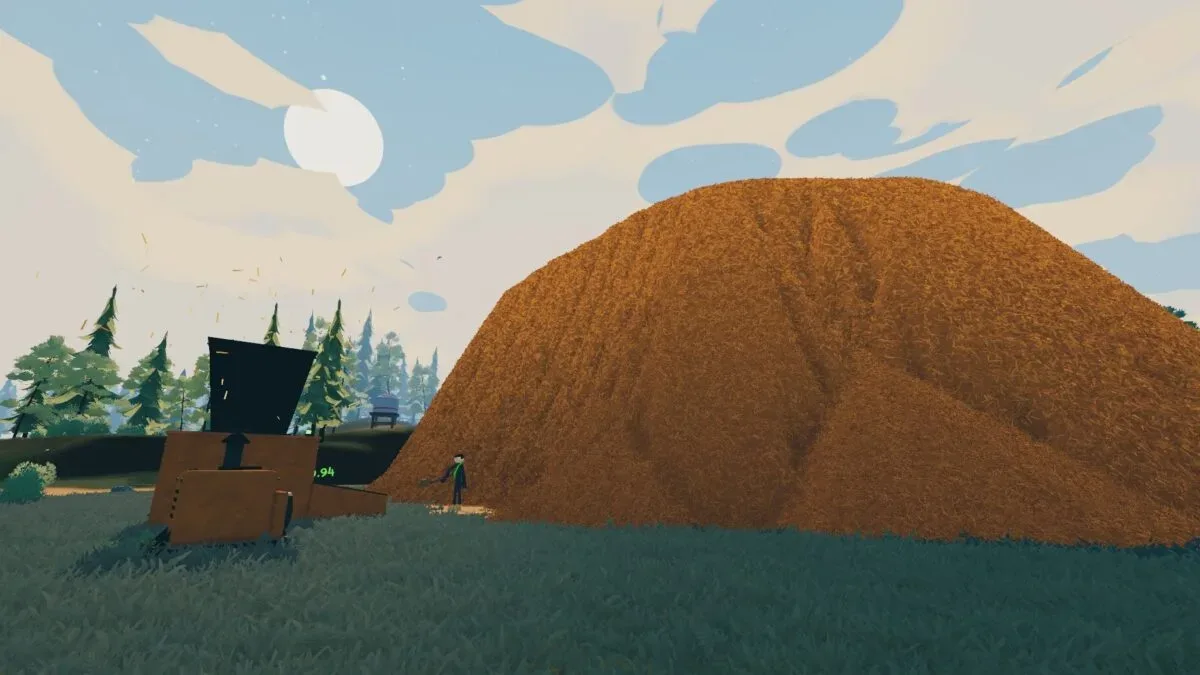
The starting point is Studio Bitdot’s Needle In A Haystack Simulator, an incremental sorting game that spread widely through social-media clips in August. The attention was followed by a rush of similarly named Steam releases, including A Needle In a Haystack and Story of The Needle In a Haystack.
At least 14 apparent clones of the original had appeared on Steam at the time of the dispute. NoGlyph’s Needle In A Haystack launched on September 29, while Little Field Studios’ A Game About Needle In A Haystack arrived on October 16. On October 17, NoGlyph publicly alleged that the newer release had incorporated material from NoGlyph’s game.
That sequence has created little public sympathy in some quarters. A developer accused of following a viral hit is now saying it was itself copied. The irony is real, but it should not erase the technical distinction at the heart of the claim. A crowded genre, a familiar mechanic or even an opportunistic title does not automatically establish that a rival has reproduced a project’s code.
What NoGlyph says it found
NoGlyph says it inspected the other game’s files and identified 13 of its classes under the same names. It further alleged that more than half of the functions in that portion matched exactly. The team highlighted error messages it says were reproduced word-for-word, one of which references a shader from NoGlyph’s project that it says is absent from Little Field Studios’ game.
In a Discord comment, NoGlyph lead developer Jahvin gave a more granular count: 39 same-named methods allegedly matched byte-for-byte.
Related coverage includes Needle In A Haystack Clone Developers Allege Their Own Clone Was Copied on Steam.
“Byte-for-byte identical” is a technical phrase with unusually weighty implications if the comparison is accurate. Computer code is ultimately stored as data. If two methods are byte-for-byte the same, that means their underlying stored sequence matches exactly, rather than merely achieving a similar result through independently written logic. Developers can certainly arrive at similar solutions to small, common programming problems. But a collection of same-named, identical methods alongside project-specific errors would be a substantially more notable pattern than resemblance in gameplay alone.
The reported shader reference is especially easy to understand. A shader is code used to control how something is drawn, such as a material, lighting effect or visual treatment. An error that points to an asset or shader not present in the game producing the error could, if accurately described, indicate that a reference was carried over from another project. It is not merely a complaint that two games have similar hay, needles or menus.
Why this is still an allegation, not a settled finding
The available claims are detailed, but they remain allegations from one developer against another. No court ruling, platform decision or independent technical audit is described here. NoGlyph’s stated observations may be compelling evidence to players and fellow developers, but outsiders do not have a complete account of the files, the comparison process, any shared assets or Little Field Studios’ response.
That distinction is important in a story where there are several layers of copying alleged or implied. Studio Bitdot’s original game inspired a wave of lookalike releases. NoGlyph’s game is itself described as a clone of that original. Then NoGlyph alleged that its particular implementation was copied by a later entrant. Those are related debates, but they are not interchangeable:
- Concept copying means following the broad idea, genre hook or marketable premise of a game.
- Presentation copying can involve imitating visible art direction, interface choices or the feel of a game.
- Code copying concerns the instructions and project structure used to make software function.
Fans may find the first two frustrating, cynical or opportunistic. The third is the more technically concrete allegation here, precisely because NoGlyph cited specific classes, methods and diagnostics rather than only outward similarity.
The AI question needs careful wording
NoGlyph’s public Steam statement did not explicitly label the other game as AI-made. The broader discussion nevertheless centers on “vibe coding,” a loose term generally used for building software by heavily relying on an AI system to generate code from prompts, with the human operator doing relatively little conventional programming.
The reported pattern has been described as consistent with AI-assisted decompilation. Decompilation is the process of taking compiled software—the form distributed to players—and attempting to turn it back into more readable code. The recovered output is not necessarily the original source project, and its quality can vary. But an AI assistant can potentially help interpret, reorganize or reproduce such output quickly.
That explanation should be treated as a possible account of the alleged similarities, not a proven account of how Little Field Studios made its game. Identical code, if established, does not by itself disclose who copied it, what tools they used or the exact route by which it entered a project. “AI did it” can become a convenient shorthand that skips over those unanswered questions.
Still, the anxiety behind the shorthand is clear. The worry is not simply that generative tools might help someone make a rough game faster. It is that a person could use tools to inspect an existing release, recreate its structure at speed and launch a competitor before a small team can react.
Why indie developers see a wider risk
The dispute arrives amid other concerns that AI can shorten the distance between a public reveal and a playable imitation. A Roblox creator was reported to have recreated the upcoming indie game Escape the Walls within 24 hours after seeing a video shared on X, and claimed that Claude had done the work. Separately, Alliance Arts canceled plans for a Steam demo of Drunken Goddess Reflux, citing concern that AI could rapidly produce works imitating the game’s presentation and gameplay before its full release.
These examples do not prove that every quick clone uses AI, nor do they establish that every resemblance is unlawful or unethical. They do illustrate why developers may become more guarded about demos, trailers and early-access builds. Traditionally, public material is how a small game earns attention, gathers feedback and builds a community. If that material also becomes a blueprint for a near-immediate imitator, the usual benefits of showing work early can feel less certain.
For players, that could mean fewer chances to try unfinished games and fewer early looks at projects that need visibility most. It may also make storefront browsing harder. A surge of almost identically named releases can bury the game that first attracted attention, whether the copies are superficial lookalikes, independently built competitors or something more troubling.
The situation is also a reminder that PC releases are not opaque boxes in the same way as a console cartridge might be. Files, error strings and other traces can become part of a public dispute when developers and technically minded users inspect a build. That does not replace formal proof, but it explains why implementation details can rapidly become central to a Steam controversy. For a separate look at the practical realities of PC game files, storage and what players actually see on a drive, read why a 1TB drive shows 931GB in Windows.
A cautionary dispute inside a clone rush
The most uncomfortable part of this episode is that it resists an easy hero-versus-villain narrative. People can reasonably criticize a market flood of games chasing Studio Bitdot’s viral idea. At the same time, if NoGlyph’s account of identical methods and leftover error messages is borne out, the fact that NoGlyph also followed a popular format would not make direct copying of its project work inconsequential.
That is the practical line worth preserving. Games often influence other games; trends generate derivatives; mechanics spread. But identical internal code and stray project-specific references are a different category of claim from “both games ask players to find a needle in hay.”
Whether Little Field Studios responds, Steam takes action or additional evidence emerges will determine where this individual dispute goes next. For now, the immediate takeaway is less about one unusually crowded joke-game niche than about the pressure facing small teams: in an environment where a viral premise can spawn many rapid imitators, developers increasingly fear that even the code beneath their version of the idea may be treated as fair game.