Meta is bringing its Muse personal agent directly into Instagram, beginning with a feature that tackles an extremely familiar social-media problem: the growing, poorly sorted pile of posts and videos saved for later.
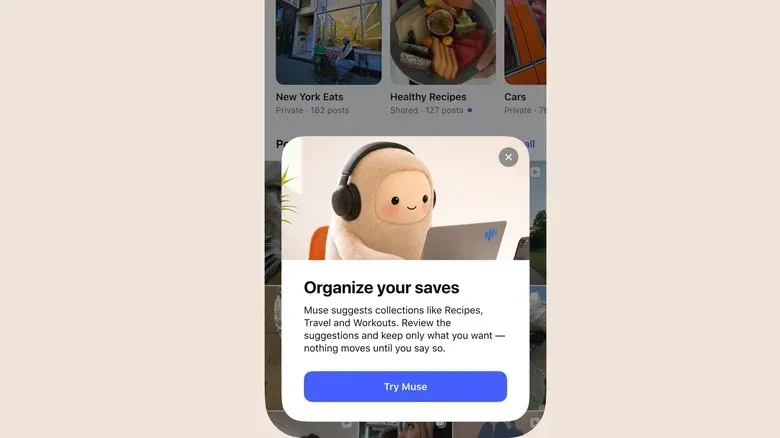
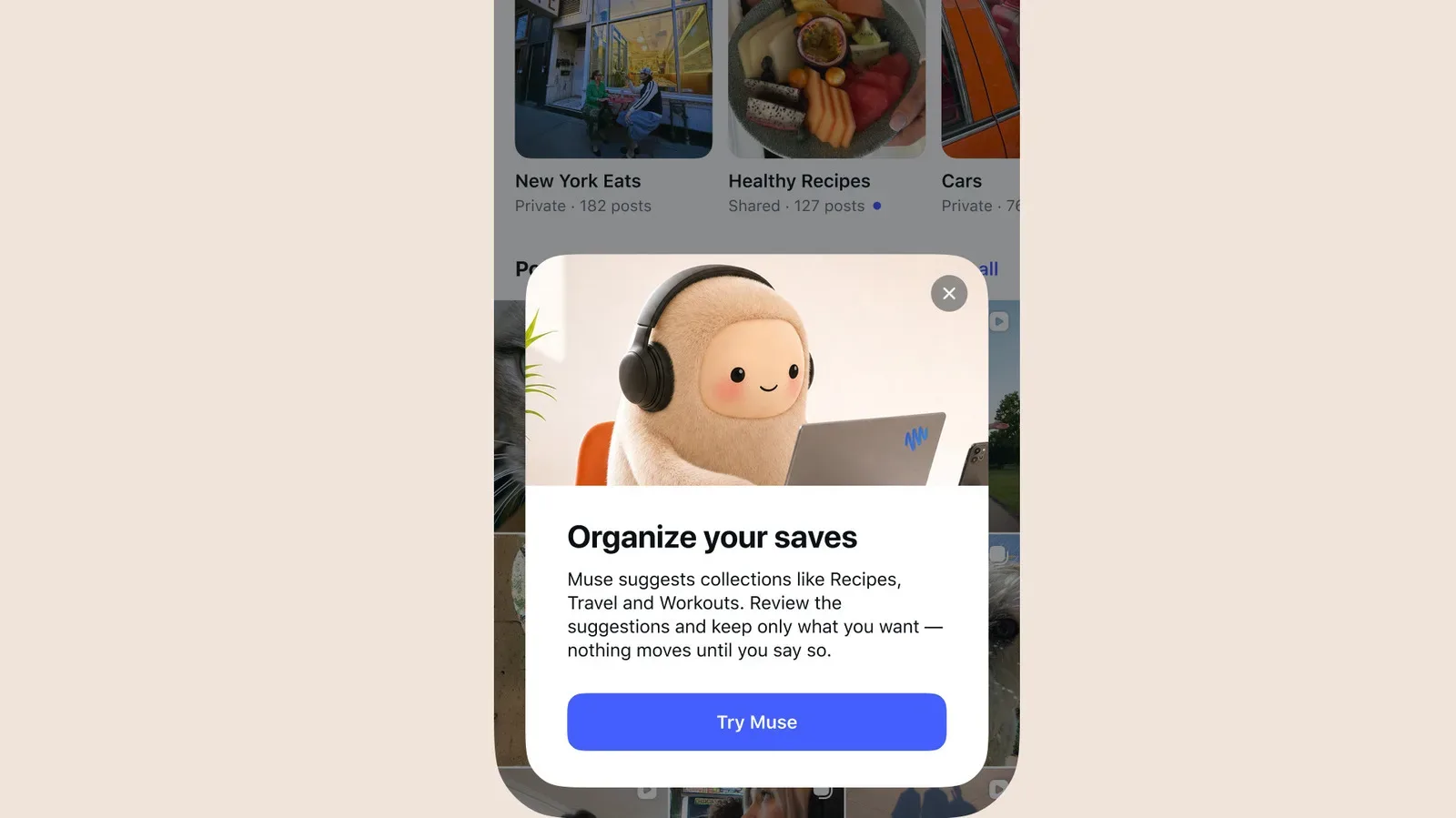
For people who connect their Instagram and Muse accounts, the assistant will be able to organize saved Instagram content into specific collections. Recipe videos and travel clips are two of the examples given. Instagram will also begin presenting prompts when people save posts, encouraging them to use Muse for that organization rather than leaving every useful-looking reel in one increasingly impossible-to-search archive.
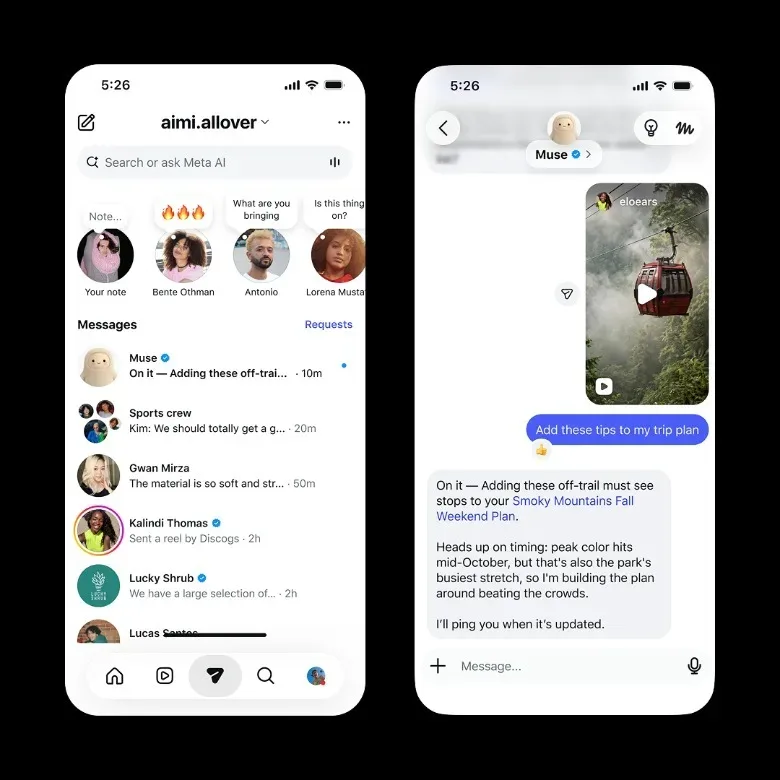
Muse is also gaining a dedicated presence in Instagram direct messages. That makes it possible to begin a chat with the assistant based on the content currently being viewed, rather than requiring a jump out to the standalone Muse app or web interface first.
What is actually changing inside Instagram
The core change is placement. Muse is moving closer to the moment when an Instagram user decides a post is worth keeping. Rather than asking people to remember a separate assistant after months of collecting food, destinations, products, clips and ideas, Instagram will surface Muse while users are saving posts.
That matters because saved-content systems tend to fail less from a lack of storage than from a lack of follow-through. Saving is a quick, low-commitment action. Categorizing material later demands time, memory and a willingness to reopen an old list. An assistant that can be asked to sort material into collections attempts to remove that later chore.
In practical terms, the intended workflow is straightforward:
- A user saves a post or video in Instagram.
- Instagram may suggest using Muse to organize it.
- Muse can place related material into a collection, such as recipes or travel clips.
- The user can return to that collection when they want to use what they saved.
The available prompts will be particularly prominent for Instagram users in the United States who have linked their Muse and Instagram accounts. The account connection is an important condition: this is not described as a feature automatically available to every Instagram account without setup.
Muse and Meta AI are not the same Instagram assistant
The integration could be confusing because Instagram will continue to have its existing Meta AI chatbot. Both can appear in a messaging environment, but they are framed as serving different jobs.
Meta AI remains the general-purpose chatbot: the one intended to answer questions. Muse, meanwhile, is positioned as a personal-agent-style assistant. An agent, in this context, means software designed to help with tasks connected to a user’s own information and requests, rather than simply generating a response to a one-off question.
Inside Instagram DMs, Muse can be sent travel content for research connected to a future trip. Users can also ask it to shop for particular items, check other DM threads, accept to-dos and track tasks tied specifically to Instagram. Those examples point to an assistant meant to work across information that is already passing through a person’s Instagram activity.
That distinction is worth keeping in mind before choosing which button or DM thread to use. A general chatbot is suited to a direct question. Muse’s pitch is more organizational and task-oriented: take a piece of content, relate it to an ongoing plan or request, and help keep track of it.
The in-app version has limits
Muse within Instagram will not replace the full Muse product. The standalone app and web interface will still be needed to see what Muse does with all Instagram messages. The Instagram integration can support Instagram-specific tasks, but it is described as more limited than using Muse in its dedicated environments.
That limitation is meaningful for anyone expecting a complete command center to appear inside DMs. Instagram is becoming a place to initiate an assistant interaction and manage a narrower set of social-app tasks. The broader view of activity, including how Muse handles Instagram messages overall, remains outside the app.
It also means users may need to decide whether the convenience of in-feed prompts outweighs the fragmentation of another tool in an already busy messaging space. Instagram will have the existing Meta AI chatbot, Muse in DMs, saved-post collections, and the separate Muse app or website for more complete visibility. The functions are differentiated, but the experience may still require a little orientation.
Why saved posts are the logical entry point
Instagram saves can become an informal archive of intentions. A cooking video may represent a meal someone plans to make; a travel reel may be an idea for a possible destination; a product post may be something to research or buy later. The posts themselves are not necessarily useful until they are grouped, revisited and acted on.
Muse’s proposed role is to add structure to that archive. A travel collection, for example, could reduce the effort of locating previously saved destination material. A recipe collection could turn scattered food videos into a more purposeful list. Importantly, the announced examples concern organization and research support; they do not establish that Muse will automatically validate a creator’s recommendations, confirm product details or make purchases on a user’s behalf.
The approach also reflects a wider product design goal: assistants are more likely to be used when they appear inside the services where people already create the raw material for their tasks. In this case, Instagram is both the stream of inspiration and the new doorway into Muse.
A strong growth push for a newer product
The prominent prompts are also a direct attempt to introduce Muse to a much larger existing audience. Muse passed 10 million users last month. Meta chief executive Mark Zuckerberg has said he wants the service to eventually reach billions of people and has predicted it could generate more revenue than the company’s existing family of apps.
Instagram is a natural distribution channel for that ambition because its users already save content and communicate in DMs. Meta has used cross-app promotion in other efforts, including pushing popular Threads posts into Facebook and Instagram feeds while Threads was growing. Threads now has more than 500 million users.
There is a difference between visibility and usefulness, however. Prompts can put Muse in front of more people, but recurring use will depend on whether the organizational results are genuinely easier to navigate than ordinary saved posts and manually created collections. The best case for the feature is not that it saves a single video, but that it helps recover something meaningful from a large backlog months later.
What Instagram users should watch for
For users who want less clutter in their saved tab, the most practical reason to connect Muse may be a simple cleanup project. Start with a narrow category that has a real future use—recipes, travel, gift ideas or a project—and see whether the resulting collection is easier to revisit. A limited category gives the assistant a clearer organizational target than asking it to make sense of years of unrelated saves at once.
For DM use, be deliberate about the difference between an answer and an ongoing task. Asking a generic factual question is aligned with the continuing Meta AI chatbot. Sending Muse a piece of travel content to research, or using it to track a to-do rooted in Instagram, is closer to Muse’s stated purpose.
Users who prefer traditional desktop organization may also recognize the underlying appeal: tools are most useful when their layout stays predictable and findable. The same principle applies whether someone is sorting saved clips or restoring order to a workspace, as in this guide to stopping macOS Spaces from reordering.
Muse’s Instagram arrival is therefore less about replacing the social app with an AI assistant than inserting assistance into two high-traffic habits: saving things and messaging people. Its success will likely rest on clarity. Users will need to understand when Muse is the right tool, what remains the responsibility of Meta AI, and when the full Muse app or website is necessary.