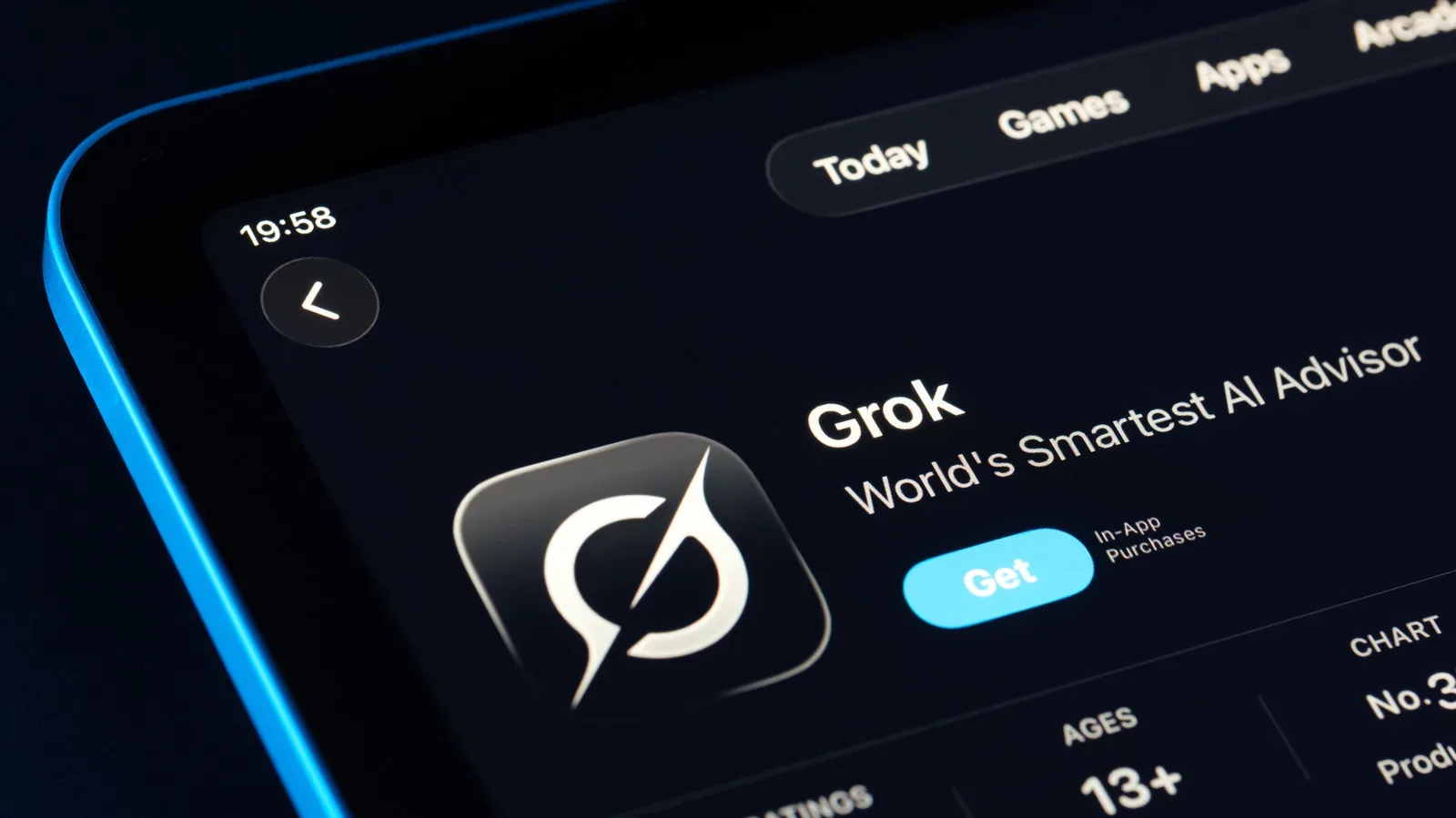
For a few hours on Thursday morning, the AI world appeared to hit the sort of server-room banana peel that can turn a perfectly ordinary day into a parade of error messages. SpaceXAI said an outage at its Memphis compute center disrupted Grok and also affected unspecified “compute partners.” Grok’s own status information records a models outage beginning at 6:30AM PT and lasting about three and a half hours.
The interruption reached Grok through X, Android, and iOS, meaning it was not simply one app having a bad hair day while the rest of the service carried on. People using any of those routes could have encountered an unavailable model rather than the usual prompt-and-response routine. SpaceXAI apologized to Grok users and to partners impacted by the incident, while Elon Musk said corrective action was being taken to stop a repeat.
What has not been explained is the crucial, extremely unglamorous question behind any outage: what actually broke? SpaceXAI did not disclose a technical cause for the Memphis event. That makes it impossible to say whether the failure involved power, networking, software, capacity, hardware, a deployment, or another part of the sprawling machinery required to keep modern AI systems answering questions at speed.
A Grok outage with a wider shadow
The phrase “compute partners” is doing a lot of work here. SpaceXAI acknowledged that other partners were affected, but did not name them. The timing is notable because Anthropic’s Claude and OpenAI’s ChatGPT and Codex all experienced problems on Thursday morning as well. Timing alone is not proof that the incidents had the same root cause, but it is enough to put a large, blinking question mark over the morning’s service disruptions.
Claude’s problems began around 6:30AM PT, matching the reported start time for Grok’s outage. Claude’s status information described elevated errors affecting multiple models: Claude Mythos 5.1, Claude Fable 5.1, and Claude Opus 5. The issue was marked resolved at 9:16AM PT. Anthropic has not said whether those errors were connected to the Memphis compute-center outage.
There is one relevant business connection, even if it does not settle the technical question. Earlier this year, Anthropic and Musk’s AI firm entered a deal under which the Claude maker would lease compute. That agreement gives the overlap more context, but it should not be treated as confirmation that Memphis caused Claude’s elevated errors. A compute arrangement can involve many systems, regions, failover paths, and operational details that have not been publicly identified here.
OpenAI reported a separate early-morning incident involving elevated errors across ChatGPT and Codex. Reports indicated users began seeing trouble at roughly 7:30AM PT. OpenAI listed the issue as resolved by 9:55AM PT, without giving a cause. No direct link between OpenAI’s disruption and SpaceXAI’s Memphis incident has been established.
What the timeline does — and does not — tell us
- 6:30AM PT: Grok’s roughly three-and-a-half-hour models outage began, and Claude began reporting elevated errors across several listed models.
- 9:16AM PT: Claude’s incident was marked resolved.
- About 10:00AM PT: A three-and-a-half-hour Grok interruption that began at 6:30AM PT would place restoration around this point, though the reported duration is the key available detail.
- 9:55AM PT: OpenAI marked its ChatGPT and Codex error incident resolved.
That sequence makes for an interesting cluster, not a solved mystery. Grok and Claude had trouble starting at approximately the same time, while reports of OpenAI user issues began about an hour later. Their recovery windows were also close together. Yet overlapping alarms in online infrastructure can result from a shared dependency, unrelated faults, demand spikes, mitigations happening elsewhere, or coincidence. Without a technical incident report, any more definite story would be guesswork dressed up in a server rack.
The distinction matters because AI services increasingly function less like isolated websites and more like layered systems. A user sees a chat window, a mobile app, or an assistant integrated into a social platform. Underneath that friendly rectangle are model-serving systems, compute capacity, storage, authentication, networks, monitoring, and whatever connections exist between providers and partners. When one layer stumbles, the visible symptom can be remarkably simple: an answer does not arrive.
Why this matters to game and tech communities
For players, creators, and developers, an AI outage is not necessarily a world-ending event. It is, however, a reminder to avoid putting a time-sensitive task behind one single service. Someone using a model to summarize patch notes, organize a community event, draft a guide outline, troubleshoot a modding question, or brainstorm a tabletop campaign can lose a chunk of momentum when the assistant goes silent. The practical response is not panic; it is having the boring backup plan that suddenly feels very clever.
That can mean keeping notes locally, saving prompts that matter, maintaining an alternate research workflow, and remembering that an AI response should not be the only copy of anything important. It is the same wisdom behind saving before a difficult boss fight. The tool may be fast, useful, and occasionally magical-looking, but the unsaved work is still standing suspiciously close to a cliff.
AI is also turning up in the kinds of oddball PC projects that thrive on experimenting with contemporary work culture and tech habits. Our look at a cat taking on office AI in a recent indie game roundup is a useful reminder that games often process these trends through satire, frustration, and a well-aimed paw before the broader industry has even agreed on the vocabulary.
The Thursday incidents do not demonstrate that AI tools are inherently unreliable, nor do they establish that one company’s systems brought down another’s. They do show how quickly availability becomes the story when major services are woven into daily habits. A few hours may not sound catastrophic on paper, but the impact depends on what a person expected to do in those hours and whether there was a realistic alternative.
The unanswered questions after restoration
SpaceXAI’s apology identifies the Memphis compute center as the location tied to Grok’s outage, and the company has said it is taking corrective action. That is meaningful acknowledgment, but it leaves several details unknown. There is no disclosed root cause, no public explanation of the repair, no list of the compute partners affected, and no confirmation of whether Claude’s or OpenAI’s errors had any relationship to the event.
Anthropic and OpenAI likewise had not publicly connected their respective incidents to SpaceXAI’s facility. Each service’s status updates establish that errors occurred and were resolved; they do not fill in the causal blanks. Readers should be wary of treating the shared morning window as a complete explanation, especially when the available facts specifically leave the relationship uncertain.
For now, the cleanest account is also the least dramatic: Grok suffered a Memphis-related compute-center outage for more than three hours, while Claude and OpenAI services encountered their own reported errors during roughly the same morning period. The systems recovered, apologies and status updates were posted, and the deeper technical postmortem remains offstage. In the grand tradition of technology, the servers have returned from their mysterious quest, but they have not yet handed over the map.