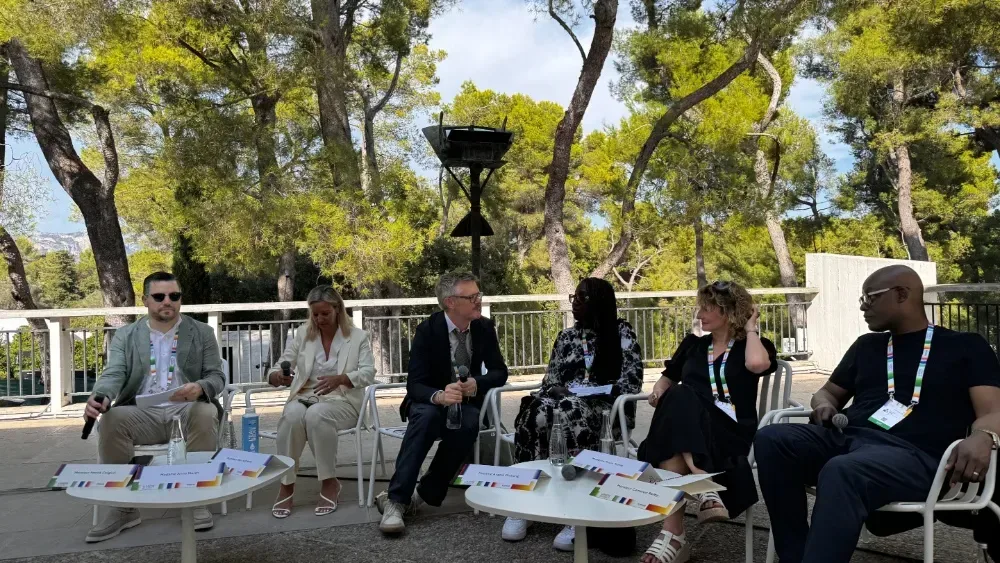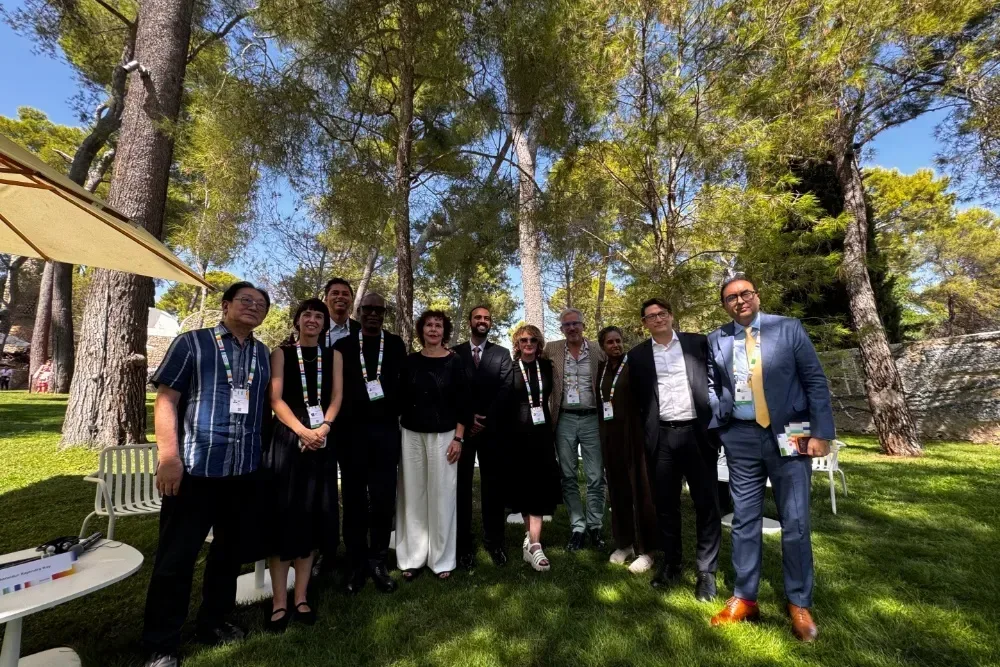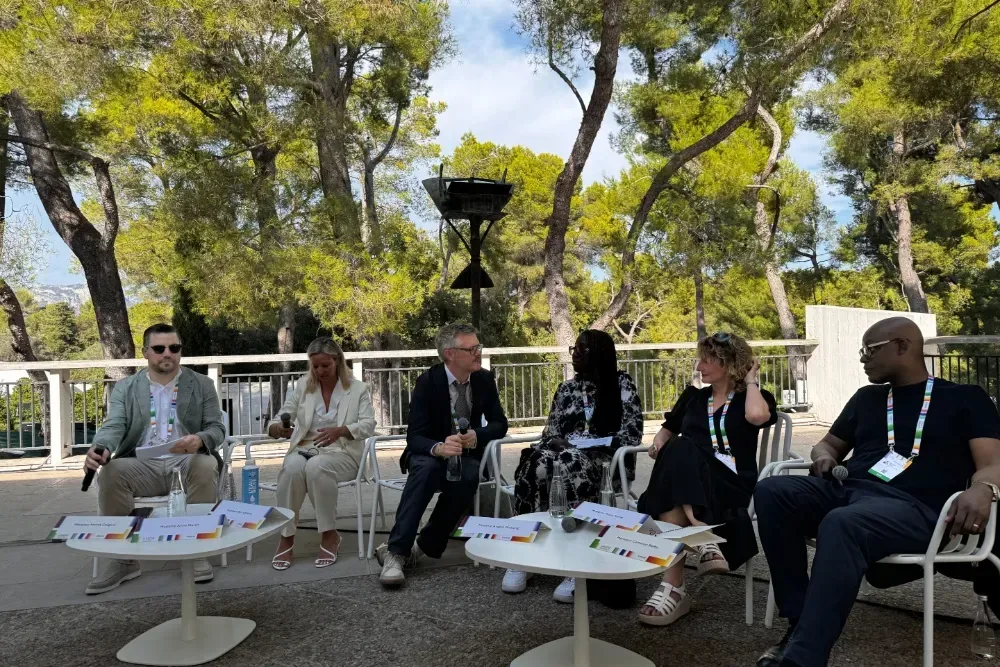
Film’s gender gap was put under an uncomfortably bright spotlight at the Lumière Summit, where a panel of studio, festival and institutional leaders argued that gradual improvement is not remotely the same thing as sufficient improvement. The discussion, titled Safer Sets, Different Stories: Why Gender Balance Matters, focused on a stubborn reality: women occupied 17% of key behind-camera jobs when the Celluloid Ceiling study began tracking the figure in 1998, and the figure was only 23% last year.
That is a six-point increase across 27 years. It is movement, certainly, but at a pace that makes the industry’s repeated promises of transformation sound less like a sprint and more like a very slow-moving end-credit crawl. The speakers’ central case was that gender balance cannot be treated as charitable add-on work, a box to check after a slate has been assembled or a red-carpet talking point. It has to be built into the systems that choose projects, allocate money, hire crews, support careers and determine which stories find an audience.
The pipeline is not the problem; the exits are
Anna Marsh, chief executive of Studiocanal and deputy chief executive of Canal+, highlighted one of the industry’s clearest contradictions. Women represent 50% of film-school graduates, yet only one in six directors is a woman by the time filmmakers reach a third feature. In other words, the talent is entering the pipeline, but the professional path narrows sharply as budgets, expectations and career risk increase.
The money figures make that narrowing impossible to ignore. Marsh said the average budget assigned to a woman director is 44% of the budget allocated to a male director. A smaller budget can mean fewer shooting days, reduced technical resources, less flexibility in post-production and a lower tolerance for anything that goes wrong. It can also make it harder to build the sort of ambitious credits that decision-makers frequently demand before entrusting someone with the next, larger project. The familiar demand for a proven track record becomes circular when access to the work required to establish that record is so uneven.
Canal+ has committed an additional €1 million over three years to development financing for projects from female writers and directors. Marsh also said a film about silent-film trailblazer Alice Guy is in development, with Anne Le Ny attached to direct. The project carries an especially fitting historical resonance: Guy’s work has long stood as a reminder that women helped shape cinema from its earliest days, even when later industry narratives frequently pushed them to the margins.
Marsh’s framing was direct: cinema should view this work as investment in its future rather than as an obligation. That distinction matters. An industry that repeatedly overlooks creators is not merely failing a fairness test; it is declining stories, perspectives and potential hits before audiences ever have the opportunity to respond.
Data changes what gatekeepers can see
Several participants returned to transparency as a practical tool rather than an abstract aspiration. Tricia Tuttle, director of the Berlinale, shared figures that show how measured accountability can change a festival’s results. In 2005, no films in Berlinale competition were directed by women. The proportion rose to 15% in 2015 and reached 40% in 2025.
Those numbers do not suggest that a single formula magically solves a structural imbalance. They do show why keeping and publishing data matters. Curators, programmers and funders have enormous influence over cultural visibility, and a tally of outcomes can reveal patterns that intuition, good intentions and the phrase “we chose the best work” may otherwise conceal. Once an organization can see its decisions accumulated over time, it is harder to pretend that the results appeared from nowhere.
Tuttle also pointed to evidence that projects with greater gender balance perform better commercially. That is a crucial counter to the tired implication that inclusion must compete with business priorities. The argument presented at the summit was that the supposed choice is false: widening who gets to make films can strengthen the creative offering and the commercial one at the same time.
The issue reaches far beyond a festival lineup, of course. Festivals can launch careers, attract distributors, build awards momentum and tell international audiences what work deserves attention. For readers following the broader screen landscape, the stakes around who gets visibility remain evident even in major franchise developments, including the planned one-season run of Spider-Noir. The pathways into film and television may differ, but gatekeeping decisions shape whose creative work receives resources, promotion and an audience.
Standards that travel with the work
Ben Roberts, director general of the British Film Institute, used the BFI’s Sight and Sound Greatest Films of All Time poll to illustrate both cultural reassessment and the scale of the remaining disparity. Only three of the top 100 films in the 2012 poll had women directors. By 2022, the number had increased to 11, including two films apiece from Agnès Varda and Chantal Akerman.
The shift demonstrates that film culture can broaden its canon when it looks more closely. But 11 out of 100 is not a finish line. It is evidence of how much vital work had been undervalued, underseen or excluded from dominant conversations for decades.
Roberts highlighted the BFI Inclusion Standards, which date to around 2014, as well as the Creative Industries Independent Standards Authority. His emphasis was on common minimum expectations across borders. Film production is often international by design: financing, crew, casting, locations, post-production and distribution can all cross national lines. If workers and projects move between jurisdictions, the protections and expectations around inclusion should not evaporate at the airport.
This is where vague commitments run into their practical test. Standards need mechanisms: eligibility requirements, reporting, funding criteria and procedures that make responsibility clear. A co-production network can either spread stronger practices internationally or reproduce the weakest practices available. The panel’s message favored the former.
Programming, training and who gets hired
Cameron Bailey, chief executive of the Toronto Film Festival, said TIFF’s programming team has remained roughly 50% women for more than a decade. The festival’s 2026 selection includes 35% films directed by women, compared with 25% a decade earlier. Bailey connected this approach to Share Her Journey, the initiative founded at TIFF in 2017 by his sister, Maxine Bailey.
The initiative rests on a basic proposition that is easy to say and difficult to enact consistently: gatekeepers have to actively find and elevate work by women. Waiting for the system to deliver equality on its own has not worked. Nor has the notion that every barrier is a relic of the past. Bailey recalled encountering dismissive attitudes toward Sarah Polley’s Women Talking during its awards campaign, including Academy members questioning why they should watch it. Such reactions make clear that access to production is only part of the challenge; a film must also be taken seriously by the people who decide what is prestigious, marketable or worth their time.
Angèle Diabang offered a ground-level model for changing the workforce itself. The Senegalese filmmaker founded the Mousso Institute in 2022 in Casamance, her home region, rather than in the capital of Dakar. The location is intentional, decentralizing access to training and opportunity. The institute works with cohorts of six women and teaches cinematography, sound, lighting and editing at no charge. Two cohorts have completed training, for 12 women in total.
Diabang’s point was not that women should be placed on a set as symbolic proof of progress. Her focus was professional skill, opportunity and independence: trained crew members who know their disciplines and can build lasting careers. That distinction should be obvious, yet it is powerful because exclusion is often defended through claims about experience. Programs that supply real technical training help dismantle the unequal access to experience in the first place.
Safety and funding consequences
France’s CNC has required gender-based violence training for cast, crew and technicians on French productions since 2021. The policy recognizes that representation is inseparable from workplace conditions. Hiring more women means little if sets remain places where people lack safety, meaningful support or confidence that misconduct will be addressed.
A more forceful funding mechanism is set to follow in 2027. CNC support will be connected to crew gender targets through a bonus-and-penalty system. Productions with fewer than 40% women on crew will face penalties, while productions meeting or surpassing the threshold will receive a bonus. It is a clear example of accountability operating where it often has the strongest influence: the budget.
Marsh also noted that Canal+ was the first company to join Safe Place, a movement supporting women who experience violence both at work and in their day-to-day lives. Taken alongside training requirements and financing criteria, the measures discussed at the summit form a more complete picture of what change requires. There is no single lever. Better data without hiring can become a spreadsheet. Training without jobs can become a dead end. Hiring without safety can leave people exposed. Funding without sustained scrutiny can lapse into performance.
Moderator Patrick Caligiuri ended the session with the hope that a future Lumière Summit will no longer need a panel devoted to the topic. The figures shared during this one explain why that hope remains distant, but they also outline a route forward: measure the imbalance, fund differently, train widely, insist on safety and make institutions answer for the outcomes they produce. The work is not a constraint on cinema’s future. It is part of how that future gets made.