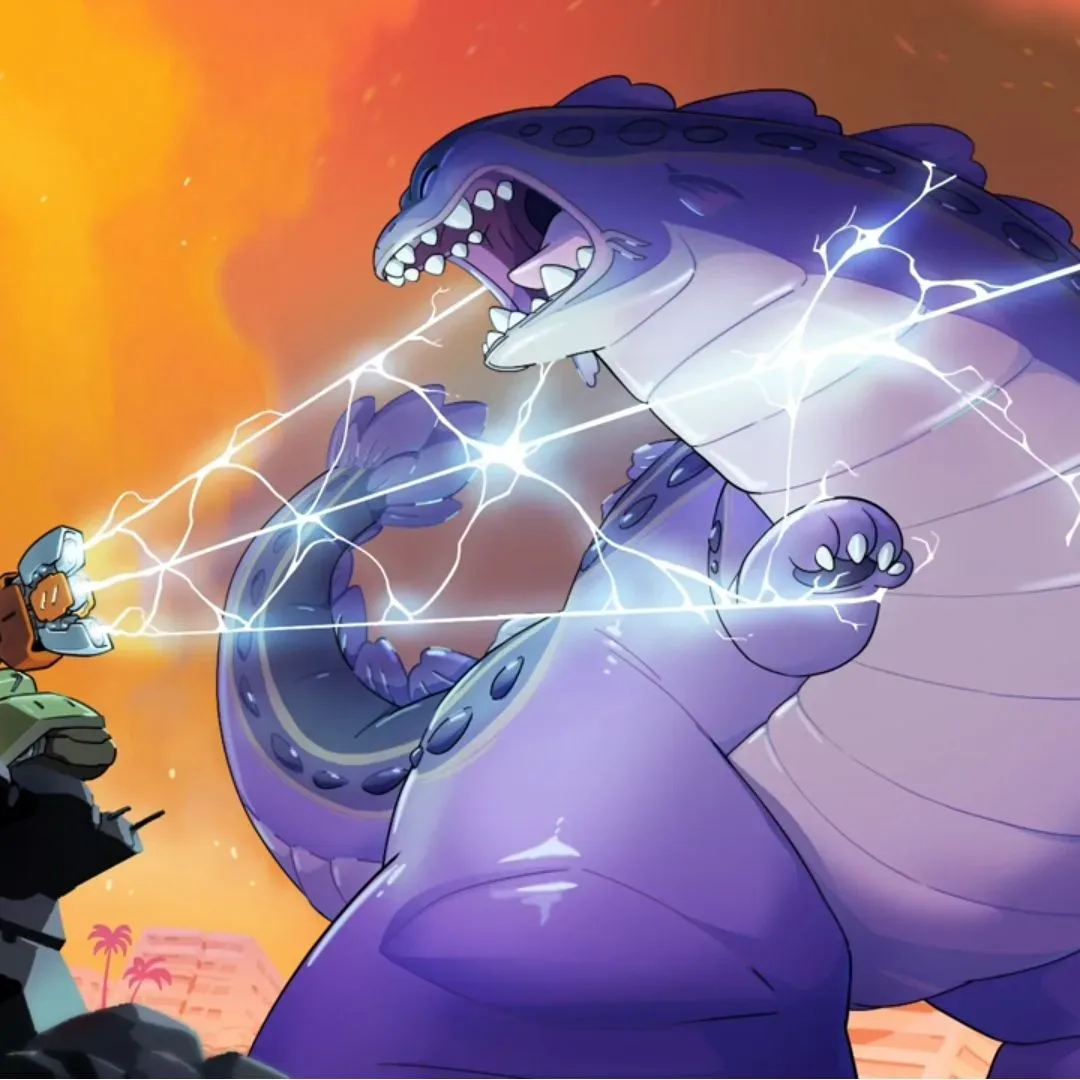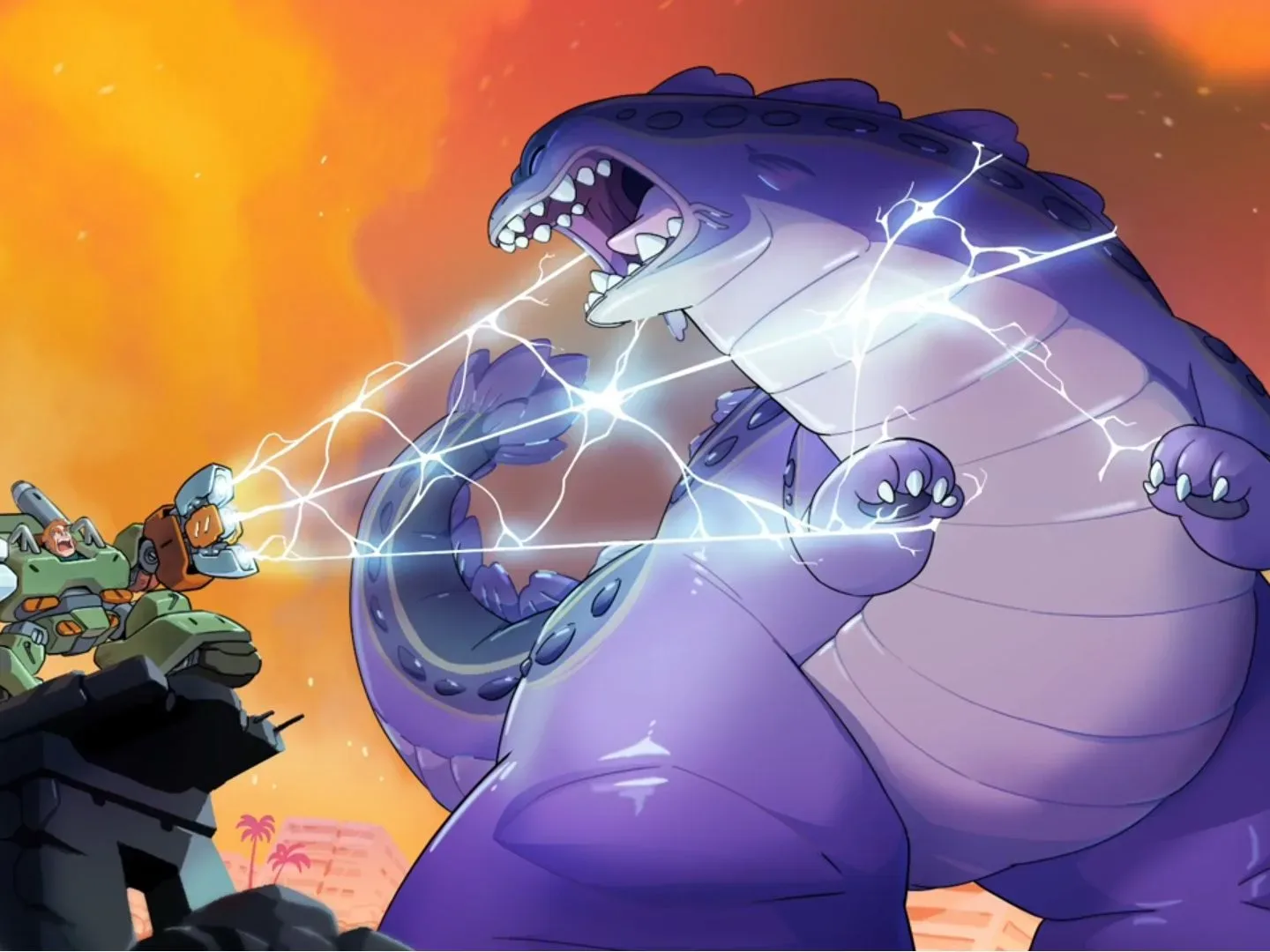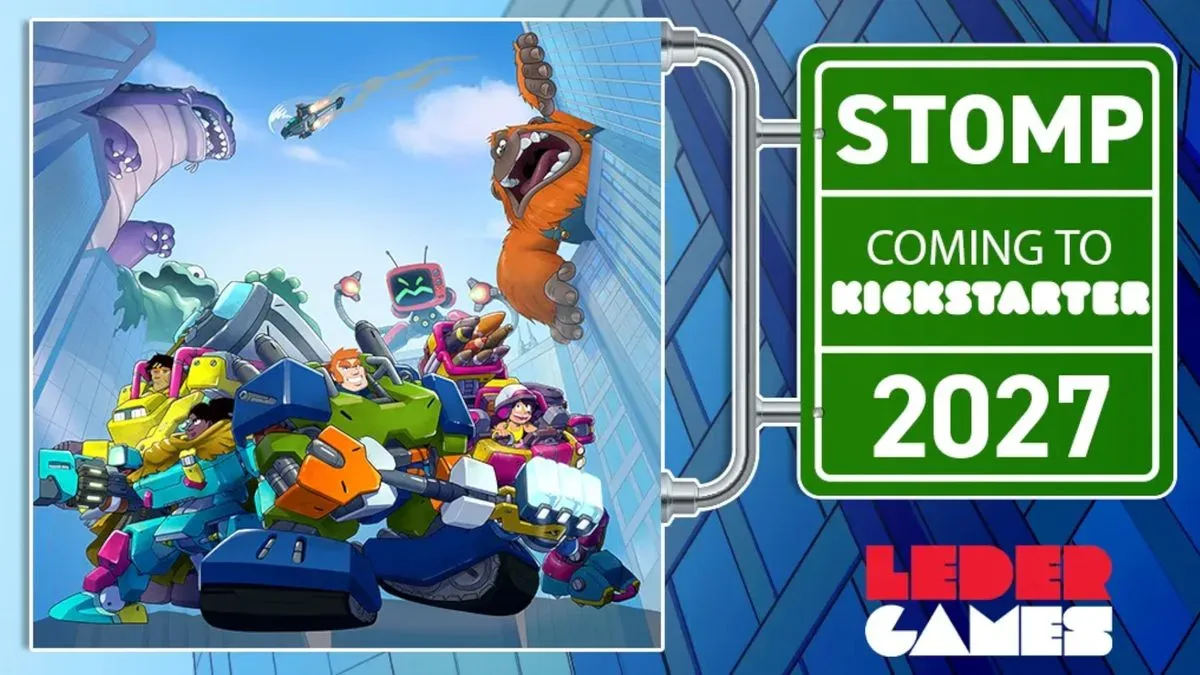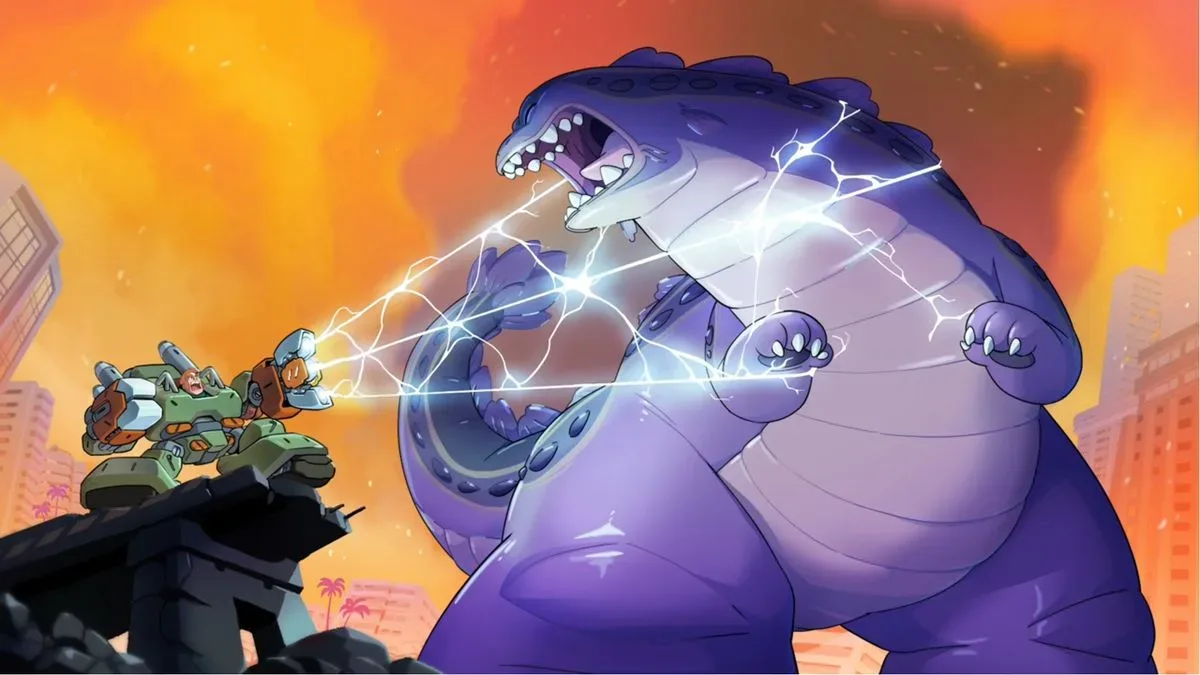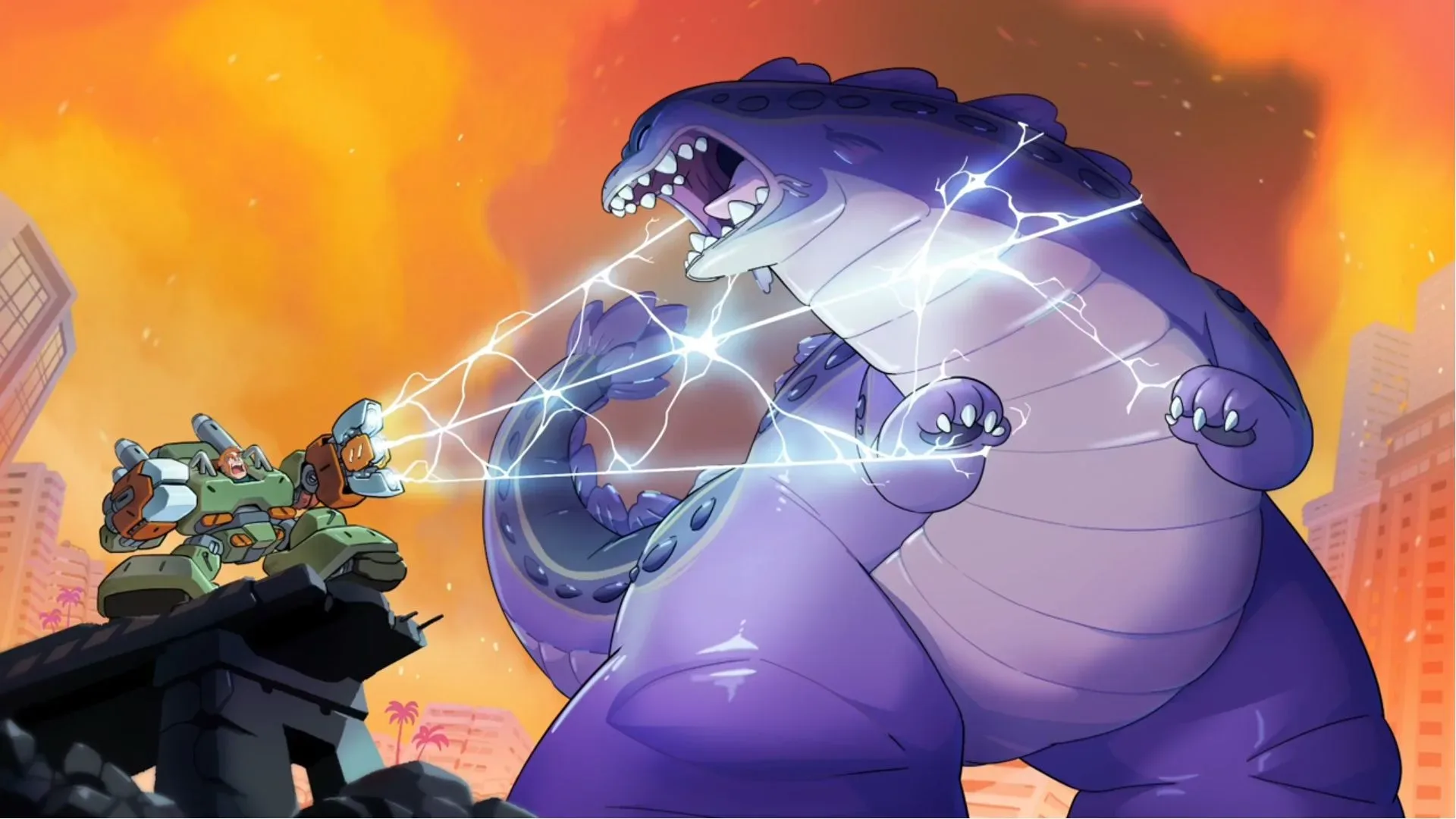
Leder Games’ next board game is taking a conspicuously different route from the woodland warfare and faction-specific strategy associated with Root. The newly revealed Stomp is a cooperative mech-versus-kaiju game built around dexterity: players will flick shots across the board in an effort to stop comedic giant monsters from wrecking a city.
Designed by Taylor Shuss and illustrated by Evan Palmer, Stomp is planned for Kickstarter in 2027. A precise campaign date has not been confirmed, so prospective backers should treat the year as the current window rather than a firm release-day promise. Leder Games also has the racing board game Kart in progress after its crowdfunding campaign concluded.
A cooperative game of plans, flicks and fallout
The core pitch combines two ideas that usually demand different skills. Players must read the board, identify what each kaiju can do and coordinate a response with teammates. Then they physically flick their attacks. The strategic answer may be clear; whether the shot actually lands as intended is another question.
That is what “cooperative dexterity game” means in this case. Cooperative means the group is working toward a shared objective against the game’s threats, rather than trying to defeat one another. Dexterity means physical precision is part of the rules experience. A player’s touch, angle and force matter, so a sound plan can be disrupted by a miss, an unexpected collision or an awkward result on the tabletop.
In Stomp, that uncertainty is not merely an incidental flourish. It is central to the intended rhythm. The game asks players to assess danger, agree on a response and then adjust when a flick does not go where it was supposed to. A turn, in other words, should contain both deliberate team planning and a moment where the table has to live with the outcome.
The kaiju are not presented as interchangeable targets. Each monster has its own powers, and each mech and monster is said to have a distinct playstyle. That matters because it suggests that simply becoming better at flicking will not be the whole challenge. Players will need to understand the particular threat in front of them and alter their priorities accordingly.
What “playstyle” could mean for the table
Specific character powers and component details have not been outlined, so it would be premature to describe exact strategies. Still, the stated design direction points to a useful practical expectation: a group may need to reconsider positioning, target choice and team roles from monster to monster.
One encounter might reward careful setup before committing to a difficult shot. Another may make speed, damage control or adapting after an error more important. The important point is not that every session will be mechanically identical, but that the monsters are intended to create changing tactical problems. For a cooperative game, that can give discussion a concrete focus beyond simply deciding whose turn is next.
Related coverage includes Leder Games Reveals Stomp, a Cooperative Mech-vs-Kaiju Dexterity Board Game.
It also gives mistakes a potentially productive role. In a pure precision contest, a missed flick can feel like dead air. In a cooperative system designed around improvisation, a missed shot can become the event that changes the group’s plan. Players may have to cover for the failed action, redirect attention toward a newly dangerous monster power or accept a less-than-ideal route through the problem.
Dark Souls is the design reference, not the setting
The most revealing detail about Stomp is its unlikely origin. Shuss has linked the idea to Dark Souls, specifically the process of learning an opponent’s behavior and then attempting the execution needed to overcome it.
“I thought, how could I distill that moment of perfect knowledge with imperfect execution into a game?” Shuss said, explaining the leap from recognizing what must be done to flicking a piece well enough to do it.
This is a narrower connection than simply borrowing the look, atmosphere or difficulty reputation of a Souls-like game. The proposed translation is about the gap between knowledge and performance. A player can recognize an enemy pattern, understand the correct response and still fail at the decisive moment. In a video game, that might mean a mistimed dodge or attack. At the Stomp table, it is the physical act of sending a shot toward the intended target.
That framework helps explain why the dexterity mechanism is more than a theme-matching gimmick. Flicking produces an immediate, visible test of execution. Everyone can see the plan, see the attempt and see the result. It also makes the uncertainty tactile rather than hidden in a card draw or die roll.
There is a meaningful distinction here. The information is described as “perfect” in the sense that players can know what the desired action is, not in the sense that every future result is guaranteed or that all rules details are public. The uncertainty comes from whether the team can carry out that answer successfully in the moment. That distinction could make Stomp appealing to groups that enjoy discussing a puzzle but want the resolution to involve more than calculating probabilities.
From fantasy prototype to giant monsters
Stomp was not initially a mech-and-kaiju game. Its early form used a fantasy setting tied more directly to the Dark Souls inspiration. Shuss later moved away from that approach because the Souls-like fantasy theme was not proving exciting enough for the project.
A playtester’s mention of classic monster movies provided the spark for a change. Shuss, a Godzilla fan, found the giant-monster direction more compelling, and the project settled into its current identity: robot suits standing between a city and destructive kaiju.
That evolution is relevant because the theme now communicates the underlying gameplay especially clearly. Mechs battling skyscraper-scale monsters makes the need to study an opponent, cooperate and improvise feel intuitive. It also leaves room for a lighter, more comedic tone than the original fantasy concept apparently had. The game may have begun with a reference point associated with punishing boss fights, but its public pitch is not one of grim fantasy misery. It is giant robots trying to keep a city intact while flicked attacks go magnificently right—or horribly sideways.
Not a monster brawl in the usual sense
The kaiju theme may invite comparisons to games where players control giant monsters and fight for dominance. Stomp takes the opposite role assignment: the monsters are the threats, and players are the defenders trying to stop them. Its cooperative structure and physical flicking mechanism further separate it from a conventional competitive monster showdown.
That distinction is useful for players deciding whether the premise matches their group. Someone looking to embody a kaiju and compete directly against friends may be seeking a different kind of game. Someone looking for a shared obstacle course of tactics and tabletop aim, however, is much closer to Stomp’s stated goal.
The mech-versus-monster premise also should not be confused with a licensed adaptation. No license, crossover or connection to a particular monster-film franchise has been announced. The available details describe an original game using the broad kaiju and mech vocabulary, shaped by the designer’s enthusiasm for classic monster movies and the gameplay lesson drawn from Dark Souls.
A notable shift for Leder Games
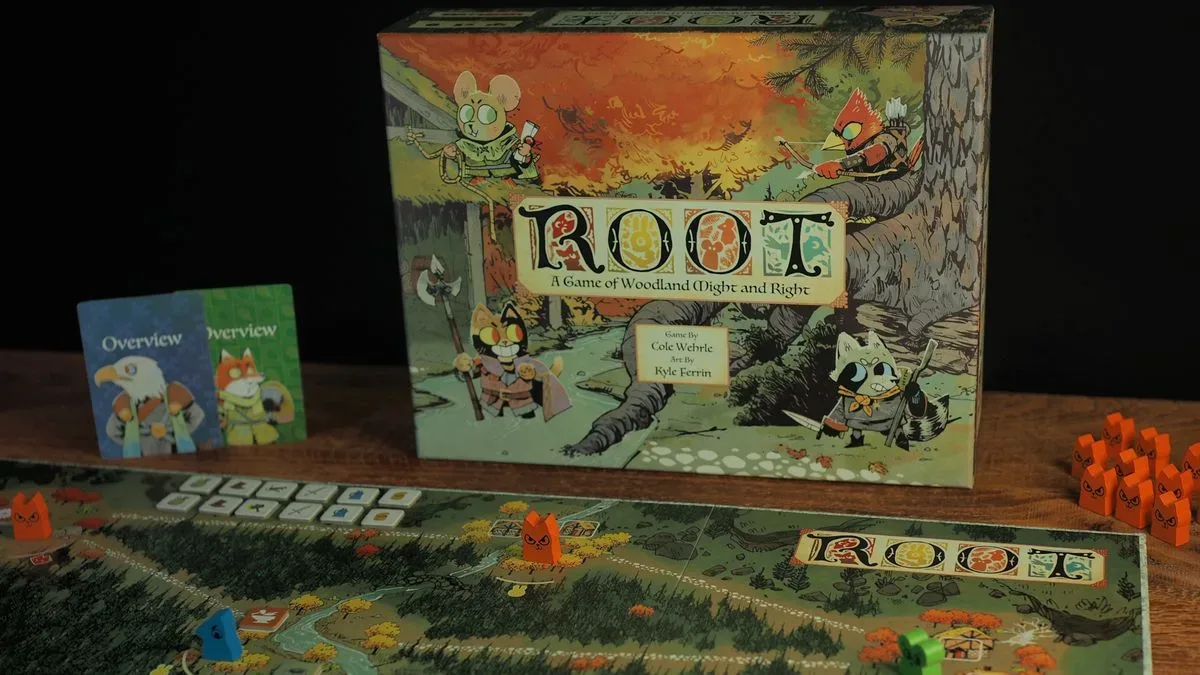
The reveal stands out in the context of Leder Games’ best-known work. Root is widely associated with asymmetrical play, a design approach in which factions follow different rules or systems instead of beginning from the same template. Its inviting animal artwork can conceal a comparatively demanding strategy game.
Stomp still shares one broad interest with that design tradition: different entities are meant to play differently. But its expression is very different. Rather than centering a competitive contest between distinct factions, it puts a team on one side of the table against varied monster challenges, and it ties execution to physical action.
That makes Stomp worth watching as an indicator of how broad Leder Games’ catalogue may become. The company is working in a period of change after the designer of Root departed earlier in the year to establish a separate studio, following differing views with Leder Games’ chief executive about the projects the publisher should pursue. That background does not establish a wholesale new strategy by itself, but it makes this unusually playful, dexterity-focused announcement more notable.
Players interested in how established creators and studios move between projects may also want to follow the longer development realities around major games, as seen in Larian’s update on its next Divinity project. In Stomp’s case, the key immediate fact is simpler: its crowdfunding campaign remains ahead, and the details currently public describe a concept rather than a finished product.
What is confirmed—and what remains open
There is enough information to identify the game’s central appeal: cooperative mech defense, monsters with different powers, tabletop flicking, and a design premise built on understanding the right move before testing the ability to execute it. The creative team is also known, with Shuss on design and Palmer on art.
Much remains unannounced. There is no confirmed Kickstarter date beyond 2027, and no firm retail timing has been provided. Detailed rules, player count, game length, component list, pricing and the full set of mechs and kaiju have not been established in the available information. Those are the details that will determine how demanding the game is in practice and how approachable it may be for different groups.
For now, Stomp looks like a deliberately offbeat blend: a game about learning a boss-like problem, making a team plan and then trusting the small but consequential physics of a flick. The monsters may be comedic, but the central question remains serious enough for any tabletop squad: now that everyone knows the perfect shot, who is brave enough to take it?
Shop the products
Check current price, model and availability at the retailer.