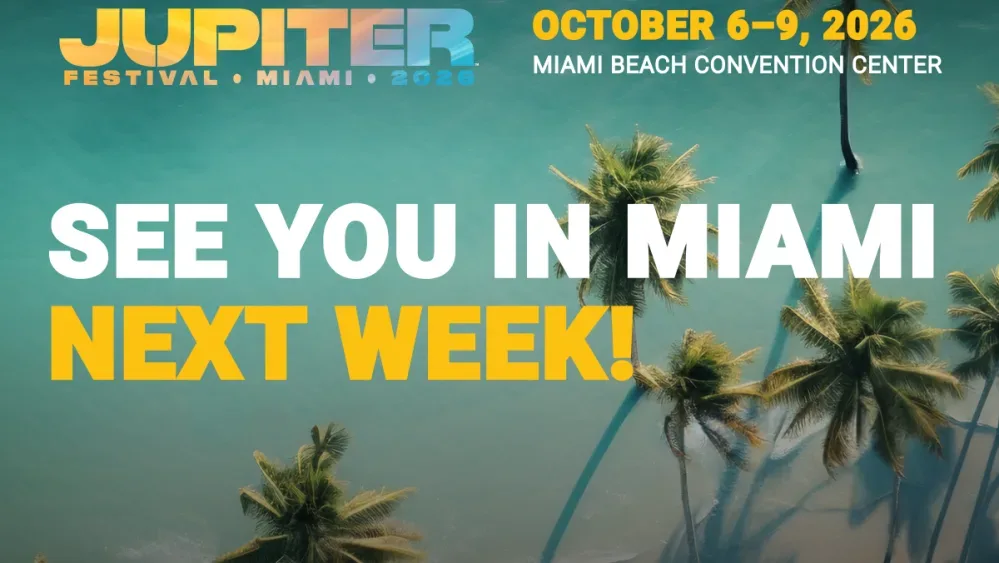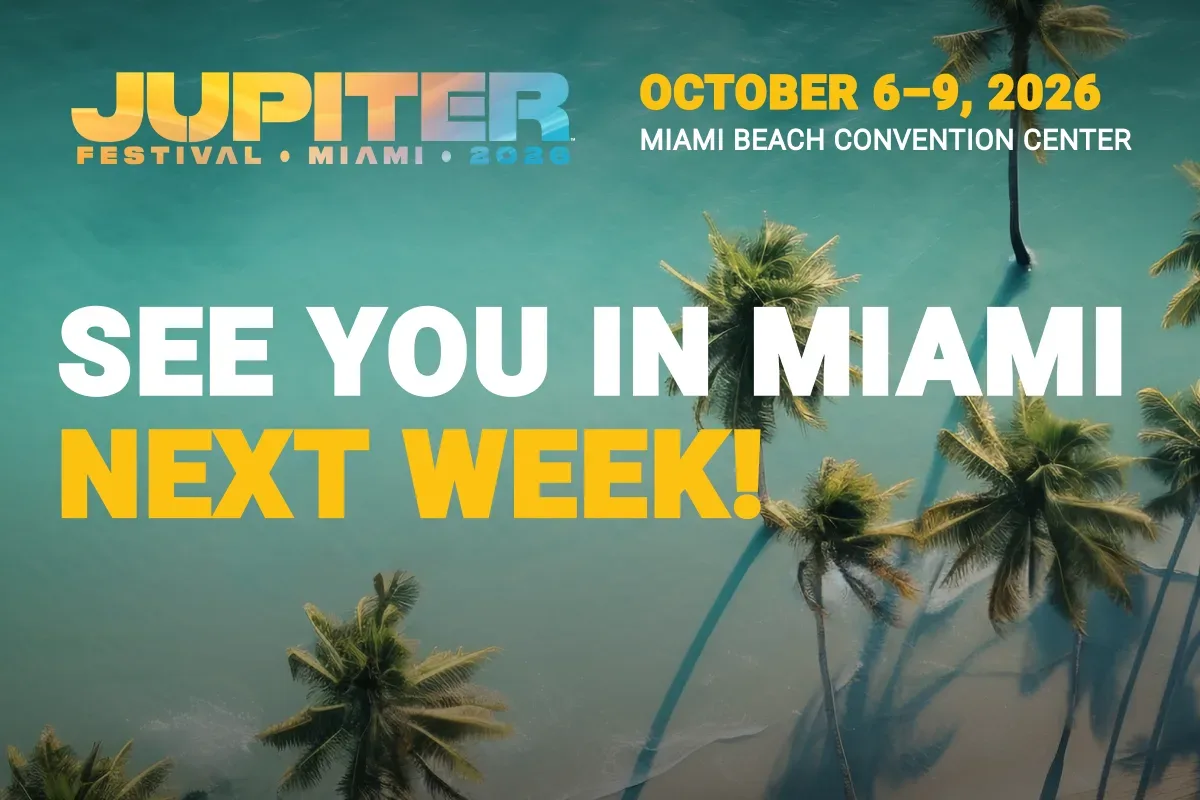
Jupiter Festival Miami is scheduled to make its inaugural run at the Miami Beach Convention Center from Oct. 6 through Oct. 9, with an agenda built around a question that matters well beyond traditional entertainment: how does a piece of content become durable enough to find an audience, keep it and support a business?
The four-day gathering is aimed at the increasingly overlapping worlds of media, entertainment, sports, brands and independent creators. More than 3,000 attendees are expected. Its programming is organized into six themes: branded entertainment; intellectual property; power, platforms and partnerships; AI, new technology and new playgrounds; brand, fan and creator; and the attention economy.
That is an expansive brief, but it is also a useful one. A game studio, streamer, sports league, filmmaker, publisher and solo video creator may have very different production processes, yet all now face related decisions: who owns the work, which platforms control discovery, what a partnership should actually accomplish and whether new AI tools make an idea easier to produce without making it less distinctive.
A business event about the content pipeline
Jupiter Festival Miami’s agenda treats content not simply as marketing material, but as a chain of creative and commercial decisions. The listed sessions range from original-film financing and vertical storytelling to sports discovery, creator economics, media investment and live-streaming retention.
That framing matters because the word content can obscure the differences between making something, getting it seen and turning it into a sustainable operation. A short video, a live sports broadcast, an interactive experience and a feature film may all compete for someone’s time, but they have distinct costs, rights arrangements, audiences and routes to monetization.
The event’s stated focus on fragmentation and consolidation captures that tension. Fragmentation describes audiences spreading across more apps, formats and communities. Consolidation points to the concentration of power that can occur when a smaller number of platforms, owners or distributors control important paths to financing, visibility and audience data. For creators and businesses, operating in that environment means weighing reach against control.
That subject is particularly relevant to games and adjacent interactive entertainment. Fan communities may discover a title through a creator, a short-form clip or a live broadcast rather than through conventional advertising. At the same time, platform rules and recommendation systems can heavily influence what becomes visible. The festival’s emphasis on partnerships, fandom and attention does not provide a universal answer to those pressures, but it does put the right practical questions on the table.
Branded entertainment: when the marketer becomes a maker
Under its branded-entertainment theme, the program asks what changes when marketers take on the roles of producer, financier and creator. The session The Brand Becomes the Story is set to examine microdramas and vertical storytelling, while Funding the Next Great Story is positioned around financing original films and immersive works.
Branded entertainment is entertainment created with a brand’s participation or support, rather than a conventional ad placed beside unrelated programming. The distinction is important. A logo can buy awareness, but a story asks for an audience’s time and attention. If a company wants viewers to choose its work voluntarily, the creative premise and execution have to carry more weight than simple recognition.
Vertical storytelling refers to video designed for portrait-oriented viewing, commonly associated with phone screens. Microdramas are short dramatic installments. Neither format automatically makes a project successful, but both reflect how delivery format can shape the way a story is written, paced and discovered. A production designed for brief, mobile viewing faces different constraints than one intended for a cinema, television set or long-form stream.
For game-adjacent brands, the central takeaway is less about copying a format than about matching the format to the audience’s behavior. An immersive project, a creator collaboration and a short-form series can serve different jobs. Treating them as interchangeable because they all produce “engagement” is likely to make the underlying strategy harder to evaluate.
IP is not merely a buzzword
Intellectual property, often shortened to IP, is another core theme. In entertainment-business usage, it generally refers to the protected creative assets that can support stories, characters, worlds, formats or brands. The commercial question is not only whether an idea gains an audience, but who has the ability to develop, license, distribute and extend it.
That is why the festival’s IP programming includes Who Owns the Sports Story Now?, a discussion of athletes, creator-reporters and social-native publishers shaping sports narratives. Sports are a revealing example because the game itself, the league, participants, broadcasters, reporters and fan communities can each have a role in the broader story around an event. The discussion is positioned around how those roles are changing in a media environment built around direct publishing and social distribution.
Ownership questions also matter in games. Characters, settings, gameplay concepts, community videos and adaptations do not all carry the same legal or commercial status. The source material does not promise legal guidance, and none should be inferred. But a business conversation centered on IP can help clarify an essential distinction: building attention around an idea is not the same as retaining rights or deciding how that idea is used later.
For readers following the broader entertainment economy, that ownership issue connects to changes in how companies organize creative work. Recent leadership restructuring in filmed entertainment is a reminder that companies are also adapting their internal structures as talent, rights and distribution strategies converge.
Partnerships need more than placement
The power, platforms and partnerships track includes Your Logo Isn’t the Partnership, which will consider why visibility alone is no longer enough and how partnerships can keep audiences involved. The premise is straightforward: placing a brand mark in front of viewers is different from creating something that gives those viewers a reason to return.
That does not mean every partnership has to become a large-scale production. It does mean the goals should be legible. Is the purpose to reach a new community, create useful programming, support a live moment, build a recurring series or encourage a deeper relationship with an existing audience? Without a clear answer, measures such as views and impressions can look impressive while revealing little about whether the collaboration achieved its purpose.
Sports programming will also feature Women’s Sports Are Rewriting the Playbook and Where Did the Game Go?, both centered on changes in sports discovery. The latter title points to a wider challenge for every entertainment sector: audiences do not necessarily begin in the same place they once did. Discovery can happen through social posts, creators, clips, search, direct recommendations or a platform feed. A business that only understands its old front door may struggle to find people entering through new ones.
AI discussions should focus on value, not just novelty
The festival’s AI and technology theme is framed around fan experiences, interactive media and uncertainty over the future value of creative work. Scheduled panels include The Next Sports Empire Won’t Be Built Like the Last One and The Infinite Feed: Who Owns Attention, Talent and the Future of Human Creativity?.
AI-powered discovery, one of the broader agenda topics, refers to systems using automated analysis or recommendation methods to determine what users may see next. In practical terms, discovery is not a neutral afterthought: it can decide whether a creator, game clip or sports story reaches the people most likely to care about it. The questions around these tools therefore include how they are deployed effectively, what work they prioritize and what kinds of creative value risk being overlooked.
The agenda does not present AI as a magic solution, and its inclusion of anxiety and fear around the technology is appropriate. A useful business discussion should distinguish several separate issues that often get collapsed into one label: using automated tools in a production workflow, using systems to recommend or organize material, and determining how creative labor and ownership are valued when those tools are widespread. They are connected, but they are not identical.
For creators, the practical implication is to ask specific questions before adopting any new tool or distribution approach. What task is it meant to improve? What control does the creator retain? Does it make the work easier to find, easier to produce, or both? And what does success look like beyond a burst of views? Those questions are more durable than broad promises about disruption.
The attention economy is the thread linking the agenda
The attention-economy portion of the program may be the clearest bridge between all the other themes. Attention is finite, while the number of available entertainment choices continues to multiply. The issue is not only getting someone to press play, watch a clip or join a stream. It is creating a reason for that person to come back.
Live Sports Is the Hook. What Makes Viewers Stay? will explore how streamers can convert the large audiences attracted by live sports into subscriptions, deeper engagement and viewing across news and entertainment. The phrasing separates the initial draw from lasting value. A live event can create urgency because it happens in real time. Retention, however, requires a broader relationship with the service or creator.
This distinction applies cleanly to gaming too. A major reveal, launch window or competitive event can create a spike of interest. Turning that moment into a continuing audience depends on what follows: useful programming, community activity, reliable updates or other reasons to remain engaged. The agenda’s focus on fandom and creator economics recognizes that audiences are participants in this process, not just passive totals on a dashboard.
Jupiter Festival Miami will pair daytime keynote conversations and panels with networking opportunities, including cocktail hours, the Jupiter Living Garden party on Wednesday evening and the Havana Nights party on Thursday evening. The full schedule is available through the Jupiter Festival Miami agenda.
For an inaugural event, the agenda casts a wide net. Its most useful through-line is that the future of entertainment will not be decided by format alone. The harder work is connecting creative ideas, ownership, distribution, technology and audience trust into a model that can endure after the initial wave of attention moves on.