Atlas Entertainment and creator-representation company Culture Genesis have formed a development partnership aimed at taking digital-native talent and content into film, television and short-form projects. The agreement brings together an established production company led by Charles Roven with Culture Genesis’ CG Collective, a network the company describes as 190 leading YouTube creators.
The initial roster named in connection with the arrangement includes iShowSpeed, Kai Cenat, REACT, AMP, People vs Food and V10’s America’s Funniest Home Videos. Atlas and Culture Genesis plan to jointly develop and package projects drawn from the company’s talent and content archive, while also pursuing other properties.
For game and entertainment audiences, the immediate takeaway is less about a particular greenlit series or movie—none has been identified—and more about the changing route by which online personalities may reach traditional screen formats. A creator’s existing audience, on-camera identity and habitual video format can now be part of the starting material for a project, rather than merely a marketing channel used after the project is made.
What the deal does—and does not—announce
This is a development deal, meaning the parties will work on finding, shaping and pitching projects. Development can include identifying a premise, matching creators with writers or producers, defining an intended format, and preparing a package for a buyer. It is not the same thing as a production order. The information provided does not identify specific titles, casts, distributors, release dates or platforms for projects arising from the partnership.
That distinction matters. Digital creators can command substantial attention without every idea naturally translating to a feature film or scripted television series. The work implied by this pact is the difficult middle stage: determining which creator-led concepts have a format, scale and creative team suitable for a different kind of screen production.
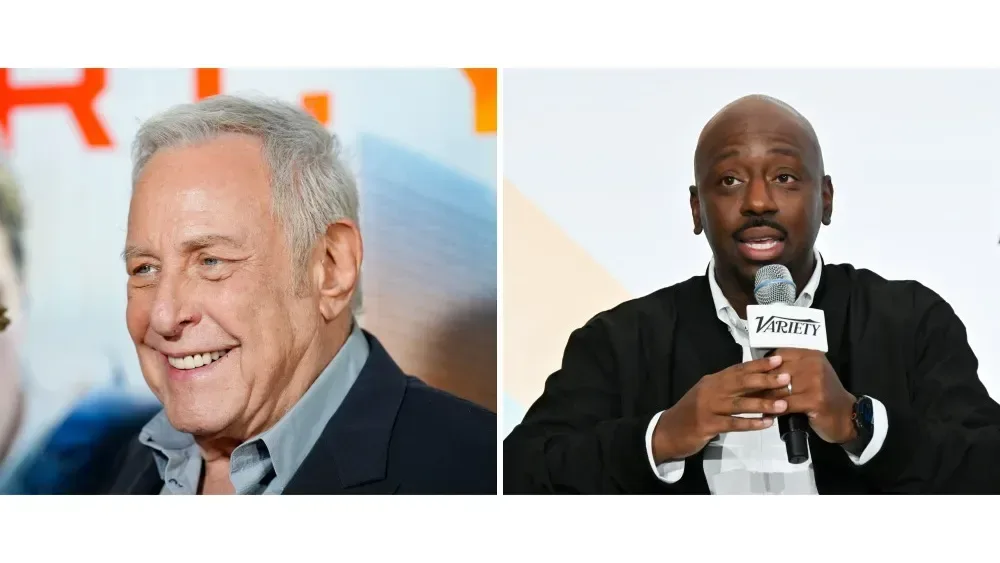
Atlas will bring experience in developing and selling large-scale film and television projects. Roven’s credits include Oppenheimer, The Dark Knight, The Dark Knight Rises, Batman v Superman: Dawn of Justice and Wonder Woman. Alex Gartner is Roven’s producing partner at Atlas. The company’s listed upcoming work includes Michael B. Jordan’s new The Thomas Crown Affair for Amazon MGM Studios, Road House 2 for Amazon Prime Video, and the Imax documentary Frontier, centered on photographer Anouk Masson Krantz.
Culture Genesis, launched in 2018 and based in Santa Monica, is led by founder and CEO Shaun Newsum, with Fred Coates as president. Its business is centered on representing and packaging creator talent for mainstream buyers—an especially relevant role when a creator’s appeal may be obvious to an established online community but requires a more conventional pitch, rights structure and production plan for film and TV decision-makers.
A collective built around creator-scale audiences
Culture Genesis says its portfolio reaches more than 43 million U.S. households per month, produces 9.5 billion monthly impressions and receives 60% of its viewing on living-room screens. Those are company-provided measures, not project-specific forecasts, but they explain why the partnership is being framed as more than a standard talent relationship.
An impression is generally an instance in which content is delivered or displayed, not a guarantee that one individual watched an entire video. A household-reach figure is also different from a count of unique people, since multiple people may live in one household and audiences can overlap across creators. The figures are useful as an indication of scale, but they should not be read as a promise that every eventual Atlas project will reach the same number of viewers.
The living-room statistic is perhaps the more telling strategic detail. Social video is often still described as mobile-first, but viewing through television screens positions creator content closer to the environment traditionally associated with broadcast, cable and streaming. That does not erase the differences between a creator upload and a studio-produced show. It does, however, strengthen the case that audiences are already willing to follow online personalities beyond a phone-sized feed.
“Today’s creators are visionaries in their own right and audiences have clearly taken notice,” Roven said, describing the collaboration as a chance to rethink the journey from digital platforms to film and television.
Newsum described creators as the authors of culture and argued that their attention now carries economic opportunities that have historically been harder for digital-native talent to access. Coates characterized the collective as “infrastructure, not inventory,” emphasizing both its independently measured audience scale and Atlas’ ability to develop and sell film and television.
Why this matters for gaming-adjacent creator culture
The creators mentioned span formats rather than one narrow genre, but some of the names have clear relevance to the broader gaming-and-streaming ecosystem. iShowSpeed and Kai Cenat are figures whose online presence is built around live, personality-forward internet entertainment, while AMP operates as a creator collective. Their inclusion illustrates a core challenge for any studio partnership: the valuable asset is not only a library of clips. It is a recognizable persona, community relationship and style of audience participation.
That is particularly familiar to gaming audiences. Livestreams and creator videos are often social spaces as much as they are individual programs. Reactions, chat, collaboration, competitive moments and unpredictable live energy can be central to the appeal. A conventional screen project may need to preserve some version of that immediacy without simply stretching a channel upload into a longer runtime.
There is no indication that this deal is specifically for video-game adaptations, esports programming or gaming shows. It would be inaccurate to treat it as an announcement of any of those things. Still, the agreement reflects a wider industry recognition that the people who gather online game, sports and entertainment communities can become creative partners in projects that sit outside the platforms where they first became known.
The opportunity: a more direct bridge from audience to screen
Traditional entertainment often develops a property first, then tries to identify its audience. Creator-led development can reverse parts of that order. The audience is already visible, and the creative question becomes what kind of project gives that audience a reason to show up in another format.
That can create practical advantages. A creator may arrive with an established public identity, an understanding of what viewers respond to and a distribution megaphone that can help introduce a project. Representation firms can also collect multiple creators under one umbrella, making it possible to develop ensemble concepts, events or format-based projects that depend on chemistry among personalities rather than a single star.
For buyers, that can reduce one form of uncertainty: whether anyone knows who the talent is. It does not eliminate the other uncertainties that come with entertainment production. An audience that watches a creator frequently may not automatically want a scripted drama, a film, a documentary or a polished competition format. The project has to be designed around what is genuinely transferable, not around raw follower totals alone.
Roven’s experience points to the other half of the equation. A major producer can contribute development discipline, industry relationships and knowledge of how projects are financed, packaged and positioned. In the best case, a partnership like this lets creators retain the specific qualities that made their work compelling while giving their ideas access to production systems that are difficult to build independently.
The hard part: translating format without flattening personality
“Creator-led” is not itself a genre. REACT, People vs Food, comedy collectives, livestream personalities and sports-focused feeds can each call for radically different approaches. A short-form concept might work because it is fast and repeatable; a television version could need recurring stakes, a stronger structure or participants beyond the original host. A creator might be ideally suited to unscripted programming, while another works best in a documentary, animation, event special or a supporting on-screen role.
The partnership’s reference to film, television and short form is therefore significant. It suggests that the parties are not forcing every idea into one prestige-sized container. Short form remains an option, as do formats that may fit a creator’s existing strengths better than a feature-length project. That range can be important because adaptation is not automatically an upgrade. The right format is the one that lets the premise do something new without losing the reason audiences cared in the first place.
There is also a business implication in the language around “package” and “economics.” A packaged project commonly combines essential components—such as talent, a concept and producing partners—so it can be presented to a potential buyer in a more complete form. For creators, that can create a pathway to roles and revenue structures historically associated with film and television work rather than solely platform-native advertising or sponsorship arrangements. The precise terms for individual creators are not disclosed here, so any financial outcome will depend on the eventual projects and contracts.
What to watch next
The next meaningful signals will be concrete ones: a named property, a stated format, additional creative partners, or a buyer attached to a project. Until then, the partnership is best understood as a framework for trying to turn the attention surrounding Culture Genesis’ creator roster into projects with broader production ambitions.
It also arrives at a moment when entertainment companies are paying closer attention to how social video, creator communities and television-scale viewing overlap. The central test will not be whether digital stars can attract attention—they plainly already do—but whether individual concepts can convert that attention into durable screen storytelling and formats audiences want to follow beyond the feed.
For a broader look at another entertainment-business project built around an unusual creative model, see the planned SCP anthology theatrical project.