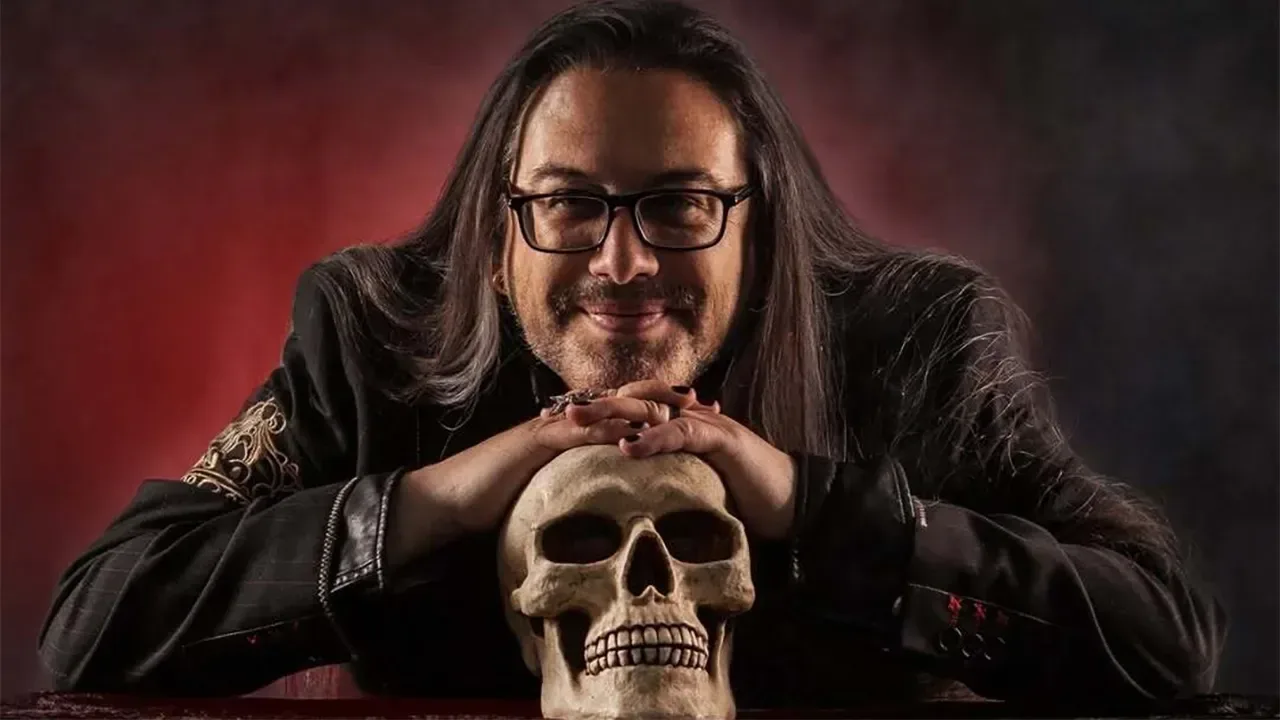
Romero Games’ previously shelved first-person shooter has found a route back into development, but it will not simply resume where its original version stopped. Studio co-founder John Romero says the project now has a new, undisclosed publisher and is being rebuilt around a significantly smaller team after layoffs reduced the company from 110 people to five at one point.
That makes this less a story of a paused game receiving a routine restart and more a case of a studio preserving work while fundamentally changing the production plan. Romero Games first revealed in 2022 that it was developing an all-new FPS based on an original intellectual property. The project was later caught up in the aftermath of Xbox cuts during the summer of 2025, when the studio’s publishing arrangement became apparent and the game appeared to be cancelled.
Now, Romero says a fresh publishing deal has enabled the studio to rehire 10 people. Those returning developers are the leads from the project’s former sub-teams, and their return provides a compact leadership structure for a game whose scale has been recalculated rather than restored to its former size.
A game saved, but not unchanged
The key distinction in Romero’s update is straightforward: the original 110-person project is not the version being completed. He described the new effort as a “complete redesign” and said the earlier plan could not be brought to the finish line with the team now in place.
In game development, scope means the total set of work a team has committed to producing: its content, systems, art, technical needs and the people required to create and support them. Rescoping is the process of bringing that commitment into line with available staff, funding and time. It is not necessarily a sign that a project has become creatively lesser; it does mean the team must decide which ambitions remain feasible and which must change or disappear.
Romero’s comments indicate that Romero Games has made that choice directly. Rather than attempt to recreate a large production with a fraction of its prior workforce, the studio is designing a different game intended for the smaller group it has assembled. That approach is materially different from keeping the original design document intact and hoping the headcount can grow later.
The studio’s immediate task is therefore twofold:
- Build a development plan that a smaller core team can actually sustain.
- Identify prior work that can be carried over without forcing the redesigned game to inherit the previous project’s full scope.
Romero said the team has moved material into the new version of the FPS, including art and weapons. That existing work gives the rebooted production a starting point, but it should not be read as confirmation that every prior mechanic, level, narrative element or platform plan will survive. No release window, platforms, game title, gameplay footage or publisher identity has been disclosed.
Related coverage includes John Romero Says New FPS Has Been Rescued With a New Publisher.
Why the returning leads matter
The 10 people brought back were described as leads of the studio’s former sub-teams. Leads commonly coordinate a specialist area, such as art, design or engineering, while connecting that work to the broader project. With a much reduced headcount, retaining people who understand the existing material and the studio’s working methods can help reduce the time otherwise spent reconstructing decisions and pipelines.
That is especially relevant when a project is being redesigned instead of rebuilt from nothing. The returning leads can assess what already exists, determine what fits the revised direction and help set realistic priorities for their disciplines. Romero specifically pointed to the transferred art and weapons as a meaningful head start.
Still, a head start is not the same thing as a completed FPS. Reusing assets and concepts can save work, but a game’s individual parts must be adapted to the design around them. A weapon, for example, needs a role within the new game’s combat structure, visual direction, technical performance targets and balance. The practical benefit of reuse will depend on how well that prior material matches the smaller project’s needs.
For players, the most useful expectation is caution: the FPS is alive again, but it is at an earlier and less defined public stage than a project returning with its original staff and plan. Romero Games has confirmed the broad direction—an original first-person shooter—while leaving the game’s identity, scale and eventual destination unannounced.
The new publishing relationship
Romero has not named the new publisher, but he characterized the arrangement as unusually hands-off creatively. In his description, the publisher has no creative goals it wants to impose and is allowing the developer to make the game it wants while handling publishing.
“The publisher we’re with right now has zero creative goals for this game,” Romero said. “They’re like ‘you make what you want, we’re publishing it, we’re not going to tell you what to make’.”
That is a meaningful part of the update because a publisher relationship can shape more than a game’s marketing. It can determine how a project is financed, what milestones it must meet and how much room a studio has to alter its creative direction. Romero’s description suggests Romero Games sees the new deal as a fit for its revised approach, particularly after the original production’s publishing situation collapsed.
However, the public information remains limited. The publisher’s identity is not available, and the terms of the agreement, funding level and publishing territories have not been shared. “Hands-off” also describes creative involvement rather than serving as a full explanation of the business arrangement. It should not be treated as evidence of a release date or a guarantee about the finished game’s scale.
What can be said is that the agreement has allowed Romero Games to move beyond survival mode. Romero said the studio held onto staff for as long as possible while seeking money to finish the game, before redundancies became unavoidable. The subsequent ability to return 10 people to the company represents a concrete operational change, not merely an intention to resume work.
From Xbox-linked cancellation to a new plan
The FPS was announced as an original IP in 2022. In the summer of 2025, amid Xbox layoffs and cuts, the project appeared to be among the affected casualties. Its publisher had not initially been announced, but its Xbox connection became clear following the cancellation, leaving Romero Games at risk of closing.
The timeline helps explain why the current announcement is more complicated than a revived title headline. The studio was not just seeking a replacement partner for a completed or nearly completed game. It had to contend with a dramatic reduction in staff and revisit the basic question of what could responsibly be made with the resources that remained.
Large projects can be difficult to transfer intact because their schedules and content plans are built around specific assumptions: the number of specialists available, the amount of parallel work those specialists can perform and the budget supporting that work. Romero’s statement that the former game was built for 110 people makes clear why simply continuing the same production with a small team was not a credible option.
There is a wider industry relevance here, too. Financing can determine whether a studio can keep working, but funding alone does not automatically restore an abandoned project to its earlier state. A replacement deal may create the conditions to preserve a concept, a team’s accumulated work and a studio’s future, while still requiring a project to become something new. Other developers facing funding uncertainty have likewise emphasized the importance of securing a path through launch, as in CI Games’ financing arrangement for Lords of the Fallen II.
What remains unknown
Romero’s update is encouraging for a project that had appeared lost, but it does not provide a conventional announcement checklist. There is no title, no trailer, no official publisher reveal, no platform list and no launch timing. There is also no indication that the game will retain the scope, structure or features that would have belonged to the earlier 110-person version.
The confirmed picture is narrower and more important: an original Romero Games FPS has new publishing support; the studio has rebuilt a small team around former discipline leads; and development is proceeding on a redesigned game that can use selected work from the cancelled production.
For Romero Games, that amounts to a second chance rather than a return to the status quo. The creative opportunity is that the smaller project can be shaped for the people actually making it. The challenge is converting that head start—art, weapons and accumulated knowledge—into a coherent FPS without the staffing model the first version expected.
For now, the studio has traded a vanished large-scale plan for a viable smaller one. After dropping to five people, it has a publisher, 10 rehired developers and a defined reason to keep building. That is substantial progress, even if the FPS players eventually see will be a fundamentally different game from the one first envisioned.