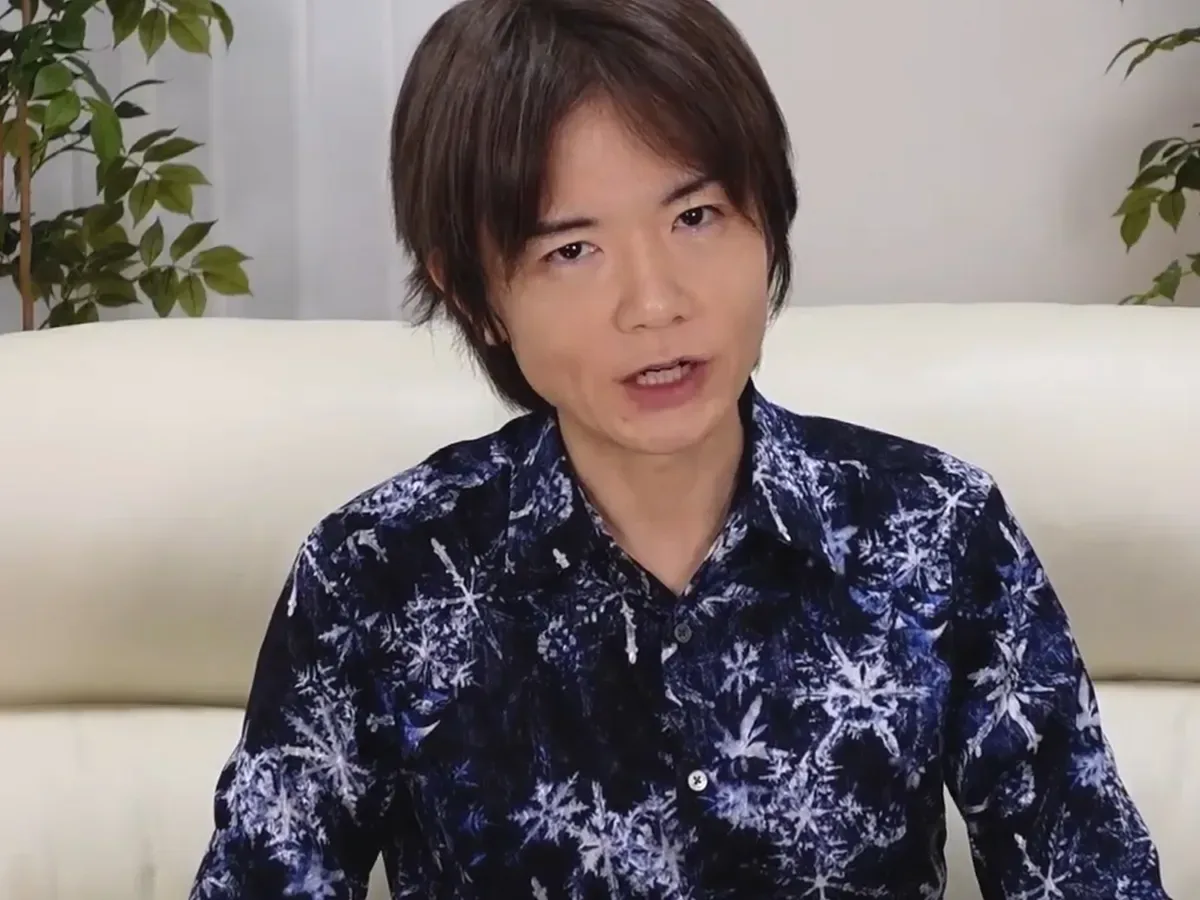
John Romero’s next game remains unnamed, unreleased, and deliberately vague. It is also, by the small set of confirmed details available, a shooter built in Unreal Engine 5.8 that wants players to miss appointments with its own objective markers.
That last quality is the intriguing one. Romero has described exploration as central to the project’s design, pointing to the appeal of seeing something interesting in the distance, changing direction, and allowing whatever happens next to reshape the plan. In the shorthand comparison he used, it is the experience of intending to reach a tower in The Legend of Zelda: Breath of the Wild, then becoming absorbed by everything encountered before getting there.
For a designer closely associated with foundational first-person shooters including Wolfenstein 3D, Doom, and Quake, that suggests a potentially unusual emphasis. The new project is still a shooter, but Romero’s comments frame shooting as part of a wider adventure rather than the sole engine pulling players through a sequence of prescribed objectives.
A new project after a severe studio contraction
The game arrives after a difficult period for Romero Games. Microsoft pulled funding for the studio’s prior project in 2025 amid cuts across the Xbox business. Romero Games subsequently went from 110 staff members to five.
Romero has said the experience was painful, but he has also stressed a forward-looking response rather than bitterness. Nearly a year later, he said he was doing better than he had in decades. Most importantly for the new game, Romero Games has secured a new publishing partner and development is continuing with its much smaller team.
The publisher has not been named, and Romero has not shared a release date, title, platforms, genre subcategory, setting, or a detailed description of the game’s structure. That boundary matters. It would be easy to turn three big reference points—Breath of the Wild, Elden Ring, and Blue Prince—into a confident prediction about a vast open-world FPS. Romero has not called the project open-world. At this stage, the firm facts are considerably narrower.
- It is a shooter.
- It uses Unreal Engine 5.8.
- It carries over elements from the cancelled game.
- It has a new publishing partner.
- Its design places a major importance on exploration, detours, and player-directed discovery.
That is already a meaningful outline, just not a full blueprint. The real question is not whether the game will contain a map of a particular size or a checklist of activities. It is whether it can make a player’s curiosity feel like the right response.
What “getting sidetracked” means in game design
Romero’s comments point toward player agency: the extent to which a game permits players to make meaningful choices about where they go, what they investigate, and what they prioritize. Agency does not require an entirely open world. A game can use individual levels, hubs, branching routes, optional encounters, or concealed spaces and still offer substantial freedom.
Related coverage includes John Romero's New Shooter Is Built Around the Joy of Getting Sidetracked.
In an objective-led shooter, the typical rhythm is direct: receive goal, fight toward goal, complete goal, receive the next one. That structure can be excellent because it maintains pace and gives combat encounters carefully controlled setups. But it can also make the world feel like scenery between waypoints. Romero is describing a different desired rhythm: an intended destination, an interruption, a discovery, and a new temporary purpose.
That difference is larger than simply scattering collectibles around a level. A distraction becomes memorable when it changes the player’s understanding of a place or creates a question worth pursuing. It might reveal a path, a strange landmark, a challenge, a new connection between areas, or an encounter that makes the original plan feel less urgent. The supplied details do not establish which of those tools Romero Games is using. They do establish the intended feeling: players should feel as though they are on an adventure and free to follow their interest.
Romero also invoked Blue Prince when discussing the pleasure of realizing there is more to a location than the initial route implies. The relevant idea is surprise through spatial discovery. Instead of a game plainly stating every possibility, a player turns around, notices an alternative, and finds that the space is bigger or stranger than expected.
For a shooter, this could make traversal as important to the overall mood as combat. Again, that is interpretation rather than a confirmed feature list. Romero has not said that his game uses puzzles, randomized spaces, hub areas, side quests, or any particular exploration mechanic. But his examples consistently focus on curiosity, not merely combat efficiency.
Why the Zelda comparison is specific—and why it is not a feature list
Breath of the Wild is a useful reference because its celebrated detours are not simply delays. A visible landmark offers a loose direction, while the journey naturally produces unplanned problems and opportunities. The destination remains available, but it competes with the player’s curiosity.
Romero’s tower example uses that same logic. A player starts with a clear goal, meets compelling material en route, and may forget the original destination altogether. That means a shooter could preserve the satisfaction of an immediate objective while leaving room for surprise. It need not be a game that refuses direction; it could be a game that makes deviation worthwhile.
There is a practical design challenge hidden in that ambition. Freedom only feels good if players can read enough of the world to form their own plans. If every path looks equally meaningless, detours become aimless. If the game constantly punishes a change in direction, exploration becomes a chore. Conversely, if every discovery is announced too loudly, the sensation of stumbling onto something disappears. Romero’s comments suggest a preference for the latter sensation: seeing something compelling and deciding for yourself that it deserves a closer look.
The studio’s small size may also make precision especially important. Romero Games does not need to prove, based on the information currently available, that it is making the largest shooter imaginable. A more plausible measure of the concept’s success would be whether each direction feels deliberately enticing and whether unexpected discoveries have enough texture to pull attention away from the main route.
Unreal Engine 5.8: confirmed technology, unknown implications
Unreal Engine 5.8 is the technical detail Romero has confirmed. A game engine is the development framework that supports a game’s underlying systems, such as rendering, tools, gameplay logic, asset workflows, and more. Naming an engine can indicate the production technology behind a game, but it does not, by itself, reveal the game’s scope, visual style, performance targets, platforms, or release timing.
So Unreal Engine 5.8 should not be read as proof of photorealism, an open world, or a certain hardware target. It tells us the project is using that engine version; the rest has not been disclosed. Likewise, the statement that material from the cancelled game is being brought forward does not tell us precisely which assets, systems, ideas, or designs have survived the transition.
Still, that carryover is significant in human terms. A cancelled project can leave behind more than an empty folder and a sad calendar invite. Reusing work gives a reduced team something concrete to build upon, while a new publishing partner provides a route for the project to continue. It does not erase the impact of the earlier funding loss, but it explains why this new shooter may be moving ahead rather than starting from nothing.
Big ambition, appropriately limited expectations
Romero previously said the project would offer experiences that feel new to players, comparing that sense of novelty to going through Elden Ring. That is an ambitious creative goal, not a promise of matching any particular feature from that game. The strongest reading is that Romero wants the shooter to feel less familiar than its genre label might imply.
That premise is worth watching because Romero’s history is deeply tied to the evolution of shooters. His stated preference here is not for a stricter shooting gallery, but for room to wander, to notice, to reconsider, and to be pleasantly derailed. The objective marker may still be there. The interesting possibility is that it will occasionally have to wait.
It also arrives amid a wider industry environment in which studio funding, staffing, and ownership can shift quickly; that instability is part of the broader business context behind reports such as Apple’s acquisition of Ascend.io. Romero Games’ situation is distinct, but its move from a cancelled funded project to a new partner illustrates why confirmed development progress matters more than premature speculation.
For now, players have no trailer, title, release window, or platform list to dissect frame by frame until someone discovers a conspiracy in a tree texture. What they do have is a clear creative north star: a shooter where the best response to “go over there” may be “absolutely not, what is that weird thing over here?”