A canceled game normally leaves behind a frustratingly incomplete record: a few pieces of concept art, a logo, perhaps an early trailer cut to music that was never intended to define the finished work. Mass Effect: Universe now has something more evocative in its surviving fragments. Composer Austin Wintory has shared roughly 22 minutes of unused musical concepts made during discussions about scoring the project, giving listeners an unusually substantial glimpse of the atmosphere its soundtrack might have pursued.
Wintory, whose past work includes Journey and Stray Gods, said he created the pieces last year and recorded them with an orchestra in Los Angeles. The score was never finalized for the game. That distinction matters: these are not tracks confirmed to have been placed in completed missions, cinematics, or any particular story sequence. They are exploratory compositions—music designed to establish a creative direction before a project’s specific narrative and production needs had been fully communicated to the composer.
Even so, the music is a meaningful artifact. Sound is among the quickest ways a series establishes identity, and Mass Effect has long been associated with the tension between orchestral scale and electronic texture. Wintory’s concepts reportedly work in that broad tradition while leaning more heavily into strings than earlier entries’ music. In a project that will not move forward, that stylistic choice is not simply an interesting production note; it is one of the few concrete indications of how a new installment might have sounded and felt.
What Wintory actually knew—and did not know
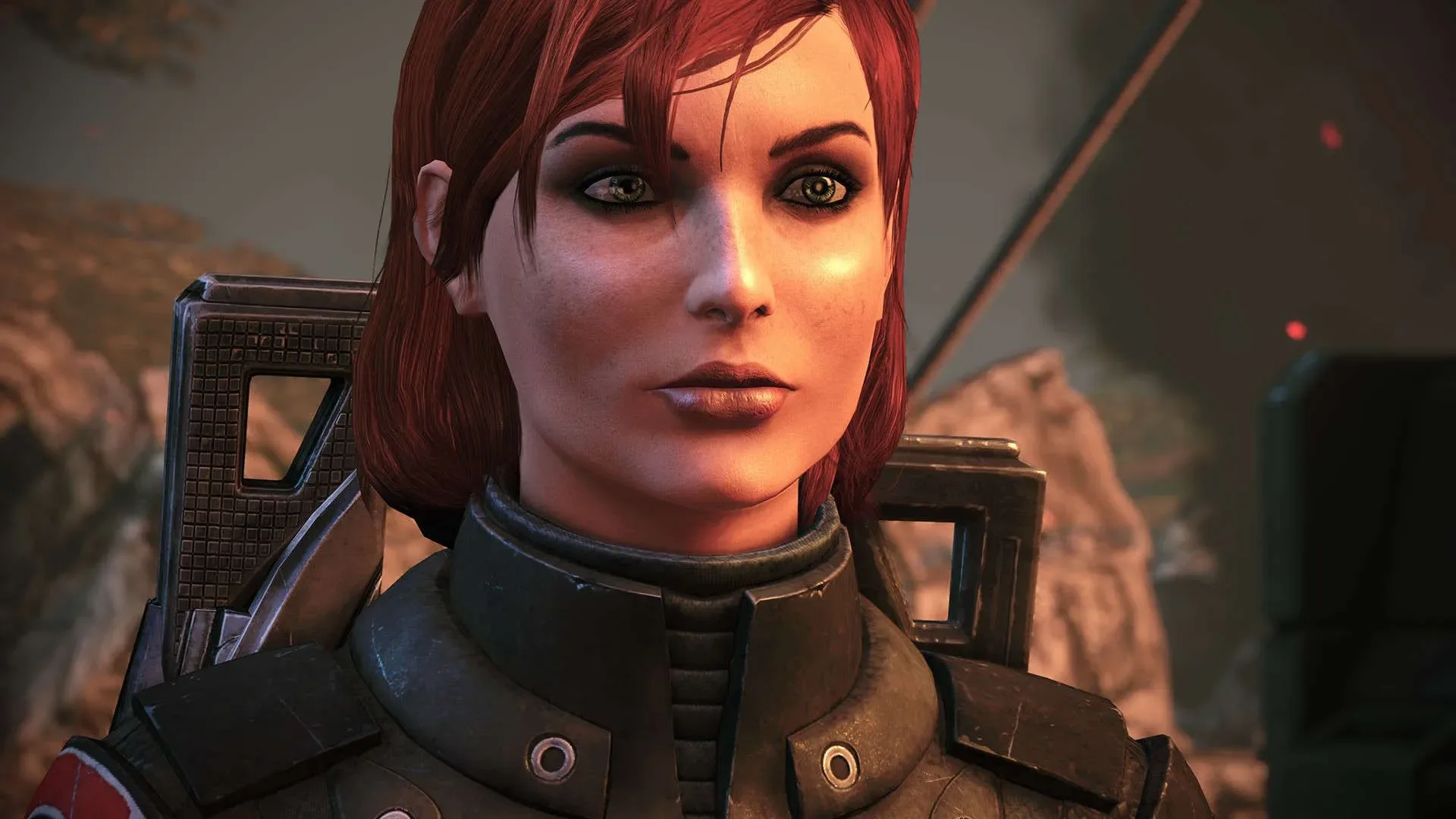
The most important guardrail around these recordings comes from Wintory himself: he did not know the game’s story when he composed them. Some track titles reference Commander Shepard, the protagonist of Mass Effect’s original trilogy, but those references should not be treated as evidence that Shepard would have returned, nor as confirmation of any plot point, setting, character role, or mission.
In this context, a title can function as creative shorthand. A composer asked to explore a sequel’s musical identity may reach for the most immediate emotional vocabulary associated with that universe. Shepard is an especially potent symbol for Mass Effect’s mixture of military duty, loneliness, danger, loss, and vast-scale science fiction. Referencing that legacy can help generate a musical mood without revealing anything about the game’s script.
That distinction is especially useful now, as fragments from an unreleased project can quickly become the raw material for confident speculation. These concepts may illuminate Wintory’s thinking, but they do not establish narrative canon. They are best understood as an early proposal for a sound world, not a recovered chapter of the game.
Why early score concepts can be so impressionistic
Music can enter development at different stages. A score written to picture is synchronized with a finished or nearly finished scene and is shaped around precise timing, editing, dialogue, action, and performance. A thematic or tonal concept, by contrast, may come much earlier. Its job is to suggest a palette: which instruments belong in the world, what emotional contrasts will matter, and how familiar series ideas might be carried forward without merely repeating them.
The available details place Wintory’s work firmly in that earlier, exploratory category. He also provided production notes discussing instrumentation and scenes he imagined as he wrote. Those imagined scenes are valuable as an explanation of the music’s dramatic intent, but they remain the composer’s own creative framing rather than documented content from Mass Effect: Universe.
Related coverage includes Austin Wintory Shares Unused Mass Effect: Universe Music Concepts.
That makes the orchestral recording all the more striking. It suggests that the conversations around the music went beyond a casual verbal pitch. At the same time, an orchestra recording should not be mistaken for proof that the score had been locked, that Wintory had been formally hired for a final soundtrack, or that the game had reached a particular developmental milestone. Creative work often advances in partial, provisional stages—particularly when teams are investigating a direction before contracts and final production plans are settled.
A deliberate conversation with Mass Effect’s musical past
Wintory has said he wanted to honor original-trilogy composers Jack Wall and Sam Hulick, using their work as a starting point rather than an endpoint. That phrase captures the central challenge in scoring an established series. A new composer has to make listeners recognize the franchise while giving a new game its own voice.
For Mass Effect, the series identity has historically involved a meeting point of two sound languages. Electronic elements can communicate futurism, machinery, distance, and the cold enormity of space. Orchestral writing can supply human vulnerability, heroism, grief, and sweep. Neither category is a fixed rule, and either can serve many emotions, but their interaction is central to why Mass Effect can feel both intimate and cosmic.
A more string-forward approach, as described for these concepts, may have shifted the balance toward the human and dramatic side of that equation. Strings can carry long melodic lines and unsettled tension with particular flexibility; they can sound fragile, urgent, mournful, or triumphant depending on the writing and performance. In combination with electronic textures, that approach could preserve the series’ science-fiction character while making its emotions more exposed. That is analysis of the stated stylistic direction, not a claim about an intended storyline.
There is also a notable restraint in Wintory’s stated approach. Treating earlier Mass Effect music as a foundation implies continuity without presenting these concepts as a replacement for the original sound. For fans, that is likely why the recordings can provoke both recognition and regret: they appear to engage directly with what the series has meant musically while pointing toward a possible variation that will remain unfinished.
The internal trailer detail underscores how unfinished the work was
The project’s leaked internal trailer reportedly uses a licensed song rather than Wintory’s work. That is consistent with the fact that his involvement had not been finalized. Licensed music is existing music cleared for use under an agreement, and it can be useful for an internal trailer because it establishes a desired pace or emotional tone without requiring a completed original score.
It also means viewers should avoid reading the trailer’s temporary musical choice as a definitive statement of Mass Effect: Universe’s eventual sound. If Wintory’s concepts had become the basis for the score, the game’s audio identity could have changed substantially during later development. Conversely, there is no basis to assume every idea in the recordings would have survived unchanged even if he had joined the project. Scores evolve alongside writing, art, gameplay, voice performances, and editing.
That is why the newly shared material is compelling precisely as a possibility. It is neither a conventional soundtrack release nor a comprehensive development archive. It is a professionally recorded set of musical ideas from a composer considering how to build on a beloved science-fiction series, preserved after the project’s cancellation.
What the cancellation leaves behind
EA announced that BioWare would be shut down and that further work on Mass Effect: Universe would be canceled. In the days since, developers, collaborators, and consultants have shared more details about a project that had apparently inspired a small team. Wintory’s music now joins that growing set of public remnants.
These fragments are naturally bittersweet. They cannot show what the finished game would have been, and they should not be assembled into an imagined finished product with more certainty than the evidence allows. Yet they do show that people working around the project were exploring its identity with care. A composer thinking about Wall and Hulick’s legacy, experimenting with a strings-heavy variation on the series’ orchestral-electronic sound, and recording that work with a Los Angeles orchestra is a tangible sign of creative effort, even when it did not lead to a released game.
For players, the practical takeaway is simple: listen to the tracks as unreleased concepts, not hidden confirmation of Mass Effect: Universe’s story. Their Shepard references are mood markers rather than plot evidence; their orchestral performance demonstrates ambition but not a completed soundtrack; and their relationship to the leaked trailer is indirect because that trailer uses licensed music.
There is a broader industry lesson in the situation, too. Game development produces substantial creative work before the public ever sees a finished product: pitches, tests, prototypes, art, writing, and musical sketches can all exist without becoming part of a commercial release. The wider business pressures surrounding technology and games have also kept workforce changes in focus, as reflected in reporting on a reported voluntary-buyout program at Microsoft. That does not explain this cancellation, but it is a reminder that creative projects operate within decisions that are often far larger than any one team’s work.
Wintory’s recordings cannot undo the loss of Mass Effect: Universe. They can, however, preserve an emotional outline of one path the project may have taken: respectful of the series’ sonic history, fuller in its string writing, and consciously aimed at the feeling of returning to an enormous and melancholy galaxy. For a canceled game, that is a rare and unusually resonant piece of evidence.