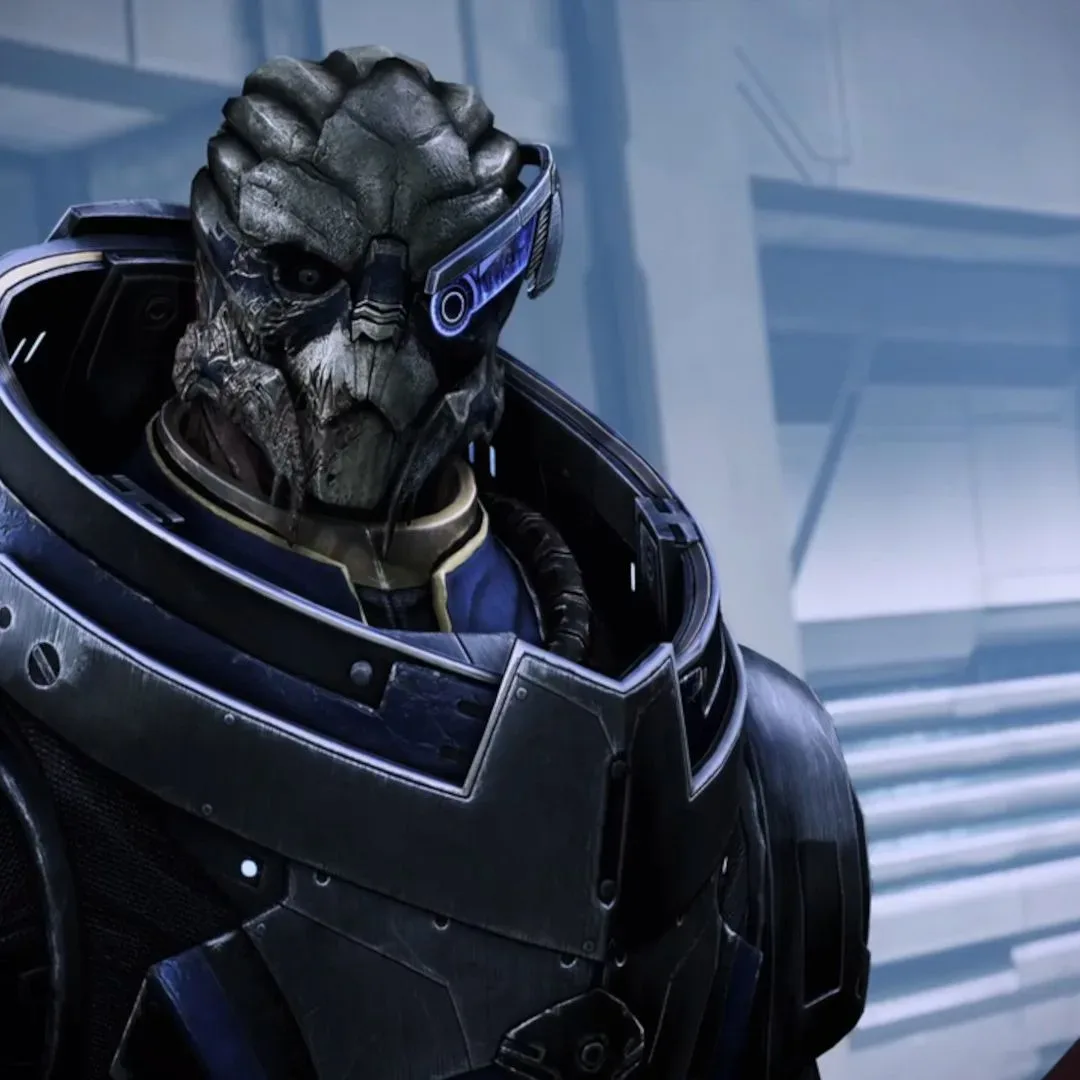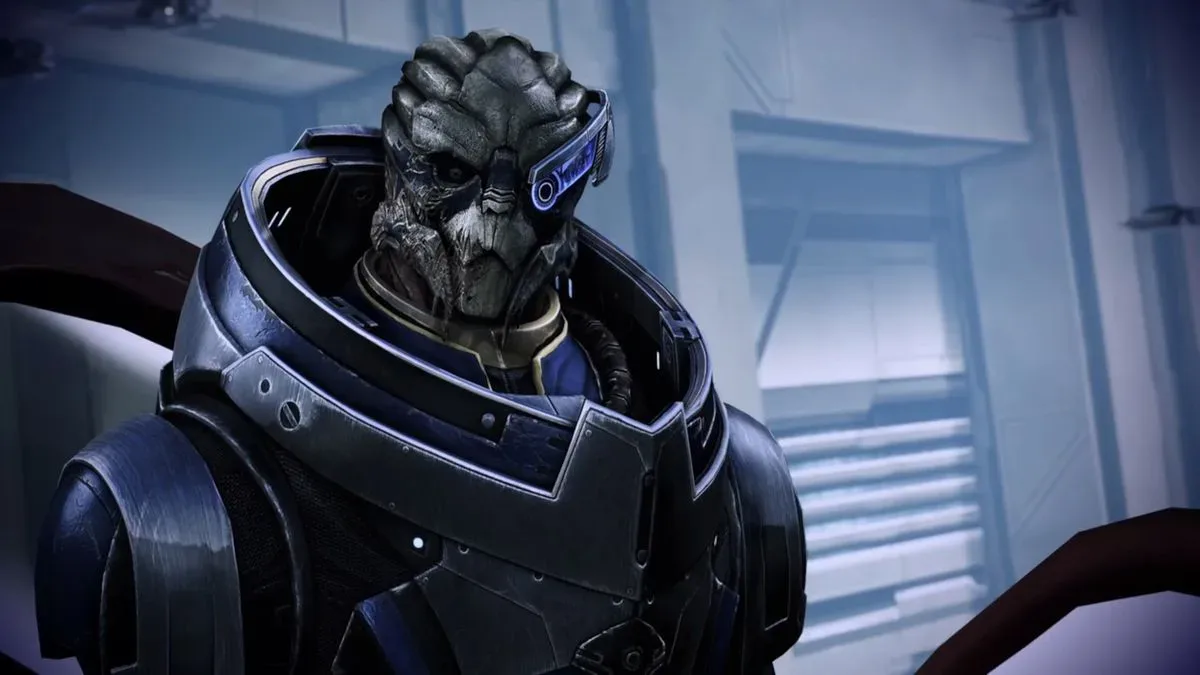
Mass Effect: Universe, the reportedly cancelled fifth entry in BioWare’s sci-fi RPG series, was built around a far more literal interpretation of player choice than a simple branching-ending screen. Former technical director Romain Toutain has described a concept in which saves could be connected to create parallel universes—or, more precisely, different timelines that players could in some fashion generate and explore.
The remarks, made during a French-language Twitch livestream and circulated in translated, subtitled clips, offer an unusually specific glimpse of a project that players are unlikely to see in finished form. They should still be treated carefully: Toutain himself qualified the shorthand description, and a translated social-media clip cannot substitute for a full design presentation. But the core idea is clear enough to be intriguing. Universe was apparently not merely a dramatic subtitle. It pointed to a system meant to organize a large volume of choices into multiple possible versions of the Mass Effect setting.
What “plug your saves together” appears to mean
Toutain said the title came partly from the number of choices involved: players could “plug” saves together to create parallel universes. He immediately softened that description, saying it was a simplification and that the game was fundamentally dealing with different timelines.
That distinction matters. A parallel universe generally suggests fully separate realities, while a timeline is a divergent sequence of events: one decision happens in one branch, a different decision happens in another. In game-design terms, the latter could cover several possible approaches without requiring a story about physically hopping between dimensions. It could mean a player’s decisions are tracked as variations of the same broad setting, or that separate saves serve as distinct branches of a larger story structure.
There is no detailed public explanation of the interface, rules, limits, or narrative consequences. It is not known whether players would have been able to import multiple old saves directly, compare outcomes, revisit turning points, or move characters and consequences from one branch to another. Those are meaningful differences, and none should be assumed from the brief description alone.
Still, Toutain’s wording suggests a system intended to make alternative outcomes visible and meaningful rather than leaving every unchosen path permanently hidden. In a series whose identity is closely tied to consequential dialogue, alliances and survival outcomes, that is a natural ambition—and an extremely complicated one.
An idea closer to branching narratives than reality-jumping spectacle
Toutain compared the broad notion to Zero Time Dilemma, Spike Chunsoft’s nonlinear puzzle game. The comparison does not establish that the two games would have played alike. It does, however, help explain the intended scale of the concept: a story constructed around routes, possibilities and the relationships between them.
That is different from treating a multiverse as a travel mechanic. Nothing in the available comments establishes that Mass Effect: Universe would have let players instantly jump through rifts between worlds or turn dimensional travel into a combat or traversal feature. The available evidence points more toward narrative architecture—how choices are saved, separated and potentially connected—than toward a spectacle-driven portal system.
Related coverage includes Mass Effect: Universe's Timeline System Could Have Connected Player Saves Into Parallel Realities.
For an RPG, narrative architecture is the invisible framework that determines which decisions the game remembers, what later scenes can acknowledge, and how mutually exclusive events are represented. A conventional branching RPG often funnels many paths back toward shared major scenes because every radically separate branch increases writing, voice recording, animation, testing and continuity work. A timeline-oriented structure could potentially acknowledge the fact that several valid histories exist without pretending they all occurred in one clean sequence.
That would be especially useful for a series with an audience carrying sharply different personal versions of its prior story. It might let the game treat disagreement over past events as a feature of the fiction rather than a problem to be quietly compressed into a single official answer. But that remains analysis of the stated concept, not confirmation of how the cancelled game would have resolved those challenges.
Original trilogy choices were reportedly in scope
Toutain also said that choices from the first Mass Effect games were taken into account. That is a broad claim, but it is notable because it implies the project’s timeline system was not designed only around decisions made within the new game. The original trilogy is full of choices that can alter the status, relationships or fate of major characters and groups. Building a new story that recognizes that variety is one thing; building systems that organize it into separate timelines is another.
The language does not prove that every prior decision would have received a bespoke scene, quest or mechanical payoff. “Taken into account” can describe anything from a major narrative branch to a codex reference or altered conversation. Players should resist filling in the gaps with a dream feature list. Yet the comment does establish an apparent design goal: the project aimed to reckon with the accumulated decision history of the trilogy rather than simply setting it aside.
This is where the subtitle’s promise becomes easier to understand. A “universe” could be the umbrella under which several incompatible histories coexist. Rather than asking which outcome is the one true past, the game could frame multiple pasts as valid branches. That would be a bold answer to one of the oldest problems in choice-heavy serial storytelling: how do creators make room for player agency once a sequel needs to move forward?
The practical cost of honoring choice
Every additional state a game recognizes multiplies the work needed to keep scenes coherent. Developers must account for dialogue that should change, characters who may or may not be present, mission conditions that no longer make sense in a given history, and the possibility that players will encounter those elements in an unexpected order. If timelines can be created or combined, the validation burden grows further.
- Continuity: the game needs to know which version of prior events applies to a given timeline.
- Presentation: scenes, conversations and records must communicate those differences clearly enough for players to follow.
- Player agency: the system has to make alternate branches feel consequential rather than like menu labels.
- Testing: each supported combination can create additional ways for quests, dialogue and progression to conflict.
That does not make the concept unworkable. It explains why the idea is so ambitious, and why a former developer’s few sentences about it can leave fans thinking about what might have been. Choice systems are not just a writing challenge; they are production systems touching nearly every part of an RPG.
Combat and character details add shape, not certainty
Alongside the timeline discussion, Toutain reiterated details that had previously circulated about the project: it would have included hand-to-hand combat and a customizable protagonist. These elements suggest the game was intended to offer a player-authored central character while expanding its action options beyond the franchise’s familiar shooting-focused encounters.
However, these are still only high-level descriptions. There is no supported detail on combat perspective, party structure, class design, progression, platforms, release timing or the final state of production. Nor is there enough information to say how melee systems and timeline mechanics would have interacted. A customizable protagonist could fit a story about divergent versions of events, but that connection is an inference—not a disclosed feature.
The same restraint applies to the game’s status. Reports describe BioWare as having been shut down by EA and Mass Effect: Universe as the fifth installment that did not reach release. The trailer and former staff comments have generated understandable interest, but they do not make the project recoverable, nor do they guarantee that its unfinished ideas existed in a playable, final form.
Why unfinished concepts still matter
Cancelled projects often become repositories for particularly attractive possibilities because the public sees the pitch without ever confronting the compromises a shipped game must make. It is possible that Mass Effect: Universe would have refined, reduced or discarded parts of the timeline concept before release. It is equally possible that its most interesting systems were still early ambitions rather than locked features.
Even so, Toutain’s comments are valuable context for interpreting the name and the project’s apparent direction. The game was not being framed solely as another distant chapter in a large science-fiction setting. It seems to have been conceived as a way to confront a franchise built on divergent personal histories, using timelines as both a narrative subject and a structural tool.
That kind of creative identity can be hard to preserve when projects change shape or studios close. The wider industry question of how teams protect a game’s distinct vision has surfaced in other recent development stories, including discussion around keeping a horror project’s team separate to safeguard its creative identity. In this case, the surviving description of Mass Effect: Universe leaves a particularly pointed absence: an RPG designed to let players engage with not one inherited Mass Effect history, but several.
For now, the responsible reading is limited but compelling. A former technical director has described an unfinished Mass Effect project whose title reflected an ambitious timeline system, whose design considered choices from the original trilogy, and whose planned character and combat features extended beyond that narrative premise. The rest—how the saves connected, what players could generate, and how far those timelines diverged—remains unknown.