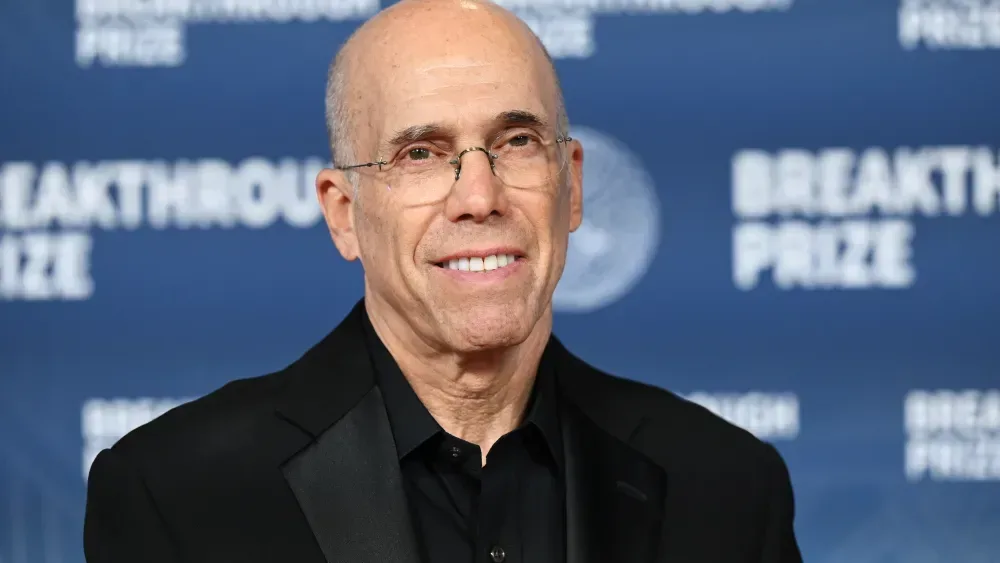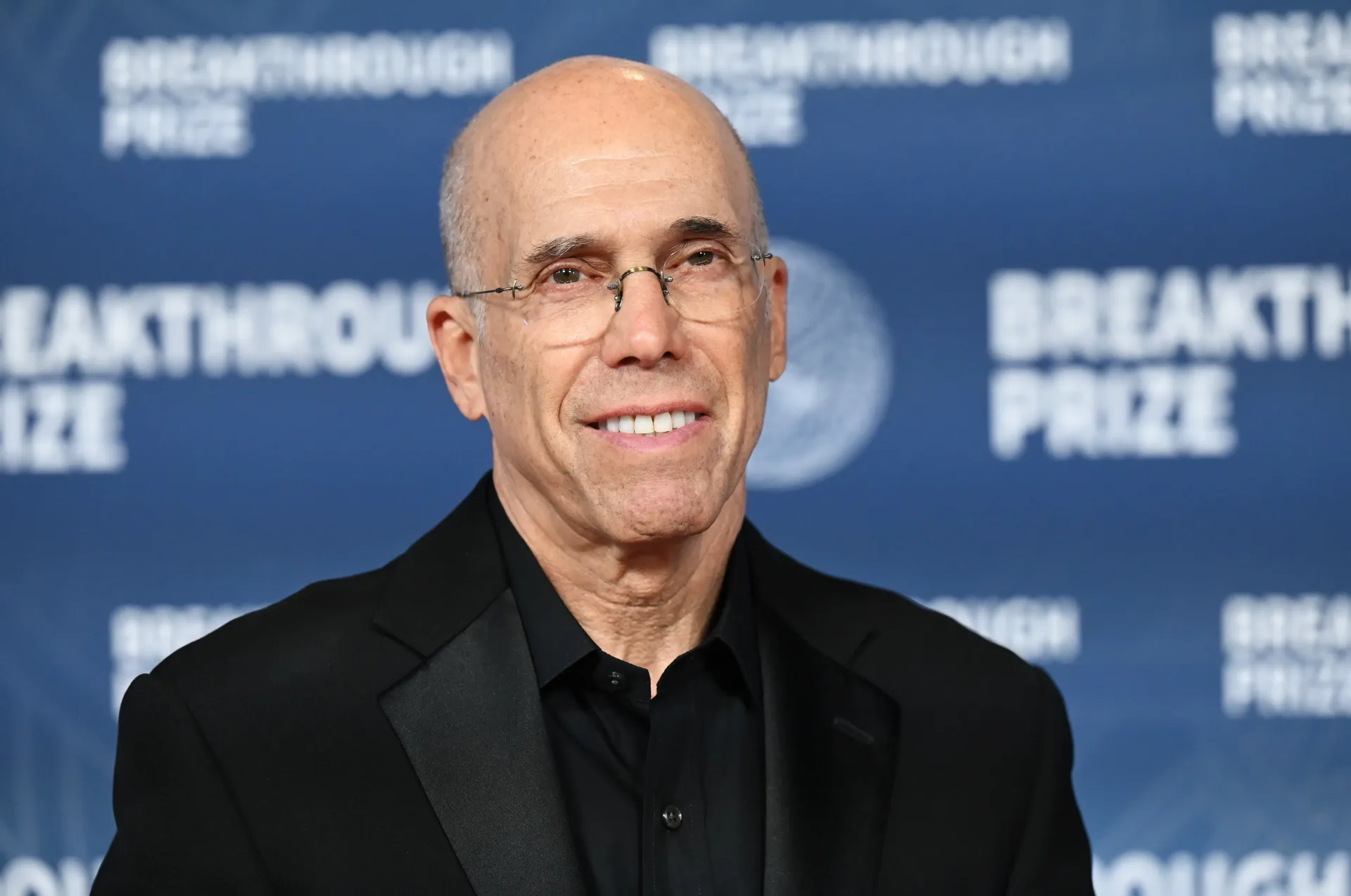
Jeffrey Katzenberg has made a case for Hollywood to move past the question of whether artificial intelligence should exist in entertainment and toward the harder question: what rules should govern it?
In a lengthy essay published on X, the former studio chair and DreamWorks co-founder argued that AI is not something the film business can simply wish away. His central point is less a blanket endorsement of every AI use than a call to establish terms before the technology’s role is determined entirely by momentum and market power.
“The tools-versus-no-tools argument is a trap,” Katzenberg wrote. “First, we must all agree that there should be terms. Then we can have the crucial debate about what fairness requires.”
It is a familiar argument from an executive whose career includes major transitions in animation. Katzenberg points to computer-generated imagery, or CGI, as a previous example of a technology that inspired both excitement and resistance, ultimately changing the kinds of movies studios could make. But his comparison also contains an uncomfortable acknowledgement: when DreamWorks adopted fully computer-generated animation, some animators who did not adapt lost their jobs.
That tension is why the word terms carries far more weight than a vague invitation to “embrace innovation.” The question is not merely whether a tool can generate images or video. It is who decides when it may be used, whose work informs it, what consent looks like, how credit and compensation work, and what happens to the people whose jobs are reshaped during the transition.
What Katzenberg is actually arguing
Katzenberg’s position rests on two connected ideas. First, he believes AI is a durable technological shift, not a temporary novelty. Second, he believes creative people possess something an AI system does not independently supply: the capacity to turn a blank page into a specific story that holds an audience.
That distinction matters. In this discussion, AI is often used as shorthand for very different things. Generative AI, or gen AI, refers to systems that produce new material such as text, images, audio or video from prompts and other inputs. A generative-video system, then, is aimed at creating or changing moving images. That is different from conventional digital tools used to edit footage, coordinate effects work or render animation according to artists’ deliberate instructions.
Katzenberg does not present AI as a replacement for the human act of storytelling. Instead, he frames it as a powerful reasoning tool that still needs creativity to make stories meaningful. His essay argues that studios and creators should negotiate the conditions of use rather than expend all their energy trying to stop the technology from appearing in the workplace.
That is a consequential framing because it shifts the debate from a binary choice to questions of governance. A tool may be technically possible and still require boundaries. “Accepting” AI need not mean accepting every deployment, every business model or every effect on creative labor. Katzenberg’s own language makes room for the debate he sees as essential: what fairness requires.
CGI is a useful comparison, but not a complete answer
Katzenberg invokes the evolution of CGI to explain why he sees resistance to AI as part of a recurring cycle. He notes that computer-generated imagery was initially used to enhance traditionally animated films including The Little Mermaid and The Lion King. Pixar’s Toy Story, he argues, demonstrated that a fully computer-animated feature could sustain emotional engagement and make audiences laugh, cry and believe.
In this telling, computer animation did not end storytelling; it changed the production vocabulary. It opened a path for fully CGI-animated films and moved animation into a new industrial era. Katzenberg also cites older medium-changing developments, including synchronized sound and color, as examples of storytelling adapting and expanding through technology.
The practical lesson he draws is that the industry cannot decide a tool does not exist simply because it is disruptive. That is an argument about reality rather than a claim that technological change is automatically beneficial for every worker. Indeed, his admission about animators losing jobs is the sharpest reminder that growth in a medium and security for individual workers are not the same thing.
There is another reason the analogy should be handled carefully. CGI became part of the filmmaking process as a way to create or enhance imagery within productions. Generative AI raises its own set of questions about authorship, consent and the relationship between an output and the creative work that precedes it. Katzenberg’s appeal for terms recognizes that there are issues to resolve, even if the essay does not prescribe all of the answers.
Why “the terms” are the entire story
The most valuable part of Katzenberg’s argument is not the prediction that AI will remain present in entertainment. It is his insistence that the conditions of use determine whether its arrival broadens opportunity or concentrates control.
His proposed upside is substantial: as production barriers and costs fall, more films could be made, studios could take more risks, more people could get seats at the table, and unfamiliar forms of storytelling could emerge. That is a forecast, not a settled outcome. Lower-cost tools can make some work more accessible, but access is not the same as equitable participation. The difference depends on the rules, bargaining power and creative control attached to those tools.
For filmmakers, artists, writers, performers and technical crews, “terms” is the practical center of the conversation. Clear terms would mean participants understand the role a system plays in a production rather than discovering it after the fact. They would establish where permission is required and give stakeholders a basis to argue for treatment they regard as fair. Katzenberg does not lay out a finished rulebook, and he explicitly concedes he does not have every answer. Still, he is right to identify the absence of agreed conditions as the pressure point.
The idea also reaches audiences. Viewers may care about the final work first, but trust in a production can be affected by how it was made and who retained creative responsibility. Katzenberg’s emphasis on human creativity suggests a model in which technology assists rather than becomes the sole author of a project’s choices. Whether that model holds depends on the deals and standards that surround it.
Investment makes the argument more immediate
Katzenberg’s comments arrive alongside direct involvement in the emerging AI-video market. His company, WndrCo, recently invested in Reactor, a startup that says its platform can make generative-AI video in real time. Katzenberg has described Reactor’s approach to storytelling tools as highly innovative. He has also reportedly discussed building a new AI-video startup with a former leader of OpenAI’s now-defunct Sora effort.
That context does not invalidate his argument, but it makes it more than an abstract historical reflection. He is speaking as someone with financial and professional interest in the field’s development. Readers should therefore separate two parts of the case: the broadly applicable premise that creative stakeholders need enforceable, fair terms, and the more optimistic prediction that reduced barriers will produce a wider and healthier film ecosystem.
Both can be debated at once. It is possible to agree that AI cannot be ignored while demanding meaningful guardrails. It is also possible to welcome tools that help small teams experiment while refusing the notion that reduced production costs alone settle questions of creative value or employment.
The gaming connection: tools do not make the creative decision
Although Katzenberg is discussing Hollywood, the argument will sound familiar across games. Games sit at the intersection of art, animation, software and production pipelines, so new tools can affect many specialties at once. A system’s capacity to generate material is only one part of the equation; someone still has to decide what belongs in the work, what serves the player experience and what is good enough to ship.
That distinction is especially relevant when the debate turns into an all-or-nothing argument. A technical capability does not dictate a creative choice. The technology can change the cost, speed or scope of a task, but it does not answer whether the task should be automated, how the people affected are treated, or who holds final responsibility for the result.
Those are industry questions as much as artistic ones. They sit beside other technology-driven changes affecting games and entertainment, including the broader platform and business shifts tracked in ongoing discussion around emerging platforms and developer priorities.
A debate about choices, not inevitability alone
Katzenberg ends on an optimistic possibility: the idea that Hollywood could enter a new renaissance if stakeholders agree on the right terms. He argues that technological shifts have repeatedly expanded the boundaries of storytelling. The hopeful case is that AI can lower barriers without lowering standards, allowing more experimentation while leaving human imagination, judgment and accountability at the center.
But the word “could” matters. Katzenberg says how the industry comes through this transition is a choice. That is the most grounded part of his message. The future is not determined merely by the presence of a tool. It will be shaped by the agreements made around it, the people included in those agreements, and the willingness to treat fairness as a foundational issue rather than an afterthought.