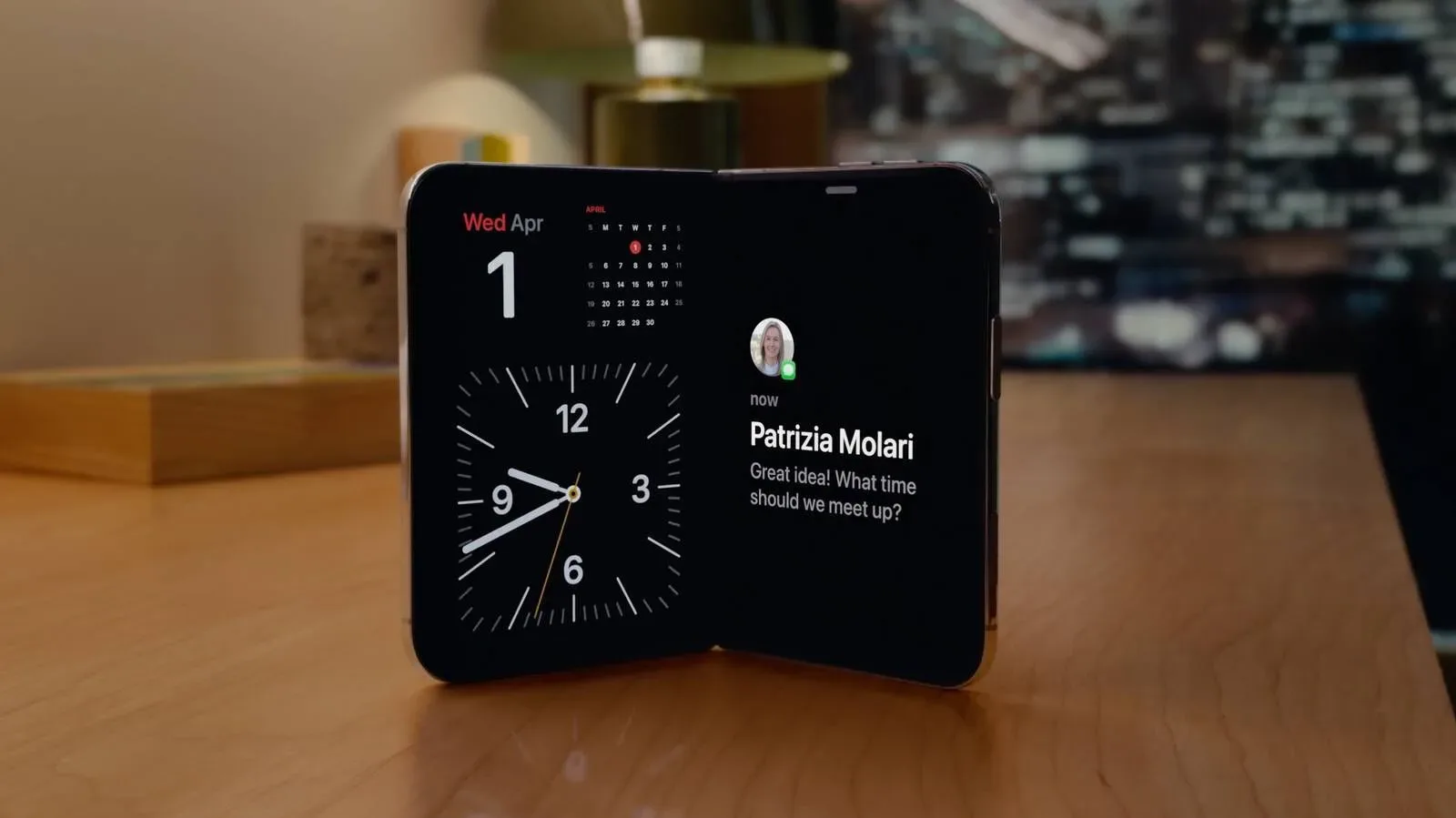
Apple’s iPhone Duo pre-order launch appears to have run straight into the problem it was expected to face: limited supply. Reports indicate that estimated delivery dates in most countries moved to around January 25 less than 30 minutes after orders opened, following an initial launch that covered more than 70 countries.
That speed matters. A long delivery estimate does not, by itself, reveal precisely how many phones Apple had available or how many customers placed orders. It does show that the initial allocation was exhausted—or at least that Apple’s ordering system quickly began assigning later inventory to new buyers. For customers who were ready at the opening bell, the practical result is simple: the pre-order may have become a waitlist almost immediately.
The reported constraints are tied to manufacturing challenges. That distinction is important because a supply issue is not necessarily a lack of interest in the device. Demand and supply are separate parts of a product launch. High demand can push dates back even when production is proceeding normally; manufacturing difficulties can produce the same customer-facing delay even before a company has fully tested broad demand. In this case, the reported expectation was that supply would be severely constrained from the outset.
A broad rollout made a limited pool go further—and disappear faster
Apple was reportedly planning a narrower first phase focused on the United States and China, with other markets following later. Instead, iPhone Duo pre-orders reportedly began in more than 70 countries at the same time.
There is an understandable appeal to a simultaneous international release. It avoids telling buyers in one region that they are less important, keeps the marketing message consistent, and gives Apple a global launch moment rather than a sequence of smaller ones. But if the available inventory is genuinely tight, spreading it across dozens of markets changes the experience for every individual market.
Think of launch allocation as a fixed number of units divided among regions. A restricted rollout concentrates inventory in a smaller number of places. A broad rollout distributes it more widely. Neither choice creates additional phones, but they create very different outcomes: a smaller launch can mean more buyers in the initial regions receive devices quickly, while a larger one gives buyers in more countries access to the order page at the same time—often with fewer immediate units available per country.
That trade-off is central to the criticism around the iPhone Duo launch. The concern is not simply that a new device sold through its early allocation. It is that Apple reportedly knew the manufacturing limits, yet chose the wider launch structure rather than delaying pre-orders until more inventory was ready or keeping the initial sale to fewer countries.
What an estimated ship date actually means
An estimated shipping date is a forecast, not a promise that a specific phone has already left a factory. When a retailer or manufacturer lists a later delivery window, it is generally communicating when it expects it can fulfill that order based on its planned supply and existing order queue.
For iPhone Duo customers, an estimate around January 25 should therefore be read as a current projection. It signals that orders placed after the first inventory allocation may be scheduled against later supply. It does not establish that every affected buyer will wait until that exact date.
Apple has a history of listing conservative delivery estimates and then moving some orders forward. That possibility should not be confused with a guarantee, especially when the reported issue is manufacturing capacity. A revised estimate can improve if production ramps up, if orders are canceled, if allocations shift between markets, or if the company’s initial forecast proves more cautious than necessary. It can also remain unchanged when supply remains as tight as expected.
For prospective buyers, the useful mindset is to treat the checkout estimate as the best available planning date, while recognizing that it may move in either direction.
Why the first wave of buyers is especially affected
The people most likely to feel the impact are early adopters: customers who choose a product at or near launch, often because they want a new form factor or feature set as soon as possible. These buyers are usually more tolerant of being first, but their enthusiasm also makes them particularly sensitive to a pre-order system that changes from immediate delivery to a multi-month estimate in minutes.
There is a difference between missing a launch window because someone decided to wait and missing it because the available allocation vanished before many customers had a realistic chance to complete an order. The latter can be frustrating even when a product is clearly popular. It turns preparedness—having an account ready, payment details saved, and a stable connection—into a major factor in who receives the earliest units.
For a device facing reported manufacturing challenges, that pressure can also create a confusing public narrative. Long delivery windows may be taken as proof of extraordinary demand. They may reflect strong demand, but they may also reflect a restricted starting supply. Without specific production and order figures, the sensible conclusion is narrower: the first available stock was not sufficient to maintain early delivery estimates across the expanded launch footprint.
What buyers can do without making assumptions
Buyers who already placed an order should keep an eye on the date shown in their order details and on any official order-status messages. An estimate can change. However, it is wise not to make travel, trade-in, accessory, or gifting plans around the hope of an earlier revision.
- Record the current estimate: Knowing the date initially shown makes later changes easier to spot.
- Check official order status rather than rumors: Inventory chatter can be useful context, but the customer’s own order page is the relevant status for that customer.
- Distinguish shipping from delivery: A shipping estimate concerns when an order is expected to leave for the buyer; it is not necessarily the date the package arrives.
- Do not assume an earlier date is inevitable: Conservative estimates sometimes improve, but reported supply pressure means a later window remains meaningful.
- Read cancellation and trade-in terms before changing plans: Customers considering a different purchase route should understand the consequences for their existing order rather than acting on a rumored delivery change.
Those who have not ordered face a more basic choice: place an order with the current timeline if they want a position in the queue, or wait until availability becomes clearer. There is no supplied indication of when broader stock will normalize, so neither a quick improvement nor a prolonged shortage should be assumed.
The business tension behind an early launch
The reported decision has also been criticized as a choice to get the iPhone Duo into the market early in Apple’s fiscal first quarter instead of prioritizing a larger inventory cushion. That is a meaningful tension for any major hardware release. An early launch can put a product on sale sooner, begin recognizing sales sooner, and establish its place in a company’s product calendar. Waiting can reduce the chance that eager customers see late delivery dates immediately, but it also delays the launch itself.
There is no evidence here that one objective entirely displaced the other. What is clear is that the two goals can conflict when manufacturing output is constrained: launching sooner favors calendar timing, while holding back favors a smoother fulfillment experience. The iPhone Duo’s rapid shift to late estimates makes that conflict visible to customers.
Apple’s simultaneous rollout across more than 70 countries adds another layer. Broad availability is normally a consumer-friendly signal. In a constrained launch, though, it can become a question of distribution fairness rather than abundance. More regions can participate at once, but all regions may be competing for a limited early pool.
That does not make the choice automatically wrong. A staged launch also has costs, especially for customers excluded from the first phase. But the immediate order-date movement illustrates why the decision is being framed as a significant misstep: the company reportedly had advance knowledge that manufacturing would limit availability, and the broad launch did not appear to leave much room for customers arriving shortly after pre-orders began.
What to watch next
The next meaningful signal will be whether the January estimates hold, move earlier, or extend further. Earlier changes would suggest that Apple’s initial forecasts included meaningful caution or that supply is improving faster than expected. Stable dates would indicate that the current production plan remains broadly intact. Further delays would reinforce the picture of a launch constrained more sharply than the opening estimates suggested.
For now, the iPhone Duo story is less about a single date than about launch design. A product reportedly known to have limited supply was offered across a very large set of markets at once, and later estimates appeared almost immediately. For buyers, it is a reminder that a successful pre-order can still mean a lengthy wait. For the industry, it is a case study in how manufacturing constraints can turn a global launch from a celebration of availability into a competition for a place in line.
For more practical technology coverage, see our guide on making and receiving phone calls on a Windows 11 PC with Phone Link.