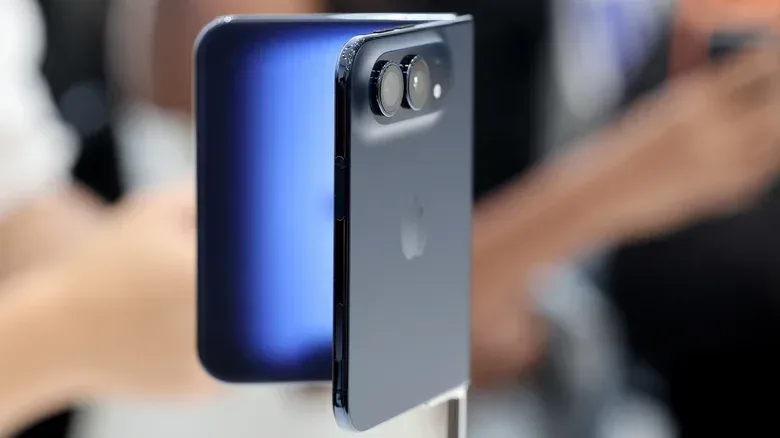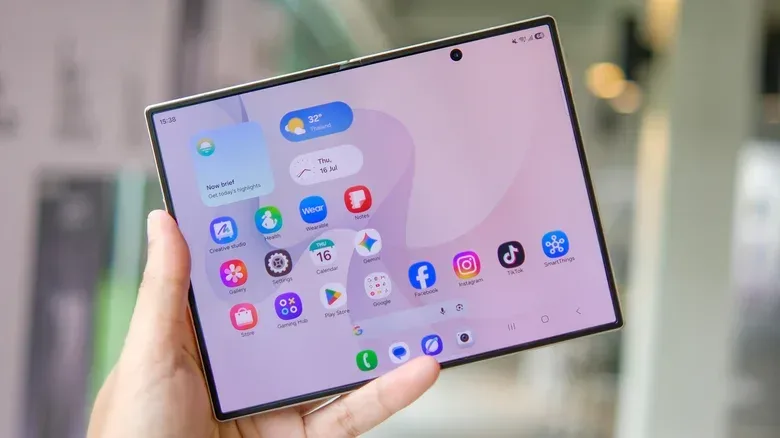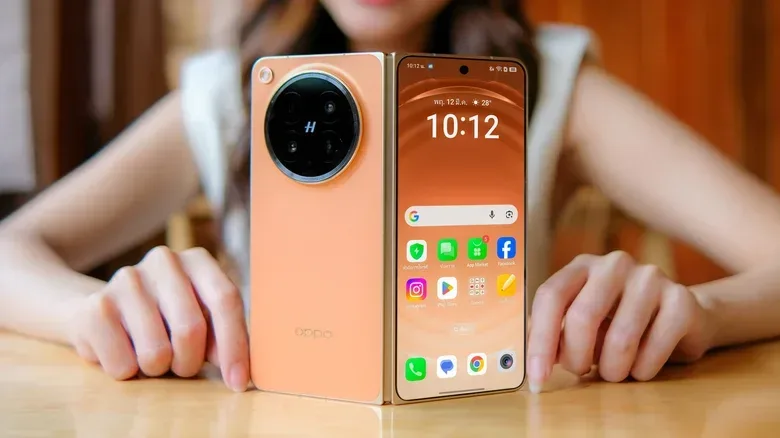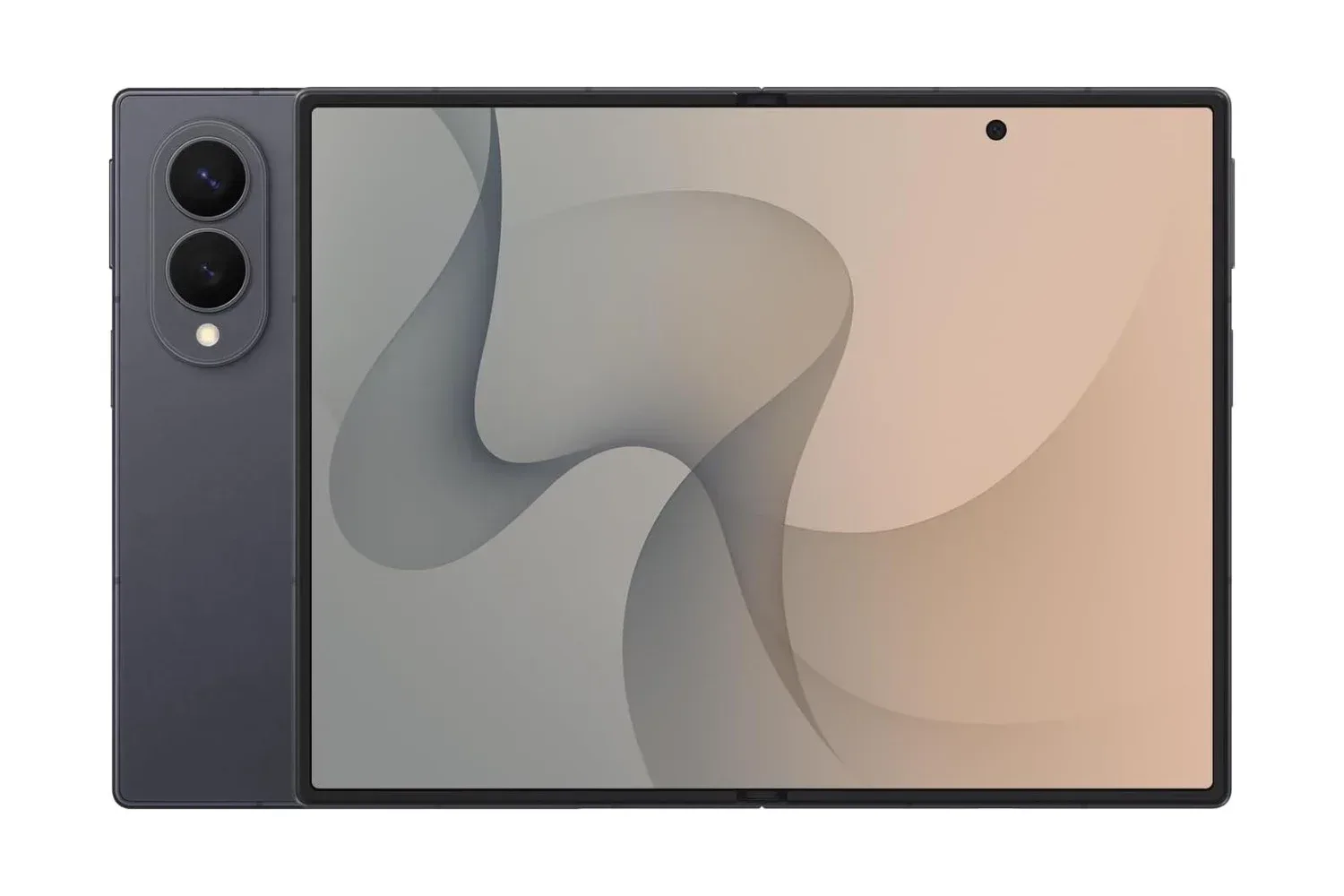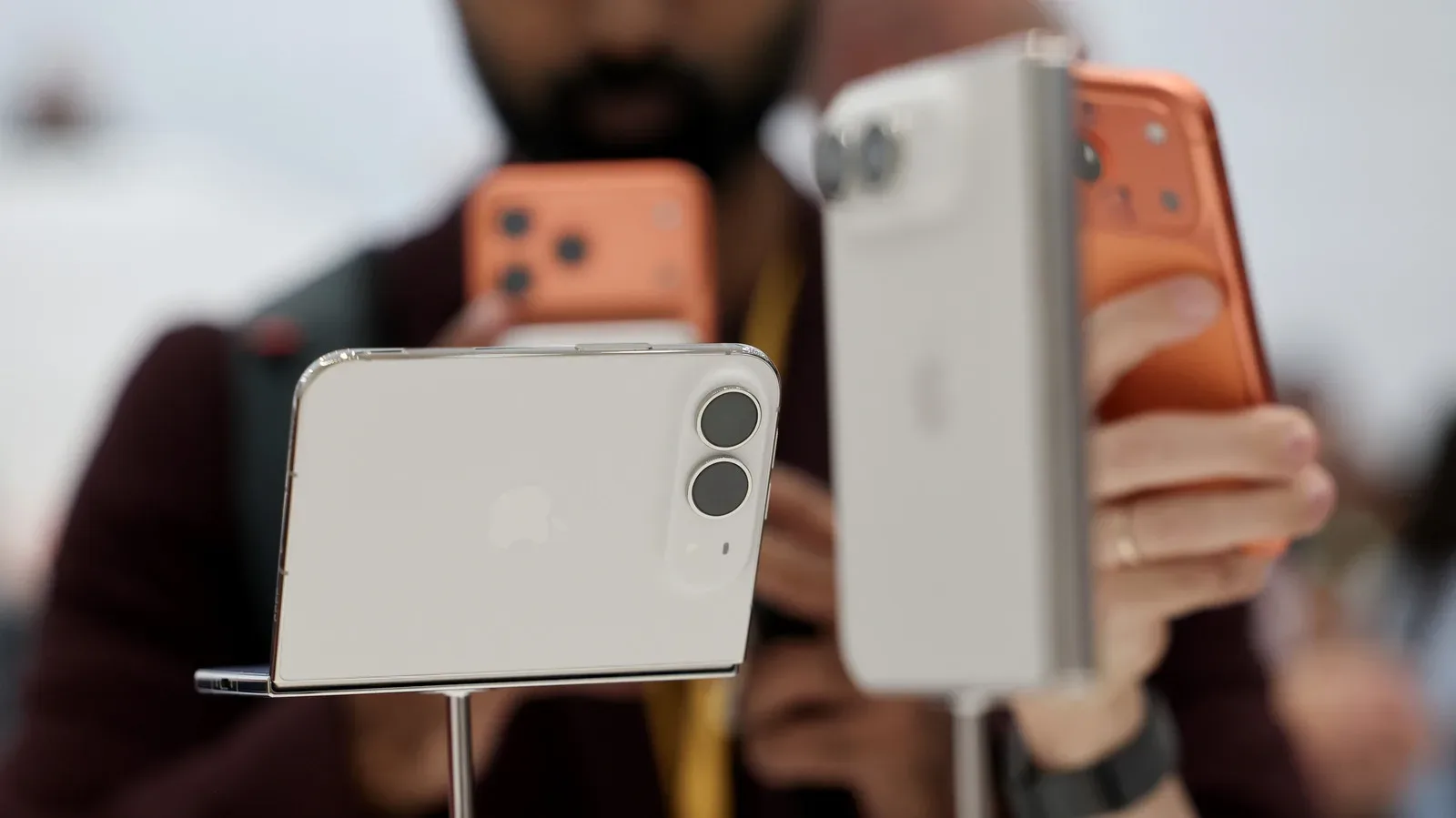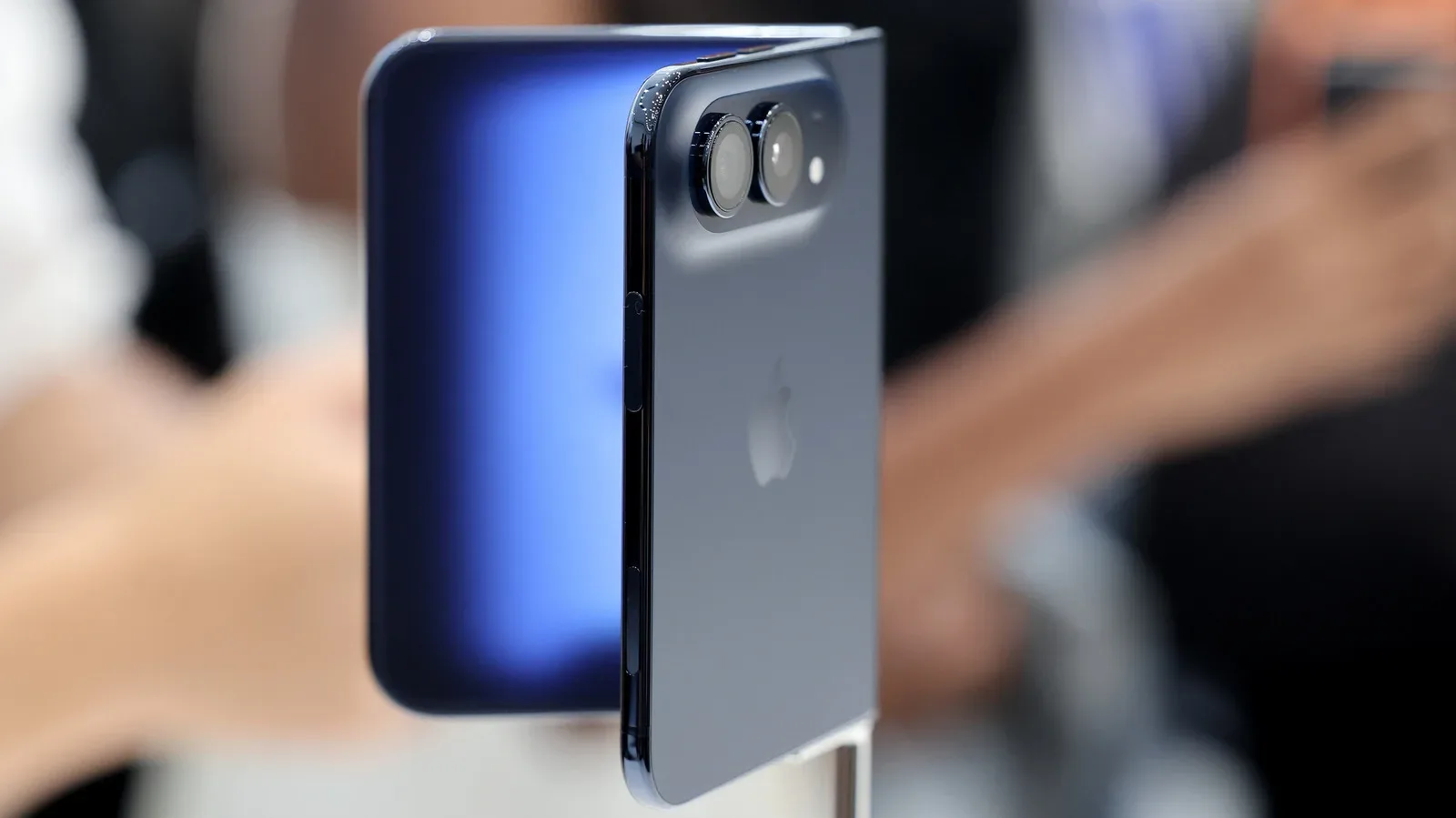
Apple’s first foldable phone, the iPhone Duo, is entering a category that is no longer waiting to be defined. The device reaches stores on October 23, with pre-orders opening a week earlier, and it arrives after Xiaomi, Samsung, Oppo and Motorola have each put a distinct answer on the table for what a large-screen folding phone should prioritize.
That makes the Duo’s launch more interesting than a simple first-generation Apple product story. The core contest is not just whether a phone folds open into a larger display. It is increasingly about how that unfolded screen is shaped, what compromises buyers accept when the device is shut, and whether software can make a two-screen form factor feel more useful than an ordinary slab phone.
Apple’s approach is a so-called passport layout: a relatively wide, book-style device rather than a near-square mini-tablet. Its 7.6-inch inside display sits alongside a 5.4-inch outer display. That positioning puts it directly against Xiaomi’s 18 Fold and Samsung’s Galaxy Z Fold8, which have also moved toward broader proportions. Meanwhile, Oppo’s Find N6 and Motorola’s Razr Fold argue for a more conventional, larger foldable format, leaning especially hard on battery capacity, charging speed, display size and camera hardware.
For buyers, the practical implication is straightforward: there is no single “foldable phone” experience anymore. Screen geometry, weight, thickness, camera configuration and regional availability could matter just as much as the logo on the back.
Why the passport shape matters
“Passport” is a helpful shorthand for a foldable that is wider and less square when opened. In this case, the iPhone Duo uses a 7.6-inch internal panel and 5.4-inch cover display, while the Xiaomi 18 Fold matches the 7.6-inch inner measurement and has a 5.4-inch outer display with the same aspect ratio. Samsung’s base Galaxy Z Fold8 is very close, with 7.6-inch and 5.5-inch displays.
Display size alone does not explain the appeal. Aspect ratio describes the relationship between a screen’s width and height. A wider inner display can make video and other horizontal content feel more natural than a near-square panel, while a wider outer screen can be more comfortable for the everyday tasks people do before unfolding a device. The trade-off is that these designs are still trying to squeeze tablet-like screen space into a pocketable body.
Samsung’s design split makes the argument visible within its own lineup. The Galaxy Z Fold8 abandons the almost-square look associated with earlier models in favor of the wider passport approach, while the pricier Galaxy Z Fold8 Ultra retains the more square-ish format. The base Fold8 is described as a stronger choice for watching shows and movies than the Ultra, despite the latter’s higher position in the range. That does not settle which shape is universally better; it does show that proportions can affect use more than a simple hierarchy of models suggests.
Apple, Xiaomi and Samsung are therefore converging on a layout that treats the folded phone as more than an emergency secondary screen. The outside panel is meant to be a meaningful part of the device, not merely a narrow strip for quick messages. The particulars still differ: Samsung uses straighter lines and lacks Xiaomi’s rounded-corner approach, but all three are competing in the same broad design territory.
Related coverage includes iPhone Duo Faces a Crowded Foldable Field From Xiaomi, Samsung, Oppo and Motorola.
Xiaomi’s challenge: familiar dimensions, lower weight and a lower entry price
The Xiaomi 18 Fold is arguably the closest specification-level counterpart to the iPhone Duo among the devices outlined here. Its matching 7.6-inch interior display and 5.4-inch outer display establish a direct comparison, but Xiaomi’s pitch rests on more than shared dimensions.
First is weight. Xiaomi’s foldable weighs 219 grams, compared with 254 grams for Apple’s device. A 35-gram difference may look modest in a specification table, but weight is one of the qualities users encounter constantly: in a pocket, during extended reading, or while holding the larger panel open. It is a notably clear hardware advantage on paper for Xiaomi.
Second is photography flexibility. The 18 Fold has three rear lenses, whereas the iPhone Duo has two. The meaningful distinction identified here is optical zoom range. Optical zoom uses camera optics to produce a closer view, as opposed to relying solely on a cropped image. A third rear camera can give Xiaomi more room to cover another focal range, though the number of lenses alone does not establish every aspect of final image quality.
Third is price. Xiaomi’s device begins at 10,999 yuan, roughly $1,640, undercutting the iPhone Duo’s $2,000 starting price. That gap is material in a product class already positioned firmly at the premium end. There is a major limitation, however: the 18 Fold is available only in China for now. A lower advertised starting point is less useful to people elsewhere if they cannot purchase the device through regular local channels.
That regional caveat is important throughout the foldable field. Hardware comparisons can be compelling, but an option’s practical value depends in part on where it is officially sold, supported and priced.
Samsung meets Apple closest in the US
For US shoppers, the Galaxy Z Fold8 is positioned as Apple’s most immediate rival. It starts at $1,900, only $100 below the iPhone Duo. At that distance, this is not a price war in the usual sense. Both phones demand a premium purchase decision, and a prospective owner may instead focus on the things that change day-to-day use: outer-screen shape, physical styling, cameras and the software environment they already prefer.
The Z Fold8 has a 7.6-inch main screen, a 5.5-inch cover display and two rear cameras, matching the Duo’s two-camera count. Its wider form is a deliberate change from older near-square Fold designs. That makes it an especially useful alternative for someone who wants the same general passport concept Apple is pursuing but does not want to wait for the Duo’s release date.
The $1,900 starting price also underscores how elevated the category has become. It is part of a broader premium-tech squeeze familiar to players considering costly gaming hardware; a recent look at a high-priced used PS5 Pro listing captures how quickly top-end device costs can become a serious buying threshold. Foldables are not game consoles, of course, but the shopper’s question is similar: what does the extra outlay tangibly buy?
On the available specifications, Samsung’s answer is a mature-looking wide-screen foldable with movie-friendly proportions. Apple’s answer will depend heavily on whether iOS 27 makes switching between folded and unfolded states feel like more than a visual novelty.
Oppo chooses the thin-and-enduring route
Oppo’s Find N6 takes a less direct route to challenging Apple’s format. Instead of matching the Duo’s passport layout, it uses a more conventional foldable profile with a 6.62-inch outer display and an 8.12-inch inside display. The larger inner panel changes the proposition: it places more emphasis on the unfolded workspace, while retaining a substantial external screen.
The Find N6’s headline physical statistic is its 8.93mm thickness when closed. That is close to the 8.75mm thickness of an iPhone 18 Pro and meaningfully slimmer than the iPhone Duo’s 11.3mm closed measurement. Thickness matters because every book-style foldable has to contain two display halves and a hinge. A thinner closed device can narrow the gap between carrying a foldable and carrying a traditional phone.
Oppo also lists a 6,000mAh battery and 80W wired charging. mAh, or milliamp-hours, is a measure of battery capacity, not a guaranteed measure of screen-on time; real longevity depends on how a device is used. But the capacity is still notable in context, standing 1,600mAh above the Galaxy Z Fold7 figure cited here. The Find N6’s 80W figure refers to supported wired charging power, a specification aimed at reducing the time required to replenish the battery under compatible conditions.
Its additional hardware claims are substantial: an IP59 rating and a 200-megapixel main camera. An IP rating is an ingress-protection classification concerning resistance to environmental intrusion, while a megapixel count describes image sensor resolution rather than serving as a complete camera-quality verdict. Those distinctions matter because both labels can communicate useful information without, by themselves, resolving every question about performance.
The Find N6 starts at 9,999 yuan, around $1,490, also below the Duo. It is aimed at Asian markets. Oppo offers a global model expected to operate in other regions, but it is not officially sold in the US. That creates a different kind of competition: it helps set expectations for what buyers see elsewhere in the market, even if it is not a straightforward US retail alternative.
Motorola’s US alternative stacks the spec sheet
Motorola’s Razr Fold is available in US stores and embraces a conventional large-foldable design rather than the passport format. Its 6.6-inch outer display opens into an 8.1-inch inner display, placing it near Oppo’s larger-screen philosophy.
The specification sheet is aggressive. The Razr Fold has a 6,000mAh battery, 80W charging and a triple-camera system that includes optical zoom for photos and video. Its internal panel supports a stylus, though that stylus costs an additional $100. For people who want handwriting or drawing input on a foldable screen, that is a relevant capability—but it is also important to count the accessory cost rather than treating the feature as included at the $1,900 starting price.
Motorola also claims a peak brightness of 6,000 nits for the inner display, versus 3,000 nits for the iPhone Duo. A nit measures luminance, or display brightness. Higher peak brightness can be valuable in demanding viewing conditions and for suitable content, but “peak” describes a maximum situation rather than necessarily the brightness sustained across every part of a display at all times.
At $1,900, the Razr Fold shares Samsung’s starting price and sits $100 beneath the Duo. It consequently gives US buyers a hardware-heavy alternative at virtually the same financial tier: bigger stated displays, high peak brightness, a large battery, fast wired charging, three cameras and optional stylus support.
Apple’s software case is the remaining variable
The iPhone Duo does not enter an empty hardware race. Xiaomi claims a lighter device and another rear camera at a lower starting price; Samsung has a closely aligned wide format in the US; Oppo highlights slimness, battery capacity and fast charging; Motorola combines big screens, bright-display claims, a triple camera and stylus support.
Apple’s differentiator is expected to be software. iOS 27 includes foldable-focused optimizations, including animations for changing between displays and different usage modes. The phrase is broad, but its importance is easy to explain: a foldable adds a transition that an ordinary phone does not have. Apps and the operating system need to respond coherently when a person moves from the cover screen to the inner display, or the hardware’s extra panel can feel like a disruptive switch rather than an extension of the same task.
Animations are the visible layer of that transition. The more substantive question is whether the operating system’s varied modes make the large screen feel purposeful across ordinary use. The supplied details establish that Apple has made optimizations for the format; they do not establish how every app behaves, nor do they settle the broader comparisons in battery life, cameras or long-term durability.
That uncertainty is precisely why the crowded field is useful to consumers. The iPhone Duo is not asking buyers to take a leap into an untested category alone. Instead, it is joining a mature argument with recognizable choices: wide versus more square screens, thinness versus battery capacity, two cameras versus three, optional stylus input, regional access and software approach. Apple may bring a new audience to foldables, but Xiaomi, Samsung, Oppo and Motorola have made sure the decision will not be made on novelty alone.