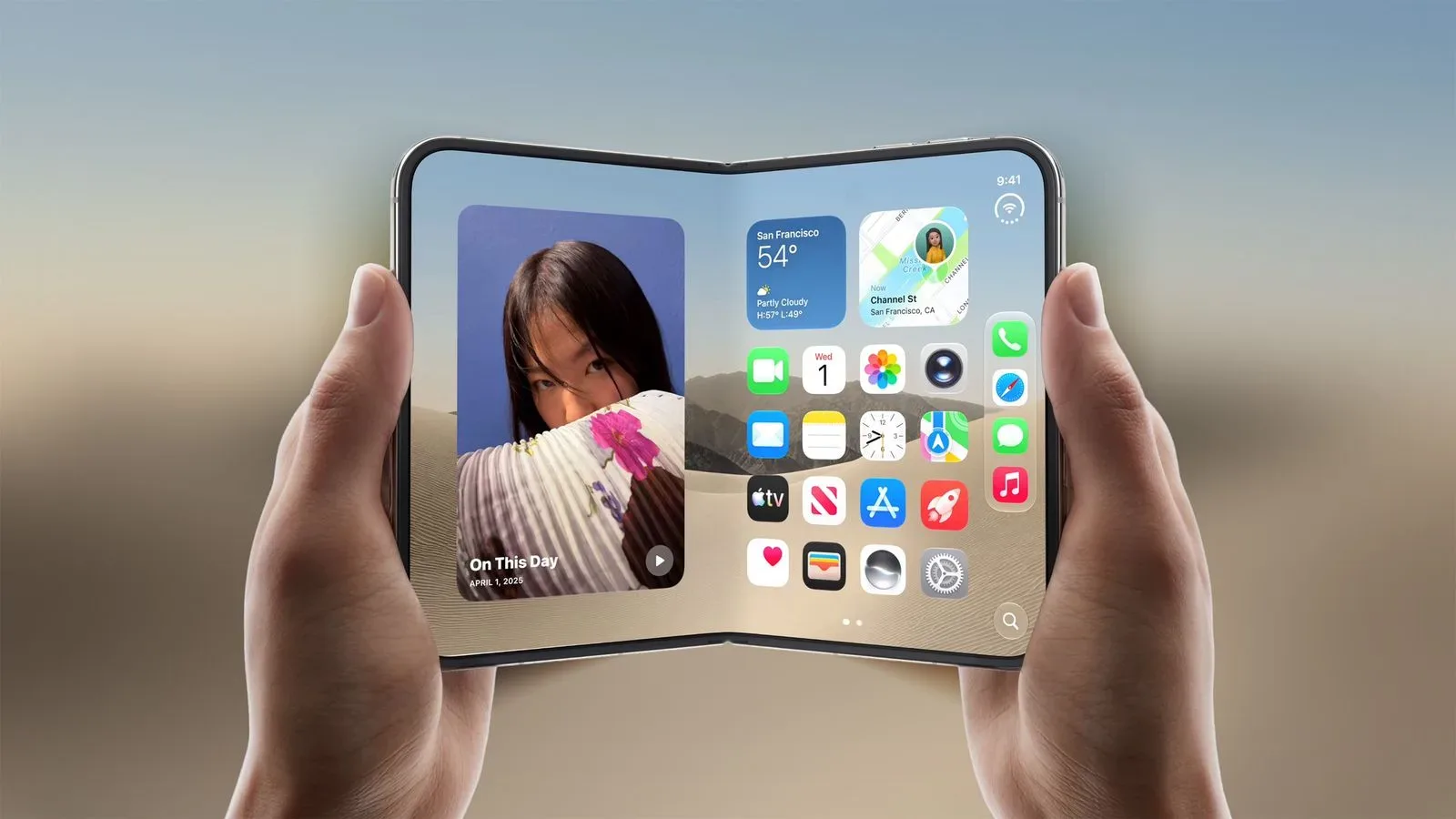
The iPhone Air 2 may keep the current iPhone Air’s Dynamic Island dimensions, even as the rumored next model is expected to add a second rear camera. That possibility has emerged from recently circulated dummy-model images, which appear to show an iPhone Air 2 display cutout that is unchanged rather than reduced.
It is a small visual detail with potentially larger engineering implications. The working theory is not simply that the smaller cutout was omitted from a mockup. Instead, it is that fitting an Ultra Wide camera into the especially thin Air design could force compromises elsewhere inside the handset—possibly including the arrangement that would enable a smaller Dynamic Island.
There is an important caveat before treating any of this as settled: dummy models are not finished retail devices, and the apparent design choice has not been confirmed. The iPhone Air 2 is currently expected in early 2027, leaving ample room for plans, prototypes, and supply arrangements to change.
What the dummy model appears to show
The discussion began around images shared by Sonny Dickson showing dummy units said to represent the iPhone Air 2 and iPhone 18 lineup. A Weibo commentator known as Experience More drew attention to the display opening on the apparent iPhone Air 2 model. It looks similar to the existing Air’s Dynamic Island, rather than resembling the smaller version associated with the iPhone 18 Pro models.
The Dynamic Island is the pill-shaped area at the top of the display used to house front-facing hardware and present system activity. In everyday use, it can visually expand around alerts, media controls, navigation information, calls, and other background tasks. Its physical size is therefore not only a cosmetic matter: it is connected to the placement of components behind the screen.
A smaller Dynamic Island, in this context, means Apple would have found a different way to arrange the relevant front-facing hardware. Experience More’s proposed explanation is that the iPhone 18 Pro’s internal revision shifts the front-facing camera toward the right side of the Dynamic Island. That layout may be harder to replicate in an iPhone Air 2 if engineering resources and physical space are already being consumed by the move to a dual-camera rear system.
The central constraint: a thin phone with another camera
The original iPhone Air reportedly places numerous components in its raised rear camera plateau, an approach that frees up more of the phone’s body for its battery. That makes the plateau more than a styling feature. It is an internal packaging strategy: concentrating hardware in one raised section can preserve volume elsewhere in a slim chassis.
Adding an Ultra Wide camera next to the existing main camera would place greater demands on that already densely used portion of the design. Experience More’s argument is that the second rear camera could leave insufficient space for the specific front-facing-camera arrangement used by the iPhone 18 Pro. If that is accurate, an unchanged Dynamic Island could reflect a practical choice about where every camera and sensor can fit, rather than a decision to withhold a visual upgrade.
That theory has some overlap with an earlier claim from a leaker known as Instant Digital. In January, the leaker said Apple had asked suppliers for an ultra-thin Face ID component, specifically to create room for an Ultra Wide camera beside the main rear camera. Face ID is Apple’s facial-recognition system, and a thinner component would theoretically reduce the space taken by the front-sensing hardware.
The two claims point toward the same broader challenge: a second camera is not merely an extra lens placed on the back of a phone. It requires room within a tightly managed structure, while the device must still accommodate its battery and front-facing authentication and camera hardware. The supplied information does not establish the final internal layout, but it does explain why seemingly unrelated design elements—the rear camera plateau and the cutout at the top of the screen—could be linked.
Why the Dynamic Island and rear cameras could affect one another
Smartphone design involves competing claims on a limited amount of internal space. In the iPhone Air 2 rumor cycle, the key claimed changes are a new Ultra Wide rear camera and potentially thinner Face ID hardware. The discussion around the Dynamic Island concerns the positioning of the front camera. Those parts sit at opposite ends of the handset, but the decisions are connected through the overall allocation of internal volume and component routing.
Analysis: If Apple’s priority is to retain the Air’s thin profile while adding an Ultra Wide camera, it may have less flexibility to adopt every internal change used by a Pro model. This does not mean a smaller Dynamic Island is impossible. It means the visual change could depend on a chain of hardware decisions that has to work alongside camera, battery, and sensor requirements.
That distinction matters because the visible cutout alone cannot reveal why it is the size it is. A dummy model can suggest the exterior dimensions of a design, but it cannot confirm the components within it, whether the hardware is final, or whether the mockup is based on complete information. The images are therefore a clue, not a specification sheet.
A conflicting prediction keeps the question open
The apparent dummy-model design also conflicts with an earlier expectation from analyst Jeff Pu, who predicted that the next iPhone Air would have a slightly smaller Dynamic Island. That disagreement is the clearest reason to avoid presenting the unchanged cutout as a finished fact.
There are several possibilities consistent with the limited information available. The dummy could accurately reflect an iPhone Air 2 that retains the existing Dynamic Island size. It could represent an incomplete, early, or inaccurate mockup. Or the expectation of a smaller cutout may not materialize in the final product. No supplied evidence decisively selects one answer.
For readers tracking Apple’s broader device plans, this is also a useful reminder that individual rumors often describe only one part of a product decision. Apple’s rumored hardware ambitions extend beyond this model; separate reports have examined the company’s potential future phone directions and their display-supply implications. But the iPhone Air 2 discussion is narrower: can a thin device gain another rear camera without changing the display cutout as some observers expected?
What an unchanged cutout would—and would not—mean
An unchanged Dynamic Island would not, by itself, indicate that the iPhone Air 2 lacks upgrades. The rumor at the center of this discussion is that it could add an Ultra Wide camera, which would be a substantive hardware change to the rear-camera setup. The reported internal effort to obtain an ultra-thin Face ID component, if accurate, would also suggest that the Air’s design is being actively reworked to accommodate that addition.
Conversely, a smaller Dynamic Island would not automatically reveal the full scope of the phone’s internal revision. It would be a visible sign of altered component placement, but not an explanation of how Apple balanced the rest of the device. The most useful takeaway is to separate external appearance from confirmed capability. At this stage, neither the camera configuration nor the size of the display cutout should be treated as official.
- What appears to be indicated: a dummy model seemingly retains the original iPhone Air’s Dynamic Island size.
- What is rumored: iPhone Air 2 could add an Ultra Wide rear camera alongside its existing main camera.
- What is theorized: the camera addition may restrict space needed for the iPhone 18 Pro-style front-camera arrangement.
- What remains disputed: a prior analyst prediction called for a slightly smaller Dynamic Island on the next Air.
- What is expected: an early-2027 launch window.
What to watch before early 2027
The next useful evidence will be reporting that can distinguish an exterior placeholder from a final engineering direction. In particular, watch for claims that address the iPhone Air 2’s rear-camera arrangement, the thickness or placement of Face ID hardware, and whether the front-facing camera adopts the same offset arrangement attributed to the iPhone 18 Pro.
Until then, the best reading of the dummy-model images is restrained. They raise a credible design question: adding an Ultra Wide camera to a thin iPhone Air may require compromises in the internal layout. But they do not prove that the Dynamic Island will stay the same size, nor do they disprove the possibility of a smaller version. For now, the cutout is one visible part of a larger and still unresolved packing puzzle.