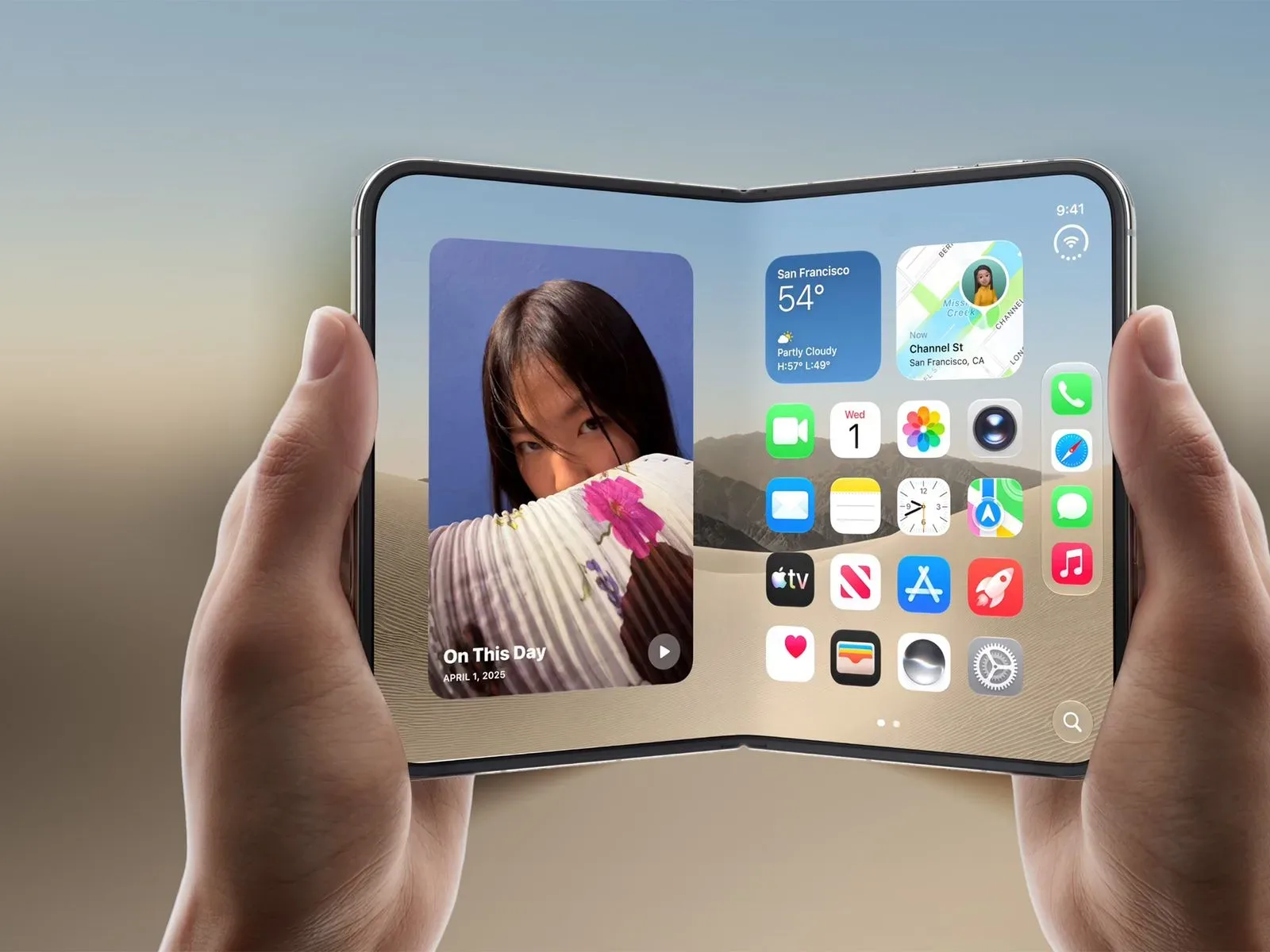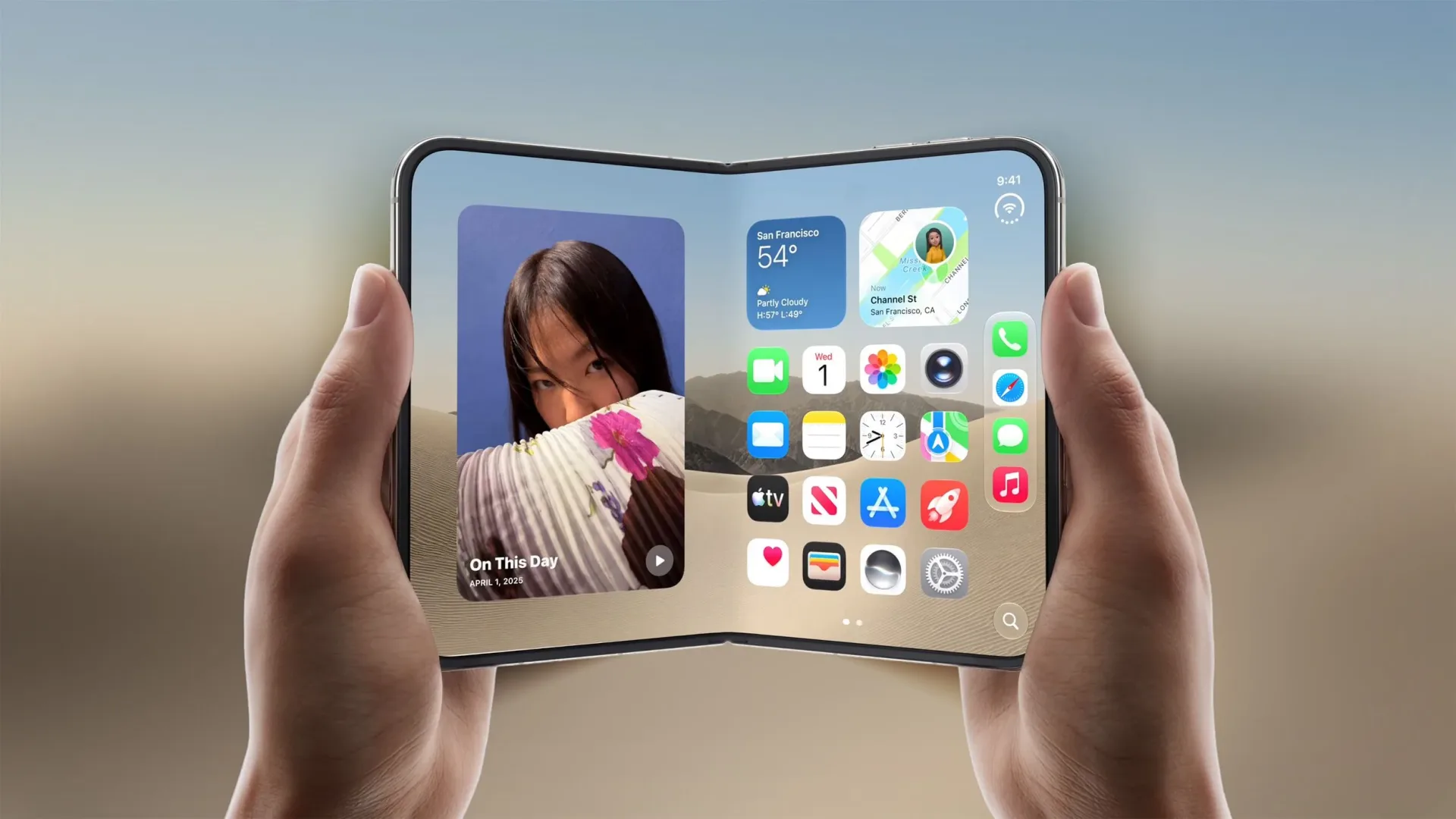
Apple’s rumored entry into foldable phones may bring an old supply-chain boss battle back for another round: finding somebody other than Samsung Display that can make the screen at the required scale.
A claim posted by the leaker known as Instant Digital says Samsung Display could remain Apple’s sole foldable-display supplier for at least five years. The central reasoning is not simply that Samsung makes foldable panels, but that it is said to hold meaningful advantages in three difficult areas: crease control, reliability, and manufacturing yield.
If accurate, that would put Samsung in an unusually strong position around the rumored iPhone Duo and later models. It would also resemble a problem Apple encountered at the start of the iPhone OLED era, when Samsung was reportedly the only supplier able to meet its display needs for the iPhone X.
That is a consequential possibility, but it remains a possibility rather than a confirmed Apple plan. The iPhone Duo name, its display arrangements, the reported exclusivity terms, and the expected duration of Samsung’s supplier advantage are all claims rather than details announced by Apple or Samsung.
Why a foldable panel is harder than an ordinary phone screen
A foldable display is not just a conventional phone screen that happens to bend. It must repeatedly flex at a specific point while remaining usable, visually consistent, and dependable. The hinge is only one part of that challenge. The display itself has to withstand the physical stress of folding without creating defects that make a premium device feel compromised.
The reported Samsung advantages highlight the parts that matter most:
- Crease control: the visible line or indentation around the folding area. A crease may be an expected physical trade-off in a folding screen, but reducing its visibility and effect on the image is a major quality target.
- Reliability: a panel must continue performing through repeated opening and closing. For a supplier, consistency is as important as demonstrating that a single sample can fold.
- Manufacturing yield: the share of panels coming off a production line that meet the required standard and can be shipped. Low yields make production less efficient and can constrain supply even when a technology works in principle.
Those terms explain why a second supplier cannot necessarily enter the chain merely by showing a foldable prototype. A company needs the ability to make enough qualifying panels repeatedly. For a product that could be sold at iPhone scale, that distinction is enormous.
In practical terms, a potential competitor such as LG Display would need to clear more than a technical threshold. It would need to demonstrate that its panels meet Apple’s expected standards and that its factories can produce them in sufficient quantities with dependable yields. The latest claim argues that Samsung’s lead in those areas could be difficult for LG Display to overcome quickly.
The iPhone X precedent is relevant—but not a guarantee
There is a clear historical comparison. Apple’s first OLED iPhone, the iPhone X in 2017, reportedly depended on Samsung as its only display supplier. OLED, or organic light-emitting diode, is a display technology in which pixels emit their own light. The source material identifies Samsung as the supplier capable of producing the necessary panels at the time.
That sole-supplier position gave Samsung substantial leverage. Analyst Ming-Chi Kuo described the OLED panel as Apple’s “single most troublesome component” in bargaining-power terms. The meaning is straightforward: when a product needs a highly specialized part and only one company can deliver it, the buyer has fewer alternatives in price negotiations, production planning, and supply disruptions.
Apple reportedly encouraged LG Display’s attempt to become a competing supplier during that period. Yet progress was not simple. As late as April 2018, questions remained over whether LG’s manufacturing difficulties would permit it to provide OLED panels for iPhones that year.
That episode does not prove a foldable iPhone will unfold in precisely the same way. OLED and foldable OLED panels are not interchangeable supply problems, and the current report concerns an alleged future device. Still, the comparison illustrates a durable manufacturing reality: developing a component is one thing; building it at the right quality and volume is another.
What exclusivity could mean for the rumored iPhone Duo
Instant Digital had previously claimed Samsung secured a three-year exclusive agreement covering the iPhone Duo and future models. The same claim put Apple’s cost at approximately $250 per foldable panel.
Neither figure should be treated as confirmed. But the reported arrangement raises an important distinction between two different kinds of supplier dependence.
First, there is contractual exclusivity: an agreement that gives one company exclusive supply rights for a defined period. That can end when the agreement expires.
Second, there is capability exclusivity: a situation where rival manufacturers still cannot meet the necessary requirements, whether or not a formal agreement remains active. This is the more stubborn version. An exclusivity deal may run out on paper while the original supplier remains the only realistic option in practice.
The new claim is essentially that this could happen with Apple’s foldable display plans. Even after an alleged three-year deal ends, Samsung could potentially retain its position because a competing maker has not yet matched its crease performance, reliability, or yields.
For Apple, that does not automatically mean a bad product or a failed strategy. A sole supplier that can consistently provide a complex part can be valuable, particularly at the beginning of a new product category. The trade-off is less negotiating flexibility and greater exposure if that supplier encounters production constraints.
Why yields matter as much as the headline panel price
The reported $250-per-panel figure will naturally attract attention because it places a number on one of the device’s specialized components. Yet the figure alone does not reveal the full economics of a foldable phone, and it does not establish a retail price for any iPhone Duo.
What it does show is why manufacturing yield is likely central to the discussion. A nominal panel price is only part of the equation. If a factory produces a high percentage of usable panels, supply is more predictable and the production process wastes fewer units. If yields are weak, the component can become harder to source at volume and more difficult to plan around.
That is why the report’s emphasis on yields belongs alongside crease control and reliability, rather than being treated as a dry factory-side detail. The physical characteristics users might notice—such as the fold line—are only one half of the challenge. The other half is whether the manufacturer can make enough of those acceptable panels for the device’s intended rollout.
Apple’s past OLED experience shows the business consequence. Samsung’s early iPhone X position reportedly gave it leverage not merely because OLED was desirable, but because it had the production capability Apple required. A foldable panel could reproduce that dynamic if Samsung is again ahead in the combination of technology and scale.
What this does—and does not—tell prospective buyers
For anyone waiting on Apple’s foldable plans, this report is more informative about manufacturing risk than about the eventual device. It does not confirm a release date, product specifications, final design, price, display size, or availability. It does not say that LG Display will never qualify as a supplier. And it does not establish that Apple has signed the alleged agreement.
It does suggest the display may be the defining bottleneck if the rumored iPhone Duo reaches market. A foldable device asks the screen to perform mechanical work every time it is opened and shut, so the component has an outsized effect on both the visible experience and the ability to make the product at scale.
There is also a useful lesson in separating an exclusive deal from a genuine competitive market. A three-year exclusivity period, if it exists, would be a clear contractual marker. But the more meaningful long-term question is whether another display maker can build a foldable panel that meets Apple’s requirements in volume. The claim that Samsung might remain alone for five years argues that this second question could outlast the first.
Apple has previously had to navigate a display-supply imbalance, and the iPhone X provides the relevant reference point. The rumored foldable program could be a more demanding repeat of that challenge. The component at issue is no longer just an OLED screen; it is a screen expected to bend, look good while doing it, last through repeated use, and emerge from a factory in vast quantities.
Until Apple or its suppliers provide firm details, the sensible reading is cautious: Samsung may have a significant early advantage in the foldable-screen race, but the reported iPhone Duo supply structure is still unconfirmed. For broader Apple-related policy and device context, see our coverage of Connecticut Apple Wallet IDs and their 2027 target.