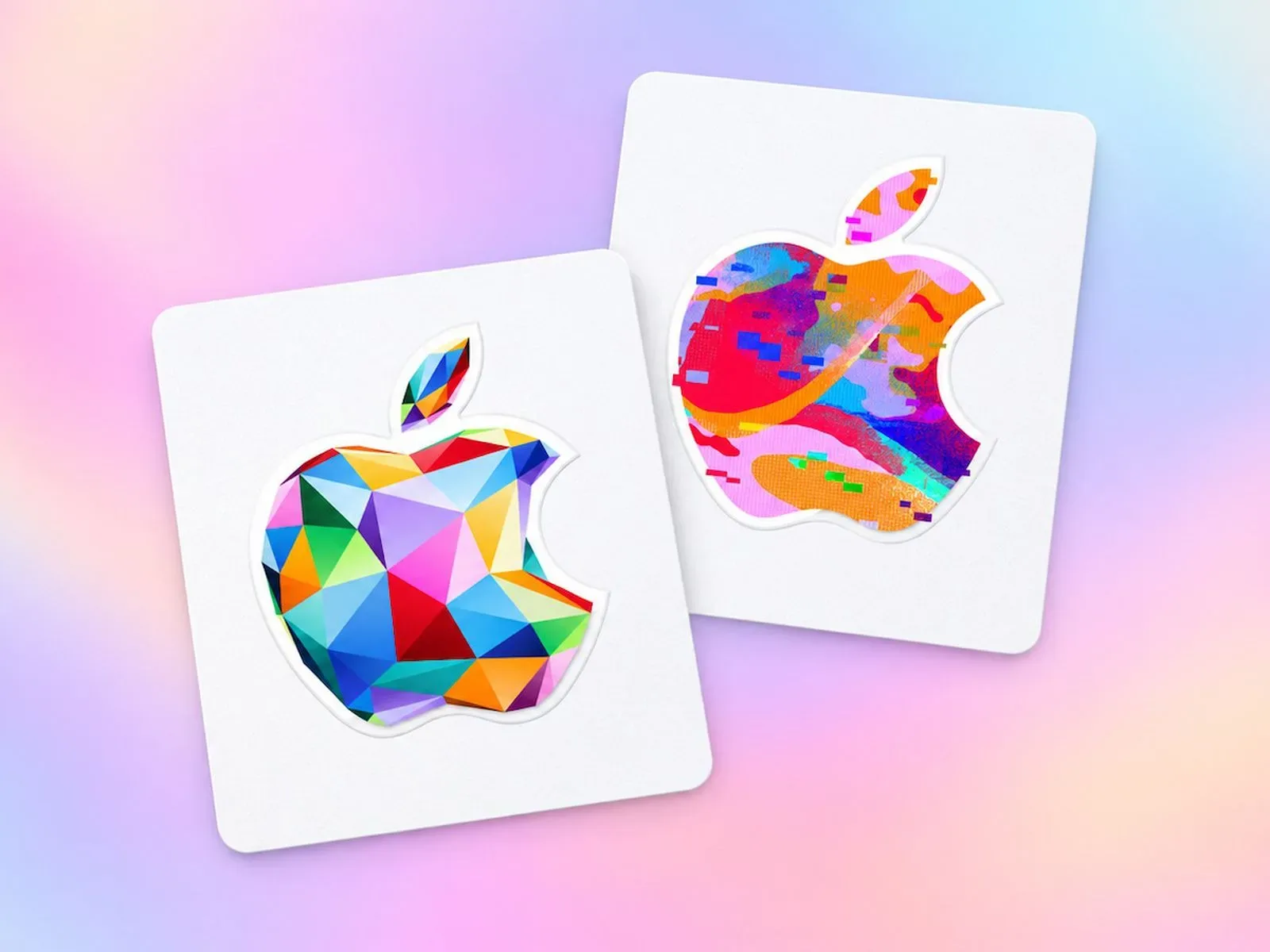
Apple gift cards may be getting a redemption process with a little less code-entry friction and a lot more “tap the thing to the thing.” Code found in the iOS 27 Release Candidate indicates that compatible iPhones could soon redeem certain Apple gift cards by reading them at the back of the handset.
The apparent feature is notable not simply because it could make adding a gift-card balance quicker. The code also points to cards carrying a security chip that the iPhone would scan to establish whether a card is genuine and has not already been used. In other words, the proposed interaction is not merely a convenience shortcut for typing a long string of characters; it appears designed to verify the physical card during redemption.
That distinction matters in a category where a piece of plastic can represent real purchasing power for games, apps, subscriptions, movies, music, hardware accessories, and other items within Apple’s ecosystem. A gift card is a handy present. It can also become an awkward little object when a buyer is unsure whether it is legitimate, active, or previously redeemed. The iOS 27 code hints at a system intended to give the phone a more direct role in addressing those questions.
What the iOS 27 Release Candidate code suggests
The evidence is limited to code discovered in the iOS 27 Release Candidate, so this should be treated as a feature signaled by software rather than a fully detailed public rollout plan. The information indicates that a user would tap a gift card on the rear of a compatible iPhone. The phone would then read the card’s security chip and check its status.
Compatibility is an important qualifier. The available details do not identify every iPhone model that could support the flow, which specific card designs would include the chip, or whether older cards would remain dependent on existing redemption methods. Likewise, there is no confirmed timetable here for when chip-equipped Apple gift cards would reach consumers or how broadly they would be distributed.
Still, the direction is clear enough: redemption could become a physical scan rather than an exercise in carefully entering or capturing a redemption code. Anyone who has ever tried to redeem a card under a dim lamp, while a receipt curls into modern sculpture nearby, can see the appeal of an approach that asks the phone to read the card directly.
Blocked and cancelled status screens could target a real problem
Among the most interesting details are interface screens reportedly associated with cards marked as blocked or cancelled. Those statuses suggest that the redemption flow may be designed to surface a clear result when a card cannot be accepted, rather than leaving the user with only an ambiguous failure message.
The apparent purpose is scam reduction. Gift cards have long been attractive targets for bad actors because their balances can be treated as a fast-moving form of value. A system that checks for authenticity and whether a card remains unspent may make it harder for compromised, invalid, or otherwise unusable cards to pass through a transaction unnoticed.
It is worth being precise about what has and has not been indicated. The code points to authenticity and redemption-status checks, plus screens for blocked or cancelled cards. It does not, on its own, spell out the full fraud-prevention system, explain why any individual card might receive either status, or promise that every gift-card issue can be prevented. A security feature can improve a process without turning it into an enchanted anti-scam force field.
For ordinary recipients, however, a plainly presented status could be useful. If a scan tells someone that a card has already been redeemed or cannot be used, that is potentially faster and clearer than repeatedly attempting a manual redemption. It may also make the next step easier to understand: pause, keep the card and purchase information, and seek help from the seller or the appropriate support channel instead of assuming a typo is to blame.
A small change with a bigger physical-media angle
There is a pleasingly physical dimension to this otherwise software-led detail. Digital storefront credit usually begins its life as a physical object: a card bought in a shop, tucked into a birthday envelope, placed in a stocking, or handed over with the classic instruction to buy something sensible. Nobody obeys that last part when a game is involved.
By adding a chip and a tap interaction, Apple would make the card itself part of the verification process. The phone would not only receive a number; it would read a security component embedded in the item being presented. That is a different relationship from a conventional scratch-off code, even if the end result remains the same: account credit available to spend digitally.
For gaming audiences, Apple gift cards can serve as a bridge between a traditional gift and a digital purchase. They can be used toward App Store spending, making them relevant to mobile games and in-app purchases alongside the broader Apple catalog. The proposed change would not alter the nature of that digital marketplace, but it could alter the moment when the card becomes usable credit.
That broader collision between tangible gifts and digital libraries has been worth watching across entertainment. Physical media’s continuing place in a digital-first market remains a live conversation, and gift cards occupy a peculiar middle ground: a physical present that usually becomes an invisible balance. A chip-enabled redemption method would make that transition feel even more deliberate.
What remains unknown before anyone should plan around it
As with many features exposed through pre-release software, the unanswered questions are substantial. The iOS 27 Release Candidate code does not provide a complete public instruction manual. It does not establish the precise user steps, model requirements, regional availability, card denominations, retail partners, replacement policy, or whether the physical card must be positioned in a particular way for the scan to work.
It is also unknown whether the feature would coexist with all existing redemption paths or be reserved for a new generation of cards. Current card holders should not assume their cards will gain chip-based verification just because an iPhone update exists. A printed card cannot download new hardware, no matter how confidently it sits on a kitchen counter.
There is also a difference between code appearing in a Release Candidate and every aspect of a feature being publicly finalized. Software references can point to capabilities that arrive in stages, vary by market, require supporting hardware, or change before broad availability. The safest reading is that iOS 27 contains strong signs of a tap-to-redeem system involving security-chip Apple gift cards, while many operational details have yet to be established.
Why clarity at redemption may be the real upgrade
Speed is the headline-friendly part of tapping a card to an iPhone. Yet the more consequential element may be the reported ability to identify a card as authentic and unspent, with specific blocked and cancelled outcomes visible in the redemption flow.
A gift card transaction often contains a moment of uncertainty. The giver expects a simple surprise; the recipient expects an immediate balance; the retailer, account system, and card all have to agree that the value is valid. If the proposed system works as indicated, the iPhone could provide a more direct checkpoint at that exact moment. The card is read, its condition is evaluated, and the user receives a result before the credit is applied.
That is not the flashiest iOS trick, and it does not need to be. Plenty of useful technology is quietly transactional: it removes an annoying step, tells people when something is wrong, and gives a physical item a reliable route into a digital account. In this case, the back of a compatible iPhone may become the place where a gift card stops being a tiny rectangle of potential and becomes confirmed store credit—or where it raises a red flag before someone is left wondering what happened.
For now, iOS 27’s Release Candidate offers the signal, not the complete playbook. The key details supported by the code are a rear-of-iPhone tap, security-chip scanning for authenticity and unused status, and screens that may flag blocked or cancelled cards. If those elements reach users as indicated, Apple gift-card redemption could become simpler for legitimate cards and more informative when a card is not what it appears to be.