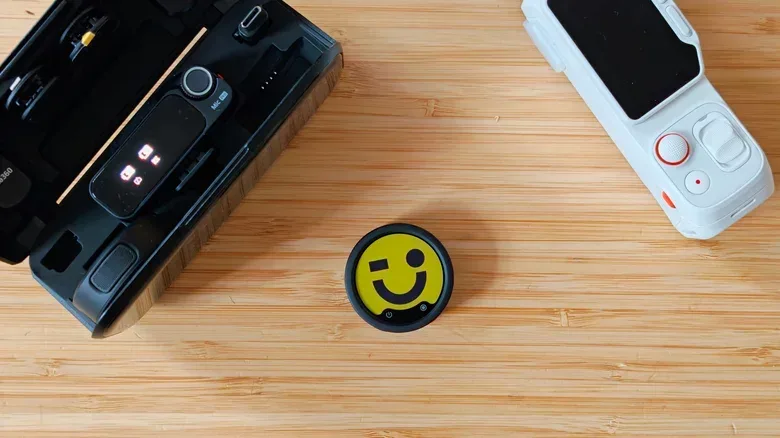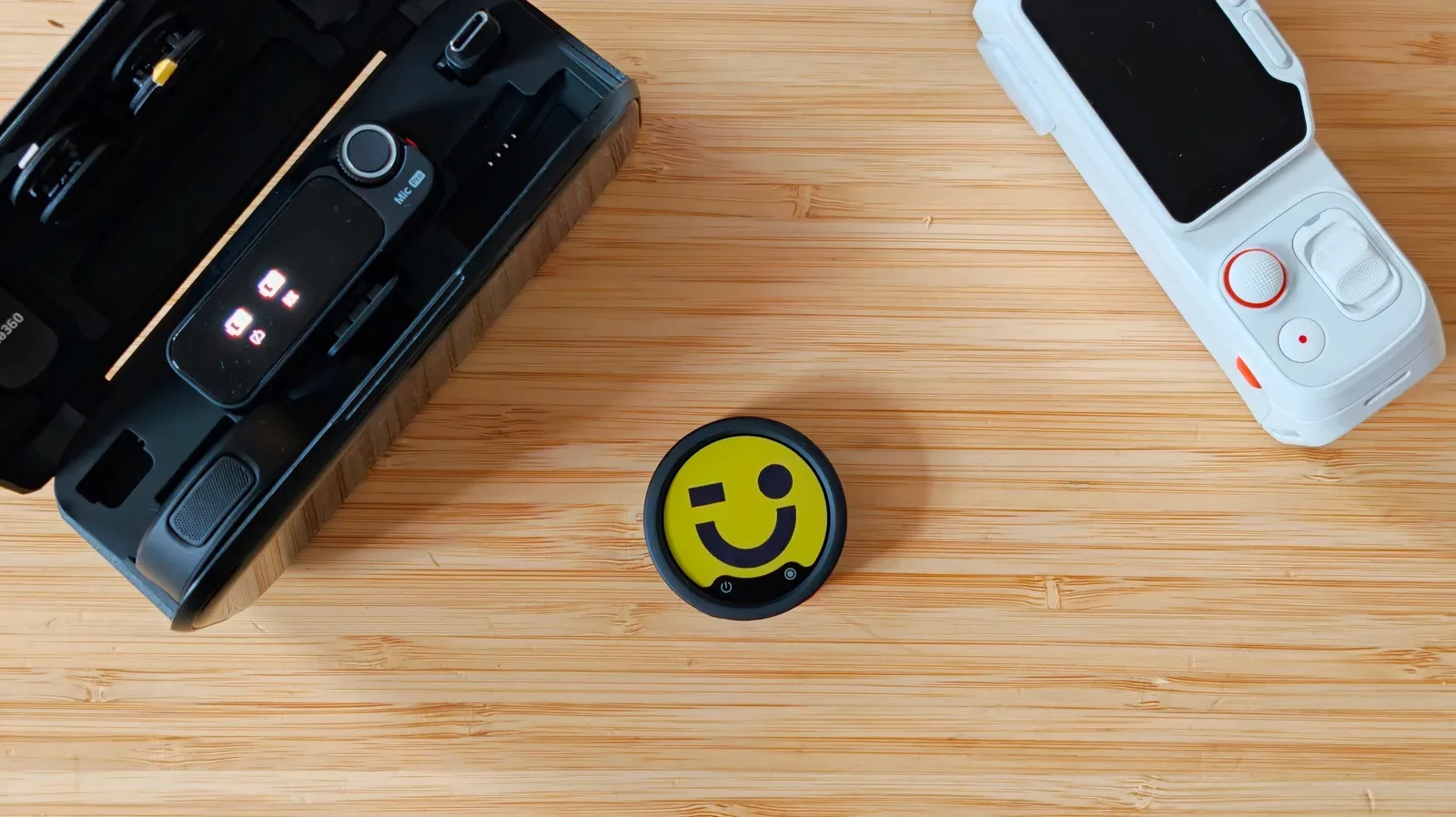
Insta360 has expanded its wireless-audio lineup with the simply named Insta360 Mic, a lower-cost alternative to the existing Mic Pro that retains several of the range’s most distinctive ideas. The headline change is expandable storage: these are the first Insta360 microphones with microSD card slots. That matters most for creators who want internal audio recording and the safety net of 32-bit float files, rather than relying exclusively on a wireless connection to a camera or receiver.
The new model also keeps the unusual visual calling card of the Mic Pro: a customizable e-ink display on each microphone button. Owners can select built-in Insta360-themed artwork, upload a personal image, use a logo associated with a business or channel, choose an all-black look, or attempt to blend the unit with an outfit. Wireless microphone transmitters are usually designed to disappear on camera; Insta360’s approach gives creators an option to turn a small, visible piece of recording equipment into part of their presentation.
For gaming video makers, streamers filming away from a desk, interview channels, and event-focused creators, the choice is less about whether the Mic has a longer feature checklist than the Mic Pro. It is about which compromises fit the recording setup. The new Mic gains removable storage and arrives at lower listed bundle prices, but it does not include the Mic Pro’s three-microphone array for directional sound pickup.
Storage is the practical change
Internal recording is useful because it creates a recording on the transmitter itself rather than putting every ounce of trust in the wireless signal path. With the new Insta360 Mic, that recording capability depends on installing a microSD card: 32-bit float internal recording is available only with a card in place.
That condition makes the card slot more than a convenient specification. A buyer interested in float recording will need to account for a compatible microSD card as part of the setup. In return, removable storage makes capacity expandable rather than fixed, which can be useful for creators planning longer recording sessions or wanting to swap cards between projects.
32-bit float is a recording format associated with substantially greater dynamic-range flexibility than conventional recording formats. Put plainly, it can provide more room to recover audio when the level proves unexpectedly loud or quiet. It is not a magical repair button: background noise, a poor microphone position, wind, and other physical recording problems are not automatically erased by a file format. But during live recording in an unpredictable environment, float recording can make an unexpectedly hot level less catastrophic in post-production.
That is especially relevant when the action cannot be easily repeated. A creator capturing an on-location gaming event, a multi-person conversation, or a spontaneous segment may be dealing with people whose speaking volume changes dramatically. Having a local recording on the microphone, with the headroom offered by 32-bit float, is a sensible form of insurance—provided the microSD card has been installed before recording begins.
What separates the Mic from the Mic Pro
The distinction is not simply “new versus old.” Insta360’s Mic shares a number of important capabilities with the Mic Pro. It uses NPU-based processing to reduce background noise, supports 48kHz recording when directly connected to compatible recent Insta360 cameras, and works with a receiver that can handle up to four microphones.
An NPU, or neural processing unit, is hardware intended for machine-learning-related processing. Here, it is used for background-noise reduction. The stated role is to help suppress unwanted surrounding sound during recording. That can be valuable in environments where voice clarity is more important than faithfully capturing everything in the room, though creators should treat any noise reduction as a tool rather than a substitute for selecting a quieter location or placing a microphone sensibly.
The more consequential hardware omission is the Mic Pro’s triple-mic array. That array supports directional sound pickup, and it is not included in the new Mic. Directional pickup is designed to prioritize sound arriving from a chosen direction while reducing attention paid to sound elsewhere. In practical terms, the Mic Pro’s configuration may better suit creators whose priority is isolating a speaker from surrounding activity. The new Mic instead makes its case through storage expansion, shared connectivity features, and price.
Neither option is automatically the right one for every channel. A presenter shooting short pieces to camera may value the customizable exterior, direct camera connection, and lower entry cost. Someone regularly working amid distracting activity may put more weight on the Mic Pro’s directional array. The important point is that expandable microSD storage is not a like-for-like replacement for directional pickup; it solves a different production problem.
Direct links to recent Insta360 cameras
The new microphones can connect directly to several recent Insta360 cameras without a receiver: the Luna Ultra, Luna Pro, X6 and GO Ultra. In that configuration, Insta360 says they record 48kHz audio.
48kHz is a widely used audio sample rate for video production. A sample rate describes how often audio is sampled each second when captured digitally. It is not by itself a guarantee that a recording will sound good—mic placement, room acoustics, wind protection, gain, and background noise remain crucial—but it is a familiar production standard for creators working with video.
Removing the receiver from a compatible camera workflow can simplify a small shooting rig. Fewer separate pieces can mean less gear to mount, charge, and monitor. For action-camera creators or anyone building a compact recording setup, that convenience is central to the appeal. At the same time, direct compatibility is explicitly tied to the listed recent Insta360 camera models, so it should not be assumed to apply broadly to unrelated cameras.
The receiver remains relevant for other setups and larger groups. One receiver supports up to four microphones, and it also works with the Mic Pro. Insta360’s receivers appear to be the same units included in existing Mic Pro bundles. That shared receiver compatibility could be meaningful for creators who already own Mic Pro equipment and want to add microphones without splitting their kit across incompatible ecosystems.
Creators who use game-focused camera gear alongside older hardware may also appreciate products that bridge specialized equipment and modern workflows. The GB Operator’s cartridge-to-PC workflow is a different kind of example, but it reflects the same practical concern: reducing friction between the tools used to capture material and the tools used to work with it.
E-ink is both branding tool and on-camera design choice
The e-ink panel remains the feature that makes Insta360’s microphones immediately recognizable. E-ink, short for electronic ink, is a display technology commonly associated with low-power screens. Here it is used as an outward-facing customization surface rather than as a dense settings display.
That design has straightforward uses. A channel can add its logo. A small production can keep units visually consistent with its branding. A host can choose a photo or illustration that complements a video’s look. There is also a subtler benefit: a microphone that visibly fits a creator’s on-camera identity can feel less like an accidental piece of technical clutter.
The option to make the display black or match clothing suggests an opposite use case as well. Not every production wants visible branding. When the goal is discretion, a muted appearance can be preferable to a colorful graphic. The feature therefore supports both approaches: make the mic a deliberate visual accessory, or make it less conspicuous.
It is worth separating this cosmetic flexibility from the audio and storage decisions. A custom display will not improve a noisy recording, and a microSD card will not create directional pickup that the hardware does not have. But for solo creators, where the same person is often performer, camera operator, editor, and brand manager, design details can still have real value.
Prices, packages and included accessories
Insta360 lists the new Mic at $80 individually. A microphone-and-receiver bundle is listed at $140, while a package with two transmitters, a receiver, and a charging case is listed at $250. Each bundle is priced below its Mic Pro counterpart.
- Mic: $80
- Mic plus receiver: $140
- Two transmitters, receiver and charging case: $250
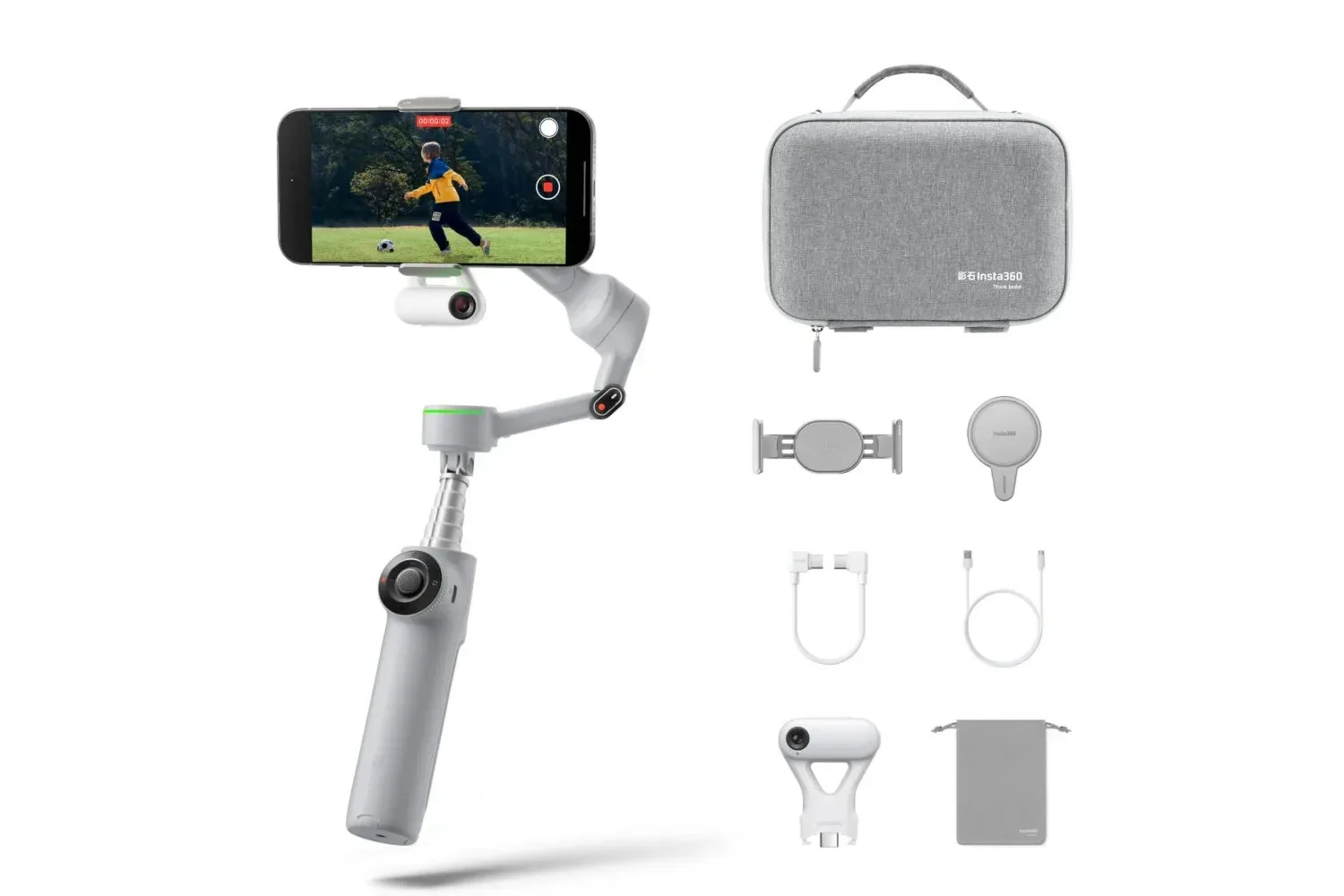
The base microphone includes a button magnet, clip windshield, and carry pouch. The microphone-and-receiver configuration also includes a USB-C phone adapter. Those contents point to the intended flexibility of the range: a magnetic mounting option for wearing the mic, wind protection for use outside or around moving air, transport storage, and a path for connecting the receiver to a USB-C phone.
The bundle structure gives prospective buyers a fairly clear planning question. A creator who only needs one transmitter may begin with the standalone Mic, but should remember that 32-bit float internal recording requires a separately installed microSD card. A creator who needs receiver-based use or phone connectivity may find the $140 package better aligned with the stated accessories. Teams, interview formats, and productions that need more than one voice will be looking most closely at the two-transmitter charging-case package, along with the receiver’s support for up to four microphones.
Insta360’s new Mic is ultimately a targeted alternative, not an across-the-board replacement for the Mic Pro. It brings customizable e-ink styling, NPU-backed noise reduction, direct links to named Insta360 cameras, cross-compatibility with the receiver, and expandable card storage into less expensive packages. The trade-off is equally clear: buyers who need the Mic Pro’s three-mic directional array should not assume the new model offers an equivalent substitute. For creators who prioritize a removable local-recording medium and want the extra flexibility that can bring to 32-bit float capture, that trade may be exactly the point.