Solar panels have a frustratingly un-game-like stat sheet: even when the sun does its job, a meaningful share of the incoming energy never becomes useful electricity. Some turns into heat. Some is emitted again as light. Researchers at the Institut de Ciències Fotòniques (ICFO) have now demonstrated a way to tackle that second escape route, using a solar-cell design that better controls where emitted light can go.
The lab result itself is deliberately modest: the researchers report an efficiency improvement of around 0.85 percentage points in an organic solar cell. The bigger deal is the principle behind it. By reducing light emitted at wide angles while still admitting sunlight, the team says photovoltaic cells could theoretically move toward efficiencies close to 43%. That is well beyond the 33.16% Shockley-Queisser limit commonly cited for conventional single-junction solar cells.
That does not mean 43% home panels are arriving at the hardware store tomorrow. The work is an experimental demonstration in an organic cell, not evidence of a finished consumer panel, a manufacturing process, or a promised product timeline. Still, it identifies a way to address a loss mechanism that has been especially difficult to manage—and it may be relevant across types of photovoltaic technology rather than only to one laboratory material.
The basic problem: a solar cell is not a one-way door
At a high level, a photovoltaic cell uses a semiconductor to turn sunlight into electrical current. Crystalline silicon is the most common semiconductor in familiar solar panels. When sunlight reaches suitable material, it can free electrons, allowing an electric current to be collected.
But solar energy conversion contains losses. The supplied energy does not all emerge as electricity. Some of it becomes heat; other energy can be re-emitted as light. Researchers have explored ways to reduce thermal losses, including work involving different semiconductor materials. ICFO’s experiment instead focuses on light that escapes from the cell.
That distinction matters because higher efficiency is not simply a matter of capturing more sunlight at the front surface. It is also about retaining as much useful energy as possible after light has entered the device. Think less “bigger bucket” and more “bucket with fewer places to leak.” The new work is aimed at one particular leak.
Boltzmann loss and the mismatch in angles
The researchers describe the challenge as a mismatch between a narrow cone of incoming sunlight and a wider cone over which a solar cell can emit light. Sunlight arriving at a panel comes from a relatively constrained range of directions. Light leaving the cell, meanwhile, can spread across a much wider range of angles.
This is connected to what the report calls Boltzmann loss: energy lost through light emitted by the solar panel. The name is technical, but the practical idea is straightforward. A cell has to balance taking in light with the physical processes that allow it to radiate light away. If its outgoing emission can be narrowed so it more closely resembles the directionality of the incoming sunlight, less energy should be squandered through broad-angle emission.
The theoretical benchmark at stake is the Shockley-Queisser limit, given here as 33.16%. It is a theoretical ceiling for a conventional single-junction solar cell under the conditions assumed by that model, rather than a score every commercial panel already reaches. Typical consumer panels perform at roughly 20% to 23%, leaving a sizable difference between present-day products and even that older theoretical maximum.
ICFO’s work does not claim to have made the Shockley-Queisser limit irrelevant in everyday equipment. Rather, its experimental result supports the proposition that deliberately controlling the angles of emitted light could enable an efficiency limit closer to 43%.
How the ICFO cell changes the optics
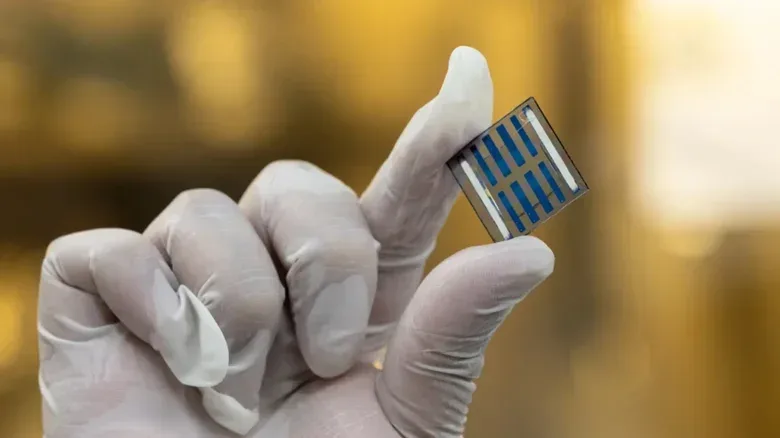
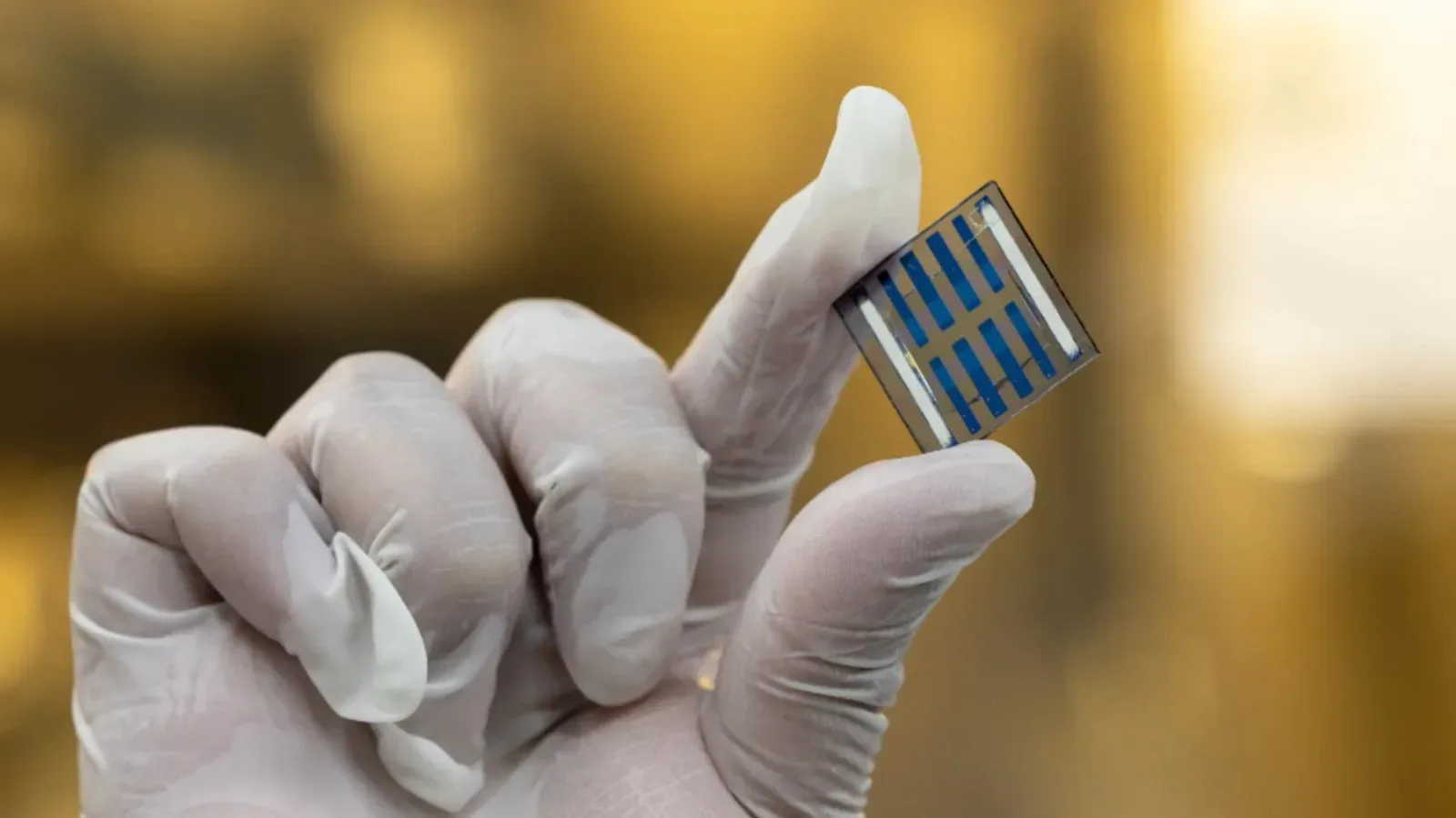
The research, published in Energy & Environmental Science, began with an organic solar cell, not the crystalline silicon used in most mainstream panels. Organic cells use carbon-based semiconductor materials. That material choice is important context: the reported gain comes from a specific test cell and should not be treated as a drop-in upgrade for a silicon rooftop system.
The team replaced the cell’s indium tin oxide front electrode with a thin silver electrode and turned the device into an optical cavity. An optical cavity is a structure designed to control how light behaves inside it, including which directions and modes are favored. In this instance, the structure continued to let sunlight enter while reducing the amount of light the cell emitted at wide angles.
That is the central engineering trick. A solar cell normally needs a front contact that helps collect charge without blocking too much incoming light. Altering that layer and the optical arrangement can affect both electrical and optical behavior. The experiment’s value is that it showed the desired directionality effect in a working solar-cell design, rather than presenting it only as a theoretical possibility.
“If the emission cone can be narrowed to more closely match the absorption cone of incoming sunlight, which is exactly what our work demonstrates experimentally, solar cells will, in principle, be able to approach efficiencies close to 43 percent,” said Dr. Francisco Bernal Texca, the study’s first author.
The phrase “in principle” carries considerable weight. It signals a physical pathway and a possible upper range, not a claim that all the intervening obstacles—manufacturing, material choices, durability, costs, scaling, and integration into complete panels—have already been solved.
Why a 0.85-point gain can still matter
In isolation, an improvement of around 0.85 percentage points may sound small beside the 43% long-term figure. It is more useful to read it as proof that the optical strategy can make a measured difference. Solar-cell efficiency advances are frequently incremental because a mature device has many interconnected constraints: light must be absorbed, charge must be separated and collected, electrical losses must be restrained, and the cell must endure real operating conditions.
A measured step is also different from merely stating that an angle-restricted emitter should perform better. The ICFO setup provides experimental evidence that controlling the emission cone can lift performance. Whether that eventually produces larger gains in another material system is still an open practical question, but the result gives researchers a new target beyond the better-known heat-loss problem.
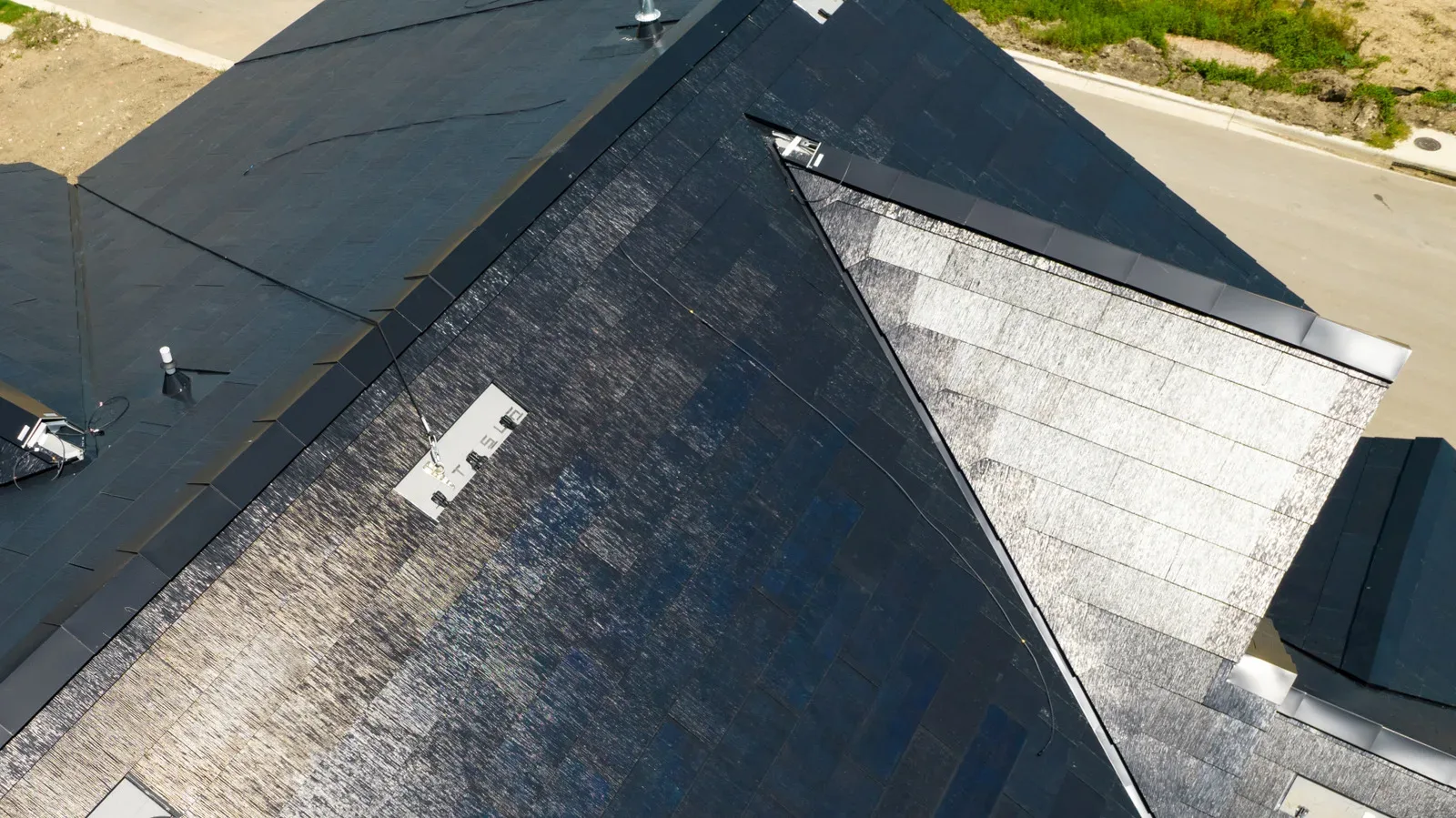
For consumers, the most relevant number remains the 20% to 23% range cited for typical panels. A future improvement in cell efficiency could mean a panel produces more electricity from the same surface area, which could be particularly meaningful where installation space is constrained. Plug-in balcony solar panels are one example of why space-efficient generation attracts interest: a limited area makes each improvement in output per area more valuable.
However, this research alone provides no basis for assuming that a given balcony system or rooftop installation will gain 0.85 points, let alone leap to 43%. The tested device was organic, the current consumer market commonly uses crystalline silicon, and lab-cell performance is not identical to finished module performance. Those distinctions are not footnotes; they are the gap between a clever cell architecture and a product that can be installed outdoors for years.
A potentially broader photovoltaic idea
The encouraging part of the research is the claim that its underlying principle could apply to different photovoltaic cells, rather than being confined to the specific advanced materials used in the experiment. If the approach can be adapted effectively, it could complement efforts that focus on semiconductor choice and thermal losses.
There is already intense activity around solar efficiency. In July, Chinese firm LONGi unveiled a solar cell reported at 35.5% efficiency and said the photovoltaic cell technology it used was theoretically capable of reaching 43%. The ICFO work therefore joins a broader 2026 picture in which researchers and companies are probing routes beyond familiar efficiency boundaries.
It is important not to merge those milestones into a single product narrative. LONGi’s reported 35.5% cell and ICFO’s optical-cavity demonstration are separate developments, and the supplied evidence does not establish that either is a consumer-ready module or that they use the same path to 43%. What they do share is a reminder that the ceiling for solar conversion remains an active engineering question.
What to watch next
The next meaningful developments will be less about a headline efficiency ceiling and more about translation. Can emission control be applied to photovoltaic materials beyond the organic test cell? Can a design that limits wide-angle light emission retain the electrical performance, stability, and sunlight intake needed in a full panel? And can that happen at a scale that matters outside a research setting?
Those are practical questions, not reasons to dismiss the research. Semiconductor devices often advance by addressing one loss at a time, and the ability to target emitted light adds a potentially useful tool to the solar engineering toolkit. It also makes the technical story easier to understand: a panel is not only trying to catch the sun; it is trying not to give too much of that captured energy back.
For another example of how display and power technologies can look deceptively simple from the outside, see our explainer on why E-Ink readers can hold a page for weeks while remaining ill-suited to gaming screens. In solar, the equivalent lesson is that the headline percentage is only one stat. The routes energy takes into, through, and out of a device are where the real design battle happens.