Hideki Kamiya has put a conspicuously enthusiastic pitch into the public square: he wants to make Castlevania.
Speaking about the ambitions of his new independent studio, Clovers, Kamiya said the team would take on Konami’s vampire-hunting series if the publisher allowed it. His message was not especially coy. “We’ll definitely make Castlevania. If you let us work on it,” he said, adding that Clovers could make something “truly insane” and inviting Konami to get in touch.
That is an expression of interest, not a deal. There is no indication that Konami has contacted Clovers, commissioned a game, approved a proposal, or begun development on a Kamiya-led Castlevania. Still, it is a notable overture from a designer closely associated with character-action games and from a studio that says it intends to work broadly across the industry.
What Kamiya actually said about Clovers
Kamiya used a recent video to clarify the status of Clovers and his relationship with Capcom. Although the studio is working on Okami, a series Kamiya created while at Capcom, he said he has not rejoined Capcom. He also said Clovers is not financed by Capcom or by other outside investors.
That independence is central to the opportunity he is describing. Kamiya said Clovers wants to maintain good relationships with many companies and pursue a range of work. In practical terms, that means the studio is presenting itself as open to partnerships rather than tied exclusively to one platform holder or publisher.
A licensed project such as Castlevania would require the owner’s involvement. Konami controls the property, so Clovers cannot simply decide to make a new entry on its own. The invitation therefore matters less as a confirmation of a forthcoming game than as a clear statement that Kamiya and his studio would like the chance to pitch for, develop, or otherwise collaborate on one.
Why a Kamiya-led Castlevania is an easy idea to picture
Kamiya is identified with Devil May Cry, and the appeal of his proposal is immediately understandable. Character action is a term commonly used for games built around expressive combat systems: players learn move sets, chain attacks together, manage enemy groups, and are often rewarded for skillful or stylish execution rather than merely reaching the end of a fight.
That language describes a possible design direction, not a feature list for a hypothetical Clovers project. Kamiya did not reveal a setting, protagonist, combat system, platform, release window, or even a preferred format for a new Castlevania. But his existing association with action design makes the prospect of a combat-forward entry especially compelling.
Related coverage includes Hideki Kamiya Wants Clovers to Take on Castlevania: "We Can Make Something Truly Insane".
Castlevania is also a flexible series premise. The name supports gothic monsters, iconic weaponry, imposing castles, and dramatic confrontations—ingredients that could suit several genres. A Kamiya and Clovers interpretation could theoretically lean into elaborate fights and player expression, but that remains analysis rather than a confirmed plan. Konami, should it ever pursue the collaboration, would ultimately determine the project’s scope and direction.
The strongest reason to keep expectations measured is also the simplest: a public desire to work on an intellectual property is not the same thing as access to it. Creative compatibility is only one part of a collaboration. Rights holders have their own priorities, teams have their own production capacity, and any agreement would need to exist before concepts turn into a game.
Clovers is signaling a wide-ranging partnership strategy
Castlevania was the clearest Konami-related wish on Kamiya’s list, but it was not the only outside property he mentioned. He also named Koei Tecmo’s Star Force, Square Enix’s King’s Knight, Bandai Namco’s Tag Team Match: M.U.S.C.L.E., and Konami’s GetsuFumaDen as franchises he would like to work with.
The list underlines the broader point: Clovers is willing to consider licensed work across different companies rather than limiting itself to a single known series. That is consequential for audiences watching the studio. Its future could include original work, projects connected to Kamiya’s prior creative history, or collaborations built around long-running publisher-owned brands. At this stage, the studio’s stated openness is the firmest fact; the identity of any next partner is unresolved.
Kamiya also mentioned Nintendo, Sony, and Microsoft as companies he would be willing to work with. He joked that Nintendo may dislike him, while stressing that he loves the company. His Nintendo history includes directing The Wonderful 101 and serving as a supervisor on the Bayonetta titles and Astral Chain. His past work also includes the cancelled Microsoft project Scalebound.
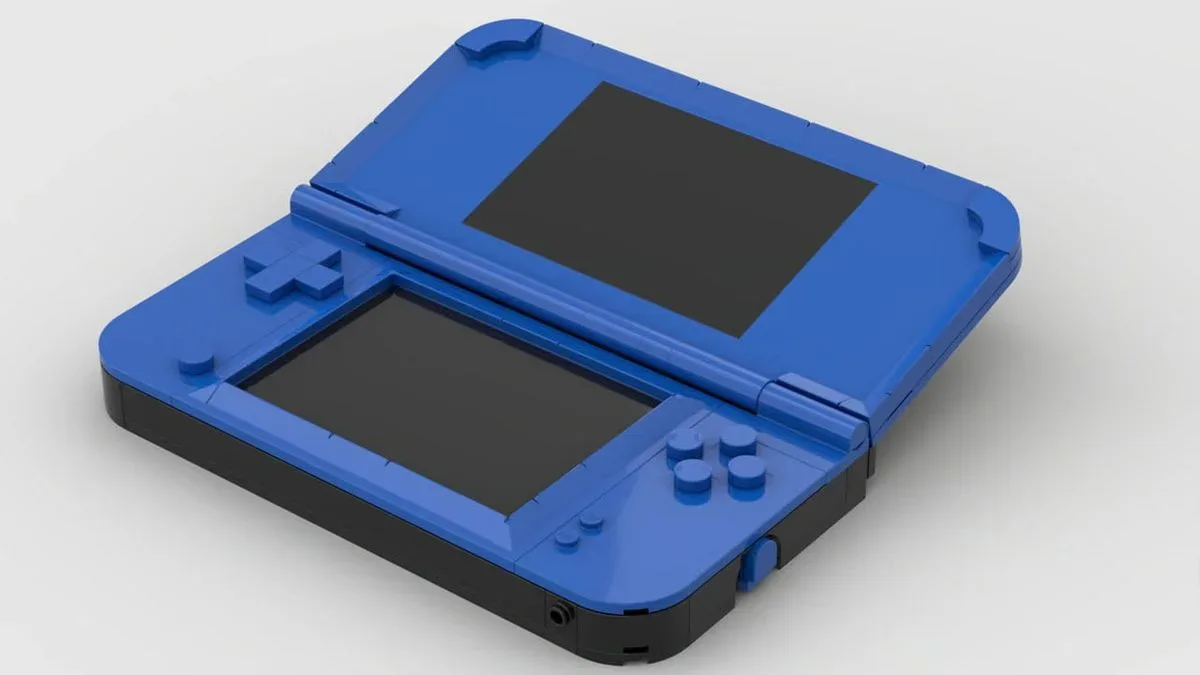
Nintendo remains a frequent point of reference wherever its hardware and games culture intersect; that reach is also visible in the community enthusiasm around this LEGO DSi XL fan build. But no Nintendo partnership with Clovers was announced here. Kamiya’s comments amount to interest and availability, not evidence of a project.
What “independent” changes—and what it does not
Clovers’ lack of external funding, as described by Kamiya, gives the studio a particular position in this discussion. An independent studio can seek relationships with multiple companies and may have more freedom to explore its own partnership strategy. For fans, that makes the prospect of unexpected collaborations easier to imagine.
Independence does not remove the practical limits around licensed games. It does not give Clovers automatic access to established properties, and it does not establish financing, publishing, or distribution arrangements for a future title. In fact, the distinction makes Kamiya’s direct appeal to Konami clearer: Clovers is signaling that it is available to work together, rather than claiming it already has the assignment.
This is also why the Okami clarification is useful. Kamiya is involved with a series connected to his Capcom past, but he says that work should not be read as a return to Capcom or proof that Clovers is funded by the publisher. It is an example of how a creator with a long history in the industry can participate in a familiar property while operating through a new, independent studio.
A moment of urgency around Castlevania
The interest arrives alongside a wider concern about momentum for the franchise. Castlevania: Belmont’s Curse has been described by its producer as being born from “a sense of urgency,” with the producer arguing that waiting 10 years for the next game would make the effort meaningless. That sentiment does not establish a timetable for any future release, but it reflects the pressure that can surround a dormant or intermittently used series.
Kamiya’s public pitch offers one possible answer to that desire for movement: entrust a fresh entry to a team led by someone known for action games. Whether that answer appeals to Konami is unknown. The important takeaway is narrower, but still exciting: Clovers is looking outward, Kamiya is specifically interested in Castlevania, and the studio has made its willingness to collaborate impossible to miss.
For now, the castle gates remain closed. Kamiya has simply made sure Konami knows where to find the people eager to storm them.