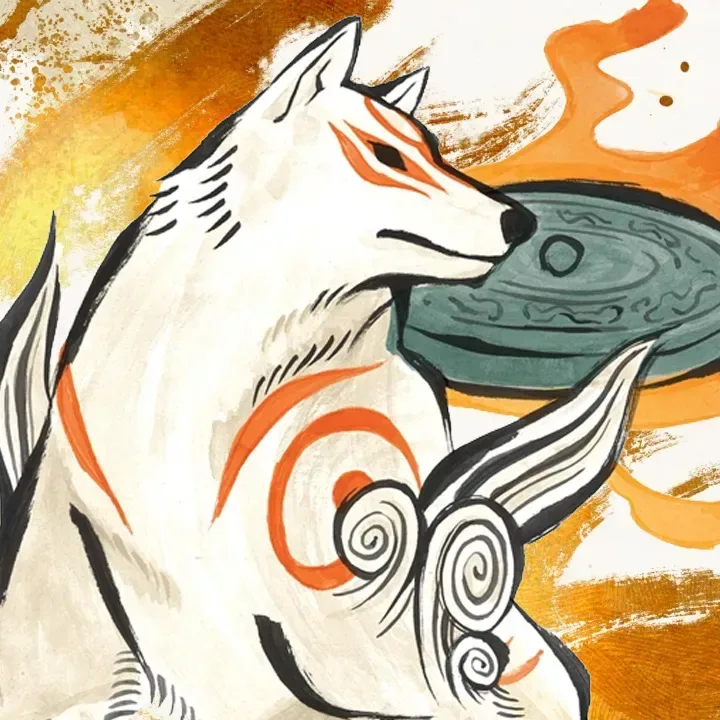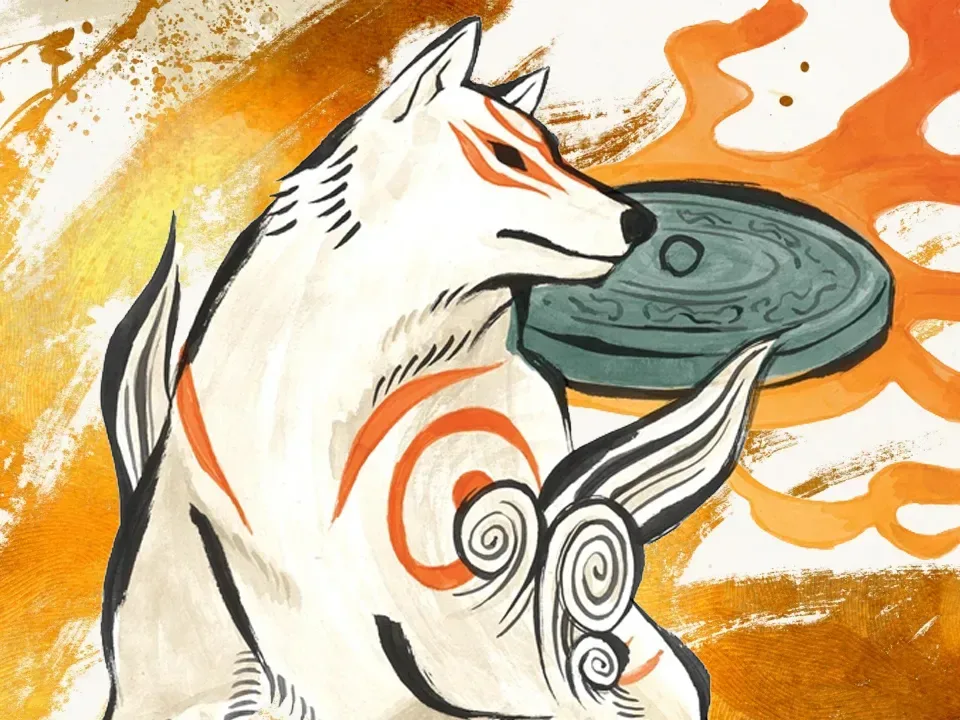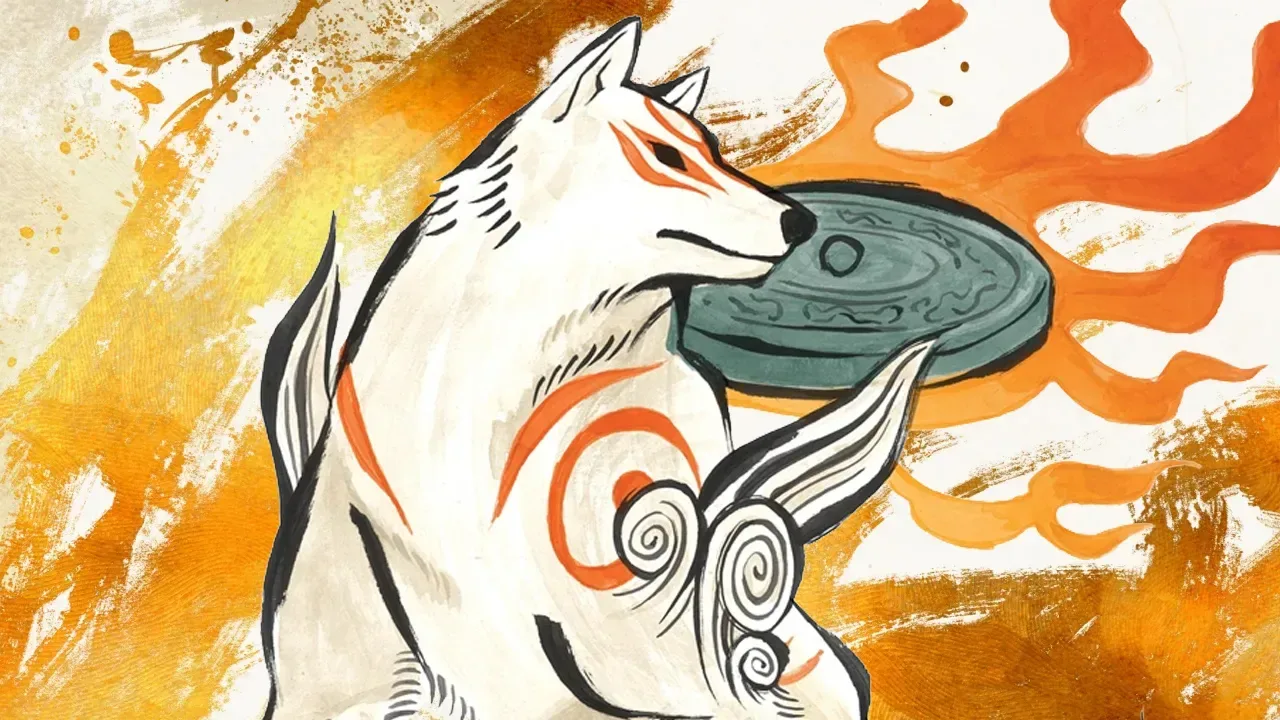
The next Okami is carrying a formidable inheritance: nearly two decades of affection for the original, a return for director Hideki Kamiya, and a fan base with plenty of ideas about what Amaterasu’s next adventure ought to be. Kamiya’s latest comments point to one especially clear priority amid that pressure. The sequel is being designed to remain approachable for players who are relatively new to games, not solely for people who have spent years revisiting the original.
That does not amount to a detailed look at the game. There are still no confirmed specifics here on its systems, release timing, platforms, or structure. But Kamiya has framed accessibility as a central creative concern, much as it was when he made the first Okami. At the same time, he has offered an unusually blunt reminder that high anticipation can become its own burden: players may be better served by holding their expectations lightly until the project has more to show.
A sequel with an old goal: make the door easy to open
Kamiya explained that the first Okami was made with relative beginners in mind, including the way it presented attack commands. In game-design terms, a command sequence is the series of player inputs used to perform an action. That can mean anything from a single button press to a longer combination. Designing those sequences for newcomers generally means thinking carefully about clarity: what an input does, when it is needed, and whether players can understand the result without feeling buried under instruction.
For the sequel, Kamiya says he is returning to that same audience focus. His comparison with Bayonetta is revealing. He described that game, including its plane sequences, as being aimed more toward experienced players. The distinction is not an announcement that the new Okami will be mechanically simple, nor does it establish any particular control scheme. It does show that Kamiya sees different games as making different assumptions about a player’s prior comfort with action-game conventions.
“Now that I’m making a second chapter of Okami, I’m going back to think about the more inexperienced or relatively new players. I still want to make it enjoyable for them, too,” Kamiya said.
That phrasing matters. “Enjoyable for them, too” is broader than saying a game will merely have a tutorial. A tutorial introduces rules; accessibility, in this narrower design sense, is about whether players can continue to understand and enjoy the experience once those rules start interacting. It can involve the way attacks are communicated, how quickly demands rise, and whether the game leaves room for someone to learn without being shut out by its opening hours.
There is also no inherent conflict between this ambition and serving seasoned fans. The stated goal is to appeal to both groups, as the original did. A newcomer-friendly approach does not automatically mean removing depth or reducing challenge. Rather, it suggests the team is considering how people enter the game before they have learned its language. Longtime Okami players may be watching for continuity; new players need an experience that does not make familiarity with a nearly 20-year-old game feel like a prerequisite.
The weight of a long-awaited return
The sequel was revealed in December 2024, almost 20 years after the first Okami released. It is being developed by Clovers, Kamiya’s new studio, whose team includes former Clover staff and industry veterans. The project is described as Amaterasu’s next adventure, and previous comments have established that it is a direct continuation of the first game rather than a side story in the mold of Okamiden.
Related coverage includes Hideki Kamiya Wants Okami Sequel to Welcome Newcomers, Despite Sky-High Expectations.
That context explains why expectations are such an unavoidable subject. A direct sequel arriving after that kind of gap does not meet a blank slate. It meets memories, personal favorites, and years of imagined possibilities. The original’s reputation as a critically acclaimed cult classic gives the follow-up an unusually emotional audience. Some players will want familiar creative touchstones; others will want evidence that the series has moved forward. The development team must navigate both impulses while making a game that can stand on its own.
Kamiya has acknowledged that this is qualitatively different from launching something wholly new. When a creator begins a new property, the public has fewer fixed ideas about its contours. With a sequel, the audience arrives with expectations already assembled. Kamiya characterized the new Okami as a mission in that regard and advised fans not to bring too many expectations to it.
“Before, when I created a new game, I had no expectation from the public,” Kamiya said. “Now that I’ve created sequels, the expectation from the public has grown quite a lot, and I feel that. It’s better if you don’t have many expectations.”
It is tempting to read a statement like that as a promise of restraint, a warning about a dramatic redesign, or a clue about the sequel’s size. The available comments support none of those conclusions. The more grounded reading is simpler: Kamiya recognizes that a beloved game’s return comes with an audience that has had a long time to decide what it wants. He is advising patience without setting out a specific feature-by-feature standard for the project.
What Kamiya says has changed over two decades
Asked how his creative process has evolved, Kamiya did not present himself as someone who has discarded his old approach. Instead, he said that, as far as he can tell, little has changed. The difference he identified is experience earned through mistakes: he feels he can now sense when he is approaching one before it happens.
That is a modest answer, but it is useful perspective for a sequel that is naturally inviting comparisons across a 20-year span. Development experience is not a checklist of guaranteed outcomes, and Kamiya did not claim it was. His point was about judgment: having made many mistakes during a career, he believes he is better able to recognize warning signs earlier. For a project with a long legacy behind it, that sort of creative intuition could be as relevant as any individual system or technical upgrade—though players will have to wait for the game itself before judging the result.
It also puts his request for measured expectations in a less defensive light. The remarks do not suggest indifference to the original. Quite the opposite: he is returning to its beginner-friendly design aim while describing the sequel as a serious responsibility. The caution is about allowing the work room to become itself rather than demanding that it perfectly satisfy every imagined version of an Okami follow-up.
What players can reasonably take from these remarks
- New players are part of the intended audience. Kamiya explicitly says he wants the sequel to work for relatively inexperienced and newer players, alongside veterans.
- Approachability is a design objective, not a confirmed list of options. There are no disclosed details on difficulty settings, assist features, controls, or onboarding tools.
- The sequel continues the first game. It is not positioned as a side story like Okamiden.
- Clovers is making the game with Kamiya involved. The studio includes former Clover staff and other industry veterans.
- Specifics remain under wraps. Kamiya did not provide further concrete project information in these comments.
For returning players, the practical implication is not to treat the sequel as a test that only original-game experts can pass. Kamiya’s stated intent is the opposite: a player arriving fresh should have a meaningful route into Amaterasu’s next story. For players curious about the series but intimidated by its history, that may be the most encouraging part of the update.
For everyone else, the healthiest response may be the one Kamiya requested. Keep the excitement, but avoid filling the information gap with declarations of what the sequel must contain. The project has a director closely associated with the first game, a studio that includes former Clover staff, and an expressed commitment to welcoming newer players. Beyond that, a great deal remains unknown.
That uncertainty is familiar territory for long-running game series, where every quiet stretch can turn into a canvas for speculation. It is also a reminder that preserving a game’s appeal is not the same thing as recreating every memory surrounding it. As other development stories have illustrated, a game’s path can change substantially before it reaches players. In Okami’s case, the clearest stated north star so far is less flashy but more important: make a continuation that longtime followers can enjoy without closing the gate on people meeting its world for the first time.