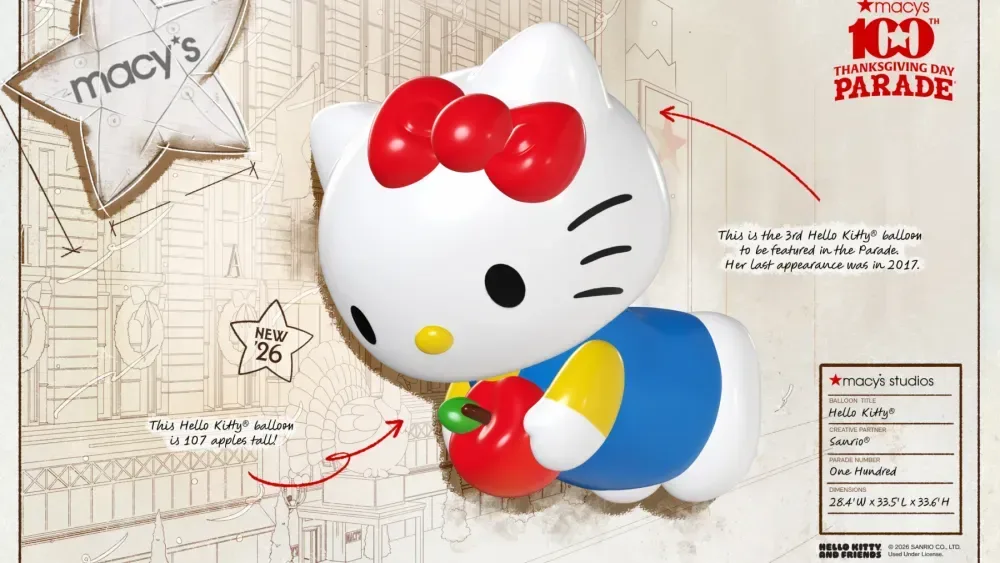
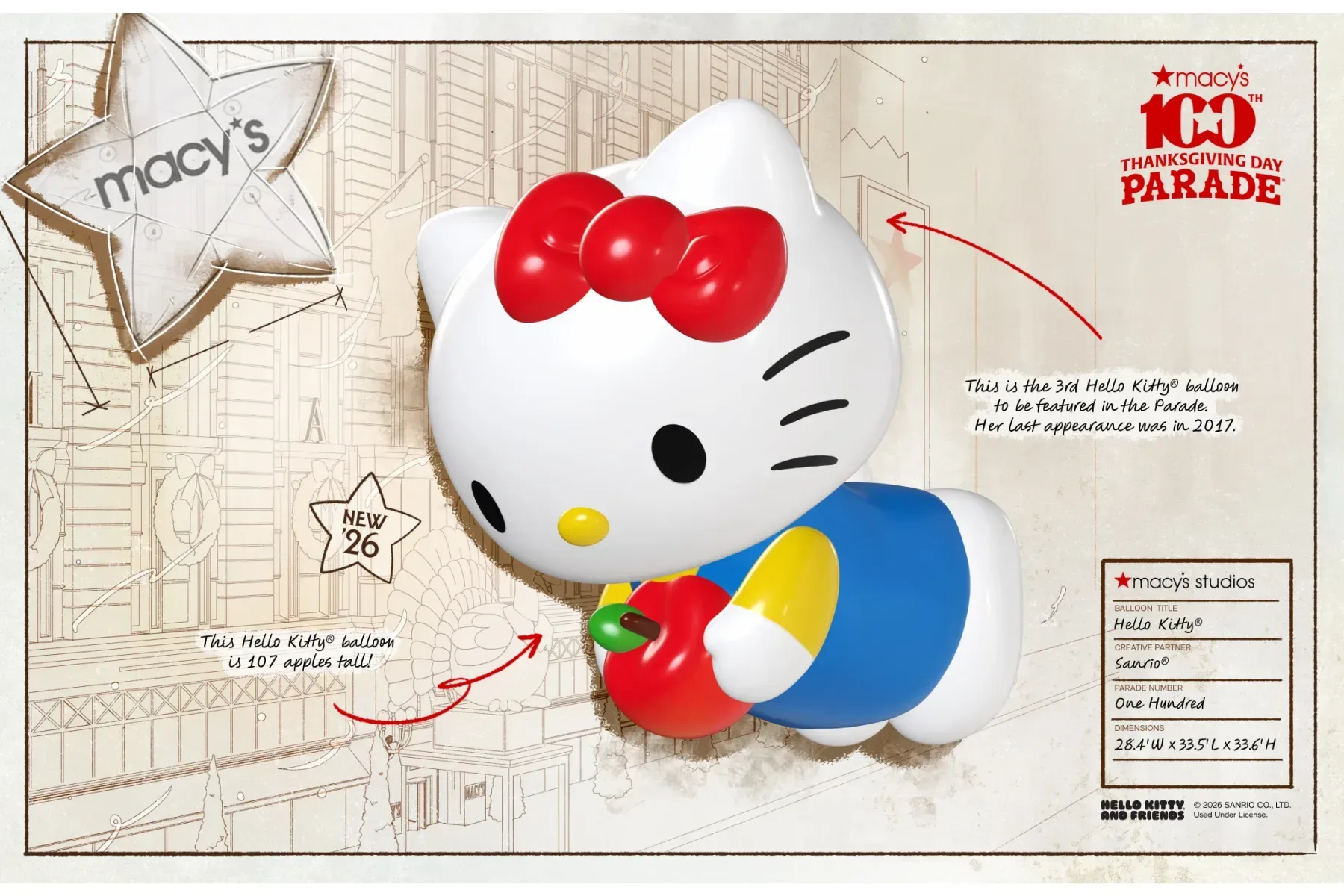
Hello Kitty is headed skyward as a 107-apple-tall balloon in Macy’s 100th Thanksgiving Day Parade, weather permitting. It is an outsized debut for a character routinely described as five apples tall, but the scale fits the moment: Sanrio is assembling a much broader entertainment strategy around Hello Kitty and Friends, with video games, live events, digital content, consumer products and a theatrical animated movie all in the mix.
That does not mean every part of the plan is designed for the same audience or does the same job. The parade balloon is a huge shared cultural image. Sporting-event activations and cafés put fans in a physical space with one another. Games offer repeat engagement. A movie, scheduled for July 2028, offers a concentrated storytelling opportunity. The connective tissue is not simply putting Hello Kitty on more things; it is giving distinct communities different ways to participate in the brand.
Sanrio reported record results for the fiscal year ending in March 2026, with sales up 33.9% year over year. That number offers important context for the company’s widening presence, though it does not prove that any individual collaboration, game or event caused the increase. What it does establish is that the broader strategy is expanding during a period of substantial reported growth.
From product character to a transmedia presence
Hello Kitty was created in 1974 by Japanese designer Yuko Shimizu for Sanrio products. The character’s original purpose matters when considering why a feature film has taken so long: Hello Kitty did not begin as a film or television protagonist waiting for a franchise adaptation. The brand has had to build its entertainment path alongside its longstanding identity in products.
Today, the range is substantial. Sanrio’s Hello Kitty and Friends activity includes fashion and kitchenware tie-ins, Hello Kitty-themed cafés across North America, comic books, a YouTube digital series, collaborations with sports leagues including F1, MLB, NHL and NFL, and partnerships involving musicians such as Bruno Mars and Katseye. The company also points to video games including Island Adventure and the newly released Party Land.
That collection of formats is commonly called a transmedia strategy: a brand operates across several media and experiences rather than relying on a single channel. The phrase can sound like boardroom confetti, but the practical meaning here is straightforward. A fan can encounter these characters through a game, a video, clothing, a café, a ballpark event or eventually a film. Each encounter can stand alone while also making the rest of the ecosystem more visible.
For game audiences, the notable part is the emphasis on repeatable attention. Sanrio’s North and South American leadership views gaming as likely to exert disproportionate influence over the next five to 10 years, particularly because younger audiences spend sustained time with games. A movie may invite a few viewings and a series may be revisited, but a game can remain part of a player’s routine over a much longer stretch. That distinction explains why games are being positioned as more than a licensed side project.
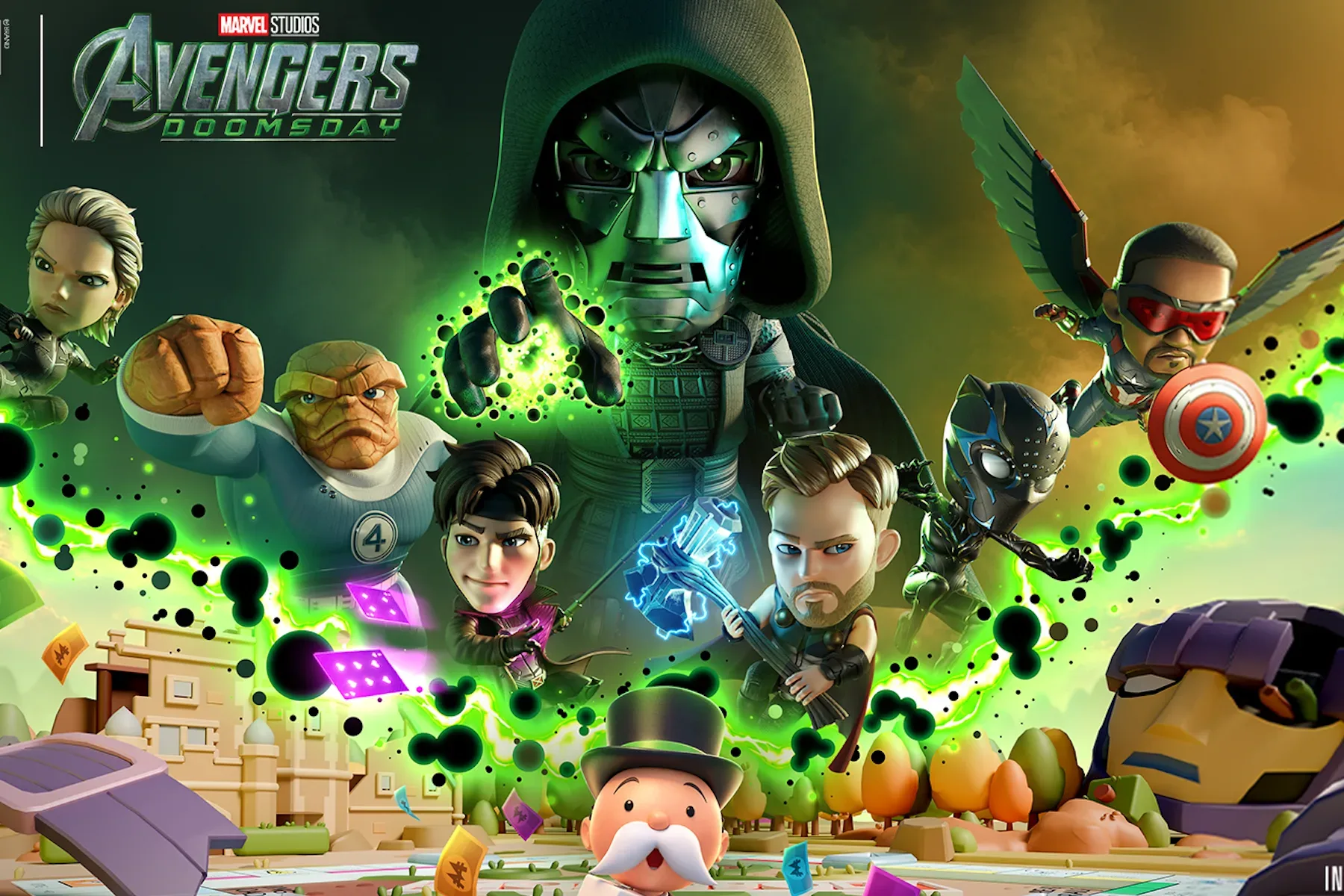
It also places Hello Kitty and Friends in a wider industry pattern: recognizable characters increasingly function as social touchstones across interactive and non-interactive formats. A recent look at projects tied to community and nostalgia in Minecraft, Roblox and Monopoly Go! shows why established identities remain useful when audiences are scattered across platforms. The Hello Kitty approach differs in its particular mix of lifestyle products and in-person fandom, but the underlying goal is similarly to meet people where they already spend time.
Related coverage includes Hello Kitty’s Balloon Debut Signals a Wider Push Across Games, Events and Film.
Gaming is being treated as a durable connection, not just a tie-in
The company identifies two core audience bands: ages six to 11 and 18 to 34. The older group is especially significant because adults in that range may introduce the brand to their own families or extended circles. In business terms, that is a “flywheel”: participation by one cohort helps generate attention from the next without a brand having to start its relationship from zero each time.
The company’s argument is that Gen Z and Gen Alpha are digital natives, meaning they have grown up with digital media as an ordinary part of daily life rather than a newer add-on. YouTube and gaming therefore sit alongside, or in some cases ahead of, the theatrical and cartoon touchpoints that shaped earlier audiences.
That does not establish that a Hello Kitty game must appeal to every existing fan. It does clarify the role games can play: they make the characters present in the spaces where younger people already form habits, share interests and spend time. For a character brand whose foundation was physical merchandise, that is a significant evolution. The objective is no longer limited to being seen on an object someone purchases; it includes becoming part of a continuing interactive routine.
Crucially, no gameplay systems, platforms, release roadmaps or future game announcements were detailed beyond the named titles. It would be premature to infer an ambitious slate of specific projects from the strategy alone. But the public emphasis on gaming signals that the medium is central to Sanrio’s long-term thinking rather than a minor extension of the merchandise business.
Why live events remain part of the plan
The digital push is paired with a firm belief that fandom needs real-world moments, too. Sanrio’s strategy includes pop-ups, collaborations and in-event activity aimed at communities in sports, music and broader entertainment. The company does not frame North America as a place where it can simply dictate culture at massive scale. Instead, the stated approach is to find relevance through more focused connections with adjacent audiences.
Sports are one especially visible route. At an August Dodgers game, a blind-box plush giveaway contained one of five possible Hello Kitty and Friends characters. A blind box is sealed packaging that keeps the specific included item unknown until opened. Its appeal is partly the surprise and partly the social behavior it creates: fans who receive a character they do not prefer may look for someone willing to trade.
That is exactly what Sanrio says it observed. Fans posted their openings, expressed preferences for particular characters such as Pompompurin or Kuromi, and in some cases met strangers to exchange their items. The event was not only about distributing plush; it gave people a low-stakes reason to start conversations through a shared fandom.
There is a practical lesson in that example. Events can generate value beyond attendance when the item, activity or setting encourages people to interact after the official moment. A blind-box giveaway produces uncertainty; multiple characters create a reason to compare; social posting carries the activity outward. None of that guarantees a lasting relationship with a new audience, but it demonstrates why a collaboration can be designed around participation rather than mere logo placement.
The parade balloon fits this logic on a much larger stage. It is a public spectacle rather than a game mechanic or collectible giveaway, yet it supplies a common visual moment for existing fans and casual viewers alike. For a brand rooted in instantly recognizable imagery, a giant balloon is an unusually direct way to turn character recognition into an event.
The Hello Kitty movie has a date, but few story details
An English-language animated Hello Kitty movie made in collaboration with Warner Bros. Pictures is set for theatrical release in July 2028. The project was first announced by New Line in 2019 and received its release date last October after years of development.
Sanrio has been careful about story specifics. The description offered so far points toward a magical transformation and themes intended to feel emotionally genuine and broadly relatable, with friendship and human connection at the center. Those are thematic signals, not a plot synopsis. There is no detailed premise, cast information, character list, or confirmed answer on whether the movie will take a self-aware, meta approach. Fans should treat the 2028 date as concrete while recognizing that most creative details remain under wraps.
The extended development period is presented as a matter of timing, team-building and finding a storytelling approach suited to a distinctive brand. Sanrio also regards the film as part of a larger market “flywheel,” not an isolated movie event. In other words, the studio release is expected to arrive into an ecosystem where games, products, live experiences and digital content have already established multiple entry points.
That sequencing may matter. A movie can provide a major focal point, but the surrounding activity gives people ways to stay connected before and after its theatrical run. Conversely, the film could introduce people to the games, events and broader Hello Kitty and Friends lineup. It is a two-way relationship, at least in theory, rather than a one-off adaptation strategy.
Hello Kitty is a girl, not a cat
One enduring point of confusion has been reiterated: Hello Kitty is a little girl. The company describes her as five apples tall. Her feline appearance has made the misconception remarkably persistent, and the ambiguity is evidently part of the character’s mystique rather than a barrier Sanrio is urgently trying to eliminate.
That unusual identity is relevant to the entertainment expansion. Hello Kitty is one of the world’s most recognizable character images, yet her storytelling frame has remained open enough to accommodate different formats and audiences. The July 2028 film will have the demanding task of turning that openness into a satisfying theatrical story without discarding the qualities that made the character flexible in the first place.
For now, the clearest measurable developments are the 33.9% sales increase reported for the fiscal year ending March 2026, the use of games and live events as long-term engagement tools, the Thanksgiving parade balloon, and the movie’s July 2028 theatrical target. The rest is an evolving strategy built around a simple proposition: a small character can travel far when fans have more than one way to meet her.