Paramount Pictures and Warner Bros. Pictures have named the motion-picture leaders who will guide the studios following Paramount’s $111 billion acquisition of Warner Bros. Discovery. The structure places Kira Goldberg and Don Granger atop Paramount’s Motion Picture Group, while Jesse Ehrman becomes president of Warner Bros. Motion Picture Group.
The appointments arrive alongside a broader Skydance-led reorganization spanning theatrical distribution, animation, consumer products, specialty labels and DC Studios. The central message to staff is deliberate: Paramount and Warner Bros. are meant to remain distinct cornerstone labels, even as selected corporate functions are shared across both operations.
That distinction is important for audiences, filmmakers and the theatrical business. A merged parent company does not necessarily mean a single movie studio with one identity. The stated plan instead combines centralized support in areas such as distribution and marketing with separate creative leadership at the two major labels. In practical terms, each studio is intended to retain its own film slate, leadership and creative mandate while drawing on the scale of a larger organization.
Who will run the two film studios?
Goldberg and Granger will serve as presidents of Paramount’s Motion Picture Group. Goldberg most recently held a film vice president role at Netflix covering faith, holiday, young-adult and family movies. Her past work there included Adam McKay’s environmental satire Don’t Look Up, the science-fiction adventure The Adam Project, and the forthcoming heist thriller The Take, starring Denzel Washington and Robert Pattinson.
Granger brings a production background from Skydance. His credits include Jack Reacher: Never Go Back, Mission: Impossible – Rogue Nation, The Old Guard 2 and Matchbox: The Movie. That experience covers established action properties, large-scale franchise filmmaking and an adaptation connected to a major toy brand—different kinds of projects that can each demand long-term coordination among talent, producers and commercial partners.
At Warner Bros., Ehrman has been elevated to president of the studio’s Motion Picture Group. A studio veteran of 20 years, his more recent work includes A Minecraft Movie and Ryan Coogler’s Sinners. Michael Ireland will continue as Warner Bros.’ president of production and report to Ehrman. Ireland had joined Warner Bros. earlier in the year after leaving Paramount.
Those job titles represent different, but closely connected, responsibilities. A motion-picture-group president is a senior leader overseeing a studio’s overall film business and creative direction. A president of production concentrates on moving films through development and production: the work of translating an idea, script or franchise plan into a completed feature. The new reporting lines put Warner Bros.’ production function under its dedicated studio film chief rather than treating the two labels as one unified creative department.
Separate labels, shared scale
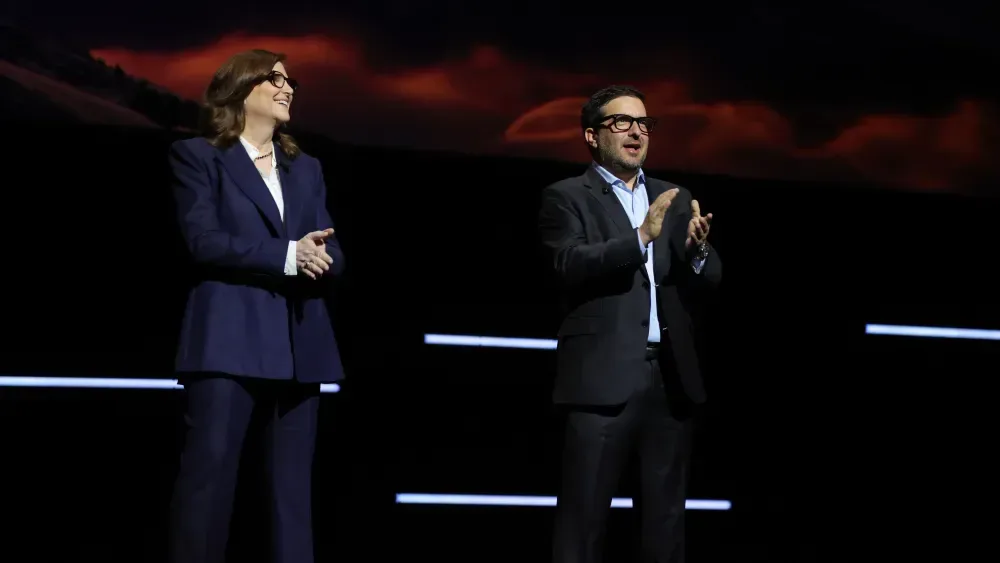
In their staff memo, Skydance Motion Picture Group co-chairs Dana Goldberg and Josh Greenstein said Paramount Pictures and Warner Bros. Pictures would remain distinct and continue to lead the company’s biggest commercial and filmmaker-driven projects. They also said the animation and specialty labels would stay separate, each with its own creative mandate.
A creative mandate is the basic remit of a label: the kinds of films it is designed to make, the audience it is trying to reach and the identity it brings to the marketplace. Keeping mandates separate can matter when a company controls multiple brands with different histories and project pipelines. The plan described here is not simply about assigning executives; it is an attempt to preserve those individual label identities while coordinating shared resources behind the scenes.
The leadership team says the organization is targeting 30 films per year. That is a substantial stated commitment, but it should be understood as a goal rather than a released calendar of titles. The announcement does not identify which films will fill that slate, when they will arrive, or how the total will be divided among Paramount, Warner Bros., animation and specialty operations.
For moviegoers, the clearest near-term takeaway is organizational rather than a specific release announcement. Paramount and Warner Bros. are expected to continue functioning as separately led studio labels. The larger corporate arrangement, however, will increasingly shape how films are marketed and brought to theaters.
Distribution becomes a shared operation
One of the most concrete examples of that shared approach is theatrical distribution. Shaun Barber will oversee domestic distribution for both Paramount and Warner Bros., while Mark Viane will oversee international distribution for both studios. Both executives will report to Josh Goldstine, president of worldwide marketing and distribution.
Domestic distribution concerns the release of a film within its home market. International distribution covers its launch and theatrical business across other territories. These roles involve working with exhibitors and managing how a film reaches theaters, but the domestic and international sides face different market conditions, release patterns and local considerations. Putting both studios under the same distribution leadership may allow the combined organization to coordinate resources while still releasing films under distinct Paramount and Warner Bros. banners.
Marketing and distribution are related but not identical. Marketing is the public-facing campaign around a movie: advertising, trailers, promotional positioning and awareness. Distribution is the commercial and logistical side of delivering the release to theaters and managing its rollout. The new structure puts those functions under Goldstine at a worldwide level, making the shared-services model especially visible in theatrical operations.
The promotions for Barber and Viane coincide with the retirement of Jeff Goldstein, the longtime Warner Bros. Pictures executive who most recently led global theatrical distribution. Goldstein has spent 48 years at Warner Bros. Pictures and is expected to move into a consulting role. His planned transition marks a significant leadership change at a moment when the distribution operation is being recast across two major studios.
Animation leadership is also being reorganized
Warner Bros. Pictures Animation is undergoing its own transition. Bill Damaschke will leave the division, remaining for a period before moving to full-time producing. During the interim, Jennifer Dodge and Traci Balthazor will oversee animation across Paramount and Warner Bros. Pictures. Chris Leahy will continue leading Warner Bros. Pictures Animation’s day-to-day operations and report to Dodge and Balthazor.
The arrangement combines broader animation oversight with continuing operational leadership at the Warner Bros. animation unit. It also sits alongside Skydance Animation, where John Lasseter remains head of the division and Holly Edwards remains president. The memo’s broader claim that animation labels retain separate creative mandates suggests that shared oversight is not intended to erase the individual units’ identities, though the announcement does not spell out how projects will be allocated among them.
Animation can be especially sensitive to organizational change because films often take years to develop and produce. The announcement does not identify any projects affected by the leadership shifts, so it would be premature to draw conclusions about specific releases. What is confirmed is a new interim reporting structure and the continued presence of dedicated leaders at Warner Bros. Pictures Animation and Skydance Animation.
Specialty labels, DC and consumer products
The restructuring also assigns leaders across several specialty operations. Richard Brener will lead New Line. Lia Buman becomes executive vice president and head of global acquisitions at Republic Pictures. J.D. Lifshitz and Raphael Margules will lead Paramount Primal, while Christian Parkes is overseeing Clockwork. Charlie Tabesh will serve as senior vice president and general manager of Turner Classic Movies.
Global acquisitions is a particularly useful term to clarify. Rather than supervising only movies developed internally, an acquisitions group evaluates and obtains distribution rights to completed or developing films. Republic Pictures’ new global-acquisitions leadership therefore signals a distinct route to building a release lineup alongside in-house production.
Jeremy Latcham had previously been announced as the new president and chief creative officer of DC Studios, replacing James Gunn and Peter Safran. DC Studios is not described in this announcement as being folded into either of the two main motion-picture groups; it has its own leadership designation within the wider structure. That separation fits the overall theme of dedicated creative leadership for major labels and brands.
Elsewhere, Ted Lim, previously chief business officer at Warner Bros. Pictures, will depart. Josh Silverman will transition from president of global products and publishing to lead consumer products and publishing. Mark Kaufman will remain executive vice president and chief content officer of theatrical ventures, continuing to oversee shows including the Broadway production of The Lost Boys.
Consumer products and publishing concern the commercial life of entertainment properties outside a film’s theatrical run, including licensed goods and publishing activity. The announcement does not tie those operations to a particular upcoming title, but retaining a dedicated leader indicates that the reorganized company views those businesses as a defined part of its wider entertainment portfolio.
What the structure means—and what it does not yet answer
The new organization creates a balance between autonomy and consolidation. Paramount and Warner Bros. each have named motion-picture leadership, while distribution, marketing and certain animation oversight responsibilities now span both. This is a familiar corporate tension in creative businesses: centralized teams can provide coordination and resources, while separate labels can maintain focus and distinct relationships with filmmakers.
There are still major unanswered questions. The announcement does not provide a film-by-film release plan, describe new franchise strategies, or set out how the 30-film annual target will be measured. It also does not detail potential changes to release windows, budgets, individual production slates or the theatrical strategy for the specialty labels.
Those omissions are not evidence of a change in any of those areas. They simply mean the leadership announcement should be read for what it is: a blueprint for who will make decisions and where responsibilities will sit after the acquisition, not a comprehensive preview of every movie the combined company will release.
For more on the wider film landscape, see the recent recognition of behind-the-camera film crafts. As this restructuring moves from executive appointments into day-to-day operation, the key development to watch will be whether Paramount and Warner Bros. can deliver the promised scale without losing the separate creative identities their new leaders say they intend to protect.