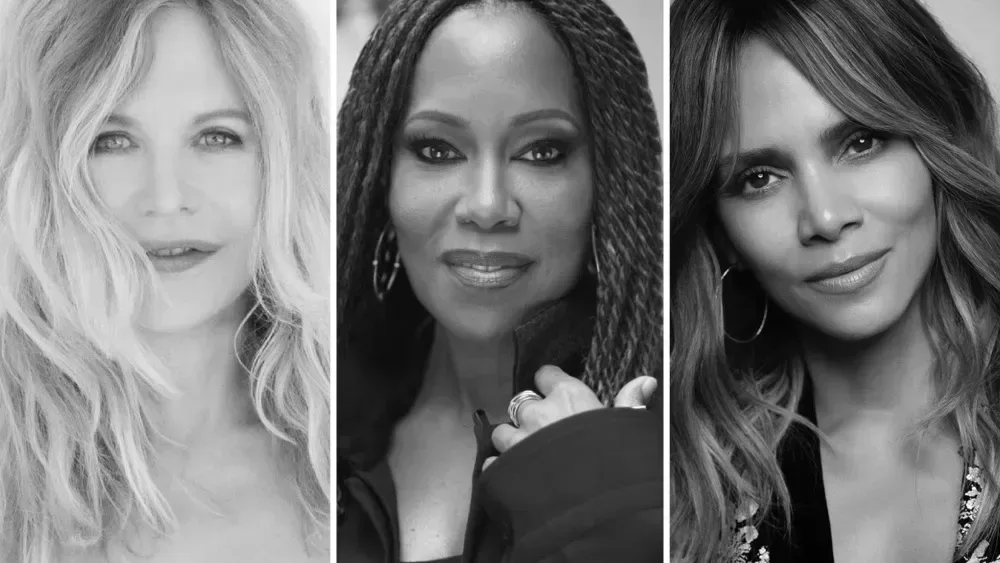
Halle Berry, Regina King and Meg Ryan will serve as jurors for the 11th edition of Through Her Lens: The Tribeca Chanel Women’s Filmmaker Program. They will be joined by cinematographer Autumn Durald Arkapaw, whose credits include Sinners, and actor Ella Rubin of Sterling Point.
The annual initiative supports emerging women and non-binary filmmakers at a particularly consequential point in the process: the gap between having a short-film idea and actually getting that idea into production. Its 2026 workshop runs in New York City from September 22 through 24, bringing together five writer-director and producer teams for workshops, individual mentorship and industry discussions. The program ends with a live pitch before the jury.
One team will receive complete financing to make its short with backing from Tribeca Studios. The other four teams will receive development grants. That split matters. Full financing can take a project from a promising presentation into a finished work; a development grant, meanwhile, is support intended to move a project forward before production, rather than an indication that the film is already fully funded.
A jury focused on the work behind the pitch
The five-person jury represents several parts of the filmmaking ecosystem. Berry, King and Ryan bring experience as actors with substantial careers in front of the camera. Arkapaw adds a cinematographer’s perspective, while Rubin brings a newer acting voice to the deliberations.
That mix is useful for a short-film pitch competition because a pitch is not merely a plot summary. A filmmaking team needs to communicate a film’s story, tonal intention and practical creative identity clearly enough that decision-makers can understand what the completed short could become. The process asks filmmakers to turn an idea that may still be private or preliminary into a project other people can evaluate and help build.
In this setting, the jurors are not being asked to select a finished movie. They are assessing potential: the potential of the story, the team and the proposed execution. The distinction explains why mentorship is central to the three-day program rather than an add-on to the final presentation.
The five projects in the 2026 class
This year’s selected projects range across contemporary pressure, historical settings, institutional environments and deliberately unusual premises. The participating teams are:
- “Break”, from Jasmine J. Johnson and producer Katy Wicker, follows a young Black surfer dealing with the consequences after a wipeout becomes viral online.
- “Camouflage”, from Jinsui Song and Shen Wei, is set during mandatory military training in Shenzhen in 2007.
- “Cold Embrace”, from Victoria Trow and Sabina Friedman-Seitz, centers on a woman who is prescribed an emotional-support python.
- “Cowards”, from Gem Little and Kseniya Yorsh, takes place in 1999 Chicago.
- “Grippy Socks”, from Carlen May-Mann and Cacá Montagnana, follows a woman over a 36-hour stay in an emergency room.
The descriptions point to projects with sharply different scales and modes. “Break” places a character’s experience inside the fast, public circulation of online attention. “Camouflage” is rooted in a specified place and period. “Cold Embrace” begins with a premise that is startling on its face, while “Cowards” and “Grippy Socks” use distinct time-and-place frameworks.
Related coverage includes Halle Berry, Regina King and Meg Ryan Join Through Her Lens Jury.
Those details should not be mistaken for completed-film claims: only concise project descriptions have been provided, and the workshop exists precisely because the teams are developing the work. Still, the variety illustrates a defining value of an artist-development program. It does not require every selected filmmaker to arrive with the same genre, tone or production model.
Mentorship across creative departments
The mentor roster also reaches beyond directing. Filmmaker Celine Song, whose work includes Past Lives and Materialists, playwright and filmmaker Aleshea Harris, producer Ellen Goldsmith-Vein, actor Fala Chen and The Woman King director Gina Prince-Bythewood are among the mentors working with the class.
Additional conversations will be led by musician H.E.R.; composer Laura Karpman; costume designer Miyako Bellizzi; director Patty Jenkins; casting director Cassandra Kulukundis; and producer Riva Marker.
The breadth of those roles is significant because film development is not simply a writing exercise. A director may need to express the visual language of a project to a cinematographer, discuss character presentation with a costume designer, or explain why specific performers are needed to make the story work. A producer has to consider how a creative ambition can be organized into a production. Casting is the process of finding and selecting performers; costume design helps establish character, world and visual storytelling; composing means creating music for the film. Each department can affect what audiences ultimately see and feel.
For emerging filmmakers, access to that range of expertise can make a short pitch more concrete. The goal is not to turn every participant into a specialist in every craft. It is to help teams understand the questions a project may face as it progresses: What does the film need? Which ideas are essential? How might collaborators be brought into a shared vision?
That emphasis on filmmaking as a collaborative practice also makes the program’s funding structure more meaningful. Financing is essential, but money alone does not answer every creative or logistical question. The workshop combines financial opportunity with access to people who work across the disciplines needed to move a movie from concept through production.
Why the short-film award has weight
Short films are often discussed as calling cards, a term for work that demonstrates what a filmmaker can do to future collaborators, programmers and financiers. That description can be helpful, but it can also undersell the form. A short needs to make its own artistic case within a limited running time, while frequently operating under tight resources. The opportunity to make one with full financing can therefore be both a creative chance and a professional step.
Through Her Lens has developed 50 short films across its first 11 editions, with 10 winning projects receiving full financing. Alumni work has screened at Sundance and TIFF and reached distribution through Max, Searchlight and Criterion. These outcomes do not promise an identical path for the current class, but they show that the program’s support can extend beyond the workshop itself.
The alumni list also includes filmmakers who later moved into feature directing. A.V. Rockwell went on to direct A Thousand and One; Nikyatu Jusu directed Nanny; Numa Perrier helmed The Perfect Find; and Hannah Peterson’s Via Negativa premiered at the 2025 Tribeca Festival.
The important practical point is that filmmaker development does not follow a single, automatic ladder. A short-film program is not a guaranteed feature deal, and a development grant is not a finished production. But introductions, feedback, funding and a completed short can create tangible materials and relationships that filmmakers may carry into the next stage of their careers.
An established partnership, with a growing advisory network
Through Her Lens was founded by Tribeca and Chanel in 2015. It sits within a partnership between the two organizations that began in 2005 and has since included filmmaker development, festival programming and artist-focused events.
Earlier in 2026, the program hosted a Tribeca Festival conversation with Teyana Taylor about mentorship, creative leadership and opportunities for women filmmakers. Taylor also joined the advisory committee.
The committee currently includes Tribeca co-founder Jane Rosenthal, Taylor, Lucy Liu, Tessa Thompson, Olivia Wilde, Jane Fonda, Jenkins, Karpman, Rockwell and Kerry Washington. An advisory committee is distinct from the jury announced for this workshop: the jury will evaluate the 2026 pitches, while the committee reflects a wider ongoing network around the initiative.
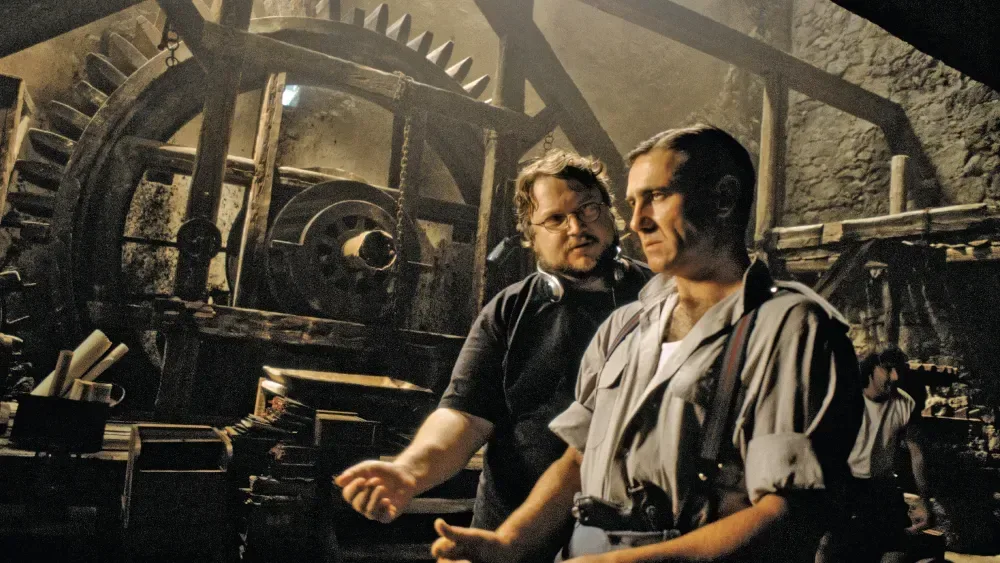
For readers interested in another example of film craft being documented through a major release, Joking Joystick has also covered a Pan’s Labyrinth screenplay and making-of book edition. The formats differ greatly, but both point to the many creative decisions that sit behind a finished screen work.
What happens next
From September 22 to 24, Johnson and Wicker, Song and Wei, Trow and Friedman-Seitz, Little and Yorsh, and May-Mann and Montagnana will take their projects through the workshop before delivering their pitches. The jury of Berry, King, Ryan, Arkapaw and Rubin will then select the team receiving full short-film financing, while the other four teams receive development grants.
It is a compact timetable, but the program is structured around more than a single winner-take-all moment. Every selected team gets the workshop, mentorship and conversations with practitioners across filmmaking disciplines. The eventual funding decision will determine which one short advances with full production support, yet the broader purpose is to give all five projects a stronger foundation for the work ahead.